ARTIFICIAL INTELLIGENCE-DRIVEN AUTONOMOUS DEVELOPMENT AND OPERATIONS GOVERNANCE SYSTEM FOR COMPLIANCE-AWARE SOFTWARE DELIVERY
US20260187653A1
2026-07-02
19/534,535
2026-02-09
Smart Summary: An artificial intelligence system helps manage software development and operations to ensure they follow rules and regulations. It uses various components to monitor and evaluate compliance throughout the software's lifecycle. The system translates regulatory rules into a format that machines can understand and connects them to software details like builds and configurations. By using machine learning, it can assess whether a software deployment is compliant and make decisions about whether to allow, delay, or stop the deployment. Additionally, it learns from past experiences and keeps secure records for verification purposes. 🚀 TL;DR
Abstract:
The present invention relates to an artificial intelligence-driven autonomous governance system for compliance-aware software delivery in development and operations environments. The disclosed system is implemented as a dedicated governance device comprising policy ingestion units, deployment signal acquisition units, compliance analysis processors, deployment control units, and secure audit storage units that collectively operate to monitor, evaluate, and enforce regulatory compliance throughout the software lifecycle. Regulatory definitions and organizational compliance rules are normalized into machine-interpretable representations and correlated with software build artifacts, configuration parameters, dependency relationships, and runtime telemetry associated with software deployment events. Machine learning-based compliance reasoning is applied to determine compliance states and associated confidence values, which are used to autonomously authorize, restrict, delay, or terminate deployment actions in real time. The system further incorporates adaptive learning mechanisms that refine compliance inference parameters based on historical outcomes and regulatory updates, as well as secure audit logging for traceability and verification.
Applicant:
Interested in similar patents?
Get notified when new applications in this technology area are published.
Classification:
G06Q30/018 » CPC main
Commerce, e.g. shopping or e-commerce; Customer relationship, e.g. warranty Business or product certification or verification
H04L63/20 » CPC further
Network architectures or network communication protocols for network security for managing network security; network security policies in general
H04L9/40 IPC
arrangements for secret or secure communications Cryptographic mechanisms or cryptographic ; Network security protocols Network security protocols
Description
FIELD OF THE INVENTION
The present invention relates to the technical field of software engineering infrastructure and, more particularly, to an artificial intelligence-driven autonomous governance device configured to physically and logically supervise software development and operational delivery pipelines. The invention lies at the intersection of DevOps governance, compliance engineering, artificial intelligence-assisted decision systems, and secure deployment infrastructure, wherein a dedicated machine structure performs continuous regulatory characterization, deployment validation, and compliance-aware operational control. The disclosed system operates as a self-regulating governance apparatus capable of real-time policy interpretation, regulatory conformity assurance, and autonomous corrective intervention during software lifecycle execution.
BACKGROUND OF THE INVENTION
Modern software delivery environments increasingly rely on continuous integration and continuous deployment paradigms that accelerate application release cycles but simultaneously amplify regulatory exposure, compliance uncertainty, and security vulnerabilities. Existing DevOps governance solutions are predominantly software-centric overlays that rely on static rule sets, post-deployment audits, or manual compliance checks, thereby failing to provide deterministic, real-time regulatory enforcement during active deployment stages. These limitations result in delayed compliance detection, fragmented policy enforcement, and operational risks arising from regulatory misalignment across distributed development infrastructures.
Conventional systems further lack a unified machine-based governance structure capable of autonomously interpreting regulatory contexts, adapting compliance thresholds, and enforcing deployment constraints without human intervention. As regulatory frameworks evolve dynamically across jurisdictions, industries, and operational contexts, static governance models are increasingly insufficient. Accordingly, there exists a critical technical need for a physically instantiated governance system that embeds artificial intelligence-based compliance reasoning directly into the deployment control fabric, thereby enabling continuous, autonomous, and compliance-aware software delivery.
The rapid evolution of software engineering practices over the last two decades has fundamentally transformed how applications are designed, developed, tested, deployed, and maintained. Continuous integration and continuous deployment paradigms have replaced traditional waterfall and staged release models, enabling organizations to deliver features, patches, and updates at unprecedented speed. While these DevOps-driven practices improve agility and responsiveness, they simultaneously introduce substantial challenges related to governance, regulatory compliance, security assurance, and operational accountability. As software systems increasingly underpin critical infrastructure, financial services, healthcare platforms, and government operations, the consequences of non-compliant or insecure deployments have become more severe, necessitating more sophisticated governance mechanisms within development and operations environments.
Existing DevOps governance solutions largely rely on rule-based compliance engines, policy-as-code frameworks, and manual approval workflows integrated into build and deployment pipelines. These systems typically operate by statically encoding regulatory requirements, organizational policies, or security standards into predefined rules that are evaluated at specific pipeline stages. While effective for simple and stable regulatory contexts, such approaches struggle to scale in environments characterized by frequent regulatory updates, heterogeneous deployment targets, and complex interdependencies between software components. Static rulesets often become outdated quickly, leading to either excessive false positives that hinder deployment velocity or false negatives that allow non-compliant software to progress into production environments.
Another widely adopted class of solutions involves post-deployment monitoring and audit systems that analyze logs, configuration states, and runtime behavior to identify compliance violations after software has already been released. These systems provide valuable visibility and reporting capabilities but are inherently reactive rather than preventive. By detecting issues only after deployment, they expose organizations to regulatory penalties, security breaches, or service disruptions before corrective action can be taken. Additionally, post-deployment audits frequently depend on human interpretation of reports, which introduces delays, subjectivity, and inconsistency in compliance enforcement across different teams and projects.
Cloud-native governance tools offered by infrastructure providers attempt to address some of these shortcomings by embedding compliance checks into infrastructure provisioning and configuration management processes. These tools typically enforce baseline security and configuration standards through templates, guardrails, and automated scans. However, they are often limited to infrastructure-level compliance and lack deep awareness of application logic, software dependencies, or dynamic behavior during execution. As a result, they cannot adequately assess higher-level regulatory requirements related to data handling, business logic constraints, or domain-specific compliance obligations that manifest only at the application or workflow level.
Security-focused DevSecOps solutions represent another category of existing approaches, emphasizing vulnerability scanning, dependency analysis, and penetration testing within the development pipeline. While these tools significantly enhance security posture, they are primarily optimized for identifying known vulnerabilities, misconfigurations, or insecure coding practices rather than comprehensive regulatory compliance. Many regulatory frameworks require contextual interpretation, risk-based assessment, and correlation across multiple deployment attributes, which conventional security scanners are not designed to perform. Consequently, organizations often deploy multiple overlapping tools, each addressing a narrow aspect of governance, resulting in fragmented compliance visibility and increased operational complexity.
Machine learning-based compliance and monitoring systems have begun to emerge as more adaptive alternatives, using anomaly detection, pattern recognition, and predictive analytics to identify unusual deployment behavior or potential policy violations. Despite their promise, many existing machine learning solutions operate as advisory systems rather than authoritative governance mechanisms. They typically generate alerts or recommendations without possessing the authority or integration necessary to autonomously enforce deployment decisions. Furthermore, these systems often function as standalone analytics layers that consume telemetry data asynchronously, limiting their ability to influence real-time deployment outcomes or prevent non-compliant actions before they occur.
Another significant limitation of current solutions is their dependence on centralized human-driven governance processes. Approval gates, compliance reviews, and change management boards remain common in regulated environments, particularly for high-risk deployments. While such processes provide oversight, they are inherently slow, difficult to scale, and prone to human error. As deployment frequency increases, these manual controls become bottlenecks that either delay releases or are bypassed under operational pressure, undermining their effectiveness. Moreover, manual governance processes struggle to maintain consistency across distributed teams, multi-cloud architectures, and globally dispersed development operations.
Existing governance platforms also face challenges related to adaptability and learning. Regulatory requirements evolve continuously due to changes in laws, standards, and industry best practices. Most current systems require manual updates to rules, policies, or configurations when such changes occur. This reactive update cycle creates windows of non-compliance and increases administrative overhead. Additionally, traditional systems do not systematically learn from historical compliance outcomes, enforcement decisions, or deployment contexts, resulting in static behavior that fails to improve governance accuracy over time.
Interoperability and integration limitations further constrain the effectiveness of existing solutions. Modern software delivery environments consist of diverse tools for source control, build automation, container orchestration, cloud management, and monitoring. Governance solutions that cannot seamlessly integrate across these heterogeneous systems often provide incomplete coverage or require complex custom integrations. This lack of cohesion leads to gaps in compliance monitoring, duplicated effort, and inconsistent enforcement across different stages of the software lifecycle.
Resource efficiency is another area where current approaches exhibit drawbacks. Continuous scanning, logging, and analysis can impose significant computational and storage overhead, particularly in large-scale environments with high deployment frequency. Many existing systems perform exhaustive checks regardless of contextual risk, leading to inefficient resource utilization and increased operational costs. This inefficiency discourages comprehensive governance adoption, especially in performance-sensitive or cost-constrained environments.
Finally, many existing solutions lack a cohesive device-oriented or system-level architecture that unifies sensing, analysis, decision-making, and enforcement into a single autonomous governance structure. Instead, governance functions are distributed across loosely coupled software components that depend on external orchestration and human oversight. This architectural fragmentation limits determinism, increases latency between detection and enforcement, and complicates accountability. Without a centralized yet adaptive governance apparatus capable of real-time decision-making, organizations remain exposed to compliance uncertainty and operational risk.
In light of these limitations, there is a clear technological gap between current DevOps governance solutions and the requirements of modern, compliance-sensitive software delivery environments. Existing systems are largely reactive, static, fragmented, and human-dependent, lacking the autonomy, adaptability, and enforcement capability necessary for continuous, real-time compliance assurance. These drawbacks underscore the need for an advanced, artificial intelligence-driven, autonomous governance system that operates as an integrated machine or structural device, capable of continuously characterizing deployments, interpreting regulatory contexts, and enforcing compliance-aware software delivery without compromising development velocity or operational reliability.
SUMMARY OF THE INVENTION
The present invention discloses an artificial intelligence-driven autonomous DevOps governance system implemented as a dedicated machine structure comprising interconnected processing, sensing, validation, and control units. The system is configured to continuously ingest software development artifacts, deployment metadata, runtime telemetry, and policy reference data, and to autonomously determine compliance posture using adaptive machine learning models. The device executes real-time regulatory characterization and enforces deployment governance through hardware-assisted validation pathways and secure control interfaces.
In one aspect, the invention provides a governance device that integrates policy interpretation logic, compliance fingerprinting circuits, and deployment authorization control elements, enabling the system to dynamically permit, restrict, or modify deployment actions based on computed compliance confidence levels. The system further incorporates adaptive learning units that refine regulatory inference models using historical compliance outcomes, thereby improving governance accuracy over time.
In another aspect, the invention establishes a machine-based compliance assurance framework that operates continuously across development, testing, staging, and production environments, ensuring that regulatory consistency is preserved throughout the software lifecycle. The disclosed system achieves superior operational reliability, reduced compliance uncertainty, and enhanced deployment security compared to conventional DevOps governance approaches.
The primary object of the present invention is to provide an artificial intelligence-driven autonomous development and operations governance system configured as a dedicated machine or structural device capable of continuously supervising software delivery pipelines and ensuring compliance-aware deployment without reliance on manual intervention. The invention seeks to overcome limitations of conventional DevOps governance solutions by embedding regulatory intelligence, decision-making capability, and enforcement control directly into the software delivery infrastructure, thereby enabling deterministic and real-time compliance assurance across diverse development and operational environments.
Another object of the invention is to enable precise and adaptive regulatory identification during software development, testing, and deployment by utilizing machine learning-based compliance reasoning that dynamically interprets regulatory requirements in relation to deployment context, application behavior, and operational risk. The invention aims to maintain accurate compliance characterization even as regulatory frameworks evolve, software architectures change, or deployment conditions vary, thereby reducing the likelihood of misclassification, false approvals, or unnecessary deployment restrictions.
A further object of the invention is to provide an autonomous governance mechanism capable of preventing non-compliant or insecure software deployments before they reach production environments. By performing continuous pre-deployment and in-flight validation of configuration states, dependency structures, and execution parameters, the system seeks to eliminate reactive, post-deployment compliance correction and instead enforce preventive governance that protects organizational, legal, and operational interests in real time.
Another important object of the invention is to integrate compliance governance seamlessly into existing development and operations workflows without disrupting developer productivity or deployment velocity. The system is designed to operate transparently within continuous integration and continuous deployment pipelines, coordinating with build systems, orchestration tools, and runtime platforms while minimizing computational overhead and avoiding excessive manual approvals or process bottlenecks.
An additional object of the invention is to provide a self-learning governance architecture that improves compliance accuracy and enforcement effectiveness over time. Through continuous analysis of historical compliance decisions, regulatory outcomes, and deployment feedback, the invention aims to refine its internal models, adjust validation thresholds, and optimize governance responses, thereby creating an evolving compliance system capable of adapting to emerging risks and regulatory trends.
Another object of the invention is to ensure consistent and uniform compliance enforcement across distributed, multi-cloud, and hybrid development environments. By centralizing governance intelligence within a unified device architecture while supporting interoperable interfaces, the system seeks to eliminate fragmented compliance practices and maintain regulatory consistency across geographically dispersed teams, heterogeneous infrastructure platforms, and multiple software delivery stages.
A further object of the invention is to enhance security assurance in software delivery by correlating compliance validation with security posture analysis, anomaly detection, and behavior-based assessment. The system aims to identify not only explicit policy violations but also implicit risk indicators arising from unusual deployment patterns, configuration drift, or anomalous execution behavior, thereby strengthening overall governance reliability.
Another object of the invention is to provide comprehensive auditability and traceability of governance decisions through secure logging and compliance documentation mechanisms. The invention seeks to generate verifiable records of policy interpretation, validation outcomes, and enforcement actions, enabling organizations to demonstrate regulatory adherence, support forensic investigations, and satisfy audit requirements without imposing additional administrative burden.
An additional object of the invention is to optimize resource utilization during governance operations by selectively applying validation intensity based on contextual risk, system criticality, and historical compliance confidence. By avoiding uniform, exhaustive checks and instead employing adaptive validation strategies, the invention aims to reduce computational overhead while maintaining high compliance assurance.
Finally, an object of the invention is to deliver a scalable, future-ready governance solution that can be extended to accommodate new regulatory domains, industry standards, and deployment technologies. The invention is intended to support long-term operational sustainability by providing a flexible, secure, and autonomous compliance-aware software delivery system capable of evolving alongside advancements in software engineering practices and regulatory landscapes.
BRIEF DESCRIPTION OF FIGURES
These and other features, aspects, and advantages of the present invention will become better understood when the following detailed description is read concerning the accompanying drawings in which like characters represent like parts throughout the drawings, wherein:
FIG. 1 displays a block diagram of a compliance-aware software delivery governance system configured as an artificial intelligence-driven autonomous device; and
FIG. 2 displays flow chart of a method for compliance-aware software delivery governance executed by an artificial intelligence-driven autonomous governance system.
Further, skilled artisans will appreciate that elements in the drawings are illustrated for simplicity and may not have been necessarily been drawn to scale. For example, the flow charts illustrate the method in terms of the most prominent steps involved to help to improve understanding of aspects of the present disclosure. Furthermore, in terms of the construction of the device, one or more components of the device may have been represented in the drawings by conventional symbols, and the drawings may show only those specific details that are pertinent to understanding the embodiments of the present disclosure so as not to obscure the drawings with details that will be readily apparent to those of ordinary skill in the art having benefit of the description herein.
DETAILED DESCRIPTION OF THE INVENTION
For the purpose of promoting an understanding of the principles of the invention, reference will now be made to the embodiment illustrated in the drawings and specific language will be used to describe the same. It will nevertheless be understood that no limitation of the scope of the invention is thereby intended, such alterations and further modifications in the illustrated system, and such further applications of the principles of the invention as illustrated therein being contemplated as would normally occur to one skilled in the art to which the invention relates.
It will be understood by those skilled in the art that the foregoing general description and the following detailed description are exemplary and explanatory of the invention and are not intended to be restrictive thereof.
Reference throughout this specification to “an aspect”, “another aspect” or similar language means that a particular feature, structure, or characteristic described in connection with the embodiment is included in at least one embodiment of the present disclosure. Thus, appearances of the phrase “in an embodiment”, “in another embodiment” and similar language throughout this specification may, but do not necessarily, all refer to the same embodiment.
The terms “comprises”, “comprising”, or any other variations thereof, are intended to cover a non-exclusive inclusion, such that a process or method that comprises a list of steps does not include only those steps but may include other steps not expressly listed or inherent to such process or method. Similarly, one or more devices or sub-systems or elements or structures or components proceeded by “comprises . . . a” does not, without more constraints, preclude the existence of other devices or other sub-systems or other elements or other structures or other components or additional devices or additional sub-systems or additional elements or additional structures or additional components.
Unless otherwise defined, all technical and scientific terms used herein have the same meaning as commonly understood by one of ordinary skill in the art to which this invention belongs. The system, methods, and examples provided herein are illustrative only and not intended to be limiting.
Embodiments of the present disclosure will be described below in detail with reference to the accompanying drawings.
Referring to FIG. 1, a block diagram of a system for compliance-aware software delivery governance system configured as an artificial intelligence-driven autonomous device is illustrated. The system 100 comprises: a policy ingestion unit (102) configured to receive regulatory definitions, organizational compliance rules, and jurisdiction-specific constraints from one or more external or internal policy sources; a deployment signal acquisition unit (104) operatively coupled to software development and operations environments and configured to continuously collect software build artifacts, configuration parameters, dependency relationships, and runtime telemetry associated with software delivery activities; a compliance analysis processor (106) operatively coupled to the policy ingestion unit and the deployment signal acquisition unit, the compliance analysis processor being configured to computationally correlate the collected deployment signals with the received regulatory definitions to determine a compliance state for each software deployment event; a deployment control unit (108) operatively coupled to the compliance analysis processor and configured to selectively authorize, restrict, delay, or terminate software deployment actions based on the determined compliance state; and a secure audit storage unit (110) configured to persistently record compliance determinations, policy interpretations, and deployment control actions in a tamper-resistant manner, wherein the system operates autonomously to enforce compliance-aware software delivery without requiring manual approval intervention.
In an embodiment, the policy ingestion unit (102) comprises a policy normalization processor configured to transform heterogeneous regulatory inputs into standardized compliance representations by performing semantic alignment, version resolution, and jurisdictional applicability determination prior to storage in a policy memory unit.
In an embodiment, the deployment signal acquisition unit (104) comprises a plurality of interface circuits configured to directly communicate with source code repositories, build systems, configuration management systems, and runtime execution environments, and wherein the deployment signal acquisition unit is further configured to timestamp and cryptographically tag collected signals to preserve temporal and integrity characteristics.
In an embodiment, the compliance analysis processor (106) comprises a plurality of machine learning processors trained using historical compliance outcomes, deployment metadata, and regulatory decision records, and wherein the machine learning processors are configured to generate adaptive compliance confidence values corresponding to each software deployment event.
In an embodiment, the compliance analysis processor (106) is further configured to dynamically adjust compliance confidence thresholds based on at least one of deployment criticality, regulatory risk classification, historical violation frequency, or execution environment sensitivity.
In an embodiment, the deployment control unit (108) comprises an enforcement controller configured to generate executable control signals that directly interface with deployment orchestration systems to block resource provisioning, halt execution pipelines, or rollback partially completed deployments when a non-compliant compliance state is detected.
In an embodiment, the enforcement controller is further configured to apply graduated enforcement actions by selecting different control responses based on a severity classification generated by the compliance analysis processor, the severity classification being derived from regulatory impact assessment and operational risk evaluation.
In an embodiment, further comprising an adaptive learning unit operatively coupled to the compliance analysis processor, wherein the adaptive learning unit is configured to update internal compliance inference parameters by analyzing discrepancies between predicted compliance states and verified post-deployment compliance outcomes.
In an embodiment, the adaptive learning unit is configured to recalibrate policy interpretation parameters when regulatory definitions are updated, such that previously stored deployment compliance records are re-evaluated to maintain consistency across regulatory revisions.
In an embodiment, the secure audit storage unit (110) comprises an append-only storage architecture with cryptographic chaining between stored records, thereby enabling verifiable traceability of policy evaluation sequences, compliance determinations, and enforcement actions for regulatory audit purposes.
In an embodiment, the policy normalization processor is configured to decompose each received regulatory definition into a plurality of atomic compliance conditions by parsing structured and unstructured regulatory inputs, extracting conditional clauses and obligations, mapping the extracted conditions to a predefined internal compliance ontology, resolving conflicts between overlapping jurisdiction-specific rules through a rule precedence evaluation sequence, and generating machine-interpretable compliance rule objects that are indexed within the policy memory unit based on jurisdictional scope, temporal validity, and applicability context for use by the compliance analysis processor during deployment event evaluation.
In an embodiment, the policy normalization processor operates as a dedicated interpretation engine that converts incoming regulatory definitions into executable internal representations by first receiving regulatory content from heterogeneous sources including structured databases, policy documents, legal text files, and compliance guidelines. The processor performs a layered parsing operation in which textual and semi-structured content is tokenized, segmented, and analyzed to identify directive statements, exception clauses, conditional triggers, and enforcement obligations embedded within the regulatory material. During this operation, the processor isolates operationally relevant segments by detecting contextual indicators such as applicability conditions, required actions, prohibited actions, and scope limitations. For instance, a regulation that mandates restricted data handling under specific geographical conditions is interpreted by separating the geographic applicability condition, the action being regulated, and the compliance requirement into distinct logical units. Each logical unit is then converted into an atomic compliance condition that can be independently evaluated against real-time deployment signals.
Following extraction, the processor maps the atomic conditions into a predefined internal compliance ontology that provides standardized representations for regulatory concepts, deployment actions, and operational states. This mapping allows disparate terminologies across multiple regulatory frameworks to be converted into consistent system-recognizable attributes. For example, different regulations referring to “restricted information,” “confidential data,” or “protected content” can be aligned to a unified internal representation associated with specific data-handling operations within the deployment environment. This semantic alignment allows the system to interpret regulatory intent consistently across varied jurisdictions and documentation styles.
Where multiple regulatory definitions apply simultaneously, the processor evaluates potential overlaps or contradictions by performing a rule precedence determination sequence. In this sequence, each rule is assigned contextual weights based on factors such as jurisdictional authority, temporal validity period, and scope specificity. The processor then resolves conflicts by determining which rule should take priority when two conditions impose different operational requirements on the same deployment action. For example, if one jurisdiction permits a configuration under certain conditions while another imposes stricter limitations for deployments affecting users within its boundaries, the processor establishes a precedence relationship that ensures the stricter requirement governs when both contexts are applicable.
After normalization and conflict resolution, the processor generates machine-interpretable compliance rule objects, each containing structured fields representing the condition trigger, required operational state, jurisdictional scope, validity timeframe, and contextual applicability parameters. These rule objects are indexed and stored within the policy memory unit using a multi-dimensional indexing structure that enables retrieval based on deployment time, operational environment, and jurisdictional relevance. When a deployment event is later evaluated, the compliance analysis processor can rapidly identify the subset of rule objects applicable to that specific deployment context by matching timestamps, environment indicators, and jurisdictional metadata. This structured transformation of regulatory definitions into granular, executable compliance conditions allows the system to perform consistent, repeatable, and context-sensitive compliance determinations even when dealing with complex and evolving regulatory landscapes.
In an embodiment, the deployment signal acquisition unit is further configured to continuously monitor software delivery environments by establishing persistent bidirectional communication sessions with the source code repositories, build systems, configuration management systems, and runtime execution environments through the plurality of interface circuits, and to construct structured deployment signal packets by aggregating code change identifiers, dependency modification indicators, configuration state transitions, execution environment variables, and runtime behavioral indicators, wherein each deployment signal packet is synchronized using coordinated temporal markers and cryptographically signed at the time of acquisition to preserve traceable sequencing of software delivery actions.
In an embodiment, the deployment signal acquisition unit operates as an integrated monitoring mechanism that establishes and maintains persistent bidirectional communication channels with multiple components of the software delivery ecosystem through the plurality of interface circuits, enabling uninterrupted observation and retrieval of operational signals associated with ongoing development and deployment activities. Each interface circuit is configured to authenticate and connect with its corresponding environment, such that changes occurring within source code repositories, build execution stages, configuration management updates, and runtime environments are captured in near real time. The unit continuously listens for event notifications, queries system states at defined intervals, and retrieves incremental updates representing transitions in software artifacts, environmental configurations, and execution behavior. As software delivery processes progress, the unit aggregates these incoming signals into structured deployment signal packets that represent a coherent operational snapshot of a deployment event.
During packet construction, the unit identifies and extracts code change identifiers representing modifications introduced into the software baseline, tracks dependency modification indicators that reveal additions, removals, or updates of external libraries or linked components, and records configuration state transitions that occur as environment parameters are altered prior to or during deployment. In addition, execution environment variables are captured to reflect the contextual conditions under which the deployment is being executed, including operational settings and resource contexts, while runtime behavioral indicators such as process initiation patterns and execution outcomes are incorporated to reflect actual system responses. These individual data elements are normalized and organized into a structured packet format that maintains relational consistency among the collected signals.
To ensure chronological coherence across signals originating from different environments, each deployment signal packet is synchronized using coordinated temporal markers derived from a unified internal time reference. This temporal synchronization allows the system to reconstruct the sequence in which deployment actions occurred, enabling accurate interpretation of cause-and-effect relationships across multiple stages of the delivery pipeline. For example, if a configuration change precedes a dependency update and is followed by a runtime activation event, the synchronized packet preserves the precise order of these actions, allowing subsequent evaluation modules to interpret them as a continuous operational chain rather than isolated events.
At the time of acquisition, the deployment signal packet is cryptographically signed using an internal signing mechanism associated with the acquisition unit. This signature embeds integrity verification information that uniquely corresponds to the contents and timestamp of the packet, allowing any alteration, duplication, or tampering attempt to be detected during subsequent validation processes. In a practical scenario, when a developer commits changes that trigger an automated build, followed by a configuration update and execution within a runtime environment, the unit collects signals from each stage, aligns them temporally, and secures the resulting packet through cryptographic tagging. This approach ensures that the recorded deployment signals remain verifiable, traceable, and resistant to unauthorized modification, enabling accurate reconstruction of software delivery sequences and supporting reliable downstream compliance evaluation.
In an embodiment, the plurality of machine learning processors within the compliance analysis processor are configured to receive the standardized compliance representations from the policy memory unit and the structured deployment signal packets from the deployment signal acquisition unit, and to perform multi-stage correlation by deriving feature representations that associate deployment metadata attributes with corresponding compliance conditions, computing a contextual compliance inference state by evaluating relationships between deployment configuration changes and applicable regulatory obligations, and generating a weighted compliance confidence value that reflects the likelihood of conformity for the specific software deployment event under evaluation.
In an embodiment, the plurality of machine learning processors operates as a coordinated analytical subsystem that receives the standardized compliance representations from the policy memory unit and the structured deployment signal packets from the deployment signal acquisition unit and converts these inputs into a unified internal representation suitable for correlation and inference. Upon receipt, the processors first align the structured deployment signal packets with the corresponding compliance representations by identifying which operational attributes, such as configuration transitions, dependency changes, and runtime context indicators, are relevant to specific regulatory obligations. The processors then derive feature representations by transforming raw deployment metadata into evaluable parameters that express the state of the deployment in terms of compliance-relevant characteristics, such as whether a protected resource is being accessed, whether a configuration change modifies a regulated operational parameter, or whether a dependency update introduces an external interaction pathway. These derived features form an intermediate analytical layer that enables the system to establish associations between actual deployment behavior and the obligations defined in the normalized policy representations.
The multi-stage correlation process proceeds by first matching the derived features with corresponding compliance conditions stored in the policy memory, followed by evaluating the degree of alignment or deviation between the observed deployment state and the expected regulatory requirements. This involves analyzing relationships across multiple aspects of the deployment event, such as determining whether a change in configuration results in a shift in operational scope, whether newly introduced dependencies create regulatory exposure, or whether runtime variables alter the applicability of certain compliance conditions. For example, when a deployment modifies a service configuration that interacts with protected datasets and simultaneously introduces a new external library, the processors correlate these changes with obligations relating to data protection, external communication restrictions, and jurisdictional data handling requirements. Through this layered evaluation, the processors generate a contextual compliance inference state that represents an integrated assessment of how the observed deployment activity aligns with the applicable regulatory framework.
Following the contextual inference stage, the processors compute a weighted compliance confidence value by aggregating the evaluated relationships using learned weighting parameters derived from prior compliance outcomes and historical deployment patterns. Each feature contributing to compliance determination is assigned a relative influence based on its operational impact and regulatory sensitivity, allowing the system to emphasize factors that historically have had stronger relevance to compliance outcomes. For instance, configuration changes affecting access control settings may carry higher influence compared to minor dependency updates, and this influence is reflected in the computed value. The resulting compliance confidence value represents a quantitative indication of how closely the specific deployment event conforms to the applicable regulatory obligations under the given operational context. By performing this layered transformation from raw deployment signals to structured feature associations and then to contextual inference, the system enables consistent and repeatable evaluation of compliance likelihood, even when deployment environments and regulatory conditions vary across different operational scenarios.
In an embodiment, the compliance analysis processor is further configured to implement dynamic threshold modulation by determining an initial compliance confidence threshold from stored regulatory risk classifications and progressively adjusting the threshold in real time by incorporating deployment-specific contextual indicators including execution environment sensitivity level, frequency of past compliance deviations associated with similar deployment attributes, and regulatory criticality of affected system components, such that subsequent compliance determinations are computed using threshold values that vary according to deployment context and regulatory exposure level.
In an embodiment, the compliance analysis processor operates with an adaptive decision control mechanism that determines an initial baseline threshold for interpreting the compliance confidence value by retrieving stored regulatory risk classifications associated with the type of deployment under evaluation. This initial threshold is derived from pre-established mappings between categories of regulatory exposure and acceptable confidence levels required before a deployment can be treated as compliant. For instance, deployments associated with highly regulated operational domains are assigned stricter baseline thresholds compared to deployments affecting non-sensitive internal components. Once the initial value is established, the processor continuously refines this threshold in real time by analyzing contextual indicators obtained from the structured deployment signal packets and historical compliance records.
As part of this process, the processor evaluates the sensitivity level of the execution environment by identifying whether the deployment targets components that interact with protected resources, mission-critical services, or externally exposed interfaces. A deployment directed toward an environment handling restricted or externally accessible functions causes the threshold to be adjusted upward, requiring a stronger alignment between deployment behavior and compliance conditions before authorization. In parallel, the processor examines the frequency of past compliance deviations associated with deployments that share similar attributes, such as repeated configuration patterns, dependency usage, or operational contexts. If historical records indicate that similar deployment patterns have frequently led to compliance discrepancies, the processor increases the threshold stringency for the current evaluation to reduce the probability of recurrence. Conversely, if past deployments under comparable conditions have consistently satisfied compliance requirements without incident, the processor allows controlled relaxation of the threshold to avoid unnecessary intervention.
The processor further incorporates regulatory criticality indicators by identifying which system components are affected by the deployment and correlating them with stored classifications representing the degree of regulatory scrutiny applied to those components. For example, if the deployment modifies modules responsible for controlled data handling or externally regulated processes, the processor increases the threshold requirement so that only deployment events demonstrating a high level of compliance alignment are permitted to proceed. These contextual adjustments occur progressively as additional deployment signals are received, allowing the threshold to evolve dynamically throughout the evaluation window rather than remaining fixed at the initial baseline.
By continuously recalculating the threshold using a combination of environment sensitivity, historical deviation patterns, and regulatory relevance of affected components, the processor ensures that the final compliance determination reflects both the intrinsic compliance likelihood and the contextual risk associated with the deployment. This dynamic modulation enables the system to apply stricter evaluation when operational conditions demand higher assurance while maintaining efficient decision-making for lower-risk deployments, thereby producing context-aware compliance decisions that are responsive to real-time operational variability.
In an embodiment, the enforcement controller is configured to intercept deployment orchestration instructions by embedding a compliance verification checkpoint within a deployment execution sequence, the checkpoint being configured to receive the compliance state and severity classification generated by the compliance analysis processor, translate the compliance state into executable control instructions, and inject the control instructions into a deployment orchestration interface such that resource provisioning requests, execution pipeline progression signals, and service activation commands are conditionally modified in accordance with the determined compliance state prior to execution within the software delivery environment.
In an embodiment, the enforcement controller operates by integrating itself within the execution path of the software delivery workflow such that all orchestration instructions pass through a verification stage before reaching the target deployment infrastructure. This is achieved by embedding a compliance verification checkpoint within the deployment execution sequence at a position where orchestration instructions are generated but not yet executed. The checkpoint is configured to receive the compliance state and the corresponding severity classification as soon as the compliance analysis processor completes evaluation of the deployment signal packet associated with the pending deployment event. Upon receiving this information, the enforcement controller interprets the compliance state by mapping it to predefined operational response conditions that determine how the upcoming deployment instructions should be treated.
The enforcement controller then converts the interpreted compliance state into executable control instructions that are compatible with the orchestration interface responsible for managing deployment actions. This translation process involves identifying the type of orchestration command that is about to be executed, such as initiating resource provisioning, advancing the execution pipeline to the next stage, or activating a service within a runtime environment, and determining whether the command should be permitted as-is, modified, delayed, or replaced with an alternative instruction. For example, if the compliance state indicates a non-conforming configuration associated with a deployment targeting a sensitive execution environment, the controller can generate a control instruction that temporarily suspends resource allocation while maintaining the current pipeline state, allowing corrective action to be initiated without allowing the deployment to proceed further. If the severity classification indicates a moderate deviation rather than a critical one, the controller may instead allow progression with restricted configuration parameters applied automatically, ensuring that the deployment continues in a controlled manner.
Once the appropriate control instructions are generated, the enforcement controller injects them directly into the deployment orchestration interface by replacing or augmenting the original orchestration commands. This injection occurs before the commands are executed by the underlying infrastructure, thereby ensuring that the actual execution reflects the compliance-driven decision. The controller continuously monitors the modified execution flow to confirm that the injected instructions are successfully applied and that subsequent pipeline stages respond according to the adjusted operational conditions. In a practical scenario, if a deployment pipeline attempts to activate a service instance after a configuration change that does not fully meet applicable requirements, the checkpoint receives the compliance state, determines the severity, and issues a modified instruction that blocks service activation while allowing logging and notification processes to continue. This process allows enforcement decisions to be applied in real time without disrupting the overall orchestration framework, ensuring that deployment actions are dynamically regulated in accordance with compliance evaluation outcomes while preserving system stability and operational continuity.
In an embodiment, the graduated enforcement actions applied by the enforcement controller are generated through a multi-level response selection process in which the severity classification is decomposed into operational impact parameters and regulatory exposure indicators, and wherein the enforcement controller is configured to sequentially determine an appropriate control response by correlating the operational impact parameters with predefined enforcement response templates stored in an internal response repository, the templates specifying execution control sequences that include conditional pipeline suspension, staged rollback initiation, restricted configuration application, or controlled continuation under monitored execution conditions.
In an embodiment, the enforcement controller determines an appropriate response to a detected non-conforming state by first interpreting the received severity classification as a composite indicator representing both the operational implications of the deployment action and the extent of regulatory exposure associated with allowing the action to proceed. The severity classification is internally decomposed into measurable parameters that describe how the deployment may affect system functionality, stability, and compliance posture. These parameters may reflect the breadth of system components involved, the sensitivity of the target execution environment, and the nature of the deviation from expected compliance conditions. By separating the severity classification into these finer operational and exposure-related elements, the controller is able to evaluate the potential consequences of allowing the deployment to continue under current conditions.
Following this decomposition, the enforcement controller performs a sequential response selection process by comparing the derived operational impact parameters with predefined enforcement response templates stored within an internal response repository. Each template represents a structured control sequence that defines how deployment orchestration instructions should be modified in response to specific combinations of impact and exposure indicators. The correlation process involves identifying which template most closely aligns with the evaluated parameters by matching contextual indicators such as the degree of system involvement, the likelihood of regulatory deviation, and the stage of the deployment pipeline at which the issue has been detected. This allows the controller to determine whether a temporary suspension, corrective intervention, or controlled continuation is more appropriate under the given circumstances.
When a condition indicates that continuing execution may lead to broader operational instability or regulatory inconsistency, the controller may select a response template that initiates a conditional pipeline suspension. In such a case, the controller generates control instructions that pause further execution at the current stage while preserving the existing system state and maintaining communication channels for corrective action. If the detected condition is associated with configuration changes that could propagate unintended effects across dependent components, the controller may instead initiate a staged rollback sequence. In this sequence, the controller coordinates a stepwise reversal of recently applied deployment changes, restoring previously verified configurations in an orderly manner while ensuring that partially applied updates do not leave the system in an inconsistent state.
In situations where the deviation is localized and can be mitigated without fully stopping the deployment, the controller may select a template that applies restricted configuration parameters. This may involve automatically substituting non-conforming configuration values with approved alternatives or limiting certain operational capabilities until compliance alignment is restored. Where the severity indicates that the deployment can proceed with heightened observation, the controller may enable controlled continuation under monitored execution conditions. In such a case, the deployment is allowed to progress while additional runtime signals are collected and evaluated to detect any emerging issues at an early stage.
This multi-level response selection mechanism enables the enforcement controller to apply proportionate and context-sensitive control actions that align with both operational considerations and compliance requirements. By correlating decomposed severity indicators with structured response templates and applying the corresponding execution control sequences in a progressive manner, the system maintains continuity of deployment activities while systematically regulating actions that may introduce risk or inconsistency. This structured approach ensures that corrective measures are applied in a measured and targeted manner rather than through uniform intervention, allowing the deployment environment to remain responsive and stable even when compliance deviations are detected.
In an embodiment, the adaptive learning unit is configured to obtain verified post-deployment compliance outcomes by receiving feedback signals from compliance verification processes and audit validation activities, compare the verified outcomes with previously predicted compliance states generated by the compliance analysis processor, compute deviation metrics representing prediction discrepancies, and adjust internal compliance inference parameters by incrementally modifying weighting factors associated with deployment attributes, regulatory condition mappings, and contextual risk indicators, such that subsequent compliance state determinations are influenced by observed historical performance patterns.
In an embodiment, the adaptive learning unit functions as a continuous calibration mechanism that refines the internal decision behavior of the system by incorporating verified outcomes observed after completion of deployment activities. Once a deployment event has progressed through execution, the unit receives feedback signals generated from independent compliance verification processes and audit validation activities that evaluate the actual operational state of the deployed system against applicable regulatory requirements. These feedback signals may originate from automated compliance scans, post-deployment configuration inspections, runtime monitoring validations, or audit logs confirming whether regulatory obligations were satisfied in practice. The adaptive learning unit aggregates these verified outcomes and associates them with the corresponding deployment events previously evaluated by the compliance analysis processor.
The unit then performs a comparative analysis by aligning the verified compliance outcomes with the earlier predicted compliance states that were generated prior to deployment. This alignment is conducted by referencing the deployment signal packets, contextual indicators, and confidence values used during the initial evaluation. The adaptive learning unit computes deviation metrics that quantify the extent to which the predicted compliance state differed from the actual verified outcome. For example, if a deployment was predicted to be compliant with a high confidence value but post-deployment validation later identifies a configuration inconsistency that violates a regulatory requirement, the unit identifies this as a negative deviation. Similarly, if a deployment was flagged as potentially non-compliant but subsequent validation confirms full conformity, the deviation is recorded in the opposite direction. These deviation metrics are structured to reflect the magnitude, frequency, and contextual patterns of prediction discrepancies across multiple deployment events.
Based on the computed deviation metrics, the adaptive learning unit incrementally adjusts internal compliance inference parameters by modifying weighting factors associated with the attributes that contributed to the original prediction. This modification process involves identifying which deployment attributes, regulatory condition mappings, or contextual risk indicators had a disproportionate influence on the prediction outcome and recalibrating their relative influence to better align future predictions with verified realities. For instance, if repeated deviations are observed when deployments involve specific configuration transitions in a particular execution environment, the unit increases the influence of those contextual indicators in subsequent evaluations so that similar patterns are examined more rigorously. Conversely, if certain deployment attributes are found to have minimal actual impact on compliance outcomes despite previously contributing strongly to predictions, their influence is gradually reduced.
Over time, this iterative adjustment creates a continuously evolving inference model that reflects observed historical performance patterns rather than relying solely on static rule interpretations. In a practical scenario, if deployments involving a particular category of dependency updates consistently pass post-deployment validation despite being initially flagged as moderate risk, the adaptive learning unit modifies the associated weighting factors so that future evaluations treat such updates with more balanced consideration. Similarly, if certain combinations of configuration changes repeatedly lead to verified compliance issues, the unit increases their relative importance within the inference process so that they contribute more strongly to compliance state determinations. This continuous feedback-driven refinement enables the system to improve alignment between predicted and actual compliance outcomes, allowing future compliance determinations to be based on accumulated operational experience and validated regulatory interpretations.
In an embodiment, the recalibration of policy interpretation parameters is performed by the adaptive learning unit through a retroactive evaluation sequence in which updated regulatory definitions received by the policy ingestion unit are normalized and compared with prior standardized compliance representations, and previously stored deployment compliance records within the secure audit storage unit are reprocessed using the updated policy interpretation parameters to determine revised compliance states, the revised compliance states being stored in association with original deployment events to maintain continuity between earlier compliance decisions and newly applicable regulatory interpretations.
In an embodiment, the adaptive learning unit performs recalibration of policy interpretation parameters by initiating a retroactive evaluation sequence whenever updated regulatory definitions are received and processed into normalized compliance representations. Once the updated definitions are available in the policy memory unit, the adaptive learning unit retrieves previously stored standardized compliance representations and compares them with the updated representations to identify differences in obligations, scope applicability, and conditional triggers. This comparison process is carried out by aligning the structural elements of earlier policy interpretations with those derived from the updated regulatory inputs, allowing the system to determine how the meaning, applicability, or enforcement conditions of certain rules have evolved over time. For example, if an updated regulatory definition expands the scope of a data protection requirement to include additional operational contexts, the adaptive learning unit detects the change by identifying newly introduced conditions or modified applicability boundaries within the normalized representation.
Following this comparison, the adaptive learning unit retrieves previously recorded deployment compliance records from the secure audit storage unit and initiates a reprocessing sequence in which the original deployment signal packets associated with those records are evaluated again using the updated policy interpretation parameters. This reprocessing is conducted by passing the stored deployment context through the compliance analysis processor with the revised rule objects and interpretation mappings applied, thereby generating a revised compliance state that reflects how the same deployment would be assessed under the newly updated regulatory definitions. For instance, a deployment that was previously considered compliant under earlier rules may be re-evaluated as partially non-compliant if the updated regulatory definition introduces additional obligations that were not previously applicable. Conversely, a deployment previously classified as non-compliant may be reinterpreted as compliant if certain conditions have been relaxed or clarified in the updated regulatory context.
The revised compliance states produced through this retroactive evaluation are stored in association with the original deployment events, preserving both the original compliance determination and the updated interpretation outcome. This dual association enables traceability of how compliance assessments evolve in response to regulatory changes while maintaining a consistent historical record of the system's decision-making process. The recalibration process also influences future policy interpretation behavior by adjusting internal mapping relationships and condition weighting factors so that the system more accurately interprets updated regulatory definitions in subsequent evaluations. In practice, if a regulatory revision introduces new jurisdictional applicability conditions that were previously absent, the adaptive learning unit incorporates these conditions into its interpretation parameters and ensures that both historical and future deployment evaluations reflect the expanded scope. This process allows the system to maintain continuity across regulatory revisions while ensuring that earlier deployment records remain contextually aligned with the current interpretation framework, enabling consistent reassessment without loss of historical context.
In an embodiment, the append-only storage architecture of the secure audit storage unit is configured to generate a chained record structure by computing a cryptographic linkage value for each newly recorded compliance determination, the cryptographic linkage value being derived from a combination of current record contents and a previously stored record reference, and wherein the secure audit storage unit is further configured to validate record integrity by re-computing the cryptographic linkage values across a sequence of stored records in response to an audit verification request to confirm continuity of compliance evaluation history.
In an embodiment, the secure audit storage unit maintains an append-only record structure in which each compliance determination, policy interpretation output, and deployment control action is stored as a new sequential entry without altering or deleting previously recorded entries.
When a new compliance-related record is generated, the storage unit forms a chained record structure by computing a cryptographic linkage value that uniquely represents the newly created record in relation to the immediately preceding stored record. This linkage value is derived by combining the data contents of the current record, including the compliance state, associated deployment context, timestamps, and decision metadata, with a reference value extracted from the previously stored record. The combined data is processed through an internal cryptographic computation to produce a linkage identifier that embeds a verifiable relationship between consecutive records. As a result, each stored record is not only self-contained but also logically connected to the record that came before it, forming a continuous and ordered sequence of compliance history entries.
This chained storage approach ensures that any attempt to modify a previously stored record would disrupt the computed relationship between adjacent entries, since the linkage value associated with the modified record would no longer align with the reference values stored in subsequent records. For example, if an earlier compliance determination were altered, the recalculated linkage value for that record would differ from the value already embedded within the next record in the sequence, creating a detectable mismatch. Because the storage architecture only allows new entries to be appended and prevents overwriting existing records, the continuity of the record chain is preserved across the entire compliance history, making it possible to detect inconsistencies with high reliability.
In response to an audit verification request, the secure audit storage unit initiates an integrity validation process in which it sequentially retrieves stored records and recomputes the cryptographic linkage values for each entry using the same method that was applied at the time of storage. The recomputed values are then compared with the stored linkage references embedded in subsequent records. If the values match across the sequence, the continuity of the compliance evaluation history is confirmed, demonstrating that the records have remained intact and unaltered since their creation. If any discrepancy is detected, the validation process identifies the point in the sequence where the inconsistency occurs, enabling precise detection of potential tampering or corruption.
In a practical scenario, when multiple deployments are evaluated over time, each resulting compliance determination is stored as a new chained entry, forming a chronological ledger of decisions. During a later audit, the system can re-evaluate the entire chain by recomputing linkage values from the earliest stored record to the most recent one, thereby confirming that the entire sequence of compliance determinations, policy interpretations, and enforcement actions has been preserved without interruption or modification. This process allows the storage unit to provide a verifiable and continuous history of compliance-related activities, supporting accurate traceability of decisions and preserving the authenticity of recorded deployment governance events.
In an embodiment, the compliance analysis processor is further configured to perform temporal compliance correlation by associating deployment signals collected at different stages of a software delivery pipeline with corresponding policy conditions applicable during those stages, constructing a deployment event timeline representing the sequence of configuration changes, dependency modifications, and runtime activation steps, and evaluating the compliance state based on cumulative policy satisfaction across the deployment event timeline rather than isolated evaluation of individual signals.
In an embodiment, the compliance analysis processor operates by aligning deployment signals with the progression of the software delivery pipeline so that compliance evaluation reflects how a deployment evolves over time rather than treating each captured signal as an independent event. As deployment signals are received from multiple stages including source modification, build execution, configuration application, and runtime activation, the processor associates each signal with its corresponding stage and timestamp, and arranges them into a structured chronological sequence that represents the full lifecycle of the deployment event. This timeline construction is achieved by correlating the coordinated temporal markers embedded in the deployment signal packets with known operational phases of the delivery pipeline, thereby enabling the processor to identify when a configuration change occurred, when dependencies were introduced or updated, and when the system transitioned into active execution.
Once the deployment event timeline is formed, the processor retrieves policy conditions whose applicability is dependent on particular stages of operation and aligns them with the corresponding points along the timeline. Certain regulatory obligations may apply during initial configuration preparation, while others may become relevant only at runtime or when external interfaces are activated. By mapping policy conditions to specific temporal segments of the deployment process, the processor can determine whether each stage of the deployment satisfied the required operational constraints. For example, if a policy requires that certain configuration parameters be applied before runtime activation, the processor verifies from the timeline whether those parameters were introduced at the correct stage and remained consistent through subsequent steps.
The processor then evaluates compliance by examining the cumulative progression of deployment actions across the entire timeline. Rather than determining conformity based solely on a single signal such as a configuration snapshot or runtime status, the processor assesses whether the sequence of actions taken throughout the pipeline collectively satisfies all applicable policy conditions. This includes identifying whether earlier configuration steps introduced a condition that later stages failed to preserve, whether dependency updates altered the operational context in a way that triggered additional obligations, or whether runtime activation occurred without completion of prerequisite compliance steps. For instance, if a deployment initially applies compliant configuration settings but later modifies dependencies in a manner that affects data handling behavior, the processor interprets the overall compliance state by considering both the earlier compliant action and the later modifying action as part of a continuous operational chain.
Through this temporal correlation approach, the compliance determination reflects the integrity of the entire deployment sequence rather than isolated snapshots. This enables detection of issues that only become evident when observing transitions between stages, such as configuration drift, untracked dependency propagation, or stage-specific obligations that were not fulfilled at the required time. By constructing and evaluating the deployment event timeline as a unified sequence, the processor produces a more accurate representation of operational conformity across the full lifecycle of the deployment process, ensuring that compliance assessment captures both the order and the interdependence of actions performed during software delivery.
In an embodiment, the machine learning processors are further configured to refine compliance confidence value generation by segmenting deployment events into multiple contextual layers including source modification context, configuration transition context, and execution activation context, and computing intermediate compliance inference values for each contextual layer, the intermediate compliance inference values being aggregated through a weighted contextual integration process to produce the final compliance confidence value corresponding to the software deployment event.
In an embodiment, the machine learning processors refine the generation of the compliance confidence value by analyzing the deployment event through multiple contextual perspectives rather than evaluating the event as a single undifferentiated activity. Upon receiving the structured deployment signal packets, the processors first segment the collected information into distinct contextual layers that represent different operational phases and influences associated with the deployment. A source modification context is formed by isolating signals that relate to code changes, revisions, and alterations introduced at the development stage. A configuration transition context is derived by identifying parameter updates, environment setting adjustments, and dependency state transitions that occur as the deployment progresses through preparation and integration stages. An execution activation context is then constructed by examining signals associated with runtime initiation, service activation, and operational behavior observed when the deployed components begin functioning within the execution environment. Each of these contextual layers captures a different dimension of how the deployment may interact with applicable compliance conditions.
Within each contextual layer, the machine learning processors compute an intermediate compliance inference value by correlating the attributes present in that layer with the relevant policy conditions stored in the policy memory. This involves transforming the contextual signals into feature representations that express whether particular obligations are likely to be satisfied or challenged within that specific operational dimension. For example, in the source modification context, the processors may evaluate whether code changes introduce functions that interact with regulated resources. In the configuration transition context, the processors may examine whether updated parameters alter operational boundaries or access controls. In the execution activation context, the processors may analyze runtime variables and observed behaviors to determine whether activation conditions align with regulatory expectations. Each layer is evaluated independently so that the inference process can capture localized compliance characteristics that may not be visible when examining the deployment as a single combined dataset.
After computing the intermediate inference values for each contextual layer, the processors perform a weighted contextual integration process to combine these values into a final compliance confidence value. The integration is carried out by assigning context-sensitive influence levels to each layer based on historical evaluation outcomes, operational relevance, and the relative impact of each phase on compliance determination. For instance, if historical data indicates that configuration transitions have a stronger influence on compliance outcomes than minor source modifications, the configuration transition context may be given a higher weighting during aggregation. Conversely, in environments where runtime activation behaviors are more closely tied to regulatory obligations, the execution activation context may contribute more prominently to the final value. The weighted integration process ensures that the final compliance confidence value reflects a balanced interpretation derived from all relevant aspects of the deployment rather than being disproportionately influenced by any single context.
This layered analytical approach enables the system to identify nuanced patterns in how different stages of deployment contribute to overall compliance alignment. For example, a deployment may show minimal risk in the source modification context but reveal potential concerns during configuration transitions that affect data flow parameters. By isolating and evaluating each context independently and then integrating the results in a structured manner, the system produces a compliance confidence value that captures the combined influence of development, configuration, and activation stages. This results in a more precise and context-aware assessment that adapts to the operational characteristics of the deployment and reflects the interplay between multiple contributing factors.
In an embodiment, the policy normalization processor is further configured to maintain a temporal policy lineage structure by storing multiple versions of normalized compliance rule objects along with associated activation timestamps and jurisdictional scope indicators, and wherein the compliance analysis processor is configured to select an applicable version of a compliance rule object by correlating the timestamped deployment signal packets with the temporal validity window of the normalized compliance rule objects to ensure that compliance determinations are computed using regulatory definitions applicable at the time of the corresponding software deployment event.
In an embodiment, the policy normalization processor maintains a temporal policy lineage structure that preserves successive versions of normalized compliance rule objects as regulatory definitions evolve over time. Each time a regulatory definition is updated, amended, or replaced, the processor generates a corresponding normalized rule object that reflects the revised interpretation and stores it alongside previously created versions rather than overwriting earlier entries. During storage, the processor associates each version with activation timestamps indicating when the rule became applicable and, where relevant, marks the end of its active validity period when superseded by a newer version. In addition, jurisdictional scope indicators are attached to each stored version to define the geographical or operational boundaries within which the rule is applicable. This structured versioning mechanism allows the system to maintain a chronological lineage of regulatory interpretations that accurately reflects how compliance requirements have changed over time.
When a deployment event is evaluated, the compliance analysis processor retrieves the timestamped deployment signal packets and determines the exact time window during which the deployment actions occurred. Using this temporal information, the processor queries the policy lineage structure to identify the version of each compliance rule object that was active and applicable at that specific point in time. This selection process involves matching the deployment timestamp with the activation and validity intervals stored alongside each rule version and filtering based on the jurisdictional scope indicators associated with the deployment environment. For example, if a deployment occurred at a time when a particular regulatory requirement was in force and applicable to the region in which the software was being executed, the processor selects the corresponding rule version that was valid during that period, even if a newer version of the regulation exists at the time of later evaluation.
This temporal alignment ensures that compliance determinations are made using the regulatory definitions that were actually applicable when the deployment was performed, rather than retroactively applying updated interpretations to past events. In practice, if a regulatory condition governing a specific configuration parameter changed after a deployment was completed, the system evaluates that deployment against the version of the rule that was valid at the time the configuration was applied. This prevents misinterpretation of historical deployment actions and preserves consistency between operational decisions and the regulatory environment in which they were made. The preservation of multiple rule versions also allows the system to track how the interpretation of compliance conditions has evolved, enabling accurate comparison of compliance states across different time periods. By maintaining and utilizing this temporal lineage, the system supports precise context-aware evaluation of deployment events while ensuring that each determination reflects the regulatory conditions that were in effect at the moment the corresponding actions took place.
In an embodiment, the compliance analysis processor is further configured to construct a dependency-aware compliance evaluation model by identifying relationships among software components from the dependency relationships included within the deployment signal packets, determining whether a modification to one software component propagates a compliance obligation to related components, and computing a composite compliance state by aggregating inferred compliance conditions across interdependent software elements participating in the software deployment event.
In an embodiment, the compliance analysis processor constructs a dependency-aware compliance evaluation model by first extracting dependency relationship information embedded within the structured deployment signal packets and organizing this information into an internal representation that reflects how individual software components interact with one another during execution. This representation may include relationships such as library associations, service invocation chains, shared configuration dependencies, and data exchange pathways between modules. The processor interprets these relationships to determine how changes introduced into one component may influence the behavior, configuration, or regulatory exposure of other connected components. By building this structured relational model, the processor is able to observe the software deployment as an interconnected system rather than a collection of isolated elements.
When a modification to a particular software component is detected, the processor evaluates whether that modification creates conditions that extend compliance obligations beyond the modified component itself. This determination is performed by tracing the dependency paths originating from the modified component and identifying other components that rely on its functionality, share configuration parameters, or participate in shared execution contexts. For example, if a dependency update alters the way a core service handles data interactions, the processor examines all components that interface with that service to determine whether their operational context has been indirectly affected. In such cases, the processor infers that compliance obligations associated with the modified behavior may propagate to those related components, even if they were not directly modified during the deployment.
The processor then aggregates the inferred compliance conditions across the set of interdependent components by evaluating how the combined operational state aligns with the applicable policy conditions. This involves examining the cumulative effect of configuration changes, dependency updates, and execution interactions across the interconnected elements. For instance, a modification in one component that introduces a new external interaction pathway may require validation of how dependent components handle data flow through that pathway. The processor evaluates whether each related component maintains the necessary compliance conditions in light of the propagated change, and whether the combined operational behavior remains aligned with the regulatory requirements. Each component's inferred compliance state is then incorporated into a unified assessment.
The final compliance determination is computed as a composite compliance state that reflects the collective influence of all interdependent software elements participating in the deployment event. This composite state is derived by integrating the individual and propagated compliance conditions, taking into account how dependencies amplify or mitigate potential compliance concerns. In a practical scenario, if a deployment introduces a change to a shared authentication module that is used by multiple services, the processor evaluates not only the updated module but also each service that depends on it to ensure that the overall system behavior remains aligned with applicable requirements. By considering the interconnected structure of software components and the propagation of obligations across dependencies, the system produces a compliance evaluation that captures the broader operational context of the deployment rather than limiting analysis to isolated modifications.
In an embodiment, the enforcement controller is further configured to implement a pre-authorization simulation sequence prior to generating executable control signals, the simulation sequence being configured to emulate execution of the software deployment event within a virtualized evaluation context by applying the determined compliance state and severity classification to projected deployment actions, monitoring simulated resource provisioning behaviors and configuration transitions, and generating the executable control signals based on an outcome of the simulated evaluation so as to regulate the actual deployment orchestration instructions in accordance with the simulated compliance impact.
In an embodiment, the enforcement controller performs a pre-authorization simulation sequence before issuing executable control signals by creating a virtualized evaluation context that mirrors the operational characteristics of the target deployment environment. When a deployment event is detected and a compliance state along with a severity classification is received from the compliance analysis processor, the enforcement controller constructs a simulated execution instance using the deployment signal packets, configuration data, dependency relationships, and projected orchestration instructions associated with the pending deployment. This virtualized context replicates the logical execution flow of the deployment pipeline, allowing the controller to observe how the deployment would behave if allowed to proceed under current conditions, without initiating actual resource provisioning or system activation in the production environment.
Within this simulated environment, the enforcement controller applies the determined compliance state and severity classification as governing parameters to interpret and influence projected deployment actions. The controller sequentially processes anticipated orchestration instructions such as resource allocation requests, configuration application steps, and service activation commands, and observes how these instructions would interact with existing system configurations and dependent components. During this emulation, the controller monitors simulated resource provisioning behavior to determine whether the deployment would result in operational conditions that may conflict with compliance requirements, such as the introduction of unverified dependencies, the application of configuration values that alter regulated operational boundaries, or the activation of services under conditions that require additional validation.
At the same time, the controller tracks configuration transitions that would occur throughout the deployment process, analyzing how earlier simulated steps influence subsequent actions. For example, if a projected configuration update in the simulation alters access parameters or operational scope, the controller evaluates whether downstream activation steps would operate under compliant conditions. By observing these transitions in sequence, the simulation provides a forward-looking representation of the cumulative effect of the deployment, allowing the controller to identify potential issues before any real changes are executed. The simulated evaluation may reveal that certain actions would lead to partial compliance alignment, while others may introduce conditions requiring intervention.
Based on the outcome of this simulated execution, the enforcement controller generates the executable control signals that will ultimately be injected into the actual deployment orchestration interface. If the simulation indicates that the deployment can proceed without introducing conditions that conflict with compliance expectations, the controller allows the corresponding orchestration instructions to be executed with minimal modification. If the simulation reveals that certain projected actions would result in undesirable states, the controller modifies the executable control signals to restrict, delay, or adjust specific instructions. For instance, the simulation may identify that a configuration transition would affect a component with heightened regulatory exposure, prompting the controller to generate a signal that holds execution at a pre-activation stage until corrective conditions are satisfied. By performing this pre-authorization simulation, the system evaluates the operational consequences of deployment actions in advance, allowing the enforcement decisions to be informed by predictive observation of projected execution behavior rather than relying solely on static compliance evaluation.
In an embodiment, each functional unit described is implemented using dedicated physical computing circuitry arranged to perform the corresponding operations in a controlled and repeatable manner. The policy ingestion unit is realized using an input interface circuit coupled with a processing circuit and a non-transitory memory module configured to receive regulatory data streams from internal and external sources through wired or wireless communication ports, temporarily buffer the received information, and forward the data to subsequent processing stages. The policy normalization processor is implemented as a programmable processing circuit including arithmetic logic components and instruction execution circuitry that physically performs parsing, transformation, and semantic alignment operations on the received regulatory inputs, while the policy memory unit is implemented as an addressable storage device configured to store normalized compliance rule objects along with associated metadata for retrieval. The deployment signal acquisition unit is formed using a set of hardware interface circuits coupled to communication controllers that establish persistent connections with development and operational environments, along with a data aggregation processor that physically captures, timestamps, and packages deployment-related signals using internal timing circuitry and cryptographic co-processing logic that generates integrity tags at the time of acquisition. The compliance analysis processor is implemented as one or more processing cores supported by dedicated memory buffers and computational acceleration circuitry that perform correlation, feature derivation, contextual inference, and compliance state computation through execution of stored instructions on physical hardware elements. The deployment control unit is realized using an enforcement controller that includes control signal generation circuitry and output interface hardware capable of transmitting executable instructions to deployment orchestration systems, thereby enabling physical interception and modification of execution commands prior to actual deployment. The adaptive learning unit is implemented as a dedicated processing module coupled with persistent storage that stores historical compliance outcomes and recalibration parameters, and executes parameter adjustment operations using physical processing logic in response to post-deployment verification inputs. The secure audit storage unit is implemented using a non-volatile append-only storage device combined with a cryptographic processing circuit configured to generate linkage values and maintain chained storage structures, ensuring that stored records are written sequentially and verified using hardware-based integrity validation operations. Together, these components operate as interconnected hardware modules linked through communication buses and interface circuitry, with each unit performing defined physical data handling, computation, storage, and control functions to support autonomous compliance-aware software delivery governance.
Referring to FIG. 2, a flow chart for a method for compliance-aware software delivery governance executed by an artificial intelligence-driven autonomous governance system, the method comprising the steps of is illustrated. The method 200 comprises:
At step 202, the method 200 includes receiving, by a policy ingestion unit, regulatory definitions, organizational compliance rules, and jurisdiction-specific constraints from one or more policy sources;
At step 204, the method 200 includes normalizing, by a policy processing processor, the received regulatory definitions by resolving semantic differences, regulatory versions, and applicability scopes to generate standardized compliance representations;
At step 206, the method 200 includes continuously collecting, by a deployment signal acquisition unit, software delivery data including software build artifacts, configuration parameters, dependency relationships, and runtime telemetry associated with a software deployment event;
At step 208, the method 200 includes correlating, by a compliance analysis processor, the collected software delivery data with the standardized compliance representations to computationally determine a compliance state corresponding to the software deployment event;
At step 210, the method 200 includes generating, by the compliance analysis processor, a compliance confidence value based on historical compliance outcomes, deployment context, and regulatory risk characteristics;
At step 212, the method 200 includes selectively authorizing, restricting, delaying, or terminating, by a deployment control unit, execution of the software deployment event based on the determined compliance state and the compliance confidence value; and
At step 214, the method 200 includes recording, by a secure audit storage unit, policy interpretation data, compliance determination results, and deployment control actions in a tamper-resistant audit record, wherein the method is executed autonomously without manual compliance approval.
In an embodiment, further comprising transforming heterogeneous regulatory inputs into standardized compliance representations by performing semantic alignment, jurisdiction mapping, and regulatory priority resolution prior to compliance correlation.
In an embodiment, further comprising cryptographically tagging and timestamping collected software delivery data prior to compliance correlation to preserve data integrity and chronological consistency during compliance evaluation.
In an embodiment, further comprising generating adaptive compliance confidence thresholds by dynamically adjusting threshold values based on at least one of deployment criticality, regulatory severity classification, execution environment sensitivity, or historical non-compliance frequency.
In an embodiment, further comprising detecting behavioral deviations by comparing runtime telemetry patterns of the software deployment event against previously stored compliant behavior profiles, and modifying the determined compliance state when deviation thresholds are exceeded.
In an embodiment, further comprising executing graduated enforcement actions by selecting a deployment control response from a plurality of enforcement responses based on a severity classification derived from regulatory impact assessment.
In an embodiment, further comprising updating compliance inference parameters by analyzing discrepancies between predicted compliance states and verified post-deployment compliance outcomes, thereby improving future compliance determination accuracy.
In an embodiment, further comprising re-evaluating previously stored deployment compliance records upon receipt of updated regulatory definitions to maintain consistency across regulatory revisions.
In an embodiment, further comprising applying environment-specific regulatory constraints by selecting compliance profiles corresponding to development, testing, staging, or production environments during compliance determination.
In an embodiment, further comprising selectively allocating computational resources for compliance validation based on deployment risk classification, thereby reducing resource consumption for low-risk deployments while maintaining enhanced validation for high-risk deployments.
Upon initialization, the system activates the policy ingestion unit, which establishes secure communication channels with one or more regulatory repositories, organizational policy stores, and jurisdiction-specific compliance sources. Regulatory definitions received through these channels are not treated as static rule sets but are first processed by a policy processing processor that performs semantic interpretation of regulatory language, resolves conflicts between overlapping regulations, and determines applicability scopes based on jurisdiction, industry classification, and deployment environment. The processor converts these interpreted regulations into structured compliance representations stored within a policy memory unit, where each representation is indexed by regulatory context, temporal validity, and enforcement priority. This preprocessing stage ensures that subsequent compliance evaluation is grounded in a coherent and machine-interpretable regulatory model rather than fragmented or ambiguous policy inputs.
During software development and delivery operations, the deployment signal acquisition unit continuously monitors connected development infrastructure, including source code repositories, build automation systems, configuration management interfaces, and runtime execution platforms. For each software deployment event, the acquisition unit captures a comprehensive set of signals encompassing build identifiers, dependency hierarchies, configuration states, execution parameters, and runtime telemetry. These signals are cryptographically tagged and timestamped at the point of acquisition to preserve integrity and chronological ordering, thereby preventing later manipulation or misattribution of compliance data. The collected signals are streamed in near real time to the compliance analysis processor for evaluation.
The compliance analysis processor executes a multi-stage technique that correlates the acquired deployment signals with the structured compliance representations stored in the policy memory unit. In an initial correlation phase, the processor maps deployment attributes to applicable regulatory constraints by matching environment identifiers, data handling characteristics, security configurations, and dependency properties against corresponding regulatory criteria. This mapping establishes a candidate compliance scope for the deployment event. In a subsequent inference phase, the processor applies machine learning-based reasoning to evaluate whether the deployment satisfies, partially satisfies, or violates the identified regulatory constraints. The machine learning processors within the compliance analysis processor utilize models trained on historical compliance outcomes, prior enforcement decisions, and known regulatory interpretations to generate probabilistic compliance assessments rather than binary determinations.
As part of this inference process, the compliance analysis processor computes a compliance confidence value that reflects the certainty of the compliance determination. This value is derived by aggregating multiple factors, including similarity to previously compliant deployments, deviation from known non-compliant patterns, regulatory severity weighting, and execution environment sensitivity. The technique dynamically adjusts compliance confidence thresholds based on contextual parameters such as deployment criticality, regulatory risk classification, and historical violation frequency associated with the development team or application. By employing adaptive thresholds, the system avoids rigid enforcement behavior and instead tailors governance rigor to the operational context.
In parallel with compliance inference, the system performs behavioral deviation analysis using runtime telemetry data. The compliance analysis processor compares observed execution behavior against stored profiles of previously characterized compliant behavior for similar applications and environments. When deviations exceed predefined tolerance ranges, the technique increases regulatory scrutiny by modifying the compliance confidence value or triggering additional validation pathways. This behavior-based assessment enables the system to detect latent compliance risks that may not be apparent from static configuration or build data alone.
Once the compliance state and associated confidence value have been determined, the deployment control unit executes an enforcement technique that translates compliance outcomes into actionable deployment decisions. If the compliance state meets authorization criteria, the deployment control unit generates control signals permitting deployment continuation. If partial compliance or elevated risk is detected, the unit may delay deployment execution, request additional validation data, or enforce constrained deployment conditions. In cases of confirmed non-compliance or unacceptable risk, the deployment control unit issues control signals to block resource provisioning, halt execution pipelines, or initiate rollback procedures for partially completed deployments. The selection of enforcement action follows a graduated response technique that aligns enforcement severity with regulatory impact and operational risk.
Throughout the compliance evaluation and enforcement process, the secure audit storage unit records all relevant events, including policy interpretations applied, deployment signals evaluated, compliance states determined, confidence values generated, and enforcement actions executed. Records are stored in an append-only structure with cryptographic chaining between entries, ensuring that the audit trail remains tamper-resistant and verifiable. This persistent record enables post hoc regulatory review, forensic analysis, and continuous improvement of governance logic.
The system further incorporates an adaptive learning technique executed by an adaptive learning unit operatively coupled to the compliance analysis processor. This technique periodically analyzes discrepancies between predicted compliance states and verified post-deployment compliance outcomes, such as audit findings or regulatory feedback. When discrepancies are identified, the adaptive learning unit updates internal inference parameters, feature weightings, and threshold adjustment logic to improve future compliance determination accuracy. Additionally, when new regulatory definitions or policy updates are ingested, the system re-evaluates stored compliance records to maintain consistency across regulatory revisions, thereby preventing historical governance decisions from becoming misaligned with current regulatory standards.
By integrating these technique processes into a unified, autonomous governance device, the invention achieves continuous, real-time compliance-aware software delivery. The described techniques enable the system to operate without manual intervention, adapt to evolving regulatory landscapes, enforce deployment governance deterministically, and maintain a balance between compliance rigor and operational efficiency.
The invention is implemented as an autonomous governance device structured around a compliance processing chassis that houses multiple coordinated functional units. A policy ingestion unit is configured to receive regulatory definitions, organizational compliance rules, and jurisdiction-specific constraints from internal repositories or external regulatory feeds. These inputs are normalized and encoded into machine-interpretable compliance vectors stored within a secured policy memory structure.
A deployment signal acquisition unit continuously interfaces with software development and operational environments, capturing build artifacts, configuration parameters, dependency graphs, execution logs, and runtime telemetry. This data is transmitted through encrypted communication channels to a compliance analysis unit, wherein artificial intelligence models perform multi-dimensional compliance evaluation by correlating deployment characteristics with stored regulatory vectors.
The compliance analysis unit comprises a plurality of machine learning processors trained to identify regulatory patterns, security anomalies, and policy deviations using probabilistic inference, temporal pattern recognition, and behavior-based classification. These processors dynamically adjust compliance confidence thresholds based on deployment context, historical behavior, and system criticality. When compliance uncertainty exceeds predefined tolerances, the system autonomously escalates validation rigor or restricts deployment progression.
A deployment control unit is physically and logically coupled to the compliance analysis unit and functions as an enforcement actuator. This unit generates authorization signals that permit, delay, modify, or terminate deployment actions across connected development infrastructures. The control unit further logs governance decisions within a secure audit ledger to support traceability, forensic analysis, and regulatory reporting.
An adaptive learning unit continuously refines the system's compliance reasoning models by analyzing historical governance outcomes, regulatory updates, and deployment feedback. This unit enables the device to evolve in response to emerging compliance patterns without manual reconfiguration, thereby maintaining long-term regulatory alignment.
The governance device further includes a secure update interface that allows authorized entities to introduce new regulatory definitions, policy modifications, or techniqueic enhancements while preserving system integrity through cryptographic validation and controlled deployment of updates.
The disclosed artificial intelligence-driven autonomous DevOps governance device is industrially applicable across enterprise software development organizations, cloud service providers, regulated industries such as finance, healthcare, and defense, and any environment requiring continuous compliance assurance during software delivery. The system enables organizations to achieve deterministic regulatory enforcement, reduce operational risk, and maintain compliance integrity at scale.
The invention provides a physically instantiated governance solution capable of real-time compliance reasoning, autonomous enforcement, and adaptive learning. By embedding regulatory intelligence directly into the deployment control infrastructure, the system eliminates reliance on post hoc compliance checks and manual governance processes. The result is a robust, scalable, and future-ready compliance-aware software delivery framework that significantly improves reliability, security, and regulatory confidence.
The present invention pertains to the technical field of software engineering infrastructure and governance systems, and more particularly to autonomous systems for development and operations governance that integrate artificial intelligence-based compliance analysis with real-time deployment control. The invention relates to compliance-aware software delivery technologies that supervise, validate, and enforce regulatory and policy constraints during software development, testing, deployment, and execution. Specifically, the invention addresses device-based systems and computer-implemented methods for continuous regulatory characterization, adaptive compliance determination, and automated enforcement within modern software development and operations environments, including distributed, cloud-based, and hybrid deployment architectures.
The drawings and the forgoing description give examples of embodiments. Those skilled in the art will appreciate that one or more of the described elements may well be combined into a single functional element. Alternatively, certain elements may be split into multiple functional elements. Elements from one embodiment may be added to another embodiment. For example, orders of processes described herein may be changed and are not limited to the manner described herein. Moreover, the actions of any flow diagram need not be implemented in the order shown; nor do all of the acts necessarily need to be performed. Also, those acts that are not dependent on other acts may be performed in parallel with the other acts. The scope of embodiments is by no means limited by these specific examples. Numerous variations, whether explicitly given in the specification or not, such as differences in structure, dimension, and use of material, are possible. The scope of embodiments is at least as broad as given by the following claims. Benefits, other advantages, and solutions to problems have been described above with regard to specific embodiments. However, the benefits, advantages, solutions to problems, and any component(s) that may cause any benefit, advantage, or solution to occur or become more pronounced are not to be construed as a critical, required, or essential feature or component of any or all the claims.
Claims
1. A compliance-aware software delivery governance system configured as an artificial intelligence-driven autonomous device, the system comprising:
a policy ingestion unit configured to receive regulatory definitions, organizational compliance rules, and jurisdiction-specific constraints from one or more external or internal policy sources;
a deployment signal acquisition unit operatively coupled to software development and operations environments and configured to continuously collect software build artifacts, configuration parameters, dependency relationships, and runtime telemetry associated with software delivery activities;
a compliance analysis processor operatively coupled to the policy ingestion unit and the deployment signal acquisition unit, the compliance analysis processor being configured to computationally correlate the collected deployment signals with the received regulatory definitions to determine a compliance state for each software deployment event;
a deployment control unit operatively coupled to the compliance analysis processor and configured to selectively authorize, restrict, delay, or terminate software deployment actions based on the determined compliance state; and
a secure audit storage unit configured to persistently record compliance determinations, policy interpretations, and deployment control actions in a tamper-resistant manner, wherein the system operates autonomously to enforce compliance-aware software delivery without requiring manual approval intervention, wherein the compliance analysis processor is further configured to perform temporal compliance correlation by associating deployment signals collected at different stages of a software delivery pipeline with corresponding policy conditions applicable during those stages, constructing a deployment event timeline representing the sequence of configuration changes, dependency modifications, and runtime activation steps, and evaluating the compliance state based on cumulative policy satisfaction across the deployment event timeline rather than isolated evaluation of individual signals.
2. The system of claim 1, wherein the policy ingestion unit comprises a policy normalization processor configured to transform heterogeneous regulatory inputs into standardized compliance representations by performing semantic alignment, version resolution, and jurisdictional applicability determination prior to storage in a policy memory unit, and wherein the deployment signal acquisition unit comprises a plurality of interface circuits configured to directly communicate with source code repositories, build systems, configuration management systems, and runtime execution environments, and wherein the deployment signal acquisition unit is further configured to timestamp and cryptographically tag collected signals to preserve temporal and integrity characteristics.
3. The system of claim 1, wherein the compliance analysis processor comprises a plurality of machine learning processors trained using historical compliance outcomes, deployment metadata, and regulatory decision records, and wherein the machine learning processors are configured to generate adaptive compliance confidence values corresponding to each software deployment event, and wherein the compliance analysis processor is further configured to dynamically adjust compliance confidence thresholds based on at least one of deployment criticality, regulatory risk classification, historical violation frequency, or execution environment sensitivity.
4. The system of claim 1, wherein the deployment control unit comprises an enforcement controller configured to generate executable control signals that directly interface with deployment orchestration systems to block resource provisioning, halt execution pipelines, or rollback partially completed deployments when a non-compliant compliance state is detected, and wherein the enforcement controller is further configured to apply graduated enforcement actions by selecting different control responses based on a severity classification generated by the compliance analysis processor, the severity classification being derived from regulatory impact assessment and operational risk evaluation.
5. The system of claim 1, further comprising an adaptive learning unit operatively coupled to the compliance analysis processor, wherein the adaptive learning unit is configured to update internal compliance inference parameters by analyzing discrepancies between predicted compliance states and verified post-deployment compliance outcomes, and wherein the adaptive learning unit is configured to recalibrate policy interpretation parameters when regulatory definitions are updated, such that previously stored deployment compliance records are re-evaluated to maintain consistency across regulatory revisions.
6. The system of claim 1, wherein the secure audit storage unit comprises an append-only storage architecture with cryptographic chaining between stored records, thereby enabling verifiable traceability of policy evaluation sequences, compliance determinations, and enforcement actions for regulatory audit purposes.
7. The system of claim 2, wherein the policy normalization processor is configured to decompose each received regulatory definition into a plurality of atomic compliance conditions by parsing structured and unstructured regulatory inputs, extracting conditional clauses and obligations, mapping the extracted conditions to a predefined internal compliance ontology, resolving conflicts between overlapping jurisdiction-specific rules through a rule precedence evaluation sequence, and generating machine-interpretable compliance rule objects that are indexed within the policy memory unit based on jurisdictional scope, temporal validity, and applicability context for use by the compliance analysis processor during deployment event evaluation.
8. The system of claim 2, wherein the deployment signal acquisition unit is further configured to continuously monitor software delivery environments by establishing persistent bidirectional communication sessions with the source code repositories, build systems, configuration management systems, and runtime execution environments through the plurality of interface circuits, and to construct structured deployment signal packets by aggregating code change identifiers, dependency modification indicators, configuration state transitions, execution environment variables, and runtime behavioral indicators, wherein each deployment signal packet is synchronized using coordinated temporal markers and cryptographically signed at the time of acquisition to preserve traceable sequencing of software delivery actions.
9. The system of claim 3, wherein the plurality of machine learning processors within the compliance analysis processor are configured to receive the standardized compliance representations from the policy memory unit and the structured deployment signal packets from the deployment signal acquisition unit, and to perform multi-stage correlation by deriving feature representations that associate deployment metadata attributes with corresponding compliance conditions, computing a contextual compliance inference state by evaluating relationships between deployment configuration changes and applicable regulatory obligations, and generating a weighted compliance confidence value that reflects the likelihood of conformity for the specific software deployment event under evaluation.
10. The system of claim 3, wherein the compliance analysis processor is further configured to implement dynamic threshold modulation by determining an initial compliance confidence threshold from stored regulatory risk classifications and progressively adjusting the threshold in real time by incorporating deployment-specific contextual indicators including execution environment sensitivity level, frequency of past compliance deviations associated with similar deployment attributes, and regulatory criticality of affected system components, such that subsequent compliance determinations are computed using threshold values that vary according to deployment context and regulatory exposure level.
11. The system of claim 4, wherein the enforcement controller is configured to intercept deployment orchestration instructions by embedding a compliance verification checkpoint within a deployment execution sequence, the checkpoint being configured to receive the compliance state and severity classification generated by the compliance analysis processor, translate the compliance state into executable control instructions, and inject the control instructions into a deployment orchestration interface such that resource provisioning requests, execution pipeline progression signals, and service activation commands are conditionally modified in accordance with the determined compliance state prior to execution within the software delivery environment.
12. The system of claim 4, wherein the graduated enforcement actions applied by the enforcement controller are generated through a multi-level response selection process in which the severity classification is decomposed into operational impact parameters and regulatory exposure indicators, and wherein the enforcement controller is configured to sequentially determine an appropriate control response by correlating the operational impact parameters with predefined enforcement response templates stored in an internal response repository, the templates specifying execution control sequences that include conditional pipeline suspension, staged rollback initiation, restricted configuration application, or controlled continuation under monitored execution conditions; and wherein the enforcement controller is further configured to implement a pre-authorization simulation sequence prior to generating executable control signals, the simulation sequence being configured to emulate execution of the software deployment event within a virtualized evaluation context by applying the determined compliance state and severity classification to projected deployment actions, monitoring simulated resource provisioning behaviors and configuration transitions, and generating the executable control signals based on an outcome of the simulated evaluation so as to regulate the actual deployment orchestration instructions in accordance with the simulated compliance impact.
13. The system of claim 5, wherein the adaptive learning unit is configured to obtain verified post-deployment compliance outcomes by receiving feedback signals from compliance verification processes and audit validation activities, compare the verified outcomes with previously predicted compliance states generated by the compliance analysis processor, compute deviation metrics representing prediction discrepancies, and adjust internal compliance inference parameters by incrementally modifying weighting factors associated with deployment attributes, regulatory condition mappings, and contextual risk indicators, such that subsequent compliance state determinations are influenced by observed historical performance patterns; and wherein the recalibration of policy interpretation parameters is performed by the adaptive learning unit through a retroactive evaluation sequence in which updated regulatory definitions received by the policy ingestion unit are normalized and compared with prior standardized compliance representations, and previously stored deployment compliance records within the secure audit storage unit are reprocessed using the updated policy interpretation parameters to determine revised compliance states, the revised compliance states being stored in association with original deployment events to maintain continuity between earlier compliance decisions and newly applicable regulatory interpretations.
14. The system of claim 6, wherein the append-only storage architecture of the secure audit storage unit is configured to generate a chained record structure by computing a cryptographic linkage value for each newly recorded compliance determination, the cryptographic linkage value being derived from a combination of current record contents and a previously stored record reference, and wherein the secure audit storage unit is further configured to validate record integrity by re-computing the cryptographic linkage values across a sequence of stored records in response to an audit verification request to confirm continuity of compliance evaluation history.
15. The system of claim 3, wherein the machine learning processors are further configured to refine compliance confidence value generation by segmenting deployment events into multiple contextual layers including source modification context, configuration transition context, and execution activation context, and computing intermediate compliance inference values for each contextual layer, the intermediate compliance inference values being aggregated through a weighted contextual integration process to produce the final compliance confidence value corresponding to the software deployment event; and wherein the compliance analysis processor is further configured to construct a dependency-aware compliance evaluation model by identifying relationships among software components from the dependency relationships included within the deployment signal packets, determining whether a modification to one software component propagates a compliance obligation to related components, and computing a composite compliance state by aggregating inferred compliance conditions across interdependent software elements participating in the software deployment event.
16. The system of claim 2, wherein the policy normalization processor is further configured to maintain a temporal policy lineage structure by storing multiple versions of normalized compliance rule objects along with associated activation timestamps and jurisdictional scope indicators, and wherein the compliance analysis processor is configured to select an applicable version of a compliance rule object by correlating the timestamped deployment signal packets with the temporal validity window of the normalized compliance rule objects to ensure that compliance determinations are computed using regulatory definitions applicable at the time of the corresponding software deployment event.
Images & Drawings included:

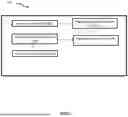

Sources:
- United States Patent and Trademark Office - verify current appl. status at the USPTO↗
Recent applications in this class:
- » 20260187656 2026-07-02
SYSTEM FOR MONITORING VEHICLE CARBON FOOTPRINT AND REDUCING COMPUTATIONAL LOAD IN CARBON-AWARE VEHICLE ROUTING - » 20260187655 2026-07-02
HARDWARE-ANCHORED REGULATORY CAPITAL ADAPTATION AND REAL-TIME POLICY ORCHESTRATION ENGINE WITH ATTESTATION-BOUND COMPLIANCE AUTOMATION - » 20260187654 2026-07-02
SYSTEMS AND METHODS FOR AN INTERNET OF THINGS DEVICE REGISTRY - » 20260187652 2026-07-02
CARBON EMISSION EVALUATION MODEL, EVALUATION METHOD AND EVALUATION SYSTEM FOR INTEGRATED IRON AND STEEL SITES - » 20260187651 2026-07-02
Systems and Methods for Generating Actionable Regulatory Insights for Predictive Analytics - » 20260187650 2026-07-02
CARBON MANAGEMENT SYSTEM AND INFORMATION PROCESSING DEVICE - » 20260179106 2026-06-25
PLATFORM FOR FACILITATING AN AUTOMATED IT AUDIT - » 20260179105 2026-06-25
METHOD AND SYSTEM FOR MONITORING VEHICLE COMPONENTS - » 20260179104 2026-06-25
MANAGEMENT SYSTEM, MANAGEMENT METHOD, AND STORAGE MEDIUM - » 20260179103 2026-06-25
Intelligent carbon emission calculation system