Patent Applications published on Jul 21, 2005
Explore the 5,382 U.S. Patent Applications published on the 29th week of 2005, including 3,479 applications that subsequently received a Patent Grant.
Featured patent applications from Jul 21, 2005
US20050158993A1
Chemistry; metallurgy
LnCuO(S,Se,Te)monocrystalline thin film, its manufacturing method, and optical device or electronic device using the monocrystalline thin film
Disclosed is a method of producing an LnCuOX single-crystal thin film (wherein Ln is at least one selected from the group consisting of lanthanide elements and yttrium, and X is at least one selected from the group consisting of S, Se and Te), which comprises the steps of growing a base thin film on a single-crystal substrate, depositing an amorphous or polycrystalline LnCuOX thin film on the base thin film to form a laminated film, and then annealing the laminated film at a high temperature of 500° C. or more. While a conventional LnCuOX film produced by growing an amorphous film through a sputtering process under appropriate conditions and then annealing the film at a high temperature was unexceptionally a polycrystalline substance incapable of achieving high emission efficiency and electron mobility required for a material of light-emitting devices or electronic devices, the method of the present invention can grow a thin film with excellent crystallinity suitable as a single crystal to an building black of light-emitting diodes, semiconductor leasers, filed-effect transistors, or a hetero-bipolar transistors.
Published: 2005-07-21 Assignee: Tyco Healthcare Group LP.US20050159778A1
Human necessities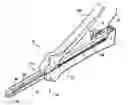
Electrosurgical stapling apparatus
An electrosurgical stapling apparatus is provided which uses thermogenic energy as well as surgical fasteners or staples for strengthening tissue, providing hemostasis, tissue joining or welding. The thermogenic energy also strengthens tissue in proximity to a staple line and knife cut line and provides hemostasis along the staple and cut lines formed by the staples and a knife blade during surgical stapling. The use thermogenic energy provides short-term hemostasis and sealing, and reduces or prevents staple line and cut line bleeding, while the stapling features provide short and long-term tissue strength and hemostasis. The stapling apparatus further substantially reduces or prevents knife cut line bleeding by energizing a knife blade for cauterizing tissue while it is being cut. In one embodiment, energy is applied to the anvil to energize the staples as they make contact with the anvil.
Published: 2005-07-21 Assignee: United States Thermoelectric Consortium.US20050159184A1
Electricity
Wireless communications apparatus and method
A wireless communication method and apparatus are described for increasing security for communication devices utilizing identification chips for accessing wireless networks and the associated billing for services. One aspect of the invention is an enhanced phone chip and a communications device adapted to engage the enhanced phone chip, which then cannot be installed or removed from the wireless communications device by unauthorized users. In one embodiment a security key mates to the identification chip and is utilized for installing and removing the enhanced phone chip. The security key preferably has a display upon which information about the communication device is displayed prior to removing the security key after installing the enhanced phone chip. Other aspects of the invention include wireless base station communication devices which support wired (dedicated and non-dedicated), and more preferably wireless extensions, while providing sharing of wireless network resources and interconnectivity between base station and extensions.
Published: 2005-07-21 Assignee: WISCONSIN ALUMNI RESEARCH FOUNDATION.US20050159397A1
Chemistry; metallurgy
(20S)-1α-hydroxy-2α-methyl and 2β-methyl-19-nor-vitamin Dand their uses
This invention discloses (20S)-1α-hydroxy-2α-methyl-19-nor-vitamin D3 and (20S)-1α-hydroxy-2β-methyl-19-nor-vitamin D3 and pharmaceutical uses therefor. These compounds exhibit pronounced activity in arresting the proliferation of undifferentiated cells and inducing their differentiation to the monocyte thus evidencing use as an anti-cancer agent and for the treatment of skin diseases such as psoriasis as well as skin conditions such as wrinkles, slack skin, dry skin and insufficient sebum secretion. These compounds also have very significant calcemic activity and therefore may be used to treat immune disorders in humans as well as metabolic bone diseases such as osteoporosis.
Published: 2005-07-21 Assignee: UNIVERSAL ELECTRONICS INC..US20050159823A1
Electricity
System and methods for home appliance identification and control in a networked environment
A home control and automation system and method. The system generally includes one or more wireless remote controls, a plurality of appliances (including network enabled appliances and traditional legacy appliances in the exemplary system), associated control centric devices, and associated content centric devices. Various methods for control and operation of appliances in the networked home control and automation environment are disclosed. Specifically, methods are disclosed which enable advanced home control features such as location based control setup and operation, network enabled legacy appliances and system integration, save and recall capabilities for appliance and media states, generic command based appliance controls, dynamic/complex macro command generation, and Internet based control capabilities from remote locations are disclosed in conjunction with the system of the current invention.
Published: 2005-07-21 Assignee: IROBOT CORPORATION.US20050156562A1
Electricity
Autonomous robot auto-docking and energy management systems and methods
A method for energy management in a robotic device includes providing a base station for mating with the robotic device, determining a quantity of energy stored in an energy storage unit of the robotic device, and performing a predetermined task based at least in part on the quantity of energy stored. Also disclosed are systems for emitting avoidance signals to prevent inadvertent contact between the robot and the base station, and systems for emitting homing signals to allow the robotic device to accurately dock with the base station.
Published: 2005-07-21 Assignee: SYNCRONATION, INC..US20050160270A1
Physics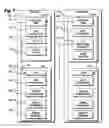
Localized audio networks and associated digital accessories
Individuals share music through portable audio devices that synchronously play music by transmitting music signals from one device to the other. Upon request, other individuals can join such a sharing group as a member, and these new members can either be accepted automatically, or through voting by existing group members. So that members of a group can converse, the fraction of ambient sound admitted by the earphones of the portable device can be manually set. In order to enhance the enjoyment of the music, wearable transducers, such as light emitting diodes, respond to signals related to the beat of the music. Signals can be automatically generated, or manually specified, and signals thereafter stored for playback with the music to which it is related. Wearable transducers associated with individuals at a large music event can be set to receive common signals such that the transducers respond in synchrony with one another.
Published: 2005-07-21 Assignee: Arbor Surgical Technologies, Inc..US20050159811A1
Human necessities
Bioprosthetic heart valve
A trileaflet biological prosthetic heart valve (11, 41) comprising a thin, rigid annular outer frame (25, 43) which supports three elastic, laminated spring inner frames (18, 57) which in turn provide consistent geometric form and structure for attachment of tissue leaflets (15, 71).
Published: 2005-07-21 Assignee: Terasemicon Co., Ltd.US20050158164A1
Electricity
Semiconductor manufacturing system and wafer holder for semiconductor manufacturing system
A semiconductor manufacturing system and wafer holder for a semiconductor manufacturing system which prevents a semiconductor wafer from being exposed to a process reaction and which includes a reaction tube for providing a sealed process space and a dual boat and which prevents the backside deposition by the wafer holder. The wafer holder includes a holder body to hide the backside of the semiconductor wafer during a process in the reaction tube and a wafer lifter having a portion that can be disengaged from and coupled to the holder body so that a lower portion of the semiconductor wafer is supported by the dual boat and so that the semiconductor wafer can be lifted up from the wafer body when the semiconductor wafer is loaded and unloaded. A separation boundary between the holder body and the wafer lifter includes a gas inflow interception surface to hinder reaction gas from flowing through the separation boundary.
Published: 2005-07-21 Assignee: MICROSOFT CORPORATION.US20050160167A1
Electricity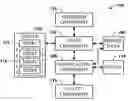
Rich profile communication with notifications
A rich communication profile system with notifications. The system is a feedback mechanism that utilizes rich content, e.g., multimedia content, as one or more indicators that represent the status of a remote user. The system includes a state component that receives information relating to state of at least one entity. A notifications component dynamically renders at least one personalized graphical indicia representative of the entity's state. The entity can be a person, group of people, component, place, and object.