Patent Applications published on May 18, 2006
Explore the 5,878 U.S. Patent Applications published on the 20th week of 2006, including 3,606 applications that subsequently received a Patent Grant.
Featured patent applications from May 18, 2006
US20060102458A1
Physics
Tamper resistant pin entry apparatus
Disclosed is a tamper resistant PIN entry apparatus for input of a key and for encryption of a password in a cash transaction machine. The PIN entry apparatus supplies the electric power to a memory of an electric circuit section, in such a manner that a first rod and a second rod of a rear case connect contacts of a key scan board, wherein the first rod is protruded on the rear of a key module including a button provided substantially on the front of the key module and the second rod of the rear case is coupled with the rear of the key module. At this time, in case that the rear case is removed from the key module or damaged, thereby changing the location of any one of the first and the second rods at the contact, the electric circuit section detects the event and destroys the memory itself physically. Otherwise, the electric circuit section makes information stored in the memory physically or softwarely unreadable, thereby preventing the leakage of the information.
Published: 2006-05-18 Assignee: MEDTRONIC ABLATION FRONTIERS LLC.US20060106375A1
Human necessities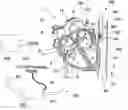
Ablation system with feedback
Devices, systems and methods are disclosed for the ablation of tissue and treatment of cardiac arrhythmia. An ablation system includes an ablation catheter that has an array of ablation elements and a location element, an esophageal probe also including a location element, and an interface unit that provides energy to the ablation catheter. The distance between the location elements, determined by calculating means of the system, can be used by the system to set or modify one or more system parameters.
Published: 2006-05-18US20060106369A1
Human necessities
Haptic interface for force reflection in manipulation tasks
A haptic interface was designed and developed for use in manipulation tasks. The mechanism consists of a closed kinematic chain. The force feedback mechanism consists of three degrees of spatial force feedback (X, Y and Z directions) and 1 degree of grasping/parting (increasing the distance between two or more points) force feedback. The three degrees of spatial force feedback are comprised of three independently actuated prismatic joints along orthogonal coordinate axes. The one degree of grasping/parting force feedback consists of a two thimbles with rotary motion for grasping and parting tasks using one's fingers. This device also provides a net of three additional passive joints for a total of 7 degrees-of-freedom.
Published: 2006-05-18 Assignee: Surgical Solutions LLC.US20060106423A1
Human necessities
Suture anchor
A suture anchor (e.g. 100) for knotlessly securing nearby tissue to bone is formed from an anchor body (e.g. 101/102) that includes a mechanism for being securely anchored to the bone, an elongated suture puller (e.g. 122) extending through the anchor body with a proximal end for being pulled in a proximal direction by a surgeon and a distal end (e.g. 125) with a suitable mechanism for engaging suture (e.g. 127), suture (e.g. 132) carried by the engaging mechanism (e.g. 127) at the distal end (e.g. 125) of the elongated suture puller (e.g. 122), and a suture locking mechanism (e.g. 110) that substantially prevents the suture (e.g. 122) from moving in at least a first direction after being pulled into and through the anchor body (e.g. 101/102) by the elongated suture puller (e.g. 122).
Published: 2006-05-18 Assignee: Intuitive Surgical, Inc..US20060106493A1
Human necessities
Camera referenced control in a minimally invasive surgical apparatus
Enhanced telepresence and telesurgery systems automatically update coordinate transformations so as to retain alignment between movement of an input device and movement of an end effector as displayed adjacent the input device. A processor maps a controller workspace with an end effector workspace, and effects movement of the end effector in response to the movement of the input device. This allows the use of kinematically dissimilar master and slave linkages. Gripping an input member near a gimbal point and appropriate input member to end effector mapping points enhance the operator's control. Dexterity is enhanced by accurately tracking orientational and/or angles of movement, even if linear movement distances of the end effector do not correspond to those of the input device.
Published: 2006-05-18 Assignee: Axcelis Technologies Inc..US20060105566A1
Electricity
Ultraviolet assisted pore sealing of porous low k dielectric films
Processes for sealing porous low k dielectric film generally comprises exposing the porous surface of the porous low k dielectric film to ultraviolet (UV) radiation at intensities, times, wavelengths and in an atmosphere effective to seal the porous dielectric surface by means of carbonization, oxidation, and/or film densification. The surface of the surface of the porous low k material is sealed to a depth less than or equal to about 20 nanometers, wherein the surface is substantially free of pores after the UV exposure.
Published: 2006-05-18 Assignee: ACCLARENT, INC..US20060106361A1
Human necessities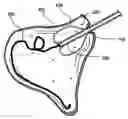
Devices and methods for delivering therapeutic substances for the treatment of sinusitis and other disorders
Devices and methods for delivering drugs and other therapeutic or diagnostic substances to desired locations within the bodies of human or non-human animal subjects. An implantable delivery device comprising a reservoir is initianlly attached to a deliver catheter or delivery tool and is introduced into the body and positioned at a desired site. A therapeutic or diagnostic substance is then introduced into the reservoir and the delivery catheter or deliver tool is then removed, leaving the implantable delivery device implanted within the body. The substance is then delivered from the reservoir at a rate that causes the desire diagnostic or therapeutic effect. Also provided are substance eluting stents that elute substance from a selected surface of the stent (e.g., the outer surface) but not from another surface of the stent (e.g., the inner surface).
Published: 2006-05-18 Assignee: MICROSOFT CORPORATION, Microsoft Corp..US20060107297A1
Electricity
Image exchange with image annotation
A system and method for providing a peer-to-peer photo-sharing environment. The system includes: manual and automatic photo annotation at the client; periodic client-server synchronization; an index of client photos on a central server or a photo database that is resident on the central server, which is updated by the client-server synchronization function; end-user search functionality to search the centralized index or photo database; and transmission of the relevant photos to the client via an on-line image cache. In one embodiment, one client's new photos are automatically displayed on another client's computer (e.g., via screen saver or another mechanism).
Published: 2006-05-18US20060103727A1
Electricity
Vehicle back up camera
A separate vehicle back up camera has a photo-device, at least one electric wire, a circuit board and a signal wire. The at least one electric wire connects the photo-device to the circuit board. The signal wire connects to the circuit board to transmit signal inside the vehicle. The photo-device and the circuit board are mounted separately in the vehicle so the photo-device can be concealed well and will not detract from the appearance of the vehicle.
Published: 2006-05-18US20060106381A1
Human necessities
Methods and apparatus for treating spinal stenosis
Surgical implants are configured for placement posteriorly to a spinal canal between vertebral bodies to distract the spine and enlarge the spinal canal. In the preferred embodiments the device permits spinal flexion while limiting spinal extension, thereby providing an effective treatment for treating spinal stenosis without the need for laminectomy. The invention may be used in the cervical, thoracic, or lumbar spine. Numerous embodiments are disclosed, including elongated, length-adjustable components coupled to adjacent vertebral bodies using pedicle screws. The preferred embodiments, however, teach a device configured for placement between adjacent vertebral bodies and adapted to fuse to the lamina, facet, spinous process or other posterior elements of a single vertebra. Various mechanisms, including shape, porosity, tethers, and bone-growth promoting substances may be used to enhance fusion. The tether may be a wire, cable, suture, or other single or multi-filament member. Preferably, the device forms a pseudo-joint in conjunction with the non-fused vertebra. Alternatively, the device could be fused to the caudal vertebra or both the cranial and caudal vertebrae.