Patent Applications published on Jun 1, 2006
Explore the 4,968 U.S. Patent Applications published on the 22nd week of 2006, including 3,135 applications that subsequently received a Patent Grant.
Featured patent applications from Jun 1, 2006
US20060113536A1
Electricity
Display
An active matrix display comprising a light control device and a field effect transistor for driving the light control device. The active layer of the field effect transistor comprises an amorphous.
Published: 2006-06-01 Assignee: CANON KABUSHIKI KAISHA, TOKYO INSTITUTE OF TECHNOLOGY.US20060113549A1
Electricity
Light-emitting device
An object of the present invention is to provide a new light-emitting device with the use of an amorphous oxide. The light-emitting device has a light-emitting layer existing between first and second electrodes and a field effect transistor, of which the active layer is an amorphous.
Published: 2006-06-01 Assignee: CANON KABUSHIKI KAISHA, TOKYO INSTITUTE OF TECHNOLOGY.US20060113565A1
Electricity
Integrated circuits utilizing amorphous oxides
Semiconductor devices and circuits with use of transparent oxide film are provided. The semiconductor device having a P-type region and an N-type region, wherein amorphous oxides with electron carrier concentration less than 1018/cm3 is used for the N-type region.
Published: 2006-06-01 Assignee: CANON KABUSHIKI KAISHA, TOKYO INSTITUTE OF TECHNOLOGY.US20060113539A1
Electricity
Field effect transistor
A novel field-effect transistor is provided which employs an amorphous oxide. In an embodiment of the present invention, the transistor comprises an amorphous oxide layer containing electron carrier at a concentration less than 1×10⁻¹⁸/cm3, and the gate-insulating layer is comprised of a first layer being in contact with the amorphous oxide and a second layer different from the first layer.
Published: 2006-06-01US20060116634A1
Human necessities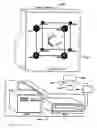
System and method for controlling movement of a surgical tool
A system whereby a magnetic tip attached to a surgical tool is detected, displayed and influenced positionally so as to allow diagnostic and therapeutic procedures to be performed rapidly, accurately, simply, and intuitively is described. The tools that can be so equipped include catheters, guidewires, and secondary tools such as lasers and balloons, in addition biopsy needles, endoscopy probes, and similar devices. The magnetic tip allows the position and orientation of the tip to be determined without the use of x-rays by analyzing a magnetic field. The magnetic tip further allows the tool tip to be pulled, pushed, turned, and forcefully held in the desired position by applying an appropriate magnetic field external to the patient's body. A Virtual Tip serves as an operator control. Movement of the operator control produces corresponding movement of the magnetic tip inside the patient's body. Additionally, the control provides tactile feedback to the operator's hand in the appropriate axis or axes if the magnetic tip encounters an obstacle. The output of the control combined with the magnetic tip position and orientation feedback allows a servo system to control the external magnetic field by pulse width modulating the positioning electromagnet. Data concerning the dynamic position of a moving body part such as a beating heart offsets the servo systems response in such a way that the magnetic tip, and hence the secondary tool is caused to move in unison with the moving body part. The tip position and orientation information and the dynamic body part position information are also utilized to provide a display that allows three dimensional viewing of the magnetic tip position and orientation relative to the body part.
Published: 2006-06-01 Assignee: Rosemount Inc..US20060112773A1
Mechanical engineering
Process fluid flow device with variable orifice
A process device providing total fluid flow control is provided. The device includes a closure mechanism disposed in a flow conduit. The closure mechanism, which is preferably an iris-type diaphragm, provides a variable internal diameter. The device includes a differential pressure sensor for sensing the differential pressure on opposite sides of the diaphragm. A controller receives an indication of differential pressure and generates a control signal to an actuator that actuates the closure mechanism. The closure mechanism, differential pressure sensor and controller create a closed-loop flow controller in a single process device.
Published: 2006-06-01 Assignee: Salient Surgical Technologies, Inc., TissueLink Medical, Inc..US20060116675A1
Human necessities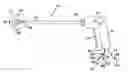
Fluid-assisted medical devices, systems and methods
Surgical devices, systems and methods for treating tissue are provided. An exemplary surgical device comprises a tip portion including first and second jaws each having a tissue grasping surface, at least one of the jaws being movable toward the other jaw. The tissue grasping surface of each jaw has includes an electrically insulative surface. The device also includes first and second electrodes connectable to different terminals of an RF generator to generate electrical current flow therebetween, with each of the electrodes having an electrode surface. One of the electrode surfaces is located on one of the jaws separated from one edge of the tissue grasping surface, and the other of the electrode surfaces is located on one or the other of the jaws separated from the other edge of the tissue grasping surface. The device also includes at least one fluid passage being connectable to a fluid source.
Published: 2006-06-01US20060113675A1
Electricity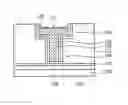
Barrier material and process for Cu interconnect
A semiconductor diffusion barrier layer and its method of manufacture is described. The barrier layer includes of at least one layer of TaN, TiN, WN, TbN, VN, ZrN, CrN, WC, WN, WCN, NbN, AlN, and combinations thereof. The barrier layer may further include a metal rich surface. Embodiments preferably include a glue layer about 10 to 500 Angstroms thick, the glue layer consisting of Ru, Ta, Ti, W, Co, Ni, Al, Nb, AlCu, and a metal-rich nitride, and combinations thereof. The ratio of the glue layer thickness to the barrier layer thickness is preferably about 1 to 50. Other alternative preferred embodiments further include a conductor annealing step. The various layers may be deposited using PVD, CVD, PECVD, PEALD and/or ALD methods including nitridation and silicidation methods.
Published: 2006-06-01 Assignee: Patrick Nunally.US20060113955A1
Electricity
Remote power charging of electronic devices
A wireless charging and power system for electronic devices and method for communicating power to a power receiver employing wireless energy transmission are disclosed. The remote charging system includes a power transmission unit, which transmits energy as a plurality of constructive transmitted frequencies, and a power receiver system that receives the transmitted frequencies. The power receiver system is preferably incorporated in a device and includes an energy receptor capable of receiving the wireless transmitted energy and transferring the energy from the transmitted frequencies to an energy storage device included in the device. The power transmission unit receives and tracks a power request signal from the power receiver system to track the power receiver system location during energy transmission. Data streams may be incorporated into the wireless signals of the remote charging system, allowing the remote charging system to function as a communications pathway as well as a power delivery system.
Published: 2006-06-01 Assignee: ASM JAPAN K.K..US20060113806A1
Electricity
Wafer transfer mechanism
A transfer mechanism for transferring a workpiece includes an arm member including a tip projection provided at a tip end thereof for contacting a periphery of the workpiece and restricting movement of the workpiece. The arm member further includes multiple supporting projections protruding from a top surface thereof for contacting and supporting a back side of the workpiece.