Patent Applications published on Nov 2, 2006
Explore the 5,876 U.S. Patent Applications published on the 44th week of 2006, including 3,649 applications that subsequently received a Patent Grant.
Featured patent applications from Nov 2, 2006
US20060244107A1
Electricity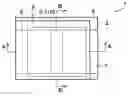
Semiconductor device with an active layer containing zinc oxide, manufacturing method, and electronic device
In a thin film transistor (1), a gate insulating layer (4) is formed on a gate electrode (3) formed on an insulating substrate (2). Formed on the gate insulating layer (4) is a semiconductor layer (5). Formed on the semiconductor layer (5) are a source electrode (6) and a drain electrode (7). A protective layer (8) covers them, so that the semiconductor layer (5) is blocked from an atmosphere. The semiconductor layer (5) (active layer) is made of, e.g., a semiconductor containing polycrystalline ZnO to which, e.g., a group V element is added. This allows practical use of a semiconductor device which has an active layer made of zinc oxide and which includes an protective layer for blocking the active layer from an atmosphere.
Published: 2006-11-02 Assignee: Warsaw Orthopedic, Inc..US20060244652A1
Human necessities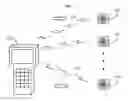
Method and apparatus for surgical instrument identification
Systems and methods for identifying surgical instruments by use of radio-frequency identification tags (RFID) are disclosed. In the systems and methods, each of a plurality of surgical instruments is provided with at least one RFID transponder tag storing identification information associated with the corresponding instrument. The tag may be adhered to, embedded, or potted within a portion of the instrument. Using an RFID reading device, a user may interrogate the tag, thereby identifying the particular instrument. This identification information may be used to index a database and retrieve a data record unique to that instrument. The systems and methods allow a user to track, inspect, and verify inbound and outbound surgical instruments, to assess, for example, the surgical instruments' duty life cycle usage.
Published: 2006-11-02 Assignee: CORNELL RESEARCH FOUNDATION, INC..US20060245971A1
Physics
Photoluminescent silica-based sensors and methods of use
Sensor particles comprise a silica-based core and at least one photoluminescent dye. The silica-based core may comprise a plurality of pores and the at least one photoluminescent dye may comprise a reference dye, insensitive to its environment and analytes and a sensor dye, sensitive to either or both of the foregoing. The sensor particles may be employed to sense unknown environmental conditions or analytes in biological or non-biological systems, in vitro or in vivo.
Published: 2006-11-02 Assignee: Robert Bosch GMBH.US20060245135A1
Electricity
Method for operating a power tool
In a method for operating a power tool with an energy accumulator, in particular a rechargeable energy accumulator, which supplies power to an electric drive motor, a clock frequency is generated by an electronic unit, with which a gate of a MOSFET—which supplies operating voltage to the drive motor—is switched on with each cycle, and a switching-off of the MOSFET is carried out within one cycle using different signals, as a function of operating parameters.
Published: 2006-11-02US20060244460A1
Electricity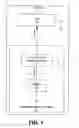
System and method for battery management
A battery management system for managing current supplied by a battery to a load. The battery management system detects an input current and drives the load at a substantially constant voltage if the detected input current reaches a predetermined current threshold. In addition, the circuit limits the input current to the predetermined current threshold, thereby allowing the output voltage to decrease when the input current is being limited to the threshold by the circuit.
Published: 2006-11-02 Assignee: Koninklijke Philips Electronics, N.V..US20060242764A1
Human necessities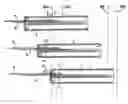
Device including moveable support for examining persons
A device for the examination of persons including a medical examination device (11) having an examination volume (12), a support (1) for a person to be examined, and a drive assembly (3) for displacing the support in a displacement direction in such a manner, that a person to be examined present on the support is displaced into and out of the examination volume. The drive assembly includes a gear-wheel (7), which is driven by a driving device (5, 8) and co-operates with a toothed rack (4) mounted to the support for displacing the toothed rack relative to the gear-wheel in the driven state of the gear-wheel. The drive assembly includes an auxiliary moving assembly (6, 9) for displacing the gear-wheel in its driven state in the displacement direction with a speed which is lower than the speed of support.
Published: 2006-11-02 Assignee: THE REGENTS OF THE UNIVERSITY OF MICHIGAN.US20060246121A1
Human necessities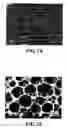
Particle-containing complex porous materials
Porous materials and methods for forming them are disclosed. One method for immobilizing micro-particles and/or nano-particles onto internal pore surfaces and/or external pore surfaces of porous materials includes suspending the micro-particles and/or nano-particles in a liquid adapted to swell, soften, and/or deform either the porous materials and/or the particles, thereby forming a liquid-particle suspension. The method further includes adding the suspension to the porous materials; and removing the liquid, thereby forming the porous materials having the micro-particles and/or nano-particles immobilized on the internal pore surfaces and/or the external pore surfaces.
Published: 2006-11-02 Assignee: ABBOTT DIABETES CARE INC., TheraSense, Inc..US20060247508A1
Physics
Method and apparatus for providing leak detection in data monitoring and management systems
Method and apparatus for providing a leak detection circuit for a data monitoring and management system using the guard trace of a glucose sensor by applying a leak detection test signal to determine whether a leakage current is present is provided. The leak detection circuit may include an interface circuit, such as a capacitor, coupled to the guard trace to detect the leakage current when the leak detection test signal is applied to the guard trace, such that the user or patient using the data monitoring and management system, such as glucose monitoring systems, is notified of a failed sensor and prompted to replace the sensor.
Published: 2006-11-02 Assignee: C. R. Bard, Inc..US20060247584A1
Human necessities
Access port identification systems and methods
An access port for subcutaneous implantation is disclosed. Such an access port may comprise a body for capturing a septum for repeatedly inserting a needle therethrough into a cavity defined within the body. Further, the access port may include at least one feature structured and configured for identification of the access port subsequent to subcutaneous implantation. Methods of identifying a subcutaneously implanted access port are also disclosed. For example, a subcutaneously implanted access port may be provided and at least one feature of the subcutaneously implanted access port may be perceived. Further, the subcutaneously implanted access port may be identified in response to perceiving the at least one feature.
Published: 2006-11-02 Assignee: Warsaw Orthopedic, Inc..US20060247770A1
Human necessities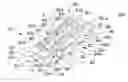
Expandable intervertebral implant and associated instrumentation
An expandable intervertebral implant including an implant body transitionable between initial and expanded configurations, and having first and second axial walls spaced apart along a transverse axis with at least one of the walls defining a recessed region when the implant body is in the initial configuration. An expansion member co-acts with the axial wall to transition the implant body to the expanded configuration wherein the recessed region is outwardly expanded generally along the transverse axis. In another embodiment, the expansion member includes a first portion displaced along an axially extending slot formed in one of the walls, and a second portion displaced between the walls to transition the implant body to the expanded configuration. In a further embodiment, the first portion of the expansion member defines a passage extending therethrough having an inner transverse dimension sized larger than an outer transverse dimension of the second portion.