Patent Applications published on Nov 16, 2006
Explore the 6,065 U.S. Patent Applications published on the 46th week of 2006, including 3,671 applications that subsequently received a Patent Grant.
Featured patent applications from Nov 16, 2006
US20060255090A1
Human necessities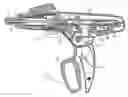
Surgical stapling apparatus
A surgical stapling device particularly suited for endoscopic procedures is described. The device includes a handle assembly and an elongated body extending distally from the handle assembly. The distal end of the elongated body is adapted to engage a disposable loading unit. A control rod having a proximal end operatively connected to the handle assembly includes a distal end extending through the elongated body. A control rod locking member is provided to prevent movement of the control rod until the disposable loading unit is fully secured to the elongated body of the stapling device.
Published: 2006-11-16US20060259073A1
Human necessities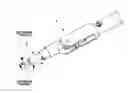
Surgical instrument
A surgical instrument of the present invention comprises: an insertion unit, an operation unit provided at the proximal end side of the insertion unit, and a treatment unit provided at the other end of the insertion unit and having a clamping unit that can rotate about one axis and can perform an opening and closing action and a bending action. The operation unit comprises: an opening and closing lever for performing the operation of opening and closing the treatment unit, an angle variation dial for performing the operation of bending the treatment unit, and a rotation dial for performing the operation of rotating the treatment unit. The angle variation dial and rotation dial are provided within the operation range of the same operation finger.
Published: 2006-11-16 Assignee: ETHICON ENDO-SURGERY, INC..US20060258907A1
Human necessities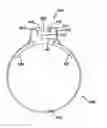
Track for medical devices
A medical apparatus and method useful for positioning one or more members within the gastro-intestinal tract is disclosed. The medical apparatus can include a track supported on a sheath sized to receive an endoscope, and a carrier slidable with respect to the track. A feeding tube accessory adapted to slidably engage the carrier is disclosed.
Published: 2006-11-16 Assignee: ETHICON ENDO-SURGERY, INC..US20060258910A1
Human necessities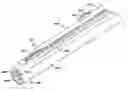
Method of positioning a device on an endoscope
A method for positioning a device, such as an endcap, on an endoscope is disclosed. The method can be used, for example, for facilitating pressing an endcap onto an endoscope, including in those applications where the endscope is disposed in a sheath and the endcap is positioned at the distal end of the sheath.
Published: 2006-11-16US20060258904A1
Human necessities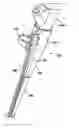
Feeding tube and track
A medical apparatus and method useful for positioning one or more members within the gastrointestinal tract is disclosed. The medical apparatus can include a track supported on a sheath sized to receive an endoscope, and a carrier slidable with respect to the track. A feeding tube accessory adapted to slidably engage the carrier is disclosed.
Published: 2006-11-16 Assignee: COREVALVE SA, Medtronics CoreValve LLC.US20060259136A1
Human necessities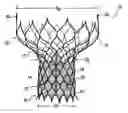
Heart valve prosthesis and methods of manufacture and use
A heart valve prosthesis is provided having a self-expanding multi-level frame that supports a valve body comprising a skirt and plurality of coapting leaflets. The frame transitions between a contracted delivery configuration that enables percutaneous transluminal delivery, and an expanded deployed configuration having an asymmetric hourglass shape. The valve body skirt and leaflets are constructed so that the center of coaptation may be selected to reduce horizontal forces applied to the commissures of the valve, and to efficiently distribute and transmit forces along the leaflets and to the frame. Alternatively, the valve body may be used as a surgically implantable replacement valve prosthesis.
Published: 2006-11-16 Assignee: ZF FRIEDRICHSHAFEN AG.US20060258502A1
Mechanical engineering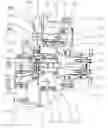
Planetary transmission
Proposed is a planetary transmission (8) comprising an internal gear (24), a sun gear (52) and a planet carrier (10), upon which at least one planet gear (20) is supported. The planetary transmission (8) possesses a clutch apparatus with a sliding sleeve (66), which in a first shift-position enables a direct connection between one of the shafts (44) driving the planetary transmission (8) and an output shaft (12) of the planetary transmission (8). In a second shift-position, the connection of the sliding sleeve (66) enables a change in the speed of rotation between the driving shaft (44) and the output shaft (12) of the planetary transmission (8). The planet gear (20) is so supported on the planet carrier (10), that in case of a shifting from a one shift-position into a respective other shift-position, the planet gear (20) on the planet carrier (20) becomes axially slidable.
Published: 2006-11-16US20060259137A1
Human necessities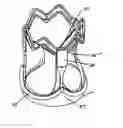
Minimally invasive valve replacement system
Methods and systems for minimally invasive replacement of a valve. The system includes a collapsible valve and anchoring structure. The valve assembly comprises a valve and anchoring structure for the valve, dimensioned to fit substantially within the valve sinus.
Published: 2006-11-16 Assignee: DexCom, Inc..US20060258929A1
Human necessities
System and methods for processing analyte sensor data for sensor calibration
Systems and methods for processing sensor analyte data are disclosed, including initiating calibration, updating calibration, evaluating clinical acceptability of reference and sensor analyte data, and evaluating the quality of sensor calibration. The sensor can be calibrated using a calibration set of one or more matched sensor and reference analyte data pairs. Reference data resulting from benchtop testing an analyte sensor prior to its insertion can be used to provide initial calibration of the sensor data. Reference data from a short term continuous analyte sensor implanted in a user can be used to initially calibrate or update sensor data from a long term continuous analyte sensor.
Published: 2006-11-16 Assignee: Ventor Technologies, Ltd..US20060259134A1
Human necessities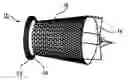
Aortic prosthetic devices
A prosthetic device is provided for treatment of an aortic valve, having a compressed state for transarterial delivery and being expandable to an expanded state for implantation. The device includes an expandable support implantable in the expanded state of the prosthetic device in an aortic annulus, and an inner envelope having an upstream portion that lines the inner surface of the support, and a downstream portion which, when the prosthetic device is in the expanded state, extends into an aorta and defines a diverging conical section having a diameter that gradually increases from an upstream end of the section to a downstream end of the section. The section is configured to produce, during systole, a non-turbulent blood flow into the aorta with pressure recovery at the downstream end of the section. Other embodiments are also described.