Patent Applications published on Nov 30, 2006
Explore the 6,266 U.S. Patent Applications published on the 48th week of 2006, including 3,822 applications that subsequently received a Patent Grant.
Featured patent applications from Nov 30, 2006
US20060271104A1
Human necessities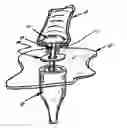
Annular adhesive structure
An assembly for joining tissue is provided and includes an anvil assembly and a body portion juxtaposed with respect to one another along a shaft and arranged so as to be approximated with respect to one another; and an applicator supported on the anvil assembly and configured for retaining a wound treatment material therein and for dispensing the wound treatment material therefrom. A method for joining tissue is provided and includes the steps of dispensing the wound treatment material from the applicator so as to distribute wound treatment material onto at least one of a first tissue section and a second tissue section; and approximating the anvil assembly and the body portion to one another so that the first tissue section and the second tissue section are in contact with one another with the dispensed wound treatment material interposed there between.
Published: 2006-11-30 Assignee: GYRUS MEDICAL, INC..US20060271102A1
Human necessities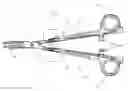
Surgical instrument construction
A surgical instrument includes a jaw assembly (2) comprising first and second jaw members (3) and (4) pivotally connected one to the other so as to be movable between respective open and closed positions. First and second handle members (8) and (12) are connected to the first and second jaw members respectively, the first and second handle members each including a hollow tubular portion (10) and (14) at the distal end of the handle member. The first and second jaw members (3) and (4) each include an extension (6) and (7) at the proximal end of each jaw member. The external diameter of each extension and the internal diameter of each tubular portion are such that each handle member is connected to a respective one of the jaw members by means of a press-fit connection. To allow for manufacturing tolerances components, the extensions (6) and (7) each include one or more externally facing ribs (19a to 19j), the height of the ribs increasing from a first height towards the first end of the extension to a second height towards the second end of the extension.
Published: 2006-11-30 Assignee: GYRUS MEDICAL, INC..US20060271042A1
Human necessities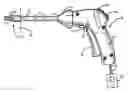
Cutting and coagulating electrosurgical forceps having cam controlled jaw closure
A bipolar electrosurgical forceps comprises an elongated tubular barrel having a proximal end, a distal end and a lumen extending between these two ends. A handle is provided at the proximal end of the barrel and includes an actuating member for opening and closing a pair of forceps jaws that are mounted at the distal end of the barrel. The forceps jaws include cam slots in a proximal head portion thereof. A coupling member extends between the actuating member on the handle and the pair of forceps jaws. The coupling member includes drive pins that cooperate with the cam slots whereby squeezing of the actuating mechanism first effects pivotal rotation of the pair of forceps jaws over a first range of motion of the actuating member and translation without rotation of the forceps jaws over a second range of motion of the actuating member.
Published: 2006-11-30 Assignee: Karl Storz GmbH & Co. KG.US20060271103A1
Human necessities
Clip and clip applicator for closing blood vessels
A clip for closing blood vessels which branch off from a main blood vessel during an intervention of the main blood vessel has a base body via which the clip can be placed on an inside face of the opened main blood vessel. At least three limbs protrude from the base body and are able to be bent in the direction towards the base body in order to clamp tissue in the area of the branch between the base body and the bent-back limbs thereby closing said branch.
Published: 2006-11-30 Assignee: GOOGLE INC..US20060270419A1
Electricity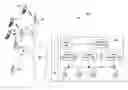
Location-based social software for mobile devices
A method of establishing connection between users of mobile devices includes receiving at a computer a location of a first user from a first mobile device, receiving from a second mobile device a location of a second user having an acquaintance relationship to the first user, and sending a message to the first mobile device based on the proximity of the first user to the second user.
Published: 2006-11-30 Assignee: Where, Inc..US20060270421A1
Electricity
Location-based services
Provided herein are methods and systems relating to location-based services such as social networking, providing demographic information, tracking mobile devices, providing business information, providing an adaptable user interface, remotely effecting a change on a portable electronic device, providing a geofence, outputting location-based information on a mobile device, varying transmissions to and from a mobile device, providing location-based alerts, verifying transactions and tailoring information to the behavior of a user.
Published: 2006-11-30 Assignee: MASIMO CORPORATION.US20060270921A1
Human necessities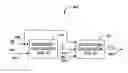
Sine saturation transform
A transform for determining a physiological measurement is disclosed. The transform determines a basis function index from a physiological signal obtained through a physiological sensor. A basis function waveform is generated based on basis function index. The basis function waveform is then used to determine an optimized basis function waveform. The optimized basis function waveform is used to calculate a physiological measurement.
Published: 2006-11-30 Assignee: MASIMO CORPORATION.US20060270920A1
Human necessities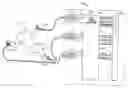
Physiological monitor
A patient monitor has multiple sensors adapted to attach to tissue sites of a living subject. The sensors generate sensor signals that are responsive to at least two wavelengths of optical radiation after attenuation by pulsatile blood within the tissue sites. Multiple data channels and associated quality parameters are derived from the sensor signals. A processor is configured to operate on the channels according to the quality parameters so as to provide a robust oxygen status measurement.
Published: 2006-11-30 Assignee: POWERCAST CORPORATION.US20060270440A1
Electricity
Power transmission network
A network for power transmission to a receiver that converts the power into current includes a first node for transmitting power wirelessly in a first area. The first area has a minimum electric or magnetic field strength. The network includes a second node for transmitting power wirelessly in a second area. The second area has a minimum electric or magnetic field strength and overlaps the first area to define an overlap area. In another embodiment, the network includes a source in communication with the first and second nodes which provides power to them. Also disclosed are methods for power transmission to a receiver that converts the power into current.
Published: 2006-11-30 Assignee: HLT, Inc..US20060271166A1
Human necessities
Stentless support structure
A stentless support structure capable of being at least partly assembled in situ. The support structure comprises a braided tube that is very flexible and, when elongated, becomes very long and very small in diameter, thereby being capable of placement within a small diameter catheter. The support structure is preferably constructed of one or more thin strands of a super-elastic or shape memory material such as Nitinol. When released from the catheter, the support structure folds itself into a longitudinally compact configuration. The support structure thus gains significant strength as the number of folds increase. This radial strength obviates the need for a support stent. The support structure may include attachment points for a prosthetic valve.