Patent Applications published on May 3, 2007
Explore the 6,712 U.S. Patent Applications published on the 18th week of 2007, including 4,027 applications that subsequently received a Patent Grant.
Featured patent applications from May 3, 2007
US20070095877A1
Human necessities
Surgical stapling device
A surgical stapling device for applying an array of surgical staples to tissue is provided. The stapling device includes an approximation mechanism for moving a cartridge assembly and an anvil assembly between spaced and approximated positions and a firing mechanism for ejecting the array of staples from the cartridge assembly. A single trigger is operable to effect approximation and firing of the device. The device also includes an alignment pin assembly which can be selectively manually or automatically advanced. The anvil assembly includes a stiffener plate which allows the device to have a reduced head portion profile.
Published: 2007-05-03 Assignee: BOSTON SCIENTIFIC SCIMED, INC..US20070100285A1
Human necessities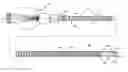
Elongate medical device with continuous reinforcement member
An elongate medical device including an inner elongate member, a reinforcing member, and an outer tubular member is described. The reinforcing member may be a helically wound continuous wire including a first portion having a first cross-sectional profile, a second portion having a second cross-sectional profile, and a transition region located between the first portion and the second portion. The first cross-sectional profile may be different from the second cross-sectional profile. In some embodiments, the first cross-sectional profile may be circular or non-circular and the second cross-sectional profile may be circular or non-circular.
Published: 2007-05-03 Assignee: Callida Genomics, Inc..US20070099208A1
Chemistry; metallurgy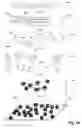
Single molecule arrays for genetic and chemical analysis
Random arrays of single molecules are provided for carrying out large scale analyses, particularly of biomolecules, such as genomic DNA, cDNAs, proteins, and the like. In one aspect, arrays of the invention comprise concatemers of DNA fragments that are randomly disposed on a regular array of discrete spaced apart regions, such that substantially all such regions contain no more than a single concatemer. Preferably, such regions have areas substantially less than 1 μm2 and have nearest neighbor distances that permit optical resolution of on the order of 109 single molecules per cm2. Many analytical chemistries can be applied to random arrays of the invention, including sequencing by hybridization chemistries, sequencing by synthesis chemistries, SNP detection chemistries, and the like, to greatly expand the scale and potential applications of such techniques.
Published: 2007-05-03 Assignee: APPLE INC..US20070100790A1
Physics
Method and apparatus for building an intelligent automated assistant
A method and apparatus are provided for building an intelligent automated assistant. Embodiments of the present invention rely on the concept of “active ontologies” (e.g., execution environments constructed in an ontology-like manner) to build and run applications for use by intelligent automated assistants. In one specific embodiment, a method for building an automated assistant includes interfacing a service-oriented architecture that includes a plurality of remote services to an active ontology, where the active ontology includes at least one active processing element that models a domain. At least one of the remote services is then registered for use in the domain.
Published: 2007-05-03 Assignee: JENAVALVE TECHNOLOGY, INC., JEN.cardiotec GmbH.US20070100440A1
Human necessities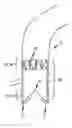
Device for the implantation and fixation of prosthetic valves
A device for the transvascular implantation and fixation of prosthetic heart valves having a self-expanding heart valve stent (10) with a prosthetic heart valve (11) at its proximal end is introducible into a patient's main artery. With the objective of optimizing such a device to the extent that the prosthetic heart valve (11) can be implanted into a patient in a minimally-invasive procedure, to ensure optimal positioning accuracy of the prosthesis (11) in the patient's ventricle, the device includes a self-expanding positioning stent (20) introducible into an aortic valve positioned within a patient. The positioning stent is configured separately from the heart valve stent (10) so that the two stents respectively interact in their expanded states such that the heart valve stent (10) is held by the positioning stent (20) in a position in the patient's aorta relative the heart valve predefinable by the positioning stent (20).
Published: 2007-05-03 Assignee: COOK INCORPORATED.US20070100435A1
Human necessities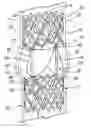
Artificial prostheses with preferred geometries
Implantable medical devices, such as intraluminally implantable stents and valves, are provided having certain preferred shapes. Preferably, a portion of the implantable medical device can define a sinus region having a preferred geometry. The sinus region can have one or more preferred geometric configurations described herein, for example to mitigate or prevent thrombosis within a body vessel. The medical device can include a valve means, such as one or more valve leaflets positioned within the sinus region. The implantable medical devices can be delivered from a catheter within a body vessel, and are preferably expandable from a compressed configuration to a radially expanded configuration. The implantable frames can be self-expanding or balloon expandable. Portions of the medical device, such as the implantable frame or a valve leaflet, are optionally coated with one or more bioactive materials.
Published: 2007-05-03US20070100981A1
Electricity
Application services infrastructure for next generation networks including one or more IP multimedia subsystem elements and methods of providing the same
A system for supporting a plurality of different applications utilizing a next generation network having a network layer includes an application services middleware between the applications and the network layer that includes a plurality of common infrastructure elements usable by the different applications. The common infrastructure elements provide both services associated with use of the network and services that are not associated with use of the network. At least one of the common infrastructure elements is an Internet Protocol (IP) Multimedia Subsystem (IMS) element.
Published: 2007-05-03 Assignee: METRONIC MINIMED, INC..US20070100222A1
Human necessities
Analyte sensing apparatus for hospital use
A system is provided for monitoring blood glucose data of a patient. The system includes a sensing device and hospital monitor. The sensing device includes a sensor and sensor electronics and is adapted to transmit information to the hospital monitor while continuing to sense blood glucose data. The communication between the sensing device and the hospital monitor may be wireless. The sensor electronics may include a sensor power supply, a voltage regulator, and optionally a memory and processor.
Published: 2007-05-03 Assignee: ADVANCED MICRO DEVICES, INC..US20070096194A1
Electricity
Technique for strain engineering in Si-based Transistors by using embedded semiconductor layers including atoms with high covalent radius
By incorporating an atomic species of increased covalent radius, which may at least partially substitute germanium, a highly efficient strain mechanism may be provided, in which the risk of stress relief due to germanium conglomeration and lattice defects may be reduced. The atomic species of increased radius, such as tin, may be readily incorporated by epitaxial growth techniques on the basis of tin hydride.
Published: 2007-05-03 Assignee: GOOGLE INC..US20070096945A1
Physics
Digital mapping system
Various methods, systems, and apparatus for implementing aspects of a digital mapping system are disclosed. One such method includes sending a location request from a client-side computing device to a map tile server, receiving a set of map tiles in response to the location request, assembling said received map tiles into a tile grid, aligning the tile grid relative to a clipping shape, and displaying the result as a map image. One apparatus according to aspects of the present invention includes means for sending a location request from a client-side computing device to a map tile server, means for receiving a set of map tiles in response to the location request, means for assembling said received map tiles into a tile grid, means for aligning the tile grid relative to a clipping shape, and means for displaying the result as a map image. Such an apparatus may further include direction control or zoom control objects as interactive overlays on the displayed map image, and may also include route or location overlays on the map image.