Patent Applications published on Jul 5, 2007
Explore the 6,356 U.S. Patent Applications published on the 27th week of 2007, including 3,781 applications that subsequently received a Patent Grant.
Featured patent applications from Jul 5, 2007
US20070152217A1
Electricity
PIXEL STRUCTURE OF ACTIVE MATRIX ORGANIC LIGHT-EMITTING DIODE AND METHOD FOR FABRICATING THE SAME
A pixel structure of an active matrix organic light-emitting diode (AMOLED) includes an organic light-emitting diode (OLED), a data line, at least one scan line, at least one switch thin film transistor (TFT), at least one driving TFT and at least one storage capacitor with two transparent electrodes. Since both the electrodes of the transparent storage capacitor are formed by transparent material, the aperture ratio of the pixel and the area of the capacitor largely increase and can reach 50%˜95% of a pixel area. Thus, the display quality of an AMOLED panel can be improved.
Published: 2007-07-05 Assignee: Intuitive Surgical, Inc..US20070156119A1
Human necessities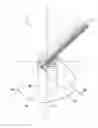
Platform link wrist mechanism
The present invention provides a robotic surgical tool for use in a robotic surgical system to perform a surgical operation. The robotic surgical tool includes a wrist mechanism disposed near the distal end of a shaft which connects with an end effector. The wrist mechanism includes a distal member configured to support the end effector, and a plurality of rods extending generally along an axial direction within the shaft and movable generally along this axial direction to adjust the orientation of the distal member with respect to the shaft. Advancement or retraction of a first rod generally along the axial direction tips the base through a first angle. The addition of a second angle allows the distal member to direct the end effector in essentially a compound angle. The robotic surgical tool may also include provisions for roll movement.
Published: 2007-07-05 Assignee: Intuitive Surgical Operations, Inc..US20070156019A1
Human necessities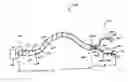
Robotic surgery system including position sensors using fiber bragg gratings
A surgical instrument is provided, including: at least one articulatable arm having a distal end, a proximal end, and at least one joint region disposed between the distal and proximal ends; an optical fiber bend sensor provided in the at least one joint region of the at least one articulatable arm; a detection system coupled to the optical fiber bend sensor, said detection system comprising a light source and a light detector for detecting light reflected by or transmitted through the optical fiber bend sensor to determine a position of at least one joint region of the at least one articulatable arm based on the detected light reflected by or transmitted through the optical fiber bend sensor; and a control system comprising a servo controller for effectuating movement of the arm.
Published: 2007-07-05 Assignee: ETHICON ENDO-SURGERY, INC..US20070152014A1
Human necessities
Surgical instrument with bending articulation controlled articulation pivot joint
A surgical instrument particularly suited to endoscopic and laparoscopic insertion through a cannula of a trocar into an insufflated body cavity or lumen includes a bending member in an elongate shaft that acts to rotate an end effector about an articulation pivot joint. A proximally directed camming surface (e.g., gear segment, cam recess) aft of a pivotal attachment of the end effector to a proximal frame ground of the elongate shaft interacts with a bending member whose proximal end is ground to the proximal frame ground. Differential fluidic actuators or mechanical cam bars deflect a distal end (e.g., rack, cam point) of the bending member to effect articulation. Thereby, the end effector may act upon tissue that would otherwise be obscured, such as behind an organ. The articulated end effector also advantageously allows an endoscope to be positioned behind the end effector without being blocked by the instrument shaft.
Published: 2007-07-05 Assignee: DEPUY SPINE, INC..US20070156023A1
Human necessities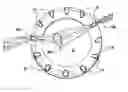
Non-rigid surgical retractor
The present invention provides a non-rigid retractor for providing access to a surgical site, such as a patient's spine, during a surgical process. When used in spinal surgery, the non-rigid retractor allows a surgeon to operate on one or more spinal levels. The non-rigid retractor includes at least one flexible strap anchored at a first end to the spine or other internal body part at the surgical site. The body of the at least one flexible strap extends from a skin incision and is anchored at a second location external to the body to retract skin and muscle from the surgical site, allowing adequate visualization of the surgical site and providing access for implants and surgical instruments to pass through the retractor and into the surgical site.
Published: 2007-07-05US20070155010A1
Human necessities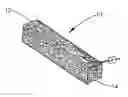
HIGHLY POROUS SELF-COHERED FIBROUS TISSUE ENGINEERING SCAFFOLD
The present invention is directed to bioabsorbable non-woven self-cohered web materials having a high degree of porosity. The web materials are very supple and soft, while exhibiting proportionally increased mechanical strength in one or more directions. The web materials often possess a high degree of loft. The web materials can be formed into a variety of shapes and forms suitable for use as scaffolds for tissue engineering.
Published: 2007-07-05 Assignee: Qinetiq Limited.US20070155579A1
Mechanical engineering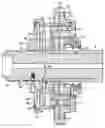
Gear change mechanism
A gear change mechanism coupling a pair of shafts employs a planetary gear set comprising a sun gear fast with a first of the shafts, planet gears in a planet carrier, and an annulus or ring gear, the latter being fixed. A selector hub slidable on the other of the shafts has sets of radially spaced dogs to engage with corresponding dogs on the planet carrier and sun gear respectively, so as to couple the shafts at two different ratios depending on the axial position of the selector hub. This results in a more axially compact package than conventional dog clutch gear changers. In an alternative embodiment a reversing mechanism is provided by fixing the planet carrier and engaging the selector hub with the sun gear or annulus depending on its axial position.
Published: 2007-07-05 Assignee: Intuitive Surgical Operations, Inc..US20070151390A1
Physics
Force and torque sensing for surgical instruments
An apparatus, system, and method for improving force and torque sensing and feedback to the surgeon performing a telerobotic surgery are provided. Groups of axially oriented strain gauges are positioned on a distal end of an instrument shaft proximate a moveable wrist of a robotic surgical instrument to sense forces and torques at the distal tip of the instrument. Advantageously, errors due to changes in the configuration of the tip or steady state temperature variations are eliminated. Other advantageous configurations and methods are disclosed.
Published: 2007-07-05 Assignee: Intuitive Surgical Operations, Inc., Intuitive Surgical, Inc..US20070156285A1
Physics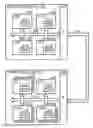
Method for tracking and reporting usage events to determine when preventive maintenance is due for a medical robotic system
A medical robotic system comprises a number of components that may be monitored to determine their preventive maintenance needs by recording usage-related information for the monitored components into associated non-volatile memories. When usage of the component exceeds a specified usage threshold, the system displays a warning message on its display screen to have preventive maintenance performed for the component. If the usage continues without such maintenance and exceeds a higher usage threshold, the system displays an error message on its display screen and the system transitions into an error state during which medical procedures are not allowed to be performed. The usage-related information may also be communicated to a remote computer which gathers and processes usage-related information from a number of medical robotic systems to estimate resource requirements for timely performing preventive maintenance on the medical robotic systems, and anticipated service revenues from such maintenance.
Published: 2007-07-05 Assignee: Hansen Medical, Inc..US20070156123A1
Human necessities
Robotic catheter system and methods
A robotically controlled guide instrument system, comprising an elongate flexible guide instrument; a drive assembly coupled to a proximal portion of the guide instrument and configured to maneuver a distal portion of the guide instrument; a master controller including a user interface that may be manipulated to actuate the drive assembly and thereby maneuver the distal portion the guide instrument; and a closure device detachably coupled to a delivery member carried by the guide instrument, the guide instrument maneuverable to position the closure device proximate an opening of a left atrial appendage of a person's heart such that the prosthesis may be detached from the delivery member and implanted to substantially close off the left atrial appendage.