Patent Applications published on Aug 14, 2008
Explore the 6,315 U.S. Patent Applications published on the 33rd week of 2008, including 3,790 applications that subsequently received a Patent Grant.
Featured patent applications from Aug 14, 2008
US20080190991A1
Human necessities
Surgical stapling device having trigger lock and associated lockout mechanism
A surgical stapling device including a self-righting anvil assembly includes an anvil center rod and a pivotable anvil head. The surgical stapling device includes an anvil retainer assembly having a locking member. A cam member is provided to retain the locking member in a locked position and, thus, the anvil head in the operative position until after firing. In another embodiment, a tiltable anvil assembly includes a center rod and a head assembly pivotally secured to the center rod. The head assembly includes a housing, a post, an anvil plate and a backup member. The backup member is movably positioned from a first to a second position. A retainer member is positioned between the backup member and the housing. In another embodiment, a passive lockout mechanism is operably associated with a trigger lock on the handle assembly of the surgical stapling device.
Published: 2008-08-14 Assignee: Tyco Healthcare Group LP.US20080190990A1
Human necessities
Surgical stapling instruments including a cartridge having multiple staple sizes
A surgical stapling apparatus includes a staple cartridge and an anvil member. The staple cartridge includes a plurality of surgical fasteners disposed in rows of retention slots. The staple cartridge may have an annular or linear configuration of retention slots. The tissue contacting surface of the staple cartridge may be tapered or stepped. The anvil member has a tissue contacting surface that includes a number of pockets arranged for substantially aligning with the retention slots. In addition, the tissue contacting surface of the anvil member may complement the tissue contacting surface of the staple cartridge.
Published: 2008-08-14 Assignee: Olympus Medical Systems Corp..US20080195090A1
Human necessities
Curative treatment system, curative treatment device, and treatment method for living tissue using energy
A treatment system includes an energy source, a pair of holding portions, an output portion and a cooling section. To hold a living tissue of a treatment target, at least one of the pair of the holding portions relatively moves with respect to the other holding portion. The output portion is disposed on at least one of the holding portions and connected with the energy source. Moreover, the output portion thermally denatures the living tissue, when the energy is supplied from the energy source. The cooling section inhibits the thermal spread in a direction away from the output portion.
Published: 2008-08-14US20080190989A1
Human necessities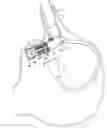
Endoscopic plication device and method
In a method of stapling layers of tissue within a body cavity, an engaging instrument is passed between a stapler cartridge and anvil and used to engage a region of tissue. The engaging instrument is retracted to move the engaged tissue into the stapling position, and driving staples from the cartridge through at least two layers of the engaged tissue. The method and associated system may be used to form plications in body tissue, such as stomach wall tissue. Staples simultaneously driven through tissue may simultaneously capture a reinforcing elements positioned adjacent the cartridge and/or anvil prior to stapling.
Published: 2008-08-14 Assignee: DexCom, Inc..US20080195967A1
Human necessities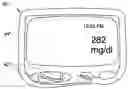
System and methods for processing analyte sensor data
Systems and methods for processing sensor analyte data, including initiating calibration, updating calibration, evaluating clinical acceptability of reference and sensor analyte data, and evaluating the quality of sensor calibration. During initial calibration, the analyte sensor data is evaluated over a period of time to determine stability of the sensor. The sensor may be calibrated using a calibration set of one or more matched sensor and reference analyte data pairs. The calibration may be updated after evaluating the calibration set for best calibration based on inclusion criteria with newly received reference analyte data. Fail-safe mechanisms are provided based on clinical acceptability of reference and analyte data and quality of sensor calibration. Algorithms provide for optimized prospective and retrospective analysis of estimated blood analyte data from an analyte sensor.
Published: 2008-08-14 Assignee: DexCom, Inc..US20080194937A1
Human necessities
System and methods for processing analyte sensor data
Systems and methods for processing sensor analyte data, including initiating calibration, updating calibration, evaluating clinical acceptability of reference and sensor analyte data, and evaluating the quality of sensor calibration. During initial calibration, the analyte sensor data is evaluated over a period of time to determine stability of the sensor. The sensor may be calibrated using a calibration set of one or more matched sensor and reference analyte data pairs. The calibration may be updated after evaluating the calibration set for best calibration based on inclusion criteria with newly received reference analyte data. Fail-safe mechanisms are provided based on clinical acceptability of reference and analyte data and quality of sensor calibration. Algorithms provide for optimized prospective and retrospective analysis of estimated blood analyte data from an analyte sensor.
Published: 2008-08-14 Assignee: DexCom, Inc..US20080194935A1
Human necessities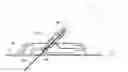
Transcutaneous analyte sensor
The present invention relates generally to systems and methods for measuring an analyte in a host. More particularly, the present invention relates to systems and methods for transcutaneous measurement of glucose in a host.
Published: 2008-08-14 Assignee: DexCom, Inc..US20080194936A1
Human necessities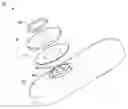
System and methods for processing analyte sensor data
Systems and methods for processing sensor analyte data, including initiating calibration, updating calibration, evaluating clinical acceptability of reference and sensor analyte data, and evaluating the quality of sensor calibration. During initial calibration, the analyte sensor data is evaluated over a period of time to determine stability of the sensor. The sensor may be calibrated using a calibration set of one or more matched sensor and reference analyte data pairs. The calibration may be updated after evaluating the calibration set for best calibration based on inclusion criteria with newly received reference analyte data. Fail-safe mechanisms are provided based on clinical acceptability of reference and analyte data and quality of sensor calibration. Algorithms provide for optimized prospective and retrospective analysis of estimated blood analyte data from an analyte sensor.
Published: 2008-08-14 Assignee: DexCom, Inc..US20080194938A1
Human necessities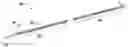
Transcutaneous medical device with variable stiffness
The present invention relates generally to variable stiffness transcutaneous medical devices including a distal portion designed to be more flexible than a proximal portion. The variable stiffness can be provided by a variable pitch in one or more wires of the device, a variable cross-section in one or more wires of the device, and/or a variable hardening and/or softening in one or more wires of the device.
Published: 2008-08-14 Assignee: QuickPlay Media Inc..US20080195664A1
Physics
Automated Content Tag Processing for Mobile Media
In embodiments, the present invention provides a method and system for delivery of content on a mobile media platform, providing an automated tag processing facility, and delivering content to a mobile device, wherein content delivery is based at least in part on the automated tag processing.