Patent Applications published on Aug 21, 2008
Explore the 5,677 U.S. Patent Applications published on the 34th week of 2008, including 3,441 applications that subsequently received a Patent Grant.
Featured patent applications from Aug 21, 2008
US20080197167A1
Human necessities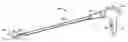
SURGICAL STAPLER WITH TIMER AND FEEDBACK DISPLAY
A surgical apparatus has a clamp and a stapling mechanism. The clamp has a first jaw and a second jaw to clamp on a body tissue at a desired location for a stapling operation. The stapling mechanism is controlled by a trigger handle or a switch assembly. The surgical apparatus has a controller for providing a delay between clamping and actuating of the firing mechanism of the stapling mechanism. The delay provides for a desired amount of time for tissue compression producing a more uniform staple formation. The surgical apparatus also has an indicator. The indicator provides feedback about the status of the stapling mechanism and also displays a time of tissue compression by the clamp.
Published: 2008-08-21 Assignee: Cook Biotech Incorporated.US20080200949A1
Human necessities
Medical devices and methods useful for applying bolster material
Described are medical devices useful for applying a bolster material to a surgical fastening device such as a stapler, and related methods of manufacture and use. The devices include an applicator element for receipt between arms of the stapler, and a bolster material, desirably a remodelable extracellular matrix material, coupled to the applicator element. In certain embodiments, the bolster material is held by the applicator element, for example having at least a portion looped around or received through or over a portion of the applicator element. Also described are unique implantable materials including coatings of dried, reversible adhesive.
Published: 2008-08-21US20080200762A1
Human necessities
Flexible endoscope shapelock
A medical apparatus includes a flexible sheath adapted to receive an endoscope. A first flexible rail is formed on the flexible sheath. The first flexible rail extends longitudinally along the length of the flexible sheath. A first rigidizable guide member includes a first track channel adapted to receive the first flexible rail. The first rigidizable guide member is adapted to slideably move along the first flexible rail and the first track channel.
Published: 2008-08-21US20080200933A1
Human necessities
Surgical devices and methods for forming an anastomosis between organs by gaining access thereto through a natural orifice in the body
A surgical instrument for creating an anastomosis between two organs. In various embodiments, the instrument may include a hollow outer sleeve for creating a tool-receiving passage between a natural orifice in the patient and the surgical site. The tool receiving passage may be used to operably accommodate various surgical instruments such as an endoscope, a hole-forming instrument, and suction and aeration tubes for assisting in the formation of the anastomosis. The hollow outer sleeve may further be used to position a hollow anastomosis sleeve segment within two aligned holes in the organs. The anastomosis sleeve segment supports an inflatable distal receptacle that is inflated within one of the organs and a proximal inflatable receptacle that is inflated in the other organ to retain the anastomosis sleeve segment in position. Thereafter, the hollow outer sleeve is withdrawn from the patient leaving the hollow anastomosis sleeve segment in position between the two organs.
Published: 2008-08-21US20080200835A1
Human necessities
Energy Biopsy Device for Tissue Penetration and Hemostasis
A biopsy system having a lateral tissue access port includes an energy based tissue penetration system that can advantageously penetrate hard tumors, improve hemostasis, and provide greater tissue access. The energy based tissue penetration system has a vibrational member removeably disposed within the biopsy system, and a distal tip of the vibrational member extending from the biopsy system for tissue penetration. A sleeve is located between the vibrational member and the lateral access port to prevent tissue contact with the vibrational member through the lateral access port.
Published: 2008-08-21 Assignee: ETHICON ENDO-SURGERY, INC..US20080200912A1
Human necessities
Electroporation ablation apparatus, system, and method
A surgical instrument, such as an endoscopic or laparoscopic instrument, includes an ablation device. The ablation device includes an elongate flexible member having a proximal end and a distal end. A first working channel is formed within the flexible member. A first diagnostic probe having a proximal end and distal end is located within the first working channel and extends through the distal end of the flexible member. A first electrode is connected to the distal end of the first diagnostic probe electrode is adapted to be endoscopically located in a tissue treatment region. The first electrode is adapted to couple to an electrical waveform generator to receive an irreversible electroporation electrical waveform sufficient to ablate tissue located proximate to the first electrode. A system further includes an electrical waveform generator electrically coupled to the first electrode of the ablation device to generate an IRE waveform sufficient to ablate tissue located proximate to the first electrode.
Published: 2008-08-21US20080200911A1
Human necessities
Electrical ablation apparatus, system, and method
A surgical instrument, such as an endoscopic or laparoscopic instrument, includes an ablation device. The ablation device includes an elongate relatively flexible member having a proximal end and a distal end. The flexible member includes a working channel. A first electrode extends from the working channel at the distal end of the flexible member and is adapted to be endoscopically located in a first position relative to a tissue treatment region. A second electrode is adapted to be percutaneously located in a second position of the tissue treatment region. The first and second electrodes are adapted to couple to an electrical waveform generator and to receive an electrical waveform sufficient to ablate tissue located between the first and second electrodes.
Published: 2008-08-21US20080200934A1
Human necessities
Surgical devices and methods using magnetic force to form an anastomosis
A method for forming an anastomosis between first and second organs in a patient using a hollow receptacle that is inflatable with magnetic material. The method may include forming openings through the first and second organs utilizing a hole-forming instrument inserted into the organs through a natural orifice in the patient. The hollow receptacle may be supported on a catheter assembly that is also inserted through the patient's natural orifice and through the openings in the first and second organs and is positioned within the second organ. The hollow receptacle is then inflated with magnetic material and magnetic force is applied within the force organ to draw the inflated receptacle toward the first organ such that the inflated receptacle retains the second organ in sealing contact with the first organ while maintaining the alignment between the first and second openings to create an anastomosis between the first and second organs.
Published: 2008-08-21US20080200755A1
Human necessities
Method and device for retrieving suture tags
A suture tag retrieval device and method for its use are described. The retrieval device has an elongate member dimensioned in cross-section to allow passage thereof through a channel leading to an internal site in a patient, such as, for example, the working channel of an endoscope. The retrieval device has a distal end and a proximal end and defines a passageway between the distal and the proximal ends for passage of a suture. The distal end of the elongate member has a suture engagement portion and a suture tag receiving portion, which may be in the form of a cradle configured to inhibit contact between the suture tag and the channel. To facilitate use with an endoscope, the elongate member is preferably a hollow, flexible tube like device.
Published: 2008-08-21US20080196419A1
Mechanical engineering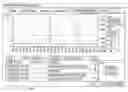
BUILD-UP MONITORING SYSTEM FOR REFRIGERATED ENCLOSURES
A build-up monitoring system in combination with a refrigerated enclosure comprises a refrigerated enclosure having a drain, a drain basin and a refrigeration unit adapted to maintain refrigerating conditions in the refrigerated enclosure. A build-up detector is positioned with respect to the refrigerated enclosure so as to monitor a level of build-up in the drain/drain basin. A condition analyzer receives detection data from the build-up detector, the condition analyzer identifying from the detection data a build-up in the drain/drain basin requiring an intervention. An interface indicates the requirement for the intervention. A method is provided to identify a build-up requiring an intervention in a drain/drain basin of a refrigerated enclosure.