Patent Applications published on Jul 30, 2009
Explore the 5,545 U.S. Patent Applications published on the 31st week of 2009, including 3,539 applications that subsequently received a Patent Grant.
Featured patent applications from Jul 30, 2009
US20090188964A1
Human necessities
MEMBRANE AUGMENTATION, SUCH AS OF FOR TREATMENT OF CARDIAC VALVES, AND FASTENING DEVICES FOR MEMBRANE AUGMENTATION
Disclosed are methods for augmenting tissue, for example membranes such as cardiac leaflets and tissue surrounding a cardiac valve, which in embodiments improve leaflet coaptation. Also disclosed are devices useful for augmenting tissue.
Published: 2009-07-30 Assignee: EasyLap Ltd..US20090188965A1
Human necessities
Device and method for applying rotary tacks
A tacker for applying a rotary tack, including a drive shaft coupled to a trigger, wherein operating the trigger causes rotation of the drive shaft, an articulated applicator arm pivotally connected to the drive shaft at a pivot, the articulated applicator arm including a rotatable output shaft connected to a magazine that holds a rotary tack, and a clutch mechanism which, at initial movement of the trigger, has a first orientation that causes the articulated applicator arm to pivot about the pivot until reaching a stop, and has a second orientation wherein upon continued movement of the trigger, the clutch mechanism permits the drive shaft to rotate the output shaft and cause application of the rotary tack from the magazine.
Published: 2009-07-30 Assignee: DexCom, Inc..US20090192366A1
Human necessities
Systems and methods for processing sensor data
Systems and methods for processing sensor data are provided. In some embodiments, systems and methods are provided for calibration of a continuous analyte sensor. In some embodiments, systems and methods are provided for classification of a level of noise on a sensor signal. In some embodiments, systems and methods are provided for determining a rate of change for analyte concentration based on a continuous sensor signal. In some embodiments, systems and methods for alerting or alarming a patient based on prediction of glucose concentration are provided.
Published: 2009-07-30 Assignee: DexCom, Inc..US20090192751A1
Human necessities
Systems and methods for processing sensor data
Systems and methods for processing sensor data are provided. In some embodiments, systems and methods are provided for calibration of a continuous analyte sensor. In some embodiments, systems and methods are provided for classification of a level of noise on a sensor signal. In some embodiments, systems and methods are provided for determining a rate of change for analyte concentration based on a continuous sensor signal. In some embodiments, systems and methods for alerting or alarming a patient based on prediction of glucose concentration are provided.
Published: 2009-07-30 Assignee: DexCom, Inc..US20090192745A1
Physics
Systems and methods for processing sensor data
Systems and methods for processing sensor data are provided. In some embodiments, systems and methods are provided for calibration of a continuous analyte sensor. In some embodiments, systems and methods are provided for classification of a level of noise on a sensor signal. In some embodiments, systems and methods are provided for determining a rate of change for analyte concentration based on a continuous sensor signal. In some embodiments, systems and methods for alerting or alarming a patient based on prediction of glucose concentration are provided.
Published: 2009-07-30 Assignee: DexCom, Inc..US20090192380A1
Physics
Systems and methods for processing sensor data
Systems and methods for processing sensor data are provided. In some embodiments, systems and methods are provided for calibration of a continuous analyte sensor. In some embodiments, systems and methods are provided for classification of a level of noise on a sensor signal. In some embodiments, systems and methods are provided for determining a rate of change for analyte concentration based on a continuous sensor signal. In some embodiments, systems and methods for alerting or alarming a patient based on prediction of glucose concentration are provided.
Published: 2009-07-30 Assignee: DexCom, Inc..US20090192722A1
Physics
Systems and methods for processing sensor data
Systems and methods for processing sensor data are provided. In some embodiments, systems and methods are provided for calibration of a continuous analyte sensor. In some embodiments, systems and methods are provided for classification of a level of noise on a sensor signal. In some embodiments, systems and methods are provided for determining a rate of change for analyte concentration based on a continuous sensor signal. In some embodiments, systems and methods for alerting or alarming a patient based on prediction of glucose concentration are provided.
Published: 2009-07-30 Assignee: DexCom, Inc..US20090192724A1
Human necessities
Transcutaneous analyte sensor
The present invention relates generally to systems and methods for measuring an analyte in a host. More particularly, the present invention relates to systems and methods for transcutaneous measurement of glucose in a host.
Published: 2009-07-30 Assignee: ETHICON ENDO-SURGERY, INC..US20090192534A1
Human necessities
SENSOR TRIGGER
Methods and devices for effecting a gastric restriction system are disclosed. In one exemplary embodiment, a restriction system for forming a restriction in a patient is provided and can include an implantable restriction device and at least one implantable sensor that is in communication with the restriction device. In general, the implantable restriction device can be adjustable and can be configured to form a restriction in a patient. The implantable sensor(s) can be defaulted to a dormant power usage mode and can have a triggering mechanism that is configured to place the sensor(s) in a use configuration upon the occurrence of a triggering event.
Published: 2009-07-30 Assignee: ETHICON ENDO-SURGERY, INC..US20090192404A1
Human necessities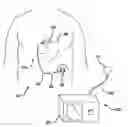
Methods and devices for measuring impedance in a gastric restriction system
Methods and devices are provided for gathering impedance data related to implantable restriction devices. In general, the methods and devices can enable patients, health care providers, and others to use gathered data as a feedback mechanism to non-invasively monitor efficacy of an implantable restriction device in a patient and to identify, modify, and/or prescribe a treatment plan for the patient considering the gathered data. Impedance data can be gathered and analyzed for tissue proximate to the restriction device, e.g., a fat pad between a gastric band and the patient's stomach. Electrodes in contact with the tissue can measure an impedance of the tissue, with the impedance between the electrodes changing as the tissue reduces in size (e.g., as fat cells shrink) and/or changes configuration.