Patent Applications published on Jan 7, 2010
Explore the 5,554 U.S. Patent Applications published on the 01st week of 2010, including 3,622 applications that subsequently received a Patent Grant.
Featured patent applications from Jan 7, 2010
US20100001036A1
Human necessities
Retraction mechanism with clutch-less drive for use with a surgical apparatus
A retraction mechanism allows the full distal retraction of the firing drive from various positions. The retraction mechanism has been developed for use with a hand held surgical apparatus. An embodiment of the retraction mechanism includes a drive member, a first pulley, a second pulley, and a firing drive. The drive mechanism is configured to be driven by a motor. The first pulley is configured to rotate when the motor drives the drive mechanism. The second pulley is movable relative to the first pulley between a proximal position and a distal position. The firing drive is movable relative to the first pulley between proximal and distal positions. In operation, the first pulley rotates in a first direction in response to a distal translation of the firing drive and wherein the firing drive moves proximally upon rotation of the first pulley in a second direction.
Published: 2010-01-07 Assignee: Covidien AG.US20100004668A1
Human necessities
Cordless hand-held ultrasonic cautery cutting device and method
A disposable ultrasonic surgical handle connectable to an ultrasonic transducer, an ultrasonic waveguide, a removable battery, and an ultrasonic-signal-generator assembly, includes a handle body with a portion defining a battery-holding compartment, the battery-holding compartment having at least two battery contacts, a waveguide attachment dock exposed to the environment and shaped to accept the waveguide therein, a transducer attachment dock exposed to the environment and shaped to place the ultrasonic transducer in coaxial alignment with the waveguide when the waveguide is disposed within the waveguide attachment dock, and an ultrasonic-signal-generator assembly dock exposed to the environment. The ultrasonic-signal-generator assembly dock is shaped to substantially simultaneously selectively removably secure the ultrasonic-signal-generator assembly to the handle body, place an end of the ultrasonic transducer within the transducer attachment dock, and electrically couple the ultrasonic-signal-generator assembly to the at least two battery contacts.
Published: 2010-01-07 Assignee: Covidien AG.US20100000074A1
Performing operations; transporting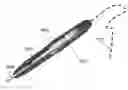
Method of assembling a cordless hand-held ultrasonic cautery cutting device
A method for assembling an ultrasonic surgical assembly includes the steps of substantially simultaneously removably coupling an ultrasonic-driving-wave-signal generating circuit to an ultrasonic surgical handle body and removably inserting an ultrasonic-movement-producing distal end of a rotatably free ultrasonic transducer into the ultrasonic surgical handle body. An ultrasonic waveguide is inserted into the ultrasonic surgical handle body opposite the ultrasonic-movement-producing distal end. The ultrasonic waveguide is rotated with respect to the ultrasonic transducer to fixedly couple the ultrasonic waveguide to the ultrasonic-movement-producing distal end of the ultrasonic transducer.
Published: 2010-01-07 Assignee: Cambridge Enterprise limited.US20100003528A1
Chemistry; metallurgy
Nanomaterial polymer compositions and uses thereof
The present invention is directed to compositions (“Nanomaterial Polymer Compositions”) comprising a silicone polymer and a nanomaterial, including but not limited to, a single or multi-walled nanotube, a nanowire, a nanodot, a quantum dot, a nanorod, a nanocrystal, a nanotetrapod, a nanotripod, a nanobipod, a nanoparticle, a nanosaw, a nanospring, a nanoribbon, a branched nanomaterial, or any combination thereof. The Nanomaterial Polymer Compositions are useful for optical and sensing devices including but not limited to noise suppression, passive Q-switching, mode-locking, waveform shaping, optical switching, optical signal regeneration, phase conjugation or filter devices, dispersion compensation, wavelength conversion, a soliton stabilization, microcavity applications, interferometers; optical, magneto-optical or electro-optical modulation; and biochemical sensors and photodetectors. The Nanomaterial Polymer Compositions are also useful in soft lithography processes.
Published: 2010-01-07 Assignee: Cake Financial Corporation.US20100005035A1
Physics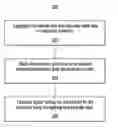
Systems and Methods for a Cross-Linked Investment Trading Platform
Systems and methods for an investment trading platform are described. An investment platform forms electronic links among member investors and investment portfolios and brokerage accounts of the investors, wherein a portfolio includes at least one investment position. The investment platform shares between the investors the portfolio data or the portfolios and/or brokerage data of the brokerage accounts. A trading application programming interface (API) conducts operations in portfolios and/or brokerage accounts in response to the portfolio data and/or the brokerage data. The trading API conducts automatic operations in portfolios and/or brokerage accounts in response to the portfolio data and/or the brokerage data.
Published: 2010-01-07 Assignee: Medtronic Corevalve LLC.US20100004740A1
Human necessities
Prosthetic valve for transluminal delivery
A method for deploying a prosthetic valve assembly is provided. The prosthetic valve assembly replaces a deficient native valve and comprises a replacement valve supported on an expandable valve support. The valve support, which entirely supports the valve annulus, valve leaflets, and valve commissure points, is configured to be collapsible for transluminal delivery and expandable to contact the anatomical annulus of the native valve when the assembly is properly positioned. Portions of the valve support may expand to a preset diameter to maintain coaptivity of the replacement valve and to prevent occlusion of the coronary oslia. The prosthetic valve assembly is compressible about a catheter, and restrained from expanding by an outer sheath. The catheter may be inserted inside a lumen within the body, such as the femoral artery, and delivered to a desired location, such as the heart.
Published: 2010-01-07 Assignee: CERCACOR LABORATORIES, INC., MASIMO LABORATORIES, INC..US20100004519A1
Human necessities
Noise shielding for a noninvasive device
A noninvasive physiological sensor for measuring one or more physiological parameters of a medical patient can include a bump interposed between a light source and a photodetector. The bump can be placed in contact with body tissue of a patient and thereby reduce a thickness of the body tissue. As a result, an optical pathlength between the light source and the photodetector can be reduced. In addition, the sensor can include a heat sink that can direct heat away from the light source. Moreover, the sensor can include shielding in the optical path between the light source and the photodetector. The shielding can reduce noise received by the photodetector.
Published: 2010-01-07 Assignee: MASIMO LABORATORIES, INC..US20100004518A1
Human necessities
HEAT SINK FOR NONINVASIVE MEDICAL SENSOR
A noninvasive physiological sensor for measuring one or more physiological parameters of a medical patient can include a bump interposed between a light source and a photodetector. The bump can be placed in contact with body tissue of a patient and thereby reduce a thickness of the body tissue. As a result, an optical pathlength between the light source and the photodetector can be reduced. In addition, the sensor can include a heat sink that can direct heat away from the light source. Moreover, the sensor can include shielding in the optical path between the light source and the photodetector. The shielding can reduce noise received by the photodetector.
Published: 2010-01-07 Assignee: Applied Materials, Inc..US20100003406A1
Chemistry; metallurgy
Apparatuses and methods for atomic layer deposition
Embodiments of the invention provide apparatuses and methods for atomic layer deposition (ALD), such as plasma-enhanced ALD (PE-ALD). In some embodiments, a PE-ALD chamber is provided which includes a chamber lid assembly coupled with a chamber body having a substrate support therein. In one embodiment, the chamber lid assembly has an inlet manifold assembly containing an annular channel encompassing a centralized channel, wherein the centralized channel extends through the inlet manifold assembly, and the inlet manifold assembly further contains injection holes extending from the annular channel, through a sidewall of the centralized channel, and to the centralized channel. The chamber lid assembly further contains a showerhead assembly disposed below the inlet manifold assembly, a water box disposed between the inlet manifold assembly and the showerhead assembly, and a remote plasma system (RPS) disposed above and coupled with the inlet manifold assembly, and in fluid communication with the centralized channel.
Published: 2010-01-07 Assignee: ResMed Limited.US20100000534A1
Human necessities
Patient interface systems
A patient interface system for delivering a flow of breathable gas to a patient includes a patient interface structure configured to sealingly engage the patient's nares; a pair of strips configured to be connected to opposite sides of the patient interface structure; and adhesive configured to secure the patient interface structure in sealing engagement with the patient's nares. The adhesive may be provided on the strips, and the strips are configured to be adhered to sides of the patient's nose by the adhesive. Another patient interface system includes a first component including adhesive on a first side and hook or loop fastener material on a second side, wherein the adhesive is configured to adhere the component to the face of the patient; and a patient interface structure configured to sealingly engage the patient's airways. The patient interface structure includes a second component including a corresponding loop or hook fastener material configured to engage the corresponding hook or loop fastener material of the first strip to secure the patient interface structure in sealing engagement with the patient's face. A patient interface system for delivering a flow of breathable gas to a patient includes a patient interface structure including a pair of nasal prongs or pillows configured to sealingly engage the patient's nares; and at least one spring configured to bias the nasal prongs or pillows outwards into engagement with the nares of the patient.