Patent Applications published on Feb 11, 2010
Explore the 5,952 U.S. Patent Applications published on the 06th week of 2010, including 3,892 applications that subsequently received a Patent Grant.
Featured patent applications from Feb 11, 2010
US20100032470A1
Human necessities
Surgical stapling systems and staple cartridges for deploying surgical staples with tissue compression features
A surgical staple having at least one projection formed thereon. In various embodiments, the projection is formed on a crown of the surgical staple. In one various embodiment, the projection surrounds, or is positioned adjacent to, at least one deformable member of the surgical staple. In one embodiment, the projection can apply an increased compressive force or pressure to soft tissue surrounding the deformable member prior to the deformable members puncturing a hole in the soft tissue. As a result of the increased compressive force or pressure on the tissue, after staple deployment, blood flow proximate deformable member puncture holes can be reduced.
Published: 2010-02-11 Assignee: ETHICON ENDO-SURGERY, INC..US20100036405A1
Human necessities
Ultrasonic device for cutting and coagulating with stepped output
Various embodiments are directed to an apparatus, system, and method for driving an end effector coupled to an ultrasonic transducer in a surgical instrument. The method comprises generating a first ultrasonic drive signal by a generator coupled to an ultrasonic drive system, actuating the ultrasonic transducer with the first ultrasonic drive signal for a first period, generating a second ultrasonic drive signal by the generator, and actuating the ultrasonic transducer with the second ultrasonic drive signal for a second period, subsequent to the first period. The first drive signal is different from the second drive signal over the respective first and second periods. The first and second drive signals define a step function waveform over the first and second periods. The apparatus comprises a generator configured to couple to an ultrasonic instrument. The system comprises a generator coupled to an ultrasonic instrument. The ultrasonic instrument comprises an ultrasonic drive system comprising an ultrasonic transducer coupled to a waveguide and an end effector coupled to the waveguide, and wherein the ultrasonic drive system is configured to resonate at a resonant frequency.
Published: 2010-02-11US20100036370A1
Human necessities
ELECTROSURGICAL INSTRUMENT JAW STRUCTURE WITH CUTTING TIP
An electrosurgical instrument for scoring, welding and transecting tissue is provided. The electrosurgical instrument comprises first and second openable-closeable jaws and at least one scoring electrode extending from a distal end of at least one of the first and second openable-closeable jaws. The first and second openable-closeable jaws comprises first and second conductive tissue engaging surfaces, respectively, and first and second insulating members, respectively. The scoring electrode is coupled with at least one of the first and second insulating members. The at least one scoring electrode can be activated independently from the first and second openable-closeable jaws so that the electrosurgical instrument can independent score tissue and weld tissue.
Published: 2010-02-11US20100036484A1
Human necessities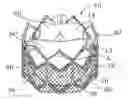
Low profile transcatheter heart valve
An implantable prosthetic valve, according to one embodiment, comprises a frame, a leaflet structure, and a skirt member. The frame can have a plurality of axial struts interconnected by a plurality of circumferential struts. The leaflet structure comprises a plurality of leaflets (e.g., three leaflets arrange to form a tricuspid valve). The leaflet structure has a scalloped lower edge portion secured to the frame. The skirt member can be disposed between the leaflet structure and the frame.
Published: 2010-02-11 Assignee: DexCom, Inc..US20100036223A1
Human necessities
Systems and methods for replacing signal artifacts in a glucose sensor data stream
Systems and methods for minimizing or eliminating transient non-glucose related signal noise due to non-glucose rate limiting phenomenon such as ischemia, pH changes, temperatures changes, and the like. The system monitors a data stream from a glucose sensor and detects signal artifacts that have higher amplitude than electronic or diffusion-related system noise. The system replaces some or the entire data stream continually or intermittently including signal estimation methods that particularly address transient signal artifacts. The system is also capable of detecting the severity of the signal artifacts and selectively applying one or more signal estimation algorithm factors responsive to the severity of the signal artifacts, which includes selectively applying distinct sets of parameters to a signal estimation algorithm or selectively applying distinct signal estimation algorithms.
Published: 2010-02-11 Assignee: DexCom, Inc..US20100036222A1
Human necessities
Systems and methods for replacing signal artifacts in a glucose sensor data stream
Systems and methods for minimizing or eliminating transient non-glucose related signal noise due to non-glucose rate limiting phenomenon such as ischemia, pH changes, temperatures changes, and the like. The system monitors a data stream from a glucose sensor and detects signal artifacts that have higher amplitude than electronic or diffusion-related system noise. The system replaces some or the entire data stream continually or intermittently including signal estimation methods that particularly address transient signal artifacts. The system is also capable of detecting the severity of the signal artifacts and selectively applying one or more signal estimation algorithm factors responsive to the severity of the signal artifacts, which includes selectively applying distinct sets of parameters to a signal estimation algorithm or selectively applying distinct signal estimation algorithms.
Published: 2010-02-11 Assignee: DexCom, Inc..US20100036215A1
Human necessities
Systems and methods for replacing signal artifacts in a glucose sensor data stream
Systems and methods for minimizing or eliminating transient non-glucose related signal noise due to non-glucose rate limiting phenomenon such as ischemia, pH changes, temperatures changes, and the like. The system monitors a data stream from a glucose sensor and detects signal artifacts that have higher amplitude than electronic or diffusion-related system noise. The system replaces some or the entire data stream continually or intermittently including signal estimation methods that particularly address transient signal artifacts. The system is also capable of detecting the severity of the signal artifacts and selectively applying one or more signal estimation algorithm factors responsive to the severity of the signal artifacts, which includes selectively applying distinct sets of parameters to a signal estimation algorithm or selectively applying distinct signal estimation algorithms.
Published: 2010-02-11 Assignee: DexCom, Inc..US20100036216A1
Human necessities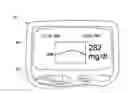
Systems and methods for replacing signal artifacts in a glucose sensor data stream
Systems and methods for minimizing or eliminating transient non-glucose related signal noise due to non-glucose rate limiting phenomenon such as ischemia, pH changes, temperatures changes, and the like. The system monitors a data stream from a glucose sensor and detects signal artifacts that have higher amplitude than electronic or diffusion-related system noise. The system replaces some or the entire data stream continually or intermittently including signal estimation methods that particularly address transient signal artifacts. The system is also capable of detecting the severity of the signal artifacts and selectively applying one or more signal estimation algorithm factors responsive to the severity of the signal artifacts, which includes selectively applying distinct sets of parameters to a signal estimation algorithm or selectively applying distinct signal estimation algorithms.
Published: 2010-02-11 Assignee: DexCom, Inc..US20100036225A1
Human necessities
SYSTEMS AND METHODS FOR REPLACING SIGNAL ARTIFACTS IN A GLUCOSE SENSOR DATA STREAM
Systems and methods for minimizing or eliminating transient non-glucose related signal noise due to non-glucose rate limiting phenomenon such as ischemia, pH changes, temperatures changes, and the like. The system monitors a data stream from a glucose sensor and detects signal artifacts that have higher amplitude than electronic or diffusion-related system noise. The system replaces some or the entire data stream continually or intermittently including signal estimation methods that particularly address transient signal artifacts. The system is also capable of detecting the severity of the signal artifacts and selectively applying one or more signal estimation algorithm factors responsive to the severity of the signal artifacts, which includes selectively applying distinct sets of parameters to a signal estimation algorithm or selectively applying distinct signal estimation algorithms.
Published: 2010-02-11 Assignee: Broadcom Corporation.US20100033021A1
Electricity
Phased array wireless resonant power delivery system
A resonant power transmission system for wirelessly delivering electric power to a target device. A transmitter resonant phased array includes a power source operable to source alternating current power at a target frequency. A plurality of transmitting elements, each operable to produce a non-radiated magnetic field, produces a composite non-radiated magnetic field. A plurality of transmitter tuned circuit elements couple the alternating current power to the plurality of transmitting elements. Control circuitry controls the plurality of transmitter tuned circuit elements to direct the composite non-radiated magnetic field toward the target device. Communication circuitry communicates with the target device. The plurality of transmitting elements may be a plurality of coils with the control circuitry individually controlling phase of the non-radiated magnetic fields produced by the plurality of transmitting elements by control of the plurality of transmitter tuned circuit elements. The plurality of coils may be directed mechanically in other embodiments.