Patent Applications published on Sep 2, 2010
Explore the 5,407 U.S. Patent Applications published on the 35th week of 2010, including 3,691 applications that subsequently received a Patent Grant.
Featured patent applications from Sep 2, 2010
US20100222901A1
Human necessities
Post-Sterilization Programming of Surgical Instruments
A surgical instrument with a programmable control unit and methods for programming the control unit while the surgical instrument is in a sterile container. The method may comprise packaging the surgical instrument in the container and then sterilizing the surgical instrument while the surgical instrument is in the container. The method may further comprise programming the surgical instrument while the surgical instrument is in the container with a programming device positioned outside of the container.
Published: 2010-09-02 Assignee: Intuitive Surgical Operations, Inc..US20100219388A1
Mechanical engineering
Compact cable tension tender device
A compact cable tension tender device includes first and second pulleys rotatably coupled to a drive shaft. First and second plates are fixed to the drive shaft. Drive stops on the plates engage and rotate the pulleys when the drive shaft is rotated. A resilient coupler urges the first and second pulleys to rotate away from engagement with the drive stops. Cables are coupled to the pulleys and adjusted to be in tension such that the first and second pulleys both engage the drive stops at the same time. The engagement of both pulleys with the drive stops at the same time minimizes lost motion when reversing the rotation of the drive shaft.
Published: 2010-09-02 Assignee: ASM JAPAN K.K..US20100221925A1
Chemistry; metallurgy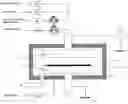
Method of forming conformal dielectric film having Si-N bonds by PECVD
A method of forming a conformal dielectric film having Si—N bonds on a semiconductor substrate by plasma enhanced chemical vapor deposition (PECVD) includes: introducing a nitrogen- and hydrogen-containing reactive gas and a rare gas into a reaction space inside which a semiconductor substrate is placed; applying RF power to the reaction space; and introducing a hydrogen-containing silicon precursor as a first precursor and a hydrocarbon gas as a second precursor in pulses into the reaction space wherein a plasma is excited, thereby forming a conformal dielectric film doped with carbon and having Si—N bonds on the substrate.
Published: 2010-09-02 Assignee: ANDREAS STIHL AG & CO. KG, Andreas Stihl AG & Co. KG.US20100218967A1
Performing operations; transporting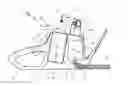
Electric power tool with battery pack
An electric power tool has a device housing with a rear grip extending in the longitudinal direction of the device housing. The device housing has first opposed housing sides and second opposed housing sides. An electric drive motor and its electronic control are arranged in the device housing. A battery pack compartment arranged in the device housing receives a battery pack that has a parallelepipedal shape and extends in a direction of a height axis, width axis and depth axis. The battery pack is arranged such that the width axis and the height axis extend transversely to the longitudinal axis of the device housing. The battery pack has narrow sides extending approximately parallel and at a minimal spacing relative to the first opposed housing sides, respectively. The battery pack has opposed end faces neighboring the second housing sides, respectively.
Published: 2010-09-02 Assignee: FIRST DATA CORPORATION.US20100223145A1
Physics
Systems, methods and apparatus for facilitating transactions using a mobile device
Systems, methods and apparatus for facilitating transactions using a mobile device are provided by certain embodiments of the invention. Information associated with a proposed transaction may be received at a mobile device from a point of sale device. The mobile device may communicate a request to approve the proposed transaction to a transaction processor. The request may at least a portion of the received information and an identifier associated with the mobile device. The transaction processor may determine whether to approve the proposed transaction and communicate an approval or decline message to the point of sale device.
Published: 2010-09-02 Assignee: Ardian, Inc., MEDTRONIC ARDIAN LUXEMBOURG S.A.R.L..US20100222851A1
Human necessities
Methods for monitoring renal neuromodulation
Methods and apparatus are provided for renal neuromodulation using a pulsed electric field to effectuate electroporation or electrofusion. It is expected that renal neuromodulation (e.g., denervation) may, among other things, reduce expansion of an acute myocardial infarction, reduce or prevent the onset of morphological changes that are affiliated with congestive heart failure, and/or be efficacious in the treatment of end stage renal disease. Embodiments of the present invention are configured for percutaneous intravascular delivery of pulsed electric fields to achieve such neuromodulation.
Published: 2010-09-02US20100223128A1
Electricity
Software-based Method for Assisted Video Creation
The invention allows for a first set of persons to create and modify templates that contain visual effects, synchronization information, and possibly director assistance. These templates are utilized by a second set of persons to generate personalized motion photo videos from photographs, video segments, personal narratives or animation. Motion photo videos are a novel because they very quickly and inexpensively allow (1) persons to create and modify templates which are synchronized to music and may be easily populated with content by others, and (2) persons to select a song and associated pre-made template and create a high-quality synchronized custom video using hand-selected visual material to populate the template with included direction and without any required editing. Populated material in template can be further modified by additional persons instantly generate new, modified motion photo videos.
Published: 2010-09-02 Assignee: Bang-Kwon Kang.US20100221452A1
Chemistry; metallurgy
Surface coating method for hydrophobic and superhydrophobic treatment in atmospheric pressure plasma
The present invention relates to a method of coating fluorocarbon or hydrocarbon on the surface of a workpiece using atmospheric pressure plasma. More particularly, the present invention relates to a method of coating hydrocarbon or fluorocarbon on the surface of a workpiece using plasma generated under atmospheric pressure such that the workpiece can have a hydrophobic or super-hydrophobic surface. The method of coating a surface of a workpiece with fluorocarbon to be hydrophobic or super-hydrophobic according to the present invention comprises the steps of generating first atmospheric pressure glow plasma by supplying a reaction gas into a discharge space formed between a first electrode and a second electrode, the reaction gas containing hydrogen gas, fluorocarbon gas and inert gas, the first and second electrodes being connected to an RF power supply of an atmospheric pressure plasma generator; and approaching the workpiece to the first electrode downstream of a reaction gas flow passing through the discharge space, such that the plasma created in the discharge space is transferred into a space between the first electrode and the workpiece to generate a second atmospheric pressure glow plasma therein, whereby a fluorocarbon coating layer can be formed on the surface of the workpiece.
Published: 2010-09-02US20100223343A1
Electricity
System and Method for Communicating from an Electronic Device
A method of communicating on a computing device is provided in which a message is presented and user attention thereto verified before the communication is initiated. In one embodiment the method comprises receiving a first input indicating a request for initiating a communication using the computing device. The message is presented. While presenting the message, a cue is presented to request a second input to proceed with the communication. A second input is received. The communication is initiated only after the presentation of the message is completed and only if the second input is responsive to the cue. In a second embodiment, the message and cue are combined such that presenting the message presents the cue. The message and cue may be combined before transmitting to the communication device. Cue presentation information may be transmitted with the combined message and cue to assist with verification of the second input.
Published: 2010-09-02US20100222752A1
Human necessities
OPHTHALMIC FLUID DELIVERY SYSTEM
An ophthalmic fluid atomizer including a body having a proximal end and a distal end and a container connected to the body, wherein the container contains an ophthalmic fluid disposed therein. The atomizer further including a discharge plate disposed at the distal end and a wick extending from the container to the discharge plate and transmitting the ophthalmic fluid from the container to the discharge plate via capillary action. Transmission of the ophthalmic fluid across the discharge plate generates a plume of ophthalmic fluid along a direction directly toward the eye, wherein the plume of ophthalmic fluid travels unassisted from the discharge plate to the eye and at the eye has a momentum subliminal to at least one of an ocular blink reflex and a lacrimation reflex of the eye. The atomizer further includes a processor that controls vibration of the discharge plate which causes an aerosol mist to form and an activation switch operatively coupled to the processor to activate the transmission of the ophthalmic fluid from the discharge plate.