Patent Applications published on Feb 23, 2012
Explore the 5,187 U.S. Patent Applications published on the 08th week of 2012, including 3,525 applications that subsequently received a Patent Grant.
Featured patent applications from Feb 23, 2012
US20120043369A1
Human necessities
Surgical stapling instruments including a cartridge having multiple staples sizes
A surgical stapling apparatus includes a staple cartridge and an anvil member. The staple cartridge includes a plurality of surgical fasteners disposed in rows of retention slots. The staple cartridge may have an annular or linear configuration of retention slots. The tissue contacting surface of the staple cartridge may be tapered or stepped. The anvil member has a tissue contacting surface that includes a number of pockets arranged for substantially aligning with the retention slots. In addition, the tissue contacting surface of the anvil member may complement the tissue contacting surface of the staple cartridge.
Published: 2012-02-23 Assignee: Tyco Healthcare Group LP, Tyco Healthcare Group LP.US20120043368A1
Human necessities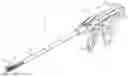
Surgical stapling apparatus
A surgical stapling device particularly suited for endoscopic procedures is described. The device includes a handle assembly and an elongated body extending distally from the handle assembly. The distal end of the elongated body is adapted to engage a disposable loading unit. A control rod having a proximal end operatively connected to the handle assembly includes a distal end extending through the elongated body. A control rod locking member is provided to prevent movement of the control rod until the disposable loading unit is fully secured to the elongated body of the stapling device.
Published: 2012-02-23 Assignee: ETHICON ENDO-SURGERY, INC..US20120046692A1
Human necessities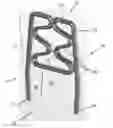
Adjustable compression staple and method for stapling with adjustable compression
A method for applying and maintaining optimal tissue compression with a staple includes piercing tissue with deformable distal ends of staple legs, each distal end defining a stapling point shaped to pierce material, the two staple legs coupled to each other at base ends thereof by a bridge and together forming a substantially U-shaped staple body. The two staple legs enter the tissue until the tissue applies a compressive force to a compression device disposed at least partly between the two staple legs. The compression device has a compression surface movably disposed between the two staple legs and a compression resistor that is connected to the bridge and to the compression surface and operable to resist movement of the compression surface towards the bridge with a force. The two staple legs are deformed to maintain the compressive force between the tissue and the compression device.
Published: 2012-02-23 Assignee: Tyco Healthcare Group LP.US20120046659A1
Human necessities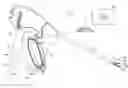
Surgical instrument configured for use with interchangeable hand grips
A surgical instrument is provided and includes a housing having a shaft that extends therefrom that defines a longitudinal axis therethrough, and supports an end effector having opposing jaw members at a distal end thereof. The surgical instrument includes a handle assembly that includes a movable handle and a fixed handle. The fixed handle is adapted to couple to one or more selectively removable grips and the movable handle is configured to impart movement of one or more movable jaw members operably associated with the end effector.
Published: 2012-02-23 Assignee: STOREFRONT.COM ONLINE INC..US20120045303A1
Human necessities
Automated battery and data delivery system
Systems and methods are provided that use a mobile robotic device to transport rechargeable batteries between a base station, which charges the batteries, and a battery operated device, such as battery powered kiosk or signage system, which uses a charged battery as a power source. After traveling to a battery operated device, the mobile robotic device removes any discharged batteries from the battery operated device and installs a charged battery. The mobile robotic device then travels to the base station and attaches the discharged battery to the base station for recharging. The mobile robotic device may be configured to perform other transfers, such as data transfers and paper transfers. In addition, the mobile robotic device may be configured to perform a photographic and spatial survey of the isles, retail shelves, and surrounding environment for various purposes, such as generating three-dimensional store models and remote viewing.
Published: 2012-02-23 Assignee: CERCACOR LABORATORIES, INC., MASIMO LABORATORIES, INC..US20120046530A1
Physics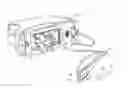
Multiple wavelength sensor drivers
A physiological sensor includes an electrical grid to activate one or more light emitters by addressing at least one row conductor and at least one column conductor. Each light emitter includes a positive terminal and a negative terminal. The physiological sensor includes a first light emitter and a second light emitter. A first contact is communicatively coupled with the positive terminal of the first light emitter, the negative terminal of the second light emitter, a first row conductor, and a first column conductor. A second contact is communicatively coupled with the negative terminal of the first light emitter, the positive terminal of the second light emitter, a second row conductor, and a second column conductor. The first light emitter is activated by addressing the first row conductor and the second column conductor. The second light emitter is activated by addressing the second row conductor and the first column conductor.
Published: 2012-02-23 Assignee: UChicago Argonne, LLC.US20120046421A1
Chemistry; metallurgy
Ordered nanoscale domains by infiltration of block copolymers
A method of preparing tunable inorganic patterned nanofeatures by infiltration of a block copolymer scaffold having a plurality of self-assembled periodic polymer microdomains. The method may be used sequential infiltration synthesis (SIS), related to atomic layer deposition (ALD). The method includes selecting a metal precursor that is configured to selectively react with the copolymer unit defining the microdomain but is substantially non-reactive with another polymer unit of the copolymer. A tunable inorganic features is selectively formed on the microdomain to form a hybrid organic/inorganic composite material of the metal precursor and a co-reactant. The organic component may be optionally removed to obtain an inorganic features with patterned nanostructures defined by the configuration of the microdomain.
Published: 2012-02-23 Assignee: INTERNATIONAL BUSINESS MACHINES CORPORATION.US20120043556A1
Electricity
Epitaxial growth of silicon doped with carbon and phosphorus using hydrogen carrier gas
A method for depositing epitaxial films of silicon carbon (Si:C). In one embodiment, the method includes depositing an n-type doped silicon carbon (Si:C) semiconductor material on a semiconductor deposition surface using a deposition gas precursor composed of a silane containing gas precursor, a carbon containing gas precursor, and an n-type gas dopant source. The deposition gas precursor is introduced to the semiconductor deposition surface with a hydrogen (H2) carrier gas. The method for depositing epitaxial films may include an etch reaction provided by hydrogen chloride (HCl) gas etchant and a hydrogen (H2) carrier gas.
Published: 2012-02-23 Assignee: MASIMO CORPORATION.US20120046557A1
Human necessities
Fluid titration system
A fluid titration system has an optical sensor, a physiological monitor, a titration controller and an infusion device. The optical sensor transmits multiple wavelengths of light into a tissue site of a person and detects the optical radiation after attenuation by pulsatile blood flowing within the tissue site. The physiological monitor receives a resulting sensor signal and derives a plethysmograph that corresponds to the pulsatile blood flow. The monitor also calculates a plethysmograph variability measure that is responsive to changes in perfusion at the tissue site. A titration controller generates a fluid control output according to the variability measure. The infusion device administers a liquid solution via an intravenous (IV) connection to the person according to the fluid control output so as to regulate at least one of a fluid flow start, rate and stop.
Published: 2012-02-23 Assignee: HITACHI KOKUSAI ELECTRIC INC..US20120045905A1
Electricity
Method of manufacturing semiconductor device, method of processing substrate and substrate processing apparatus
Provided is a method of manufacturing a semiconductor device. The method includes: loading a substrate into a process vessel; performing a process to form an film on the substrate by alternately repeating: (a) forming a layer containing an element on the substrate by supplying at least two types of source gases into the process vessel, each of the at least two types of source gases containing the element, and (b) changing the layer containing the element by supplying reaction gas into the process vessel, the reaction gas being different from the at least two types of source gases; and unloading the processed substrate from the process vessel.