Patent Applications published on Jan 24, 2013
Explore the 5,650 U.S. Patent Applications published on the 04th week of 2013, including 3,839 applications that subsequently received a Patent Grant.
Featured patent applications from Jan 24, 2013
US20130020376A1
Human necessities
SURGICAL INSTRUMENT
A surgical instrument. The surgical instrument has an end effector and a trigger in communication with the end effector. The surgical instrument also has a first sensor and an externally accessible memory device in communication with the first sensor. The first sensor has an output that represents a first condition of either the trigger or the end effector. The memory device is configured to record the output of the first sensor. In various embodiments, memory device may include an output port and/or a removable storage medium.
Published: 2013-01-24 Assignee: ETHICON ENDO-SURGERY, INC..US20130020375A1
Human necessities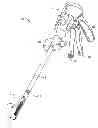
SURGICAL INSTRUMENT
A surgical instrument. The surgical instrument has an end effector and a trigger in communication with the end effector. The surgical instrument also has a first sensor and an externally accessible memory device in communication with the first sensor. The first sensor has an output that represents a first condition of either the trigger or the end effector. The memory device is configured to record the output of the first sensor. In various embodiments, memory device may include an output port and/or a removable storage medium.
Published: 2013-01-24 Assignee: ETHICON ENDO-SURGERY, INC..US20130023861A1
Human necessities
SURGICAL INSTRUMENT
A surgical instrument. The surgical instrument has an end effector and a trigger in communication with the end effector. The surgical instrument also has a first sensor and an externally accessible memory device in communication with the first sensor. The first sensor has an output that represents a first condition of either the trigger or the end effector. The memory device is configured to record the output of the first sensor. In various embodiments, memory device may include an output port and/or a removable storage medium.
Published: 2013-01-24 Assignee: TYCO Healthcare Group LP, Covidien LP.US20130023915A1
Human necessities
Articulating surgical apparatus
An endoscopic instrument includes a housing having shaft. The shaft includes an articulating section disposed thereon. The articulating section includes a plurality of annular stationary and rotatable links arranged in an alternating configuration therealong. Each link of the plurality of rotatable links seated within a corresponding stationary link of the plurality of stationary links to collectively define a central annulus therethrough. An end effector assembly operatively connected to a distal end of the shaft includes a pair of first and second jaw members. An articulation catheter operably disposed through the central annulus is configured to rotate the rotatable links with respect to the stationary links to articulate the shaft about the articulating section.
Published: 2013-01-24 Assignee: TYCO Healthcare Group LP, Covidien LP.US20130023923A1
Human necessities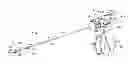
Coaxial coil lock
A surgical instrument includes a housing and an elongated shaft extending distally therefrom. The elongated shaft includes a proximal portion, a distal portion and a flexible portion supported therebetween. The flexible portion permits pivotal movement of the distal portion of the elongated shaft and an end effector supported thereon. A locking mechanism is operatively associated with the flexible portion of the elongated shaft to selectively impede pivotal motion of the distal portion. The locking mechanism includes a locking coil disposed about an axis defined by the flexible portion of the elongated shaft. A distal end of the locking coil is coupled to the distal portion of the elongated shaft, and a proximal end of the locking coil is rotatable about the longitudinal axis to laterally approximate the locking coil to flexible portion, and thus frictionally engage the flexible portion of the elongated shaft to selectively impede articulating motion thereof.
Published: 2013-01-24 Assignee: ETHICON ENDO-SURGERY, INC., Ethicon Endo-Surgery, LLC.US20130023868A1
Human necessities
Surgical instrument with contained dual helix actuator assembly
An apparatus comprises an end effector, an elongate shaft, and a handle assembly. The shaft includes an articulation section that is operable to deflect the end effector away from the longitudinal axis of the shaft. The handle assembly includes a rotary member positioned within an intermediate section of the handle assembly. The rotary member is rotatable about an axis that is parallel to the longitudinal axis of the shaft. The rotary member is operable to control the articulation section of the shaft. The rotary member may include opposing thread sections that simultaneously drive lead screws in opposite longitudinal directions, to thereby control the articulation section. The shaft may be rotatable relative to the handle assembly, and the apparatus may selectively lock or resist such rotation based on the articulation state of the articulation section.
Published: 2013-01-24 Assignee: TERUMO KABUSHIKI KAISHA, Karl Storz GmbH & Co. KG.US20130023860A1
Human necessities
Medical manipulator system
A medical manipulator system includes an operation unit that has motors, a composite input unit and a tip operating unit that is operated by a driving force of the motors, a working unit that may by attached to and detached from the operating unit, and a console. The motors are driven based on an input operation to the composite input unit. The tip operating unit performs at least a rotation operation along an axial direction or a swing operation that crosses the axial direction. The console changes a driving speed of the motors and includes a speed setting unit that changes an operating speed of the rotation operation or the swing operation of the tip operating unit.
Published: 2013-01-24US20130023910A1
Human necessities
TISSUE-IDENTIFYING SURGICAL INSTRUMENT
The tissue-identifying surgical instrument includes a surgical instrument having a handle and an integral probe operatively connected to the handle. The probe senses a tissue of interest to identify the type of tissue, e.g., nerve, muscle, vein or other. The interior of the handle includes a control assembly connected to a power source for operation of the tissue identification function. The control assembly displays and wirelessly transmits tissue identification data to a monitoring workstation to inform the surgeon of the type of tissue contacted by the probe.
Published: 2013-01-24 Assignee: Ethicon Endo-Surgery, LLC.US20130023875A1
Human necessities
Surgical instruments for tensioning tissue
A surgical instrument can comprise an end effector including a plurality of jaws which can be configured to compress tissue therebetween. The end effector can further comprise one or more electrodes which can be configured to direct a flow of electrical current through the tissue in order to heat the tissue and denature collagen and/or other proteins within the tissue. As the tissue cools, the collagen and/or other proteins can renature and thereby seal the tissue. In certain embodiments, the end effector of the surgical instrument can further comprise movable portions which can apply a tension force to the tissue surrounding the tissue being sealed. In various circumstances, the tension force can reduce the over-denaturation, shrinkage, and/or other damage to the surrounding tissue caused by heat flowing from the end effector during the sealing process.
Published: 2013-01-24 Assignee: NATROGEN THERAPEUTICS INTERNATIONAL, INC..US20130022609A1
Human necessities
Method of treating androgen independent prostate cancer
The present invention is directed to a method treating prostate cancer. The method comprises administering to a patient in need thereof at least one compound selected from N-methyl-Δ3,3′-dihydroindole-2,2′ diketone; N-1-(β-D-O-triacetyl-xylopranosyl)-Δ3,3′-dihydroindole-2,2′ diketone; and N-1-(β-D-O-triacetyl-xylopranosyl)-N′-methyl-Δ3,3′-dihydroindole-2,2′ diketone. Preferably the compound is in an amount sufficient to inhibit growth, invasion, and/or metastasis of prostate cancer cells.