Patent Applications published on Feb 20, 2014
Explore the 5,695 U.S. Patent Applications published on the 08th week of 2014, including 3,948 applications that subsequently received a Patent Grant.
Featured patent applications from Feb 20, 2014
US20140048580A1
Human necessities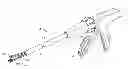
BUTTRESS ATTACHMENT FEATURES FOR SURGICAL STAPLING APPARATUS
An end effector assembly for use with a surgical stapler, comprising a staple cartridge having a tissue contacting surface, an anvil plate having a tissue contacting surface, a buttress material releasably disposed on the tissue contacting surfaces of each of the staple cartridge and the anvil plate, and an epoxy positioned onto the tissue contacting surfaces of each of the staple cartridge and anvil plate defining an attachment zone configured to retain the respective buttress material atop the respective tissue contacting surfaces.
Published: 2014-02-20 Assignee: ETHICON ENDO-SURGERY, INC., Ethicon Endo-Surgery, LLC.US20140048582A1
Human necessities
Staple cartridges for forming staples having differing formed staple heights
A staple cartridge is disclosed. The staple cartridge comprises a staple cartridge body comprising a first side, a second side, and an elongated slot comprising a first lateral side and a second lateral side. The staple cartridge body further comprises, one, a deck having elevationally offset first and second portions, and, two, a plurality of staple cavities. The staple cartridge further comprises a plurality of staples comprising, one, a first row of staples supported a first forming distance from an anvil and formed against the anvil to a first deformed height and, two, a second row of staples supported a second forming distance from the anvil and formed against the anvil to a second deformed height, wherein the second deformed height is different than the first deformed height, and wherein the second forming distance is different than the first forming distance.
Published: 2014-02-20 Assignee: Insurgical, LLC.US20140052135A1
Human necessities
Limited-use tool system and method of reprocessing
A system of limited-use, battery-operated orthopedic power tools, having data collection modules for recording performance characteristics and data analysis modules with algorithms for performing analysis of performance characteristics and providing recommendations for preventative maintenance and repairs.
Published: 2014-02-20 Assignee: COLOPLAST A/S.US20140052143A1
Human necessities
Vaginal manipulator head with tissue index and head extender
A vaginal manipulator includes a head with a tissue index, a door, and a head extender that are attached to the head. The head has an anterior side opposite a posterior side. The tissue index has a first arm that is slidingly engaged with a first groove formed in a first lateral edge of the head, a second arm that is slidingly engaged with a second groove formed in a second lateral edge of the head, and a rib connected between the first and second arms and disposed laterally across the anterior side of the head. The door is coupled to and movable relative to the posterior side of the head. The head extender is removably attached to a distal end of the head.
Published: 2014-02-20 Assignee: Intuitive Surgical Operations, Inc..US20140052154A1
Human necessities
User initiated break-away clutching of a surgical mounting platform
Robotic and/or surgical devices, systems, and methods include kinematic linkage structures and associated control systems configured to facilitate preparation of the system for use. One or more kinematic linkage sub-systems may include joints that are actively driven, passive, or a mix of both. A set-up mode employs an intuitive user interface in which one or more joints are initially held static by a brake or joint drive system. The user may articulate the joint(s) by manually pushing against the linkage with a force, torque, or the like that exceeds a manual articulation threshold. Articulation of the moving joints is facilitated by modifying the signals transmitted to the brake or drive system. The system may sense completion of the reconfiguration from a velocity of the joint(s) falling below a threshold, optionally for a desired dwell time. The system may provide a detent-like manual articulation that is not limited to mechanically pre-defined detent joint configurations. Embodiments of the invention provide, and can be particularly well-suited for manual movement of a platform supporting a plurality of surgical manipulators in a robotic surgical system or the like without having to add additional input devices.
Published: 2014-02-20 Assignee: Globus Medical, Inc.US20140052254A1
Human necessities
Expandable fusion device and method of installation thereof
The present invention provides an expandable fusion device capable of being installed inside an intervertebral disc space to maintain normal disc spacing and restore spinal stability, thereby facilitating an intervertebral fusion. In one embodiment, the fusion device includes a body portion, a first endplate, and a second endplate, the first and second endplates capable of being moved in a direction away from the body portion into an expanded configuration or capable of being moved towards the body portion into an unexpanded configuration. The fusion device is capable of being deployed and installed in both configurations.
Published: 2014-02-20 Assignee: MASIMO CORPORATION.US20140051954A1
Human necessities
Hemoglobin display and patient treatment
The present disclosure describes embodiments of a patient monitoring system and methods that include the measure and display of hemoglobin statistics. In an embodiment, total hemoglobin trending is displayed over a period of time. Statistics can include frequency domain analysis, which may be unique for each patient monitored. The total hemoglobin trending and/or statistics can further be used to help control the treatment of a patient, such as being used to control IV administration.
Published: 2014-02-20 Assignee: GLT ACQUISITION CORP..US20140051952A1
Human necessities
Flowometry in optical coherence tomography for analyte level estimation
Optical coherence tomography (herein “OCT”) based analyte monitoring systems are disclosed. In one aspect, techniques are disclosed that can identify fluid flow in vivo (e.g., blood flow), which can act as a metric for gauging the extent of blood perfusion in tissue. For instance, if OCT is to be used to estimate the level of an analyte (e.g., glucose) in tissue, a measure of the extent of blood flow can potentially indicate the presence of an analyte correlating region, which would be suitable for analyte level estimation with OCT. Another aspect is related to systems and methods for scanning multiple regions. An optical beam is moved across the surface of the tissue in two distinct manners. The first can be a coarse scan, moving the beam to provide distinct scanning positions on the skin. The second can be a fine scan where the beam is applied for more detailed analysis.
Published: 2014-02-20 Assignee: QUALCOMM INCORPORATED.US20140049422A1
Electricity
Wireless power system with capacitive proximity sensing
This disclosure provides systems, methods and apparatus for tuning a transmit coil for operation in a plurality of frequency bands. In one aspect, a method of wireless power transmission is provided. The method includes exciting a first part of a wireless power transmission system, via a wireless power transmitter. The method further includes detecting, in the presence of a non-charging object, a first change in a first parameter. The first parameter is indicative of a coupling between the non-charging object and the first part. The method further includes varying a characteristic of the wireless power transmission based on said first change.
Published: 2014-02-20 Assignee: CERCACOR LABORATORIES, INC..US20140051953A1
Human necessities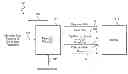
ADAPTIVE CALIBRATION SYSTEM FOR SPECTROPHOTOMETRIC MEASUREMENTS
This disclosure describes, among other features, systems and methods for customizing calibration curves, parameter algorithms, and the like to individual users. An initial calibration curve generated based on a population can be used as a starting point in an algorithm for measuring a physiological parameter such as glucose. The measurement algorithm can determine one or more initial measurement values for a user based on the initial calibration curve. In certain embodiments, one or more alternative measurements, such as invasive or minimally invasive measurements, can periodically or sporadically be input into the measurement algorithm. The algorithm can use the alternative measurements to adapt the calibration curve to the individual. As a result, measurements for the individual can more accurately reflect the individual's actual parameter values.