Patent Applications published on Jul 10, 2014
Explore the 6,260 U.S. Patent Applications published on the 28th week of 2014, including 4,346 applications that subsequently received a Patent Grant.
Featured patent applications from Jul 10, 2014
US20140191015A1
Human necessities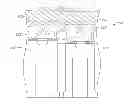
Stapling assembly for forming different formed staple heights
A surgical stapling assembly can include a staple cartridge, an anvil, and a firing system configured to eject staples from the staple cartridge. The firing system can include a firing member configured to relatively position the anvil and the staple cartridge. The staple cartridge can include a first deck portion, a second deco portion, and a wall defined between the first deck portion and the second deck portion.
Published: 2014-07-10 Assignee: ETHICON ENDO-SURGERY, INC., Ethicon LLC.US20140191014A1
Human necessities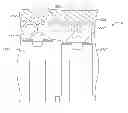
Stapling assembly for forming different formed staple heights
A surgical stapling assembly can include a staple cartridge, an anvil, and a firing system configured to eject staples from the staple cartridge. The firing system can include a firing member configured to relatively position the anvil and the staple cartridge.
Published: 2014-07-10 Assignee: ETHICON ENDO-SURGERY, INC., Ethicon Endo-Surgery, LLC.US20140194914A1
Human necessities
Surgical cutting and sealing instrument with reduced firing force
A surgical instrument includes a first jaw, a second jaw, a cutting member, and at least one compression element. The cutting member includes a cutting edge and is configured to translate with respect to the first jaw between a retracted position and a fully advanced position. The at least one compression element extends distally from the cutting member, wherein the at least one compression element is configured to contact the first jaw such that the first jaw rotates with respect to the second jaw between an open configuration and a closed configuration when the cutting member translates with respect to the first jaw, wherein the at least one compression element comprises a rotatable member, and wherein the rotatable member is configured to be advanced ahead of the cutting edge as the cutting member translates to the fully advanced position.
Published: 2014-07-10 Assignee: Electricite De France.US20140191727A1
Electricity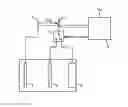
Metal-air accumulator with air electrode protection device
The present invention relates to a rechargeable accumulator comprising one or more metal-air cells, each cell comprising a metallic negative electrode, a first positive electrode for releasing oxygen, a second positive electrode which is a porous air electrode containing at least one oxygen reducing catalyst, and an automatic device for protecting the air electrode during the charging and discharging phases of the accumulator. The invention also relates to a method for storing and releasing electrical energy using such an accumulator.
Published: 2014-07-10 Assignee: Covidien LP.US20140194923A1
Human necessities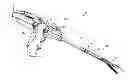
Powered surgical instrument
A powered surgical apparatus, which is configured to engage tissue includes a handle assembly having proximal and distal portions, a movable portion operatively connected to the distal portion of the handle assembly, a tool assembly operatively coupled to the movable portion, a power source configured to supply electrical power, and a transmission system operatively associated with the power source. The movable portion is movable with respect to the handle assembly. The tool assembly is adapted to engage tissue. The transmission system is configured to transmit electrical power or signals between the handle assembly and the movable portion.
Published: 2014-07-10 Assignee: MIDOKURA SARL, Midokura Sarl.US20140195666A1
Electricity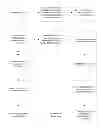
System and method for implementing and managing virtual networks
A system and method for implementing and management virtual networks is disclosed. A method includes receiving a network packet arriving at a first network interface of a first node of an underlying network, communicating at least the packet and an identifier of the first network interface to a decision engine, determining how the packet should be processed based on a simulation by the decision engine of a traversal of a virtual network topology including a plurality of virtual network devices, wherein the decision engine communicates with a shared database accessible from the underlying network that stores the virtual network topology and virtual device configurations for the plurality of virtual network devices; and processing the packet based upon the simulation.
Published: 2014-07-10 Assignee: INTERMEC IP CORP..US20140191913A1
Electricity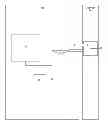
TECHNIQUES FOR STANDARDIZING ANTENNA ARCHITECTURE
Technology for standardizing an antenna design for a computing device includes an antenna element in the shape of an object that is commonly useful with multiple, different computing products. For example, in one embodiment the antenna element is a bracket for holding a stylus or other object within a stylus chamber that is associated with the computing device. The dimension and composition of the antenna remain relatively constant to provide a consistent radiation pattern requiring little or no redesign when implemented across the different products, since it may be placed at an edge of a device, by a stylus holder, or similar, common location that is a distance from a ground plane and device circuitry.
Published: 2014-07-10 Assignee: Medtronic CV Luxembourg S.a.r.l..US20140194981A1
Human necessities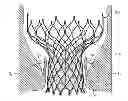
Anti-paravalvular leakage components for a transcatheter valve prosthesis
A valve prosthesis includes one or more anti-paravalvular leakage components coupled to a stent. The anti-paravalvular leakage component may encircle the stent and include a radially expandable control ring coupled to an unattached edge of a flexible skirt which extends the unattached skirt edge outwardly away from the stent and against the native heart valve to form an open-ended annular pocket around the stent. The anti-paravalvular leakage component may encircle the perimeter of the stent and include a flexible skirt having opposing edges coupled to the stent to form one or more enclosed compartments around the stent. Each compartment includes a one-way valve which allows for blood flow into the compartment but prevents blood flow out of the compartment. The anti-paravalvular leakage component may be at least one flap that is coupled to an inner surface of the stent and formed of a flexible material moveable by blood flow.
Published: 2014-07-10 Assignee: MASIMO CORPORATION.US20140194711A1
Human necessities
Patient monitor for determining microcirculation state
As placement of a physiological monitoring sensor is typically at a sensor site located at an extremity of the body, the state of microcirculation, such as whether vessels are blocked or open, can have a significant effect on the readings at the sensor site. It is therefore desirable to provide a patient monitor and/or physiological monitoring sensor capable of distinguishing the microcirculation state of blood vessels. In some embodiments, the patient monitor and/or sensor provide a warning and/or compensates a measurement based on the microcirculation state. In some embodiments, a microcirculation determination process implementable by the patient monitor and/or sensor is used to determine the state of microcirculation of the patient.
Published: 2014-07-10 Assignee: MASIMO CORPORATION.US20140194766A1
Human necessities
Respiratory monitoring
A patient interface in accordance with one embodiment of the present disclosure is configured to be at least partially carried by a patient and to receive gas exhaled by the patient. The patient interface includes first and second cannula tubes each having a first end and a second end, the first ends are configured to be inserted into the nostrils of a patient, the first and second cannula tubes are configured to direct exhaled gas from the patient from the first ends to said second ends. The patient interface also includes first and second sensors positioned near the second ends, and the first and second sensors are configured to provide first and second signals based upon the gas, wherein the first and second signals are indicative of a physiological parameter of the patient. The patient interface also includes a communications link configured to provide the signal to a physiological monitor.