Patent Applications published on Nov 12, 2015
Explore the 7,517 U.S. Patent Applications published on the 46th week of 2015, including 5,376 applications that subsequently received a Patent Grant.
Featured patent applications from Nov 12, 2015
US20150324317A1
Physics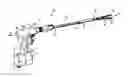
AUTHENTICATION AND INFORMATION SYSTEM FOR REUSABLE SURGICAL INSTRUMENTS
An authentication and information system for use in a surgical stapling system includes a microprocessor configured to demultiplex data from a plurality of components in the surgical system. The authentication and information system can include one wire chips and a coupling assembly with a communication connection.
Published: 2015-11-12 Assignee: GOOGLE INC..US20150326570A1
Electricity
Systems and methods for discerning eye signals and continuous biometric identification
Apparatus, systems, and methods are provided for substantially continuous biometric identification (CBID) of an individual using eye signals in real time. The apparatus is included within a wearable computing device with identification of the device wearer based on iris recognition within one or more cameras directed at one or both eyes, and/or other physiological, anatomical and/or behavioral measures. Verification of device user identity can be used to enable or disable the display of secure information. Identity verification can also be included within information that is transmitted from the device in order to determine appropriate security measures by remote processing units. The apparatus may be incorporated within wearable computing that performs other functions including vision correction, head-mounted display, viewing the surrounding environment using scene camera(s), recording audio data via a microphone, and/or other sensing equipment.
Published: 2015-11-12 Assignee: Covidien LP.US20150320423A1
Human necessities
Ejecting assembly for a surgical stapler
An end effector includes first and second jaws, a drive screw, a lead screw nut, and a drive beam. The drive screw is disposed within the first jaw. The lead screw nut defines a threaded bore that receives the drive screw. The lead screw nut is advanced along the drive screw as the drive screw is rotated in a first direction and is retracted along the drive screw as the drive screw rotates in a second direction. The drive beam is releasably coupled to the lead screw nut when the lead screw nut is in a retracted position. As the lead screw nut is advanced the drive beam is pulled by the lead screw nut. The drive beam is decoupled from the lead screw nut as the lead screw nut is advanced such that the lead screw nut is advanced relative to the drive beam.
Published: 2015-11-12 Assignee: Ethicon LLC.US20150320437A1
Human necessities
Method of operating an articulating ultrasonic surgical instrument
An apparatus comprises a body assembly, a shaft, an acoustic waveguide, an articulation section, an end effector, and an articulation drive assembly. The shaft extends distally from the body assembly and defines a longitudinal axis. The acoustic waveguide comprises a flexible portion. The articulation section is coupled with the shaft. A portion of the articulation section encompasses the flexible portion of the waveguide. The articulation section comprises a plurality of body portions aligned along the longitudinal axis and a flexible locking member. The flexible locking member is operable to secure the body portions in relation to each other and in relation to the shaft. The end effector comprises an ultrasonic blade in acoustic communication with the waveguide. The articulation drive assembly is operable to drive articulation of the articulation section to thereby deflect the end effector from the longitudinal axis.
Published: 2015-11-12 Assignee: STMicroelectronics Asia Pacific Pte Ltd..US20150324023A1
Physics
Touch panel scanning method, circuit and system
A touch panel includes a plurality of drive lines, a plurality of orthogonal sense lines, and a plurality of sensors. A method of controlling the touch panel to detect touches includes simultaneously applying a drive signal to each of a group of drive lines of the touch panel. Each of the drive signals is applied to a corresponding drive line in the group during a time slot and all the applied drive signals having the same electrical characteristics over the time slot. The method includes sensing sense signals generated on the sense lines in response to the applied drive signals and processing the sense signals to detect touches of the touch panel.
Published: 2015-11-12 Assignee: CHENES LLC, COSMAN INSTRUMENTS, LLC.US20150320481A1
Human necessities
Electrosurgical generator
This invention relates to high-frequency ablation of tissue in the body using a cooled high-frequency electrode connected to a high frequency generator including a computer graphic control system and an automatic controller for control the signal output from the generator, and adapted to display on a real time graphic display a measured parameter related to the ablation process and visually monitor the variation of the parameter of the signal output that is controlled by the controller during the ablation process. In one example, one or more measured parameters are displayed simultaneously to visually interpret the relation of their variation and values. In one example, the displayed one or more parameters can be taken from the list of measured voltage, current, power, impedance, electrode temperature, and tissue temperature related to the ablation process. The graphic display gives the clinician an instantaneous and intuitive feeling for the dynamics and stability of the ablation process for safety and control. This invention relates to monitoring and controlling multiple ground pads to optimally carry return currents during high-frequency tissue ablation, and to prevent of ground-pad skin burns. This invention relates to the use of ultrasound imaging intraoperatively during a tissue ablation procedure. This invention relates to the use of nerve stimulation and blocking during a tissue ablation procedure.
Published: 2015-11-12 Assignee: INTEL CORPORATION.US20150325029A1
Physics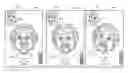
Mechanism for facilitating dynamic simulation of avatars corresponding to changing user performances as detected at computing devices
A mechanism is described for facilitating dynamic simulation of avatars based on user performances according to one embodiment. A method of embodiments, as described herein, includes capturing, in real-time, an image of a user, the image including a video image over a plurality of video frames. The method may further include tracking changes in size of the user image, the tracking of the changes may include locating one or more positions of the user image within each of the plurality of video frames, computing, in real-time, user performances based on the changes in the size of the user image over the plurality of video frames, and dynamically scaling an avatar associated with the user such that the avatar is dynamically simulated corresponding to the user performances.
Published: 2015-11-12 Assignee: Micron Technology, Inc..US20150325272A1
Physics
In-memory lightweight memory coherence protocol
A system includes a plurality of host processors and a plurality of HMC devices configured as a distributed shared memory for the host processors. An HMC device includes a plurality of integrated circuit memory die including at least a first memory die arranged on top of a second memory die and at least a portion of the memory of the memory die is mapped to include at least a portion of a memory coherence directory; and a logic base die including at least one memory controller configured to manage three-dimensional (3D) access to memory of the plurality of memory die by at least one second device, and logic circuitry configured to determine memory coherence state information for data stored in the memory of the plurality of memory die, communicate information regarding the access to memory, and include the memory coherence information in the communicated information.
Published: 2015-11-12 Assignee: Micron Technology, Inc..US20150324290A1
Physics
Stacked memory device system interconnect directory-based cache coherence methodology
A system includes a plurality of host processors and a plurality of hybrid memory cube (HMC) devices configured as a distributed shared memory for the host processors. An HMC device includes a plurality of integrated circuit memory die including at least a first memory die arranged on top of a second memory die, and at least a portion of the memory of the memory die is mapped to include at least a portion of a memory coherence directory; and a logic base die including at least one memory controller configured to manage three-dimensional (3D) access to memory of the plurality of memory die by at least one second device, and logic circuitry configured to implement a memory coherence protocol for data stored in the memory of the plurality of memory die.
Published: 2015-11-12 Assignee: HONEYWELL INTERNATIONAL INC..US20150327012A1
Electricity
PORTABLE ELECTRONIC DEVICES HAVING A SEPARATE LOCATION TRIGGER UNIT FOR USE IN CONTROLLING AN APPLICATION UNIT
A portable electronic device (10) includes a housing (130), a receiver (190, 450) operably coupled to the housing for receiving data regarding a physical location of the portable electronic device, a location trigger unit (300), and an application unit (200). The location trigger unit is operably coupled to the housing and to the receiver, and the location trigger unit comprises a first processor (322). The application unit is operably coupled to the housing and to the location trigger unit, and comprises a second processor (222). The application unit comprises a plurality of operating modes. The location trigger unit, based on the physical location of the portable electronic device, is operable to at least one of effect a) changing the operating mode of the application unit, and b) turning on and off the second processor of the application unit. The portable electronic device maybe a portable phone.