Patent Applications published on Jun 30, 2016
Explore the 9,125 U.S. Patent Applications published on the 26th week of 2016, including 6,674 applications that subsequently received a Patent Grant.
Featured patent applications from Jun 30, 2016
US20160183948A1
Human necessities
Surgical stapling instrument having a clearanced opening
A stapling assembly comprising a first jaw and a second jaw, wherein the first jaw is rotatable relative to the second jaw. The stapling assembly comprises a detachable cartridge portion comprising a plurality of staples and an anvil configured to deform the staples. The stapling assembly comprises a staple firing member comprising a first cam configured to engage the first jaw and a second cam configured to engage the second jaw when the staple firing member is advanced from an initial position, and wherein the first jaw comprises a clearanced opening configured to receive the first cam when the staple firing member is in the initial position such that the first cam is not engaged with the first jaw when the staple firing member is in the initial position.
Published: 2016-06-30 Assignee: Ethicon LLC.US20160183950A1
Human necessities
Surgical stapling instrument having a restraining member
A surgical severing and stapling instrument, suitable for laparoscopic and endoscopic clinical procedures, clamps tissue within an end effector of an elongate channel pivotally opposed by an anvil. An E-beam firing bar moves distally through the clamped end effector to sever tissue and to drive staples on each side of the cut. The E-beam firing bar affirmatively spaces the anvil from the elongate channel to assure properly formed closed staples, especially when an amount of tissue is clamped that is inadequate to space the end effector. In particular, an upper pin of the firing bar longitudinally moves through an anvil slot and a channel slot is captured between a lower cap and a middle pin of the firing bar to assure a minimum spacing. Forming the E-beam from a thickened distal portion and a thinned proximal strip enhances manufacturability and facilitates use in such articulating surgical instruments.
Published: 2016-06-30 Assignee: Ethicon LLC.US20160183945A1
Human necessities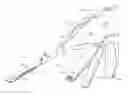
Surgical instrument including a shifting assembly
A surgical instrument comprising a rotary motion generator, a shifting assembly, a rotatable shaft, an end effector, and a firing member is disclosed. The shifting assembly comprises a first output, a second output, a switch, and a biasing mechanism. The first output and the second output are selectively drivable by the rotary motion generator. The switch is configured to switch between the selective drivability of the first and second outputs. The biasing mechanism is configured to motivate and maintain an operative meshment between the rotary motion generator and one of the first output and the second output. The end effector comprises a first jaw and a second jaw. The first jaw is moveable relative to the second jaw during a closing motion. The firing member is moveable relative to the end effector during a firing motion. The closing motion is separate and distinct from the firing motion.
Published: 2016-06-30 Assignee: Ethicon Endo-Surgery, LLC.US20160183947A1
Human necessities
Surgical stapling instrument configured to apply a compressive pressure to tissue
A surgical stapling assembly. The surgical stapling assembly comprises a frame, a distal end, a first jaw comprising a channel, and a second jaw extending from the frame. The surgical stapling assembly comprises a channel retainer, wherein the channel is slidably attachable to the channel retainer. The surgical stapling assembly further comprises a plurality of staples and a staple firing member comprising a first cam configured to engage the first jaw and a second cam configured to engage the second jaw when the staple firing member is advanced from an unadvanced position toward the distal end, wherein one of the first jaw and the second jaw comprises a clearanced opening configured to permit the firing member to be unengaged with one of the first jaw and the second jaw when the firing member is in the unadvanced position.
Published: 2016-06-30 Assignee: Ethicon Endo-Surgery, LLC.US20160184039A1
Human necessities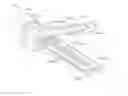
Surgical end effectors having angled tissue-contacting surfaces
Surgical end effectors are disclosed having angled tissue-contacting surfaces. The end effectors may have a first jaw member that is movable relative to a second jaw member between an open position and a closed position. The first jaw member may have a first positively-angled tissue-contacting surface. The second jaw member may have a second positively-angled tissue-contacting surface. At least one of the jaw members may have at least one active electrode configured to deliver RF energy to tissue located between the first jaw member and the second jaw member when in the closed position.
Published: 2016-06-30US20160183944A1
Human necessities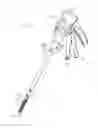
SURGICAL CUTTING INSTRUMENT THAT ANALYZES TISSUE THICKNESS
A surgical instrument with a tissue-clamping end effector, where actuation of the instrument is locked out when the thickness of the tissue clamped in the end effector is not within a specified thickness range. The end effector may comprise a tissue thickness module that senses the thickness of the tissue clamped in the end effector. The surgical instrument also comprises a control circuit in communication with the tissue thickness module. The control circuit prevents actuation of a working portion of the end effector when the thickness of the tissue clamped in the end effector is not within the specified thickness range.
Published: 2016-06-30 Assignee: Cilag GmbH International.US20160183943A1
Human necessities
Empty clip cartridge lockout
A surgical device for clipping tissue can include a replaceable cartridge comprising a stack of clips contained therein and a firing drive configured to reciprocatingly eject, or deploy, the clips from the cartridge. After the clips have been deployed from the cartridge, a blocking member can be positioned to impede or block the firing drive. In at least one embodiment, the cartridge can include a biasing member configured to bias the blocking member into a firing chamber defined in the cartridge and/or surgical device. The surgical device can also include a crimping drive configured to deform a clip after it has been ejected from the cartridge. The blocking member can also be configured to impede or block the crimping drive after all of the clips from the cartridge have been used.
Published: 2016-06-30US20160183939A1
Human necessities
ACCESSING DATA STORED IN A MEMORY OF A SURGICAL INSTRUMENT
A process and system are disclosed for downloading sensor data, stored in a memory device of a surgical cutting and fastening instrument, to an external or remote computer device. The process may involve storing data from one or more sensors of a surgical cutting and fastening instrument in a memory device of a control unit of the surgical cutting and fastening instrument during a surgical procedure involving the surgical cutting and fastening instrument. Next, after the surgical procedure, a data link between the control unit and the remote computer device is established. Then, the sensor data can be downloaded from the control unit to the remote computer device.
Published: 2016-06-30 Assignee: P4TENTS1, LLC.US20160188181A1
Physics
User interface system, method, and computer program product
A system, method, and computer program product are provided for a touch or pressure signal-based interface. In operation, a touch or pressure signal is received in association with a touch interface of a device. To this end, a user experience is altered utilizing the signal. A system, method, and computer program product are provided for modifying one or more objects in one or more memory devices. In one embodiment, an apparatus is provided, comprising one or more memory devices including a non-volatile memory. Additionally, the apparatus comprises circuitry including a first communication path for communicating with the at least one processor, and a second communication path for communicating with at least one storage sub-system which operates slower than the one or more memory devices. Further, the circuitry is operable to modify one or more objects in the one or more memory devices.
Published: 2016-06-30 Assignee: Covidien LP.US20160183938A1
Human necessities
Surgical device having multiple drivers
A surgical device is provided, the surgical device including a first driver for performing a first movement function; a second driver for performing a second movement function; a first rotatable drive shaft configured, upon actuation, to cause selective engagement of one of the first and second drivers with a second rotatable drive shaft, wherein the second rotatable drive shaft is configured to drive the selectively engaged one of the first and second drivers. Third and fourth drivers may also be included. The drivers may function to rotate a shaft portion of the surgical device relative to, and about the longitudinal axis of, a handle; move a jaw portion relative to the shaft portion; move a first jaw relative to a second jaw; and/or move a surgical member within the second jaw.