Patent Applications published on Nov 30, 2017
Explore the 7,700 U.S. Patent Applications published on the 48th week of 2017, including 5,947 applications that subsequently received a Patent Grant.
Featured patent applications from Nov 30, 2017
US20170343896A1
Physics
Sequential infiltration synthesis for enhancing multiple-patterning lithography
Simplified methods of multiple-patterning photolithography using sequential infiltration synthesis to modify the photoresist such that it withstands plasma etching better than unmodified resist and replaces one or more hard masks and/or a freezing step in MPL processes including litho-etch-litho-etch photolithography or litho-freeze-litho-etch photolithography.
Published: 2017-11-30 Assignee: ASM IP Holding B.V..US20170342559A1
Chemistry; metallurgy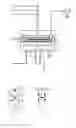
Method for forming carbon-containing silicon/metal oxide or nitride film by ALD using silicon precursor and hydrocarbon precursor
An oxide or nitride film containing carbon and at least one of silicon and metal is formed by ALD conducting one or more process cycles, each process cycle including: feeding a first precursor in a pulse to adsorb the first precursor on a substrate; feeding a second precursor in a pulse to adsorb the second precursor on the substrate; and forming a monolayer constituting an oxide or nitride film containing carbon and at least one of silicon and metal on the substrate by undergoing ligand substitution reaction between first and second functional groups included in the first and second precursors adsorbed on the substrate. The ligand may be a halogen group, —NR2, or —OR.
Published: 2017-11-30 Assignee: Auris Health, Inc..US20170340396A1
Human necessities
Configurable robotic surgical system with virtual rail and flexible endoscope
Systems and methods for moving or manipulating robotic arms are provided. A group of robotic arms are configured to form a virtual rail or line between the end effectors of the robotic arms. The robotic arms are responsive to outside force such as from a user. When a user moves a single one of the robotic arms, the other robotic arms will automatically move to maintain the virtual rail alignments. The virtual rail of the robotic arm end effectors may be translated in one or more of three dimensions. The virtual rail may be rotated about a point on the virtual rail line. The robotic arms can detect the nature of the contact from the user and move accordingly. Holding, shaking, tapping, pushing, pulling, and rotating different parts of the robotic arm elicits different movement responses from different parts of the robotic arm.
Published: 2017-11-30 Assignee: TOUCHSTONE INTERNATIONAL MEDICAL SCIENCE CO., LTD..US20170340328A1
Human necessities
Staple cartridge assembly and medical stapler using the staple cartridge assembly
A staple cartridge assembly comprises a staple cartridge, an anvil and a cutter, wherein the cutter comprises a first end and a second end; the staple cartridge assembly also comprises a rotation shaft and an auxiliary closing member which is connected with the rotation shaft; the staple cartridge assembly is also provided with a driving component capable of driving the rotation shaft to rotate; the driving component drives the rotation shaft to drive the auxiliary closing member to move in the process in which the staple cartridge assembly is converted from an original status to a closed status; when at least the staple cartridge assembly is in the closed status, one end surface of the auxiliary closing member abuts against the anvil to apply a force to the anvil for driving the anvil to be closed towards the staple cartridge.
Published: 2017-11-30 Assignee: SEMES CO., LTD., SEMES CO., LTD..US20170341229A1
Performing operations; transporting
Stocker for receiving cassettes and method of teaching a stocker robot disposed therein
Disclosed is a stocker for receiving a cassette. The stocker includes a shelf for receiving a cassette, a stocker robot, a teaching jig, and a teaching unit. The stocker robot includes a robot arm configured to load the cassette in the shelf and to unload the cassette from the shelf. The teaching jig is disposed in the shelf to teach the stocker robot. The teaching unit is disposed on the robot arm to acquire information for teaching the stocker robot using the teaching jig.
Published: 2017-11-30 Assignee: MASIMO CORPORATION.US20170340293A1
Human necessities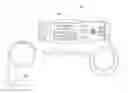
Automated condition screening and detection
Embodiments are disclosed that enable an electronic device to instruct as user how to user one or more noninvasive sensors to measure one or more physiological parameters of a patient. In one embodiment, the measured parameters are used to obtain a diagnosis, such as a diagnosis of a critical congenital heart defect.
Published: 2017-11-30 Assignee: TOKYO ELECTRON LIMITED.US20170345674A1
Electricity
Method of selective silicon nitride etching
Embodiments of the invention provide a substrate processing method for selective SiN etching relative to other layers used in semiconductor manufacturing. According to one embodiment, the substrate processing method includes providing in a plasma processing chamber a substrate containing a first material containing silicon nitride and a second material that is different from the first material, forming a plasma-excited process gas containing NF3 and O2, and exposing the substrate to the plasma-excited process gas to selectively etch the first material relative to the second material. According to one embodiment, the second material may be selected from the group consisting of Si, SiO2, and a combination thereof.
Published: 2017-11-30US20170344754A1
Physics
System and method for data management and task routing based on data tagging
Systems and methods are shown for managing call center data in accordance with one or more sets of compliance rules involving receiving data pertaining to an interaction, determining a set of compliance rules relevant to the received data, tagging the received data to identify the relevant set of compliance rules, and utilizing the data tagging, applying the relevant set of compliance rules to handling the received data. Examples also involve receiving an interaction request, obtaining the data tagging for data corresponding to the received interaction request, using the data tagging for the data corresponding to the received interaction request to obtain the corresponding relevant set of compliance rules, using the corresponding set of compliance rules to identify agents eligible to access the data corresponding to the received interaction request, and routing the received interaction request to one of the eligible agents based on a defined routing strategy.
Published: 2017-11-30 Assignee: CenturyLink Intellectual Property LLC.US20170345420A1
Physics
Internet of things (IoT) human interface apparatus, system, and method
Novel tools and techniques are provided for implementing Internet of Things (“IoT”) functionality. In some embodiments, microphones of an IoT human interface device might receive user voice input. The IoT human interface device and/or a computing system might identify explicit commands in the voice input, identify first IoT-capable devices to which the explicit commands are applicable, receive sensor data from IoT sensors, and analyze the voice input in view of previous user voice inputs and in view of the sensor data to determine whether the voice input contains any implicit commands. If so, second IoT-capable devices to which an implicit command is additionally applicable might be identified, instructions based on a combination of the explicit and implicit commands may be generated and sent to the second IoT-capable devices. Instructions based only on the explicit commands are generated and sent to first IoT-capable devices to which implicit commands are not applicable.
Published: 2017-11-30US20170346851A1
Electricity
Mutual authentication security system with detection and mitigation of active man-in-the-middle browser attacks, phishing, and malware and other security improvements
A strong, unified and comprehensive new computer security and authentication solution is disclosed. It is ideal for everyday users, and invents faster and easier enrollments, faster usage, easier usage, numerous aspects of stronger security including token based rapid mutual-authentication with protection against phishing, MitM, malware and user carelessness, secure resilience against token loss or theft, continuing protection in harsh situations, non-repudiation benefits, biometric encryption, code self-defenses, improved deployment, lower costs, new revenue opportunities, and more. One aspect's flow, visually-enforced mutual-authentication is: customer visits protected web site's login page, gets identified via Cookies, site displays one random photograph on said page, triggers customer's smartphone to automatically show a grid of random photos, one of which matches the login page photo, and customer taps it to login. Disclosed techniques teach how to block fraudulent sites and activity by preventing these producing any matching photo the customer can tap.