Patent Applications published on May 24, 2018
Explore the 6,725 U.S. Patent Applications published on the 21st week of 2018, including 5,161 applications that subsequently received a Patent Grant.
Featured patent applications from May 24, 2018
US20180140299A1
Human necessities
FASTENER CARTRIDGE COMPRISING A TISSUE THICKNESS COMPENSATOR AND A GAP SETTING ELEMENT
A fastener cartridge can comprise a support portion, a tissue thickness compensator positioned relative to the support portion, and a plurality of fasteners positioned within the support portion and/or the tissue thickness compensator which can be utilized to fasten tissue. In use, the fastener cartridge can be arranged in a first jaw of a surgical fastening device, wherein a second jaw, or anvil, can be positioned opposite the first jaw. To deploy the fasteners, a staple-deploying member is advanced through the fastener cartridge to move the fasteners toward the anvil. As the fasteners are deployed, the fasteners can capture at least a portion of the tissue thickness compensator therein along with at least a portion of the tissue being fastened. The fastener cartridge can further comprise a gap setting element which can be configured to control the distance between the anvil, the support portion, and/or the tissue thickness compensator.
Published: 2018-05-24 Assignee: Ethicon LLC.US20180140368A1
Human necessities
Surgical end effectors having angled tissue-contacting surfaces
Surgical end effectors are disclosed having angled tissue-contacting surfaces. The end effectors may have a first jaw member that is movable relative to a second jaw member between an open position and a closed position. The first jaw member may have a first positively-angled tissue-contacting surface. The second jaw member may have a second positively-angled tissue-contacting surface. At least one of the jaw members may have at least one active electrode configured to deliver RF energy to tissue located between the first jaw member and the second jaw member when in the closed position.
Published: 2018-05-24 Assignee: KIMBERLY-CLARK WORLDWIDE, INC..US20180142420A1
Textiles; paper
Hesperaloe tissue having improved cross-machine direction properties
Soft, durable and bulky tissue products comprising non-wood fibers and more particularly high yield hesperaloe pulp fibers are disclosed. The tissue products preferably comprise at least about 5 percent, by weight of the product, high yield hesperaloe pulp fiber and have relatively modest tensile strengths, such as a geometric mean tensile (GMT) less than about 1,000 g/3″, and improved durability and cross-machine direction (CD) properties, such as a CD Stretch greater than about 10 percent. Additionally, at the foregoing tensile strengths the products are not overly stiff. For example the tissue products may have a Stiffness Index less than about 10.0.
Published: 2018-05-24 Assignee: TOKYO ELECTRON LIMITED.US20180142357A1
Chemistry; metallurgy
Substrate processing apparatus, injector, and substrate processing method
There is provided a substrate processing apparatus, including: a process vessel configured to accommodate a plurality of substrates; a gas supply part configured to supply a gas into the process vessel; an exhaust part configured to exhaust the gas in the process vessel; and a scavenging part configured to scavenge an interior of the gas supply part, wherein the gas supply part is connected to the scavenging part.
Published: 2018-05-24 Assignee: HITACHI KOKUSAI ELECTRIC INC., KOKUSAI ELECTRIC CORPORATION.US20180142353A1
Chemistry; metallurgy
Reaction tube structure and substrate processing apparatus
A substrate processing apparatus includes a reaction tube defining a substrate processing chamber; a gas inlet provided at a lower portion of the reaction tube to supply a process gas; a first buffer unit for temporarily retaining the process gas, the first buffer unit at a first side of an inner surface of the reaction tube and includes a plurality of gas supply holes; and a gas outlet provided at a second side of the inner surface of the reaction tube opposite to the first side, to exhaust the process gas from the process chamber. The gas supply holes are provided from an upper end portion of the first buffer unit to a lower end portion of the first buffer unit, and the process gas is supplied through the plurality of gas supply holes into the process chamber, passes through the process chamber, and exhausted through the gas outlet.
Published: 2018-05-24 Assignee: Sony Corporation.US20180145741A1
Electricity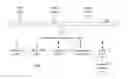
Interference suppressing method and device in dynamic frequency spectrum access system
An interference suppressing method and device in a dynamic frequency spectrum access (DSA) system. The system includes: a frequency spectrum management device, a primary system including a plurality of primary devices, and a secondary system including a plurality of secondary devices. The method includes: transmitting position information of each of the secondary devices to the frequency spectrum management device; determining, by the frequency spectrum management device, a weight factor for a specific secondary device according to the received position formation; and performing a second-stage precoding, and in the second-stage precoding, adjusting, by using the weight factor, an estimated power of the specific secondary device leaking to the other secondary device.
Published: 2018-05-24 Assignee: Aon Global Operations Ltd (Singapore Branch).US20180146004A1
Electricity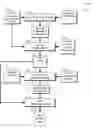
Systems and methods for cybersecurity risk assessment
In an illustrative embodiment, methods and systems for cybersecurity assessment of an organization's technology infrastructure include identifying features of the technology infrastructure and automatically generating a threat profile relevant to both the technology infrastructure and the organization's business (and/or business objectives), where the threat profile includes potential threat actors and threat scenarios applicable to the technology infrastructure. The methods and systems may include evaluating cybersecurity controls of the organization's technology infrastructure in light of the threat profile to identify and rate vulnerabilities within the technology infrastructure.
Published: 2018-05-24 Assignee: Covidien LP.US20180140366A1
Human necessities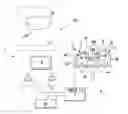
Controlling robotic surgical instruments with bidirectional coupling
A surgical system for connection to a robotic arm includes an instrument drive unit and a surgical instrument detachably coupled to the instrument drive unit. The instrument drive unit includes a motor assembly and an adapter assembly. The motor assembly has a motor and a shaft extending from the motor. The adapter assembly includes an adapter body and a tab lock supported by the adapter body. The adapter body is connected to the shaft and movable along the shaft. The surgical instrument supports an instrument tab that is engagable with the tab lock to move the tab lock relative to the adapter body from a first position to a second position. The tab lock moves from the second position to the first position so that the adapter assembly secures to the instrument tab.
Published: 2018-05-24 Assignee: GENERAL ELECTRIC COMPANY.US20180144243A1
Physics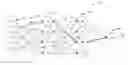
Hardware system design improvement using deep learning algorithms
Methods and apparatus for deep learning-based system design improvement are provided. An example system design engine apparatus includes a deep learning network (DLN) model associated with each component of a target system to be emulated, each DLN model to be trained using known input and known output, wherein the known input and known output simulate input and output of the associated component of the target system, and wherein each DLN model is connected as each associated component to be emulated is connected in the target system to form a digital model of the target system. The example apparatus also includes a model processor to simulate behavior of the target system and/or each component of the target system to be emulated using the digital model to generate a recommendation regarding a configuration of a component of the target system and/or a structure of the component of the target system.
Published: 2018-05-24 Assignee: Matterport, Inc..US20180143756A1
Physics
Defining, displaying and interacting with tags in a three-dimensional model
This application generally relates to defining, displaying and interacting with tags in a 3D model. In an embodiment, a method includes generating, by a system including a processor, a three-dimensional model of an environment based on sets of aligned three-dimensional data captured from the environment, and associating tags with defined locations of the three-dimensional model, wherein the tags are respectively represented by tag icons that are spatially aligned with the defined locations of the three-dimensional model as included in different representations of the three-dimensional model rendered via an interface of a device, wherein the different representations correspond to different perspectives of the three-dimensional model, and wherein selection of the tag icons causes the tags respectively associated therewith to be rendered at the device.