Patent Applications published on May 31, 2018
Explore the 6,473 U.S. Patent Applications published on the 22nd week of 2018, including 5,044 applications that subsequently received a Patent Grant.
Featured patent applications from May 31, 2018
US20180146960A1
Human necessities
TORQUE OPTIMIZATION FOR SURGICAL INSTRUMENTS
A control system having speed management control. The control system can be in signal communication with a battery, and the battery can be coupled to a motor. The speed management control can include a pulse width modulation circuit, which can control the duration of pulses supplied from the battery to the motor. The motor can include a primary set of coils and a secondary set of coils. The control system can direct surplus current to the secondary set of coils to maximize the torque generated by the motor.
Published: 2018-05-31 Assignee: Covidien LP.US20180146962A1
Human necessities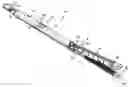
Reload assembly with spent reload indicator
A reload assembly is disclosed that includes a proximal body portion having an indicator that is movable from a retracted position to an advanced position to provides a visual indication to a clinician of the state of the reload assembly, i.e., whether the reload assembly is loaded with staples and ready for use or depleted of staples. A tool assembly of the presently disclosed reload assembly may also include a cartridge assembly, an anvil and a drive assembly. In embodiments, one or both of the cartridge assembly, the anvil, and/or the drive assembly may support an illuminating device. In embodiments, the illuminating device, which may be an LED, is adapted to change color when the reload assembly has been fired to provide an indication to a clinician that the reload assembly is spent. Since the illuminating device is illuminated when reload assembly is in both the unused and spent states, the illuminating device also improves visualization during placement and use of the reload assembly.
Published: 2018-05-31 Assignee: HiDeep Inc..US20180150153A1
Physics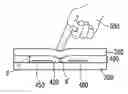
Pressure detectable touch input device including display module
A touch input device which includes a display module and is capable of detecting a pressure may be provided. The touch input device includes: a display module including a flat portion and at least one curved portion which extends from the flat portion and is curved with a predetermined curvature; and a pressure detection module which is formed under the display module and detects a touch pressure applied to a surface of the display module. The pressure detection module detects the touch pressure on the basis of a capacitance change amount according to a distance change between a reference potential layer and the pressure detection module. As a result, the touch input device including various types and forms of the display modules is capable of efficiently detecting the touch position and touch pressure.
Published: 2018-05-31 Assignee: ASM IP Holding B.V..US20180151346A1
Electricity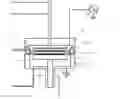
Method of topologically restricted plasma-enhanced cyclic deposition of silicon or metal nitride
In an embodiment, a method for transferring a pattern constituted by vertical spacers arranged on a template with intervals to the template, includes depositing by plasma-enhanced cyclic deposition a layer as a spacer umbrella layer substantially only on a top surface of each vertical spacer made of silicon or metal oxide, wherein substantially no layer is deposited on sidewalls of the vertical spacers and on an exposed surface of the template, followed by transferring the pattern constituted by the vertical spacers to the template by anisotropic etching using the vertical spacers with the spacer umbrella layers.
Published: 2018-05-31 Assignee: SanDisk Technologies LLC.US20180151588A1
Electricity
Three-dimensional memory device with discrete self-aligned charge storage elements and method of making thereof
A memory opening can be formed through an alternating stack of insulating layers and sacrificial material layers over a substrate. A material layer stack containing, from outside to inside, an aluminum oxide tunneling dielectric layer, a silicon-containing tunneling dielectric layer, and a vertical semiconductor channel is formed within the memory opening. After forming backside recesses by removing the sacrificial material layers, charge trapping material portions are formed on physically exposed surfaces of the aluminum oxide tunneling dielectric layer by employing a selective silicon nitride deposition process. A backside blocking dielectric layer and electrically conductive layers are formed in the backside recesses. The charge trapping material portions are discrete silicon nitride portions located at levels of the electrically conductive layers and vertically spaced from one another by the insulating layers.
Published: 2018-05-31 Assignee: ASM IP Holding B.V..US20180151355A1
Electricity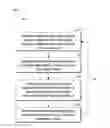
Formation of silicon-containing thin films
Methods for depositing silicon-containing thin films on a substrate in a reaction space are provided. The methods can include at least one plasma enhanced atomic layer deposition (PEALD) cycle including one or more deposition cycles including contacting the substrate with a silicon precursor and a second reactant that does not include oxygen. In some embodiments the methods a deposition cycle can also including contacting the substrate with a carbon precursor.
Published: 2018-05-31 Assignee: AT&T Intellectual Property I, LP.US20180151957A1
Electricity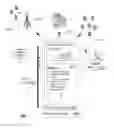
Method and apparatus including an antenna comprising a lens and a body coupled to a feedline having a structure that reduces reflections of electromagnetic waves
Aspects of the subject disclosure may include, for example, antenna structure that includes a dielectric antenna having a dielectric lens and a dielectric body, and a feedline coupled to the dielectric antenna, wherein an endpoint of the feedline is configured to reduce a reflection of an electromagnetic wave transmission, wherein electromagnetic waves generated by the electromagnetic wave transmission are guided along the feedline without requiring an electrical return path, and wherein the electromagnetic waves propagate through the dielectric body to the dielectric lens to generate wireless signals. Other embodiments are disclosed.
Published: 2018-05-31 Assignee: ASM IP Holding B.V..US20180151358A1
Electricity
Process for forming a film on a substrate using multi-port injection assemblies
A gas distribution system is disclosed in order to obtain better film uniformity on a substrate in a cross-flow reactor. The better film uniformity may be achieved by an asymmetric bias on individual injection ports of the gas distribution system. The gas distribution may allow for varied tunability of the film properties.
Published: 2018-05-31US20180148832A1
Chemistry; metallurgy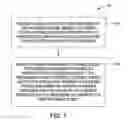
METHODS FOR DEPOSITING FLOWABLE CARBON FILMS USING HOT WIRE CHEMICAL VAPOR DEPOSITION
In some embodiments, a method of processing a substrate disposed within a processing volume of a hot wire chemical vapor deposition (HWCVD) process chamber, includes: (a) providing a carbon containing precursor gas into the processing volume, the carbon containing precursor gas being provided into the processing volume from an inlet located a first distance above a surface of the substrate; (b) breaking hydrogen-carbon bonds within molecules of the carbon containing precursor via introduction of hydrogen radicals to the processing volume to deposit a flowable carbon layer atop the substrate, wherein the hydrogen radicals are formed by flowing a hydrogen containing gas over a plurality of filaments disposed within the processing volume above the substrate and the inlet.
Published: 2018-05-31 Assignee: OneTrust, LLC.US20180152483A1
Electricity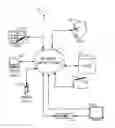
Data processing systems and methods for performing privacy assessments and monitoring of new versions of computer code for privacy compliance
Data processing systems and methods, according to various embodiments, perform privacy assessments and monitor new versions of computer code for updated features and conditions that relate to compliance with privacy standards. The systems and methods may obtain a copy of computer code (e.g., a software application or code associated with a website) that collects and/or uses personal data, and then automatically analyze the computer code to identify one or more privacy-related attributes that may impact compliance with applicable privacy standards. The system may be adapted to monitor one or more locations (e.g., an online software application marketplace, and/or a specified website) to determine whether the application or website has changed. The system may, after analyzing the computer code, display the privacy-related attributes, collect information regarding the attributes, and automatically notify one or more designated individuals (e.g., privacy office representatives) regarding the attributes and information collected.