Patent Applications published on Jul 19, 2018
Explore the 6,884 U.S. Patent Applications published on the 29th week of 2018, including 5,295 applications that subsequently received a Patent Grant.
Featured patent applications from Jul 19, 2018
US20180199940A1
Human necessities
Adapter assembly for interconnecting electromechanical surgical devices and surgical loading units, and surgical systems thereof
The present disclosure relates to adapter assemblies for use with and to electrically and mechanically interconnect electromechanical surgical devices and surgical loading units, and to surgical systems including hand held electromechanical surgical devices and adapter assemblies for connecting surgical loading units to the hand held electromechanical surgical devices.
Published: 2018-07-19 Assignee: Z Advanced Computing, Inc., Z ADVANCED COMPUTING, INC. (ZAC).US20180204111A1
Physics
System and method for extremely efficient image and pattern recognition and artificial intelligence platform
Specification covers new algorithms, methods, and systems for: Artificial Intelligence; the first application of General-AI (versus Specific, Vertical, or Narrow-AI) (as humans can do); addition of reasoning, inference, and cognitive layers/engines to learning module/engine/layer; soft computing; Information Principle; Stratification; Incremental Enlargement Principle; deep-level/detailed recognition, e.g., image recognition (e.g., for action, gesture, emotion, expression, biometrics, fingerprint, tilted or partial-face, OCR, relationship, position, pattern, and object); Big Data analytics; machine learning; crowd-sourcing; classification; clustering; SVM; similarity measures; Enhanced Boltzmann Machines; Enhanced Convolutional Neural Networks; optimization; search engine; ranking; semantic web; context analysis; question-answering system; soft, fuzzy, or un-sharp boundaries/impreciseness/ambiguities/fuzziness in class or set, e.g., for language analysis; Natural Language Processing (NLP); Computing-with-Words (CWW); parsing; machine translation; music, sound, speech, or speaker recognition; video search and analysis (e.g. tracking); image annotation; image or color correction; data reliability; Z-Number; Z-Web; Z-Factor; rules engine; playing games; control system; autonomous vehicles or drones; self-diagnosis and self-repair robots; system diagnosis; medical diagnosis; genetics; drug discovery; biomedicine; data mining; event prediction; financial forecasting (e.g., for stocks); economics; risk assessment; fraud detection (e.g., for cryptocurrency); e-mail management; database management; indexing and join operation; memory management; data compression; event-centric social network; social behavior; and Image Ad and Referral Networks.
Published: 2018-07-19 Assignee: Standard Bariatrics, Inc..US20180199941A1
Human necessities
Compression mechanism for surgical stapling devices
An end effector for use by a surgeon to staple an anatomical structure of a patient during a minimally invasive procedure, the anatomical structure having a first side and a second side, the end effector including an anvil, a cartridge that is configured to house a plurality of staples, and a compression mechanism that movably couples the anvil to the cartridge.
Published: 2018-07-19 Assignee: CERCACOR LABORATORIES, INC..US20180199871A1
Human necessities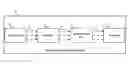
Methods and devices for detecting intensity of light with translucent detector
An optical measurement device includes a light source, a first detector, and a second detector. The light source emits light to a measurement site of a patient and one or more detectors detect the light from the light source. At least a portion of a detector is translucent and the light passes through the translucent portion prior to reaching the measurement site. A detector receives the light after attenuation and/or reflection or refraction by the measurement site. A processor determines a light intensity of the light source, a light intensity through a tissue site, or a light intensity of reflected or refracted light based on light detected by the one or more detectors. The processor can estimate a concentration of an analyte at the measurement site or an absorption or reflection at the measurement site.
Published: 2018-07-19 Assignee: TOKYO ELECTRON LIMITED.US20180204733A1
Electricity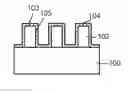
Method of preferential silicon nitride etching using sulfur hexafluoride
Embodiments of the invention describe substrate processing methods using non-polymerizing chemistry to preferentially etch silicon nitride relative to other materials found in semiconductor manufacturing. According to one embodiment, a processing method includes providing in a plasma processing chamber a substrate containing a first material containing silicon nitride and a second material that is different from the first material, forming a plasma-excited process gas containing SF6, and exposing the substrate to the plasma-excited process gas to preferentially etch the first material relative to the second material. In one example, the process gas can contain or consist of SF6 and Ar. In another example, the second material is selected from the group consisting of Si and SiO2.
Published: 2018-07-19 Assignee: Covidien LP.US20180200894A1
Performing operations; transporting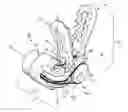
Wrist and jaw assemblies for robotic surgical systems
An end effector for use and connection to a robot arm of a robotic surgical system, wherein the end effector is controlled and/or articulated by at least one cable extending from a respective motor of a control device of the robot surgical system, is provided. The end effector includes a wrist assembly, and a jaw assembly. The jaw assembly includes a cam pulley rotatably supported on at least one support plate of the jaw assembly, wherein the cam pulley is operatively connected to a proximal end of each of the jaws of the jaw assembly such that rotation of the cam pulley results in one of an opening and closing of the jaw assembly.
Published: 2018-07-19 Assignee: MAKO Surgical Corp..US20180199995A1
Human necessities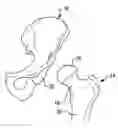
Lower extremities leg length calculation method
A method of calculating leg length discrepancy of a patient including: receiving patient bone data associated with a lower body of the patient; identifying anatomical landmarks in the patient bone data; orienting a first proximal landmark and a second proximal landmark relative to each other and an origin in a coordinate system; aligning a first axis associated with a first femur and a second axis associated with a second femur with a longitudinal axis extending in a distal-proximal direction, wherein the first and second distal landmarks are adjusted according to the alignment of the first and second axes; calculating a distance between the first and second distal landmarks in the distal-proximal direction along the longitudinal axis; and displaying at least one of the distance or a portion of the patient bone data on a display screen.
Published: 2018-07-19 Assignee: HashLynx Inc..US20180204213A1
Physics
System for facilitating secure electronic communications between entities and processing resource transfers
Embodiments of the present invention provide a system for utilizing one or more decentralized applications to allow entities to interface with a blockchain for the purposes of conducting a resource transfer. Typically, the blockchain is a permissioned blockchain which may be accessed only by the entities involved in the resource transfer. The decentralized applications may communicate with the legacy systems within each entity through an application programming interface (API) such that the data stored on the legacy systems may be governed by the blockchain. This ensures the authenticity of the data stored on the legacy systems while preventing the possibility of disparate versions of data being created over time.
Published: 2018-07-19 Assignee: TAIWAN SEMICONDUCTOR MANUFACTURING CO., LTD..US20180204868A1
Electricity
Semiconductor device structure with a conductive feature passing through a passivation layer
A semiconductor device structure is provided. The semiconductor device structure includes a first semiconductor die, and a second semiconductor die bonded on the first semiconductor die. A through-substrate via penetrates through a semiconductor substrate of the second semiconductor die. A passivation layer is disposed between the first semiconductor die and the second semiconductor die, wherein the passivation layer is directly bonded to the semiconductor substrate of the second semiconductor die. A conductive feature passes through the passivation layer, wherein the conductive feature is bonded to the through-substrate via. A barrier layer is disposed between the conductive feature and the passivation layer. The barrier layer covers sidewalls of the conductive feature and separates the surface of the conductive feature from a nearest neighboring surface of the first or second semiconductor die.
Published: 2018-07-19 Assignee: CA, Inc..US20180205712A1
Electricity
Publicly readable blockchain registry of personally identifiable information breaches
A registry is utilized to identify personally identifiable information (PII) that has been breached. The registry is a distributed database shared by multiple organizations to track which PII has been breached in other organizations. A first service provider initially receives PII and corresponding signed descriptor from a user. The PII is used to verify an identity of the user and the signed descriptor describes the type of PII that is received. The first service provider queries the registry to determine if the signed descriptor of the user has been written to the registry by a second service provider, indicating that it has been breached at a service provided by the second service provider. If the first service provider uses the breached PII, the breached PII is invalidated by the first service provider.