Patent Applications published on Dec 20, 2018
Explore the 8,403 U.S. Patent Applications published on the 51st week of 2018, including 6,465 applications that subsequently received a Patent Grant.
Featured patent applications from Dec 20, 2018
US20180360452A1
Human necessities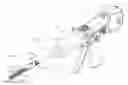
Techniques for adaptive control of motor velocity of a surgical stapling and cutting instrument
A method of controlling motor velocity in a surgical instrument is disclosed. The surgical instrument includes a displacement member, a motor coupled to the displacement member, a control circuit coupled to the motor, a position sensor coupled to the control circuit, and a timer coupled to the control circuit. The method includes receiving a first position of a displacement member from a position sensor, starting a timer, advancing the displacement member to a second position by setting a motor velocity to a first velocity, receiving the second position from the position sensor, stopping the timer when the displacement member reaches the second position, receiving elapsed time from the timer, wherein the elapsed time is the time taken by the displacement to move from the first position to the second position, and controlling, by the control circuit, velocity of the motor based on the elapsed time.
Published: 2018-12-20 Assignee: Ethicon LLC.US20180360449A1
Human necessities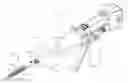
Systems and methods for controlling velocity of a displacement member of a surgical stapling and cutting instrument
A motorized surgical instrument is disclosed. The surgical instrument includes a displacement member, a motor coupled to the displacement member, the motor operable to translate the displacement member, a control circuit coupled to the motor, and a position sensor coupled to the control circuit. The control circuit is configured to receive a position output of the position sensor indicative of at least one position of the displacement member and control velocity of the motor to translate the displacement member at a plurality of velocities corresponding to the position output. Each of the plurality of velocities is maintained in a predetermined zone.
Published: 2018-12-20 Assignee: Ethicon LLC.US20180360470A1
Human necessities
Method for closed loop control of motor velocity of a surgical stapling and cutting instrument
A method of adjusting velocity in a motorized surgical instrument is provided. The surgical instrument comprises a displacement member configured to translate within the surgical instrument over a plurality of predefined zones, a motor coupled to the displacement member to translate the displacement member, a control circuit coupled to the motor, a position sensor coupled to the control circuit, the position sensor configured to measure the position of the displacement member and a timer circuit coupled to the control circuit, the timer circuit configured to measure elapsed time. The method includes setting a directed velocity of the displacement member; determining an actual velocity of the displacement member; determining an error between the directed velocity of the displacement member and the actual velocity of the displacement member; and controlling the actual velocity of the displacement member based on the magnitude of the error.
Published: 2018-12-20 Assignee: Ethicon LLC.US20180360454A1
Human necessities
Closed loop feedback control of motor velocity of a surgical stapling and cutting instrument based on measured time over a specified number of shaft rotations
A motorized surgical instrument is disclosed. The surgical instrument includes a displacement member configured to translate over a plurality of predefined zones. A motor comprising a shaft is coupled to the displacement member. A control circuit is coupled to the motor. A position sensor is coupled to the control circuit to monitor the rotation of the shaft. A timer circuit is coupled to the control circuit. The control circuit is configured to receive rotations of the shaft in a current zone defined by a set rotation interval, measure time at a set position of the rotation interval, wherein the measured time is defined as the time taken by the displacement member to traverse the rotation interval based on a predetermined number of shaft rotations, and set a command velocity of the displacement member for a subsequent zone based on the measured time in the current predefined zone.
Published: 2018-12-20 Assignee: Cilag GmbH International.US20180360456A1
Human necessities
SURGICAL INSTRUMENT HAVING CONTROLLABLE ARTICULATION VELOCITY
A motorized surgical instrument is disclosed. The surgical instrument includes a motor configured to drive an end effector between an unarticulated position and an articulated position, a sensor configured to detect a position of the end effector and provide a signal indicative of the position of the end effector, and a control circuit coupled to the sensor and the motor. The control circuit is configured to detect a position of the end effector via the signal provided by the sensor and provide a drive signal to the motor to drive the end effector at a velocity corresponding to the signal indicative of the position of the end effector.
Published: 2018-12-20 Assignee: Ethicon LLC.US20180360469A1
Human necessities
Control of motor velocity of a surgical stapling and cutting instrument based on angle of articulation
A motorized surgical instrument is disclosed. The surgical instrument includes a control circuit configured to control the movement of an end effector. If the end effector moves outside a predetermined acceptable range, the control circuit may create a dynamic brake to resist the undesired movement of the end effector. The control circuit may apply pulse width modulated (PWM) current to resist the undesired movement of the end effector outside a predetermined acceptable range.
Published: 2018-12-20 Assignee: Ethicon LLC.US20180360450A1
Human necessities
Systems and methods for controlling displacement member velocity for a surgical instrument
A motorized surgical instrument is disclosed. The surgical instrument includes a displacement member movable between a first position and a second position to effect a motion at an end effector, a motor coupled to the displacement member, the motor configured to drive the displacement member between the first position and the second position, and a control circuit coupled to the motor. The control circuit is configured to receive a signal indicative of force from a sensor, the signal indicative of the force applied by a closure tube to the end effector, determine a closure force applied by the closure tube to the end effector; determine whether the closure force is within a threshold of an expected closure force, and set a motor velocity to drive the motor at a velocity that corresponds to the closure force relative to the expected force.
Published: 2018-12-20 Assignee: Cilag GmbH International.US20180360473A1
Human necessities
Closed loop feedback control of motor velocity of a surgical stapling and cutting instrument based on measured displacement distance traveled over a specified time interval
A motorized surgical instrument is disclosed. The surgical instrument includes a displacement member, a motor coupled to the displacement member, a control circuit coupled to the motor, a position sensor coupled to the control circuit, and a timer circuit coupled to the control circuit. The timer circuit is configured to measure elapsed time and to to receive, from the position sensor, a position of the displacement member in a current zone during a set time interval, measure displacement of the displacement member at a set time at the end of the set time interval, wherein the measured displacement is defined as the distance traveled by the displacement member during the set time interval at a set command velocity for the current zone, and set a command velocity of the displacement member for a subsequent zone based on the measured displacement of the displacement member within the current zone.
Published: 2018-12-20 Assignee: Cilag GmbH International.US20180360472A1
Human necessities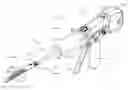
Closed loop feedback control of motor velocity of a surgical stapling and cutting instrument based on measured time over a specified displacement distance
A motorized surgical instrument is disclosed. The surgical instrument includes a displacement member, a motor coupled to the displacement member, a control circuit coupled to the motor, a position sensor coupled to the control circuit, and a timer circuit coupled to the control circuit. The control circuit is configured to receive, from the position sensor, a position of the displacement member in a current zone defined by a set displacement interval, measure time at a set position of the displacement interval, wherein the measured time is defined as the time taken by the displacement member to traverse the displacement interval, and set a command velocity of the displacement member for a subsequent zone based on the measured time in the current predefined zone.
Published: 2018-12-20 Assignee: Cilag GmbH International.US20180360446A1
Human necessities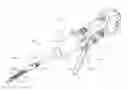
Systems and methods for controlling motor velocity of a surgical stapling and cutting instrument according to articulation angle of end effector
A motorized surgical instrument is disclosed. The surgical instrument includes a displacement member, a motor, a control circuit, and a position sensor. The displacement member is configured to translate. The motor is coupled to the displacement member to translate the displacement member. The control circuit is coupled to the motor. A position sensor is coupled to the control circuit. The position sensor is configured to measure the position of the displacement member and to measure an articulation angle of an end effector relative to a longitudinally extending shaft. The control circuit is configured to determine the articulation angle between the end effector and the longitudinally extending shaft and set motor velocity based on the articulation angle.