Patent Applications published on Sep 12, 2019
Explore the 7,514 U.S. Patent Applications published on the 37th week of 2019, including 5,910 applications that subsequently received a Patent Grant.
Featured patent applications from Sep 12, 2019
US20190274680A1
Human necessities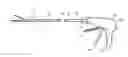
Staple cartridges for forming staples having differing formed staple heights
A staple cartridge for use with a stapling device that has an actuator that is selectively actuatable in an axial direction and an anvil portion that is selectively movable between open and closed positions is disclosed. Various embodiments of the present invention include a cartridge body that movably supports first and second staple drivers. The staple drivers each support a staple thereon and serve to drive the staples into forming contact with the anvil upon actuation by the actuator. The various embodiments of the present invention enable the final formed heights of the staples to be varied without the need to use different sizes of staples.
Published: 2019-09-12 Assignee: Cilag GmbH International.US20190274677A1
Human necessities
Staple cartridges for forming staples having differing formed staple heights
A staple cartridge for use with a stapling device that has an actuator that is selectively actuatable in an axial direction and an anvil portion that is selectively movable between open and closed positions is disclosed. Various embodiments of the present invention include a cartridge body that movably supports first and second staple drivers. The staple drivers each support a staple thereon and serve to drive the staples into forming contact with the anvil upon actuation by the actuator. The various embodiments of the present invention enable the final formed heights of the staples to be varied without the need to use different sizes of staples.
Published: 2019-09-12 Assignee: Cilag GmbH Intemational.US20190274679A1
Human necessities
Staple cartridges for forming staples having differing formed staple heights
A staple cartridge for use with a stapling device that has an actuator that is selectively actuatable in an axial direction and an anvil portion that is selectively movable between open and closed positions is disclosed. Various embodiments of the present invention include a cartridge body that movably supports first and second staple drivers. The staple drivers each support a staple thereon and serve to drive the staples into forming contact with the anvil upon actuation by the actuator. The various embodiments of the present invention enable the final formed heights of the staples to be varied without the need to use different sizes of staples.
Published: 2019-09-12 Assignee: Cilag GmbH International.US20190274678A1
Human necessities
Staple cartridges for forming staples having differing formed staple heights
A staple cartridge for use with a stapling device that has an actuator that is selectively actuatable in an axial direction and an anvil portion that is selectively movable between open and closed positions is disclosed. Various embodiments of the present invention include a cartridge body that movably supports first and second staple drivers. The staple drivers each support a staple thereon and serve to drive the staples into forming contact with the anvil upon actuation by the actuator. The various embodiments of the present invention enable the final formed heights of the staples to be varied without the need to use different sizes of staples.
Published: 2019-09-12 Assignee: Covidien LP.US20190274685A1
Human necessities
Center cinch and release of buttress material
A buttressed anvil assembly is provided for use with a surgical stapling instrument. The buttressed anvil assembly generally includes an anvil member having a strip of buttress material attached thereto by a pair of sutures. A tensioning mechanism is provided to secure or tension the buttress material to the anvil member prior to use and allow for release of the buttress material after stapling of tissue. The tensioning mechanism includes a cinch track engageable with one of the pair of sutures.
Published: 2019-09-12 Assignee: Cilag GmbH International.US20190274716A1
Human necessities
Determining the state of an ultrasonic end effector
Various systems and methods for determining the state of an end effector of an ultrasonic surgical instrument are disclosed. A control circuit can be configured to measure a complex impedance of an ultrasonic electromechanical system including an ultrasonic blade and compare the measured complex impedance to reference complex impedance patterns that each correspond to a state of the end effector. Accordingly, the control circuit can further be configured to determine the state of the end effector according to which of the plurality of reference complex impedance patterns the measured complex impedance corresponds.
Published: 2019-09-12 Assignee: ASM IP Holding B.V..US20190276934A1
Chemistry; metallurgy
Semiconductor processing apparatus comprising one or more pyrometers for measuring a temperature of a substrate during transfer of the substrate
A semiconductor processing apparatus is disclosed. The apparatus may include a multiple chamber module comprising at least a first reaction chamber and a second reaction chamber, and a first substrate support structure disposed within the first reaction chamber and a second substrate support structure disposed within the second reaction chamber. The apparatus may also include a wafer handling chamber comprising a transfer robot configured for transferring two or more substrates along a first transfer path between the wafer handling chamber and the first substrate support structure and a second transfer path between the wafer handling chamber and the second substrate support structure. The apparatus may also include at least a first pyrometer and a second pyrometer, wherein a first optical path of the first pyrometer intersects the first transfer path and a second optical path of the second pyrometer intersect the second transfer path. Methods of monitoring and controlling a semiconductor processing apparatus are also disclosed.
Published: 2019-09-12 Assignee: Auris Health, Inc..US20190274764A1
Human necessities
Object removal through a percutaneous suction tube
A method is described for using percutaneous access to a patient to remove an object from a cavity within the patient. The method includes inserting a suction tube into a port created by a percutaneous cut. An endoscope is also advanced into the cavity, however the endoscope passes through a patient lumen rather than through the port. Using a working channel within the endoscope, fluid is irrigated through the cavity. Additionally, a negative pressure is applied to the suction tube, such that the combination of fluid irrigation and negative pressure assist in removing the object from the cavity through the suction tube.
Published: 2019-09-12 Assignee: Cilag GmbH International.US20190274707A1
Human necessities
Application of smart blade technology
An ultrasonic device may include an electromechanical ultrasonic system having a resonant frequency, the system including a transducer coupled to an ultrasonic blade. A method of driving the blade may include determining a tissue type contacting the blade, setting current delivered to the transducer to achieve a desired blade temperature, and setting a desired period during which the desired temperature is applied to the tissue. The tissue type may be determined by measuring an impedance of the transducer, comparing an impedance measurement data point to a reference data point, and classifying the impedance measurement data point based on a result of the comparison. Alternatively, the tissue type may be determined by applying a drive signal to the transducer, sweeping the frequency of the drive signal from below to above a resonance of the ultrasonic system, measuring and recording impedance/admittance variables, and comparing the measured variables to reference variables.
Published: 2019-09-12 Assignee: Cilag GmbH International.US20190274717A1
Human necessities
Methods for controlling temperature in ultrasonic device
A generator, ultrasonic device, and method for controlling a temperature of an ultrasonic blade are disclosed. A control circuit coupled to a memory determines an actual resonant frequency of an ultrasonic electromechanical system comprising an ultrasonic transducer coupled to an ultrasonic blade by an ultrasonic waveguide. The actual resonant frequency is correlated to an actual temperature of the ultrasonic blade. The control circuit retrieves from the memory a reference resonant frequency of the ultrasonic electromechanical system. The reference resonant frequency is correlated to a reference temperature of the ultrasonic blade. The control circuit then infers the temperature of the ultrasonic blade based on the difference between the actual resonant frequency and the reference resonant frequency. The control circuit controls the temperature of the ultrasonic blade based on the inferred temperature