Patent Applications published on Nov 14, 2019
Explore the 7,085 U.S. Patent Applications published on the 46th week of 2019, including 5,614 applications that subsequently received a Patent Grant.
Featured patent applications from Nov 14, 2019
US20190349426A1
Electricity
Internet of things
The Internet can be configured to provide communications to a large number of Internet-of-Things (IoT) devices. Devices can be designed to address the need for network layers, from central servers, through gateways, down to edge devices, to grow unhindered, to discover and make accessible connected resources, and to support the ability to hide and compartmentalize connected resources. Network protocols can be part of the fabric supporting human accessible services that operate regardless of location, time, or space. Innovations can include service delivery and associated infrastructure, such as hardware and software. Services may be provided in accordance with specified Quality of Service (QoS) terms. The use of IoT devices and networks can be included in a heterogeneous network of connectivity including wired and wireless technologies.
Published: 2019-11-14 Assignee: Cilag GmbH International.US20190343525A1
Human necessities
Surgical system including a knife bar supported for rotational and axial travel
A surgical system is disclosed. The surgical system comprises a surgical end effector, a housing configured to operably interface with a source of rotary input motions, and a first rotary output member operably supported by the housing. The surgical system further comprises a second rotary output member operably supported by the housing, a knife bar supported for rotational and axial travel, and an axially movable closure member configured to apply closure and opening motions to the second jaw. The surgical system further comprises a knife bar interface, a first rotary control interface between the first rotary output member and the knife bar, and a second rotary control interface between the second rotary output member and the knife bar.
Published: 2019-11-14 Assignee: Cilag GmbH International.US20190343518A1
Human necessities
Fastener cartridge assembly comprising a camming sled with variable cam arrangements
A surgical stapling device that comprises an end effector that is configured to receive various control motions from a robotic system.
Published: 2019-11-14 Assignee: Cilag GmbH International.US20190343514A1
Human necessities
Powered surgical instruments with firing system lockout arrangements
A surgical stapling instrument comprising a housing, an end effector, and a firing system is disclosed. The end effector comprises a first jaw, a second jaw, and a replaceable staple cartridge. The first jaw is rotatable relative to the second jaw. The firing system comprises a firing actuator, a firing member movable from an unfired position toward a fired position during a firing stroke, and an electric motor operable by the firing actuator to advance the firing member through the firing stroke and retract the firing member back into the unfired position during a retraction stroke. The firing actuator is operable to slow the retraction stroke.
Published: 2019-11-14 Assignee: Cilag GmbH International.US20190343515A1
Human necessities
Robotically-controlled end effector
The present invention is directed to a surgical instrument with a robotics system, a memory device and an end effector having an elongate channel, knife position sensor(s) and a firing bar coupled to a knife. In response to drive motions initiated by the robotics system, the firing bar may translate within the elongate channel. As the firing bar translates, the sensor(s) transmit a signal to the memory device. The position of the knife may be determined from the output signals and may be communicated to the robotics system or instrument user. The sensors may be Hall Effect sensors.
Published: 2019-11-14 Assignee: ASM IP Holding B.V..US20190348261A1
Electricity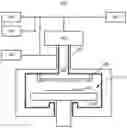
Apparatus for use with hydrogen radicals and method of using same
A system and method suitable for removing both carbon-based contaminants and oxygen-based contaminants from a substrate within a single process chamber are disclosed.
Published: 2019-11-14 Assignee: ASM IP Holding B.V..US20190348515A1
Electricity
Method of forming a doped metal carbide film on a substrate and related semiconductor device structures
Methods for depositing a doped metal carbide film on a substrate are disclosed. The methods may include: depositing a doped metal carbide film on a substrate utilizing at least one deposition cycle of a cyclical deposition process; and contacting the doped metal carbide film with a plasma generated from a hydrogen-containing gas. Semiconductor device structures including a doped metal carbide film formed by the methods of the disclosure are also disclosed.
Published: 2019-11-14 Assignee: ASM IP Holding B.V..US20190348273A1
Electricity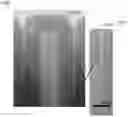
Methods for depositing an oxide film on a substrate by a cyclical deposition process and related device structures
A method for depositing an oxide film on a substrate by a cyclical deposition is disclosed. The method may include: depositing a metal oxide film over the substrate utilizing at least one deposition cycle of a first sub-cycle of the cyclical deposition process; and depositing a silicon oxide film directly on the metal oxide film utilizing at least one deposition cycle of a second sub-cycle of the cyclical deposition process. Semiconductor device structures including an oxide film deposited by the methods of the disclosure are also disclosed.
Published: 2019-11-14 Assignee: ASM IP Holding B.V..US20190346300A1
Physics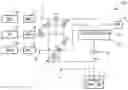
Thin film forming method
A thin film forming method includes: a first operation of supplying a source gas at a first flow rate into a reactor; a second operation of purging the source gas in the reactor to an exhaust unit; a third operation of supplying a reactive gas at a second flow rate into the reactor; a fourth operation of supplying plasma into the reactor; and a fifth operation of purging the reactive gas in the reactor to the exhaust unit, wherein, during the second to fifth operations, the source gas is bypassed to the exhaust unit, and a flow rate of the source gas bypassed to the exhaust unit is less than the first flow rate. According to the thin film forming method, the consumption of the source gas and the reactive gas may be reduced, and the generation of reaction by-products in the exhaust unit may be minimized.
Published: 2019-11-14 Assignee: SRI INTERNATIONAL.US20190343594A1
Human necessities
Hyperdexterous surgical system
A hyperdexterous surgical system is provided. The system can include one or more surgical arms coupleable to a fixture and configured to support one or more surgical tools. The system can include an electronic control system configured to communicate electronically with the one or more robotic surgical tools. The control system can electronically control the operation of the one or more surgical tools. The system can include one or more portable handheld controllers actuatable by a surgeon to communicate one or more control signals to the one or more surgical tools via the electronic control system to operate the one or more surgical tools. The one or more portable handheld controllers can provide said one or more control signals from a plurality of locations of an operating arena, allowing a surgeon to be mobile during a surgical procedure and to remotely operate the one or more surgical tools from different locations of the operating arena.