Patent Applications published on Nov 28, 2019
Explore the 7,301 U.S. Patent Applications published on the 48th week of 2019, including 5,706 applications that subsequently received a Patent Grant.
Featured patent applications from Nov 28, 2019
US20190357909A1
Human necessities
Fastener cartridges including extensions having different configurations
A fastener cartridge can include, one, a cartridge body comprising a deck and a plurality of fastener cavities and, two, a plurality of fasteners positioned in the fastener cavities. The cartridge body can further comprise extensions extending from the deck having different sizes and/or configurations. The extensions can control the flow of tissue relative to the deck and/or support the fasteners as they are ejected from the fastener cavities.
Published: 2019-11-28 Assignee: INTEL CORPORATION.US20190364492A1
Electricity
Methods and devices for radio communications
A circuit arrangement includes a preprocessing circuit configured to obtain context information related to a user location, a learning circuit configured to determine a predicted user movement based on context information related to a user location to obtain a predicted route and to determine predicted radio conditions along the predicted route, and a decision circuit configured to, based on the predicted radio conditions, identify one or more first areas expected to have a first type of radio conditions and one or more second areas expected to have a second type of radio conditions different from the first type of radio conditions and to control radio activity while traveling on the predicted route according to the one or more first areas and the one or more second areas.
Published: 2019-11-28 Assignee: Brian Gordaychik.US20190363843A1
Electricity
Variable length downlink control information formats for next generation radio technologies
A UE may comprise a transmitter configured to transmit a capability ID corresponding to a plurality of capabilities of the UE, to a gNB. The UE may be configured to receive first and second DCI formats. Each format may be different and thus may provide the UE with different control information. The second format may comprise fewer bits than the first format and may have both fixed length and variable length fields. At least one of the fixed length fields may be used to identify the DCI format, while the variable length fields may be used to indicate resources and other information for transmitting or receiving data on a shared channel in accordance with the capability ID. The UE may receive a third DCI format indicating that the UE should not monitor a PDCCH for a period.
Published: 2019-11-28 Assignee: ASM IP Holding B.V..US20190363006A1
Electricity
Substrate processing method and device manufactured by using the same
Provided are a substrate processing method and a device manufactured by using the same, which may improve etch selectivity of an insulating layer deposited on a stepped structure. The substrate processing method includes: forming a first layer on a stepped structure having an upper surface, a lower surface, and a side surface connecting the upper surface and the lower surface; weakening at least a portion of the first layer; forming a second layer on the first layer; and performing an isotropic etching process on the first layer and the second layer.
Published: 2019-11-28 Assignee: Magic Leap, Inc..US20190362557A1
Physics
Transmodal input fusion for a wearable system
Examples of wearable systems and methods can use multiple inputs (e.g., gesture, head pose, eye gaze, voice, totem, and/or environmental factors (e.g., location)) to determine a command that should be executed and objects in the three-dimensional (3D) environment that should be operated on. The wearable system can detect when different inputs converge together, such as when a user seeks to select a virtual object using multiple inputs such as eye gaze, head pose, hand gesture, and totem input. Upon detecting an input convergence, the wearable system can perform a transmodal filtering scheme that leverages the converged inputs to assist in properly interpreting what command the user is providing or what object the user is targeting.
Published: 2019-11-28US20190362989A1
Electricity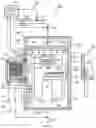
SUBSTRATE MANUFACTURING APPARATUS AND METHODS WITH FACTORY INTERFACE CHAMBER HEATING
Electronic device processing apparatus including a factory interface chamber purge apparatus with purge gas heating. The factory interface chamber purge apparatus includes one or more heating elements configured to heat the purge gas. In some embodiments, the provision of heated purge gas to the chamber filter assembly can rapidly reduce moisture contamination after the access door is opened for factory interface servicing. In further embodiments, the provision of heated purge gas to the factory interface chamber can aid in desorbing certain chemical compounds from the substrates following processing when a low-humidity environment is provided. Purge control methods and apparatus are described, as are numerous other aspects.
Published: 2019-11-28 Assignee: INTERNATIONAL BUSINESS MACHINES CORPORATION.US20190363015A1
Electricity
Self-aligned gate contact isolation
A semiconductor device includes a first contact positioned on an externally accessible surface of the semiconductor device and electrically coupled with a first structure in the semiconductor device, a second contact positioned on an externally accessible surface and electrically coupled with a second structure in the semiconductor device, and an isolation structure disposed between the first contact and the second contact, the isolation structure self-aligning with a first surface of the first contact such that the first surface of the first contact is orthogonal to the externally accessible surface up to a depth and faces the second contact.
Published: 2019-11-28 Assignee: Yangtze Memory Technologies Co., Ltd., Yangtze Memory Technologies Co., Ltd..US20190362970A1
Electricity
Methods for repairing substrate lattice and selective epitaxy processing
The present disclosure describes patterned devices and methods for repairing substrate lattice damage in a patterned device. The patterned device includes a substrate, an alternating conductor and dielectric stack atop the substrate, a channel hole extending through the alternating conductor and dielectric stack to the substrate, and an epitaxial grown layer at a bottom of the channel hole and a top surface of the substrate. A part of the substrate in contact with the epitaxial grown layer has a dopant or doping concentration different from an adjacent part of the substrate. The method includes forming a channel hole in an insulating layer atop a substrate, forming an amorphous layer in a top side of the substrate below the channel hole, heating to crystallize the amorphous layer, and growing an epitaxial layer on the crystallized layer in the channel hole.
Published: 2019-11-28 Assignee: CIGNA INTELLECTUAL PROPERTY, INC..US20190362268A1
Physics
System and method for synthesizing data
Systems and methods for constructing sets of synthetic data. A single data record is identified from a first set of data. The first set of data comprises a first plurality of data records, each of the data records including multiple items of data describing an entity. Using pattern recognition, the single data record is processed to identify a group of records from within the first set that have corresponding characteristics equivalent to the single data record. The identified group of records comprises a target set of variables and the group of records from the first set that are not identified comprises a control set of variables. The target set of variables and the control set of variables are processed, using probability estimation and optimization constraints, to determine a score for each of the records in the first set. The score describes how similar each of the records in the first set is to the single data record. The records associated with a percentage of the highest scores are identified. The data associated with the single data record is replaced with data associated with the identified records identified, item-by-item.
Published: 2019-11-28US20190361917A1
Physics
SMART DEVICE
An Internet of Thing (IoT) device includes a camera coupled to a processor; and a wireless transceiver coupled to the processor. Blockchain smart contracts can be used with the device to facilitate secure operation.