Compounds derived from benzoic acid esters, composition containing said compounds and use thereof
US20050101645A1
2005-05-12
11/009,079
2004-12-13
✅ Patent granted
US 7,125,991 B2
2006-10-24
-
-
Zachary C. Tucker
2024-12-13
Abstract:
The invention relates to novel compounds of formula (I) wherein R1 represents a polymer, aryl or alkyl group, R2 represents a hydrogen atom, a halogen atom, a radical CN, CF3, OH, OCF3, COOH, R7, OR7 or OCOR7, R3 represents an aryl or alkyl halogen, R4 represents an alkyl radical. The invention also relates to a cosmetic composition comprising said compounds and to the use thereof to reduce and/or curb hair loss i.e. to increase and/or stimulate the growth of said hair.
Inventors:
- Lionel Breton 54 🇫🇷 Versailles, France
- Maria Dalko 17 🇫🇷 Gif sur Yvette, France
- Jean-Baptiste Galey 2 🇫🇷 Aulnay, France
Assignee:
- L'OREAL S.A. 683 🇫🇷 Paris, France
Interested in similar patents?
Get notified when new applications in this technology area are published.
Classification:
C07D295/088 » CPC main
Heterocyclic compounds containing polymethylene-imine rings with at least five ring members, 3-azabicyclo [3.2.2] nonane, piperazine, morpholine or thiomorpholine rings, having only hydrogen atoms directly attached to the ring carbon atoms with substituted hydrocarbon radicals attached to ring nitrogen atoms substituted by singly bound oxygen or sulfur atoms with the ring nitrogen atoms and the oxygen or sulfur atoms attached to the same carbon chain, which is not interrupted by carbocyclic rings to an acyclic saturated chain
A61K8/44 » CPC further
Cosmetics or similar toilet preparations characterised by the composition containing organic compounds containing nitrogen Aminocarboxylic acids or derivatives thereof, e.g. aminocarboxylic acids containing sulfur; Salts; Esters or N-acylated derivatives thereof
A61K8/70 » CPC further
Cosmetics or similar toilet preparations characterised by the composition containing organic compounds containing fluorine containing perfluoro groups, e.g. perfluoroethers
A61P17/14 » CPC further
Drugs for dermatological disorders for baldness or alopecia
C07C235/16 » CPC further
Carboxylic acid amides, the carbon skeleton of the acid part being further substituted by oxygen atoms having carbon atoms of carboxamide groups bound to acyclic carbon atoms and singly-bound oxygen atoms bound to the same carbon skeleton the carbon skeleton being acyclic and saturated having the nitrogen atom of at least one of the carboxamide groups bound to a carbon atom of a six-membered aromatic ring
C07C251/48 » CPC further
Compounds containing nitrogen atoms doubly-bound to a carbon skeleton; Oximes with oxygen atoms of oxyimino groups bound to hydrogen atoms or to carbon atoms of unsubstituted hydrocarbon radicals with the carbon atom of at least one of the oxyimino groups bound to a carbon atom of a six-membered aromatic ring
C07D265/30 IPC
Heterocyclic compounds containing six-membered rings having one nitrogen atom and one oxygen atom as the only ring hetero atoms 1,4-Oxazines; Hydrogenated 1,4-oxazines not condensed with other rings
C07C229/00 IPC
Compounds containing amino and carboxyl groups bound to the same carbon skeleton
C08B3/00 IPC
Preparation of cellulose esters of organic acids
C08B5/00 IPC
Preparation of cellulose esters of inorganic acids, e.g. phosphates
Description
The present invention relates to novel derivatives of benzoic acid esters, to their use in particular in cosmetics, and to the compositions containing them.
In human beings, the growth of hair and its renewal are mainly determined by the activity of the hair follicles and their dermoepidermal environment. Their activity is cyclic and comprises essentially three phases, namely the anagen phase, the catagen phase and the telogen phase.
The anagen phase or growth phase, which lasts for several years and during which the hair grows longer, is followed by a very short and transitory catagen phase which lasts for a few weeks, and then by, a resting phase, called the telogen phase, which lasts for a few months.
At the end of the resting period, the hair falls out and another cycle begins. The hair is therefore continuously renewed, and of the approximately 150,000 hair strands which make up the hair, at each instant, approximately 10% of them are in the resting phase and will therefore be replaced in a few months.
In a large number of cases, the premature loss of the hair occurs in genetically predisposed subjects and it affects men in particular. It involves more particularly androgenetic or androgenic or alternatively androgeno-genetic alopecia.
This alopecia is essentially due to a disruption in hair renewal which causes, in the first instance, the acceleration of the frequency of the cycles at the expense of the quality of the hair and then of its quantity. A gradual deterioration of the hair is brought about by regression of the so-called <<terminal>> hair at the down stage. Some areas are, preferably affected, in particular, the temporal or frontal sinuses and the upper part of the occipital in men, whereas in women a diffuse alopecia of the vertex is mainly observed.
Substances which make it possible to suppress or reduce the effect of alopecia, and in particular to induce or stimulate growth of head hair and/or body hair, or even to reduce its loss, have been sought for many years, in particular in the cosmetics industry. For this purpose, a large number of widely varying active substances have indeed already been proposed, such as for example 2,4-diamino-6-piperidinopyrimidine 3-oxide or <<Minoxidil>> described in U.S. Pat. No. 4,596,812 or its many derivatives such as those described for example in patent applications EP 353123, EP 356271, EP 408442, EP 522964, EP 420707, EP 459890 and EP 519819. There may also be mentioned 6-amino-1,2-dihydro-1-hydroxy-2-imino-4-piperidinopyrimidine and its derivatives, which are described more particularly in patent U.S. Pat. No. 4,139,619.
The fact remains, in general, that it would be advantageous and useful to be able to have active compounds other than those already known, which are preferably potentially more active and/or less toxic, and which can be used in the cosmetic field.
However, after many research studies, the Applicant has just demonstrated that novel compounds, derived from benzoic acid esters, exhibit remarkable properties which may justify their use for reducing and/or slowing down the loss of head hair and/or body hair. These compounds could also be potentially capable of inducing and/or stimulating its growth.
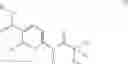
Thus, the subject of the invention is novel compounds corresponding to the following formula (I)
in which:
- *R1 represents:
- a linear or branched C1-C12 aliphatic alkyl group, optionally substituted with one or more groups chosen from OH, NH2, SH; CONHR5, COOR5, OR5, SR5, SiOR5, NHR5 in which R5 is a linear or branched C1-C4 alkyl radical; CN, CF3, halogen, or with one or more aliphatic or aromatic, optionally heterocyclic, C3-C6 rings;
- an aryl group, optionally substituted with one or more groups OH, NH2, SH, COOH; CONHR6, COOR6, OR6, SR6, NHR6 in which R6 is a linear or branched C1-C12 alkyl radical; CN, CF3, halogen, or with one or more aliphatic or aromatic, optionally heterocyclic, C3-C6 rings; or
- a natural or synthetic polymer or copolymer carrying one or more combinations of the following groups: hydroxyl, carboxylate, primary amine, secondary amine, tertiary amine, thiol, aldehyde.
- *R2 represents a hydrogen or halogen atom, a radical CN, CF3, OH, OCF3, COOH, R7, OR7 or OCOR7 in which R7 denotes a linear or branched C1-C4 aliphatic alkyl radical.
- *R3 represents a mono- or polyhalogenated linear or branched C1-C4 alkyl radical, or an aryl radical, optionally substituted with one or more groups chosen from OH, NH2, SH, CN, CF3, halogen, COOH, CONHR8, COOR8, OR8, SR8, NHR8 in which R8 is a linear or branched C1-C12 alkyl radical.
- *R4 represents a linear or branched C1-C4 alkyl radical, optionally substituted with a halogen atom, or represents a CF3 radical.
The subject of the invention is also a composition, in particular a cosmetic composition, comprising, in a physiologically, acceptable medium, at least one compound as defined above.
The subject of the invention is also the use, in particular in a composition, in particular a cosmetic composition, or for the preparation of a physiologically acceptable composition, of at least one compound corresponding to formula (I) for reducing and/or slowing down the loss of head hair and/or body hair, or even inducing and/or stimulating its growth.
One of the advantages of the invention consists in the fact that the compounds according to the invention are free of side effects since they are metabolized into an acid which is free of anti-androgen effect.
The compounds according to the invention are represented by the following formula (I):
in which:
- *R1 represents:
- a linear or branched C1-C12 aliphatic alkyl group, optionally substituted with one or more groups chosen from OH, NH2, SH; CONHR5, COOR5, OR5, SR5, SiOR5, NHR5 in which R5 is a linear or branched C1-C4 alkyl radical; CN, CF3, halogen, or with one or more aliphatic or aromatic, optionally heterocyclic, C3-C6 rings;
- an aryl group, optionally substituted with one or more groups OH, NH2, SH, COOH; CONHR6, COOR6, OR6, SR6, NHR6 in which RE is a linear or branched C1-C12 alkyl radical; CN, CF3, halogen, or with one or more aliphatic or aromatic, optionally heterocyclic, C3-C6 rings; or
- a natural or synthetic polymer or copolymer carrying one or more combinations of the following groups: hydroxyl, carboxylate, primary amine, secondary amine, tertiary amine, thiol, aldehyde.
- *R2 represents a hydrogen or halogen atom, a radical CN, CF3, OH, OCF3, COOH, R7, OR7 or OCOR7 in which R7 denotes a linear or branched C1-C4 aliphatic alkyl radical.
- *R3 represents a mono- or polyhalogenated linear or branched C1-C4 alkyl radical, or an aryl radical, optionally substituted with one or more groups chosen from OH, NH2, SH, CN, CF3, halogen, COOH, CONHR6, COOR9, OR8 SR8, NHR8 in which R8 is a linear or branched C1-C12 alkyl radical.
- *R4 represents a linear or branched C1-C4 alkyl radical, optionally substituted with a halogen atom, or represents a CF3 radical.
Among the natural polymers which may be to represent R1, there may be mentioned modified natural polymers such as ether or ester derivatives of cellulose, polysaccharides, oligosaccharides and glycosaminoglucans.
Preferably, R1 represents an optionally substituted aryl group, and in particular a phenyl or benzyl group.
Preferably, R2 represents a hydrogen atom, a halogen atom and in particular a chlorine atom, or a hydroxyl radical.
Preferably, R3 represents a halogenated, in particular fluorinated, alkyl radical, or a phenyl radical. In particular, R3 may represent the CF3 radical.
Preferably, R4 represents a methyl radical.
Among the compounds of formula (I), there may be more particularly mentioned:
- 4-(O-methyloxime)phenyl ester of 2-hydroxy-4-(3,3,3-trifluoro-2-hydroxy-2-methylpropionylamino)benzoic acid;
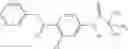
- phenyl ester of 2-hydroxy-4-(3,3,3-trifluoro-2-hydroxy-2-methylpropionylamino)benzoic acid;
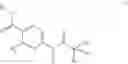
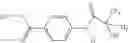
- methyl ester of 4-(3,3,3-trifluoro-2-hydroxy-2-methylpropionylamino)benzoic acid;
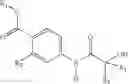
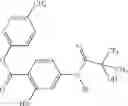
- para-tolyl ester of 2-hydroxy-4-(3,3,3-trifluoro-2-hydroxy-2-methylpropionylamino)benzoic acid;
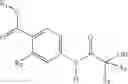
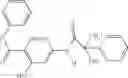
- phenyl ester of 2-hydroxy-4-(2-phenyl-2-hydroxypropionylamino)benzoic acid;
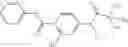
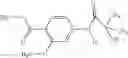
- methyl ester of 2-methoxy-4-(3,3,3-trifluoro-2-hydroxy-2-methylpropionylamino)benzoic acid;
- phenyl ester of 2-chloro-4-(3,3,3-trifluoro-2-hydroxy-2-methylpropionylamino)benzoic acid;
- methyl ester of 2-ethyl-4-(3,3,3-trifluoro-2-hydroxy-2-methylpropionylamino)benzoic acid;
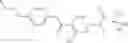
- 3,5-bis(trifluoromethyl)benzyl ester of 2-hydroxy-4-(3,3,3-trifluoro-2-hydroxy-2-methylpropionyl-amino)benzoic acid;
- tert-butyl ester of 2-hydroxy-4-(3,3,3-trifluoro-2-hydroxy-2-methylpropionylamino)benzoic acid;
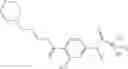
- 3-morpholinopropyl ester of 2-hydroxy-4-(3,3,3-trifluoro-2-hydroxy-2-methylpropionylamino)benzoic acid;
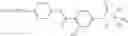
- 4-octylphenyl ester of 2-hydroxy-4-(3,3,3-trifluoro-2-hydroxy-2-methylpropionylamino)benzoic acid; and
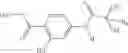
- methyl ester of 2-hydroxy-4-(3,3,3-trifluoro-2-hydroxy-2-methylpropionylamino)benzoic acid.
The compounds of formula (I) may be used alone or in the form of a mixture.
The quantity of compound to be used in the compositions according to the invention can be easily determined by persons skilled in the art according to the nature of the compound used, the person to be treated and/or the desired effect. In general, this quantity may be between 0.0001 and 30% by weight relative to the total weight of the composition, in particular between 0.01 and 10% by weight, and preferably between 0.1 and 5% by weight.
Thus, the compounds of formula (I) according to the invention may in particular be used in a composition or for the preparation of a composition which comprises, moreover, a physiologically acceptable medium.
This composition may be provided in the form of a cosmetic composition which therefore comprises a cosmetically acceptable medium.
The physiologically acceptable medium in which the compounds according to the invention may be used can be easily determined by persons skilled in the art.
In general, it may be anhydrous or aqueous.
The expression anhydrous medium is understood to mean a solvent medium containing less than 1% by weight of water. This medium may consist of an organic solvent or, of a mixture of organic solvents chosen more particularly from C1-C4 alcohols such as ethanol; alkylene glycols such as propylene glycol; alkyl ethers of alkylene glycols or of dialkylene glycols, in which the alkyl or alkylene radicals contain from 1 to 4 carbon atoms.
The expression aqueous medium is understood to mean a medium consisting of water or of a mixture of water and of another physiologically acceptable solvent, chosen in particular from the organic solvents mentioned above. In the latter case, these other solvents may represent about 5 to 95% by weight of the composition.
It is possible to add to the composition, in combination with the compounds of the invention, one or more compounds which further enhance the activity on hair regrowth and/or on slowing down hair loss, and which have already been described for this activity.
There may be mentioned more particularly, without limitation:
-
- nicotinic acid esters, including in particular tocopherol nicotinate, benzyl nicotinate and C1-C6 alkyl nicotinates such as methyl or hexyl nicotinates;
- pyrimidine derivatives, such as 2,4-diamino-6-piperidinopyrimidine 3-oxide or <<Minoxidil>> described in patents U.S. Pat. No. 4,139,619 and U.S. Pat. No. 4,596,812;
- agents promoting hair regrowth such as those described in patent application EP0648488;
- antibacterial agents such as macrolides, pyranosides and tetracyclines, and in particular erythromycin;
- calcium-antagonizing agents such as cinnarizin, diltiazem, nimodipine and nifedipine;
- hormones such as estriol and its analogs, or thyroxin and its salts;
- steroidal or nonsteroidal anti-inflammatory agents, such as corticosteroids (for example: hydrocortisone);
- antiandrogenic agents such as oxendolone, spironolactone, diethylstilbestrol and flutamide;
- steroidal or nonsteroidal inhibitors of 5-α-reductases such as finasteride;
- potassium agonists such as cromakalim and nicorandil;
- agonists of retinoid RXR receptors and antagonists of retinoids;
- scavengers of OH radicals, such as dimethyl sulfoxide;
- peptides such as for example the tripeptide Lys-Pro-Val, and more generally α-MSH and its derivatives.
The following compounds may also be added to this list:
-
- diazoxide, spiroxasone,
- phospholipids such as lecithin,
- linoleic and linolenic acids,
- salicylic acid and its derivatives described in French patent FR 2 581 542, such as their salicylic acid derivatives carrying an alkanoyl group having from 2 to 12 carbon atoms at the 5-position of the benzene ring,
- hydroxycarboxylic or ketocarboxylic acids and their esters,
- lactones and their corresponding salts,
- anthralin, carotenoids,
- eicosatetraenoic and eicosatrienoic acids or their esters and amides,
- vitamin D and its derivatives,
- extracts of plant or bacteria origin.
Moreover, there may be added, to the physiologically acceptable medium, adjuvants normally used in the field of application considered, in particular in the cosmetic field, such as surfactants, thickening or gelling agents, cosmetic agents, preservatives, alkalinizing or acidifying agents well known in the state of the art.
The nature and the quantity of these adjuvants may be chosen by persons skilled in the art on the basis of their general knowledge so as to obtain the form of presentation desired for the composition. In any case, persons skilled in the art will be careful to choose all the possible additional compounds and/or their quantity so that the advantageous properties of the composition according to the invention are not, or not substantially, impaired by the addition envisaged.
The compositions according to the invention may be provided in the form of a lotion which is thickened to a greater or lesser degree, a gel, an emulsion or a cream. They may be optionally used in pressurized form as an aerosol or as a spray from a pump dispenser.
The compositions may also be provided in liposomal form, as described in particular in patent application WO 94/22468. In this case, the compound encapsulated in the liposomes may be selectively delivered to the hair follicles.
The compositions according to the invention may be applied to the alopecic areas of the scalp and/or of the head hair and/or of the body hair of one individual, and may then be optionally left in contact for several hours and may be optionally rinsed off.
It is possible, for example, to apply the composition comprising an effective quantity of a compound according to the invention to the hair or the scalp in the evening, to keep it in contact overnight and to optionally shampoo in the morning. These applications may be repeated daily for one or more months according to the individual.
Thus, the subject of the present invention is also a method for the cosmetic treatment of head hair, body hair and/or the scalp, in which a cosmetic composition comprising an effective quantity of at least one compound of formula (I) is applied to the head hair, the body hair and/or the scalp, leaving it in contact with the head hair and/or the scalp and/or the body hair, and optionally rinsing off.
The method of treatment exhibits the characteristics of a cosmetic method insofar as it makes it possible to improve the esthetic appearance of the hair by giving it greater vitality and improved appearance.
The invention is illustrated in greater detail in the following examples.
EXAMPLE 1 Preparation of the Phenyl Ester of 2-hydroxy-4-(3,3,3-trifluoro-2-hydroxy-2-methylpropionylamino)benzoic Acid
2.1 g of 3,3,3-trifluoro-2-hydroxy-2-methylpropanoic acid are solubilized in 20 ml of anhydrous N,N-dimethylacetamide. The medium is cooled to −20° C. and then 1 ml of thionyl chloride is added dropwise. The reaction medium is stirred for 1 hour at −20° C. and then 2.0 g of phenyl 4-aminosalicylate are added. The temperature is allowed to rise to about 25° C. and the mixture is stirred for one night (12 hours). The mixture is poured into 100 ml of ice-cold water and extracted 3 times with 50 ml of dichloromethane.
The organic phase is washed with water and then dried over Na2SO4 and evaporated to dryness.
A yellow oil is obtained which is purified by chromatography on a silica column (eluent: dichloromethane). The oil obtained after evaporating to dryness is taken up in 20 ml of a heptane/toluene 1:1 mixture.
A white solid is obtained which is recrystallized from 10 ml of toluene and dried under vacuum.
1.35 g of phenyl ester of 2-hydroxy-4-(3,3,3-trifluoro-2-hydroxy-2-methylpropionylamino)benzoic acid are obtained (yield=50%).
C17H14F3NO5 MW=369
NMR spectrum: 1H (400 MHz) in CDCl3: conforms with the expected structure.
Elemental analysis
| C | H | N | F | |
| % calculated | 55.28 | 3.79 | 3.79 | 15.45 | |
| % found | 55.23 | 3.73 | 3.85 | 15.71 | |
The following compounds are prepared in the same manner as in example 1:
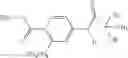
- (a) methyl ester of 4-(3,3,3-trifluoro-2-hydroxy-2-methylpropionylamino)benzoic acid of formula:
NMR spectrum: 1H (500 MHZ) in DMSO: conforms with the expected structure
- (b) para-tolyl ester of 2-hydroxy-4-(3,3,3-trifluoro-2-hydroxy-2-methylpropionylamino)benzoic acid of formula:
NMR spectrum: 1H (500 MHz) in DMSO: conforms with the expected structure.
- (c) phenyl ester of 2-hydroxy-4-(2-phenyl-2-hydroxypropionylamino)benzoic acid of formula:
- (d) methyl ester of 2-methoxy-4-(3,3,3-trifluoro-2-hydroxy-2-methylpropionylamino)benzoic acid of formula:
- (e) phenyl ester of 2-chloro-4-(3,3,3-trifluoro-2-hydroxy-2-methylpropionylamino)benzoic acid of formula:
- (f) methyl ester of 2-ethyl-4-(3,3,3-trifluoro-2-hydroxy-2-methylpropionylamino)benzoic acid of formula:
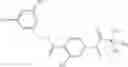
- (g) 3,5-bis(trifluoromethyl)benzyl ester of 2-hydroxy-4-(3,3,3-trifluoro-2-hydroxy-2-methylpropionyl-amino)benzoic acid of formula:
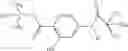
- (h) tert-butyl ester of 2-hydroxy-4-(3,3,3-trifluoro-2-hydroxy-2-methylpropionylamino)benzoic acid of formula:
- (i) 3-morpholinopropyl ester of 2-hydroxy-4-(3,3,3-trifluoro-2-hydroxy-2-methylpropionylamino)benzoic acid of formula:
- (j) 4-octylphenyl ester of 2-hydroxy-4-(3,3,3-trifluoro-2-hydroxy-2-methylpropionylamino)benzoic acid of formula:
- (k) 4-(O-methyloxime)phenyl ester of 2-hydroxy-4-(3,3,3-trifluoro-2-hydroxy-2-methylpropionyl-amino)benzoic acid of formula:
- (l) methyl ester of 2-hydroxy-4-(3,3,3-trifluoro-2-hydroxy-2-methylpropionylamino)benzoic acid of formula:
NMR spectrum: 1H (500 MHz) in DMSO: conforms with the expected structure.
EXAMPLE 3 Daily LotionA composition comprising the following constituents is prepared:
| compound of example 1 | 1 | g | |
| ethanol | 30 | g |
| perfume, colorants | qs |
| demineralized water | qs 100 | g | |
A composition comprising the following constituents is prepared:
| compound of example 2(a) | 0.5 | g | |
| carbomer | 0.25 | g |
| triethanolamine | qs pH = 7 | |
| preservatives | qs |
| demineralized water | qs 100 | g | |
A composition comprising the following constituents is prepared:
| compound of example 2(b) | 1 | g | |
| propylene glycol | 10 | g | |
| isopropanol | qs 100 | g | |
1 ml of this lotion is applied to the scalp, at the rate of once to twice per day.
EXAMPLE 6 Anti-Hair Loss LotionA composition comprising the following constituents is prepared:
| compound of example 2(c) | 2 | g | |
| propylene glycol | 30 | g | |
| ethanol | 40.5 | g | |
| water | qs 100 | g | |
This lotion is applied to the scalp, once or twice per day, in an amount of 1 ml per application.
EXAMPLE 7 Anti-Hair Loss LotionA composition comprising the following constituents is prepared:
| compound of example 2(d) | 1 | g | |
| propylene glycol monomethyl ether | 20 | g | |
| (Dowanol PM from Dow) | |||
| hydroxypropyl cellulose (Klucel G | 3 | g | |
| from Hercules) | |||
| ethanol | 40 | g | |
| water | qs 100 | g | |
This thickened lotion is applied to the scalp, once or twice per day, in an amount of 0.1 ml per application.
With each of the compositions described in examples 3 to 7 above, a slowing down of hair loss is observed after several months of treatment and depending on the subjects treated.
Claims
1-14. (canceled)
15. A compound of formula (I):
wherein:
R1 is chosen from:
linear and branched (C1-C12) aliphatic alkyl groups, optionally substituted with at least one group chosen from OH, NH2, SH, CN, CF3, halogen, CONHR5, COOR5, OR5, SR5, SiOR5, NHR5, aliphatic (C3C6) rings, and aromatic (C3-C6) rings, wherein R5 is chosen from linear and branched (C1-C4) alkyl groups,
aryl groups,
natural polymers, synthetic polymers, and copolymers, said polymers and copolymers carrying at least two groups chosen from: hydroxyl, carboxylate, primary amine, secondary amine, tertiary amine, thiol, and aldehyde;
R2 is chosen from a hydrogen atom, a halogen atom, CF3, OH, OCF3, COOH, R7, OR7, and OCOR7, wherein R7 is chosen from linear and branched (C1-C4) aliphatic alkyl groups;
R3 is chosen from monohalogenated and polyhalogenated linear and branched (C1-C4) alkyl groups, and from aryl groups, wherein the aryl groups are optionally substituted with at least one group chosen from OH, NH2, SH, CN, CF3, halogen, COOH, CONHR8, COOR8, OR8, SR8, and NHR8, wherein R8 is chosen from linear and branched (C1-C12) alkyl radicals; and
R4 is chosen from linear and branched (C1-C4) alkyl groups, and a CF3 group.
16. The compound according to claim 15, wherein the aliphatic (C3-C6) rings are heterocyclic.
17. The compound according to claim 15, wherein the aromatic (C3-C6) rings are heterocyclic.
18. The compound according to claim 15, wherein the linear and branched (C1-C4) alkyl groups of R4 are substituted with a halogen atom.
19. The compound according to claim 15, wherein R2 is chosen from a hydrogen atom, a halogen atom, and a hydroxyl group.
20. The compound according to claim 19, wherein the halogen atom is a chlorine atom.
21. The compound according to claim 15, wherein R3 is chosen from a halogenated alkyl group and a phenyl group.
22. The compound according to claim 21, wherein the halogenated alkyl group is fluorinated.
23. The compound according to claim 22, wherein the halogenated alkyl group is a CF3 group.
24. The compound according to claim 15, wherein R4 is a methyl group.
Images & Drawings included:
Sources:
- United States Patent and Trademark Office - verify current appl. status at the USPTO↗
Similar patent applications:
Recent applications in this class:
- » 20250263386 2025-08-21
Charged Ion Channel Blockers and Methods for Use - » 20250263385 2025-08-21
"Good" buffer-based cationic lipids - » 20250154117 2025-05-15
POLYMORPH FORM OF PITOLISANT HYDROCHLORIDE - » 20250100986 2025-03-27
BISPHENOL DERIVATIVES AND THEIR USE AS ANDROGEN RECEPTOR ACTIVITY MODULATORS - » 20250059145 2025-02-20
SOLID FORMS OF 1-{3-[3-(4-CHLOROPHENYL) PROPOXY] PROPYL} PIPERIDINE HYDROCHLORIDE AND PROCESS FOR THE PREPARATION THEREOF - » 20240327366 2024-10-03
Polymorph form of pitolisant hydrochloride - » 20240270707 2024-08-15
"Good" buffer-based cationic lipids - » 20230219914 2023-07-13
Process for preparing pitolisant hydrochloride and solid-state forms thereof - » 20220411388 2022-12-29
SUBSTITUTED IMIDAZOLE CARBOXAMIDES AND THEIR USE IN THE TREATMENT OF MEDICAL DISORDERS - » 20220402886 2022-12-22
Process for preparing pitolisant hydrochloride and solid-state forms thereof
Recent applications for this Assignee:
- » 20250032564 2025-01-30
STRAINS, COMPOSITIONS AND METHODS OF USE - » 20220110986 2022-04-14
Strains, composition and method of use - » 20220000948 2022-01-06
Method for reducing the transfer of pathogenic microorganisms - » 20210045521 2021-02-18
Cleansing brushhead for a facial skin cleansing appliance - » 20190311191 2019-10-10
Hierarchical differential image filters for skin analysis - » 20150152486 2015-06-04
METHOD OF IN VITRO DIAGNOSING A PELLICULAR STATE IN A SUBJECT AND RELATED APPLICATIONS - » 20140142175 2014-05-22
ANHYDROUS COSMETIC COMPOSITIONS CONTAINING ASCORBIC ACID - » 20140140945 2014-05-22
Cosmetic compositions having long lasting shine - » 20140135665 2014-05-15
System for treatment of skin conditions using at least one narrow band light source in a skin brush having an oscillating brushhead - » 20140107059 2014-04-17
Compositions containing adenosine and the hydrotropes caffeine and nicotinamide for cosmetic use