Bimetal acetabular component construct for hip joint prosthesis
US20050102034A1
2005-05-12
10/989,245
2004-11-15
✅ Patent granted
US 7,850,738 B2
2010-12-14
-
-
Corrine M McDermott | Christopher D Prone
2025-04-17
Abstract:
This invention provides a prosthetic acetabular component that comprises two constructs, one being a metal base construct that engages the bone and the other being a polyethylene bearing construct that attaches to the metal base construct and articulates with a femoral stem prosthetic component. The metal base construct is composed of two different metals, one of which engages the bone surface and the other of which engages the polyethylene bearing construct. Each of these metals is selected so that its characteristics are well suited to its particular function. The first metal is selected so as to provide a superior bone-engaging face, while the second metal is selected so as to provide a superior polyethylene-engaging face. By combining the different material characteristics of two different metals in the metal bone construct, it is possible to simultaneously form a superior bone-engaging face and a superior polyethylene-engaging face.
Inventors:
- Daniel E. E. Hayes, JR. 11 🇺🇸 Placerville, CA, United States
- Alfred S. Depres, III 4 🇺🇸 Shingle Springs, CA, United States
- Daniel E. E. Hayes 6 🇺🇸 Placerville, CA, United States
- Alfred S. Depres 2 🇺🇸 Shingle Springs, CA, United States
Interested in similar patents?
Get notified when new applications in this technology area are published.
Classification:
A61F2/30767 » CPC main
Filters implantable into blood vessels; Prostheses, i.e. artificial substitutes or replacements for parts of the body; Appliances for connecting them with the body; Devices providing patency to, or preventing collapsing of, tubular structures of the body, e.g. stents; Prostheses implantable into the body; Joints Special external or bone-contacting surface, e.g. coating for improving bone ingrowth
A61F2/34 » CPC further
Filters implantable into blood vessels; Prostheses, i.e. artificial substitutes or replacements for parts of the body; Appliances for connecting them with the body; Devices providing patency to, or preventing collapsing of, tubular structures of the body, e.g. stents; Prostheses implantable into the body; Joints for the hip Acetabular cups
A61L27/047 » CPC further
Materials for prostheses or for coating prostheses; Inorganic materials; Metals or alloys Other specific metals or alloys not covered by - or
A61L27/06 » CPC further
Materials for prostheses or for coating prostheses; Inorganic materials; Metals or alloys Titanium or titanium alloys
A61L27/306 » CPC further
Materials for prostheses or for coating prostheses; Materials for coating prostheses; Inorganic materials Other specific inorganic materials not covered by -
A61B17/86 » CPC further
Surgical instruments, devices or methods, e.g. tourniquets; Surgical instruments or methods for treatment of bones or joints; Devices specially adapted therefor for osteosynthesis, e.g. bone plates, screws, setting implements or the like; Internal fixation devices, including fasteners and spinal fixators, even if a part thereof projects from the skin; Fasteners therefor or fasteners being internal fixation devices Pins or screws or threaded wires; nuts therefor
A61F2/30771 » CPC further
Filters implantable into blood vessels; Prostheses, i.e. artificial substitutes or replacements for parts of the body; Appliances for connecting them with the body; Devices providing patency to, or preventing collapsing of, tubular structures of the body, e.g. stents; Prostheses implantable into the body; Joints; Special external or bone-contacting surface, e.g. coating for improving bone ingrowth applied in original prostheses, e.g. holes or grooves
A61F2/3094 » CPC further
Filters implantable into blood vessels; Prostheses, i.e. artificial substitutes or replacements for parts of the body; Appliances for connecting them with the body; Devices providing patency to, or preventing collapsing of, tubular structures of the body, e.g. stents; Prostheses implantable into the body; Joints Designing or manufacturing processes
A61F2/30965 » CPC further
Filters implantable into blood vessels; Prostheses, i.e. artificial substitutes or replacements for parts of the body; Appliances for connecting them with the body; Devices providing patency to, or preventing collapsing of, tubular structures of the body, e.g. stents; Prostheses implantable into the body; Joints; Designing or manufacturing processes Reinforcing the prosthesis by embedding particles or fibres during moulding or dipping
A61F2/36 » CPC further
Filters implantable into blood vessels; Prostheses, i.e. artificial substitutes or replacements for parts of the body; Appliances for connecting them with the body; Devices providing patency to, or preventing collapsing of, tubular structures of the body, e.g. stents; Prostheses implantable into the body; Joints for the hip Femoral heads ; Femoral endoprostheses
A61F2/3662 » CPC further
Filters implantable into blood vessels; Prostheses, i.e. artificial substitutes or replacements for parts of the body; Appliances for connecting them with the body; Devices providing patency to, or preventing collapsing of, tubular structures of the body, e.g. stents; Prostheses implantable into the body; Joints for the hip; Femoral heads ; Femoral endoprostheses Femoral shafts
A61F2/367 » CPC further
Filters implantable into blood vessels; Prostheses, i.e. artificial substitutes or replacements for parts of the body; Appliances for connecting them with the body; Devices providing patency to, or preventing collapsing of, tubular structures of the body, e.g. stents; Prostheses implantable into the body; Joints for the hip; Femoral heads ; Femoral endoprostheses; Femoral shafts Proximal or metaphyseal parts of shafts
A61F2/3676 » CPC further
Filters implantable into blood vessels; Prostheses, i.e. artificial substitutes or replacements for parts of the body; Appliances for connecting them with the body; Devices providing patency to, or preventing collapsing of, tubular structures of the body, e.g. stents; Prostheses implantable into the body; Joints for the hip; Femoral heads ; Femoral endoprostheses; Femoral shafts Distal or diaphyseal parts of shafts
A61F2/32 » CPC further
Filters implantable into blood vessels; Prostheses, i.e. artificial substitutes or replacements for parts of the body; Appliances for connecting them with the body; Devices providing patency to, or preventing collapsing of, tubular structures of the body, e.g. stents; Prostheses implantable into the body; Joints for the hip
A61F2/3859 » CPC further
Filters implantable into blood vessels; Prostheses, i.e. artificial substitutes or replacements for parts of the body; Appliances for connecting them with the body; Devices providing patency to, or preventing collapsing of, tubular structures of the body, e.g. stents; Prostheses implantable into the body; Joints for elbows or knees Femoral components
A61F2002/30016 » CPC further
Filters implantable into blood vessels; Prostheses, i.e. artificial substitutes or replacements for parts of the body; Appliances for connecting them with the body; Devices providing patency to, or preventing collapsing of, tubular structures of the body, e.g. stents; Prostheses implantable into the body; Joints; Additional features of subject-matter classified in , and subgroups thereof; Material related properties of the prosthesis or of a coating on the prosthesis the prosthesis being made from materials having different values of a given property at different locations within the same prosthesis differing in hardness, e.g. Vickers, Shore, Brinell
A61F2002/30028 » CPC further
Filters implantable into blood vessels; Prostheses, i.e. artificial substitutes or replacements for parts of the body; Appliances for connecting them with the body; Devices providing patency to, or preventing collapsing of, tubular structures of the body, e.g. stents; Prostheses implantable into the body; Joints; Additional features of subject-matter classified in , and subgroups thereof; Material related properties of the prosthesis or of a coating on the prosthesis the prosthesis being made from materials having different values of a given property at different locations within the same prosthesis differing in tissue ingrowth capacity, e.g. made from both ingrowth-promoting and ingrowth-preventing parts
A61F2002/30322 » CPC further
Filters implantable into blood vessels; Prostheses, i.e. artificial substitutes or replacements for parts of the body; Appliances for connecting them with the body; Devices providing patency to, or preventing collapsing of, tubular structures of the body, e.g. stents; Prostheses implantable into the body; Joints; Additional features of subject-matter classified in , and subgroups thereof; The prosthesis having different structural features at different locations within the same prosthesis; Connections between prosthetic parts; Special structural features of bone or joint prostheses not otherwise provided for; The prosthesis having different structural features at different locations within the same prosthesis differing in surface structures
A61F2002/3079 » CPC further
Filters implantable into blood vessels; Prostheses, i.e. artificial substitutes or replacements for parts of the body; Appliances for connecting them with the body; Devices providing patency to, or preventing collapsing of, tubular structures of the body, e.g. stents; Prostheses implantable into the body; Joints; Special external or bone-contacting surface, e.g. coating for improving bone ingrowth applied in original prostheses, e.g. holes or grooves; Apertures or holes, e.g. of circular cross section Stepped or enlarged apertures, e.g. having discrete diameter changes
A61F2002/30827 » CPC further
Filters implantable into blood vessels; Prostheses, i.e. artificial substitutes or replacements for parts of the body; Appliances for connecting them with the body; Devices providing patency to, or preventing collapsing of, tubular structures of the body, e.g. stents; Prostheses implantable into the body; Joints; Special external or bone-contacting surface, e.g. coating for improving bone ingrowth applied in original prostheses, e.g. holes or grooves; Grooves Plurality of grooves
A61F2002/30906 » CPC further
Filters implantable into blood vessels; Prostheses, i.e. artificial substitutes or replacements for parts of the body; Appliances for connecting them with the body; Devices providing patency to, or preventing collapsing of, tubular structures of the body, e.g. stents; Prostheses implantable into the body; Joints; Special external or bone-contacting surface, e.g. coating for improving bone ingrowth shot- sand- or grit-blasted
A61F2002/30925 » CPC further
Filters implantable into blood vessels; Prostheses, i.e. artificial substitutes or replacements for parts of the body; Appliances for connecting them with the body; Devices providing patency to, or preventing collapsing of, tubular structures of the body, e.g. stents; Prostheses implantable into the body; Joints; Special external or bone-contacting surface, e.g. coating for improving bone ingrowth etched
A61F2002/30929 » CPC further
Filters implantable into blood vessels; Prostheses, i.e. artificial substitutes or replacements for parts of the body; Appliances for connecting them with the body; Devices providing patency to, or preventing collapsing of, tubular structures of the body, e.g. stents; Prostheses implantable into the body; Joints; Special external or bone-contacting surface, e.g. coating for improving bone ingrowth having at least two superposed coatings
A61F2002/30967 » CPC further
Filters implantable into blood vessels; Prostheses, i.e. artificial substitutes or replacements for parts of the body; Appliances for connecting them with the body; Devices providing patency to, or preventing collapsing of, tubular structures of the body, e.g. stents; Prostheses implantable into the body; Joints; Designing or manufacturing processes Diffusion bonding
A61F2002/30968 » CPC further
Filters implantable into blood vessels; Prostheses, i.e. artificial substitutes or replacements for parts of the body; Appliances for connecting them with the body; Devices providing patency to, or preventing collapsing of, tubular structures of the body, e.g. stents; Prostheses implantable into the body; Joints; Designing or manufacturing processes Sintering
A61F2002/3097 » CPC further
Filters implantable into blood vessels; Prostheses, i.e. artificial substitutes or replacements for parts of the body; Appliances for connecting them with the body; Devices providing patency to, or preventing collapsing of, tubular structures of the body, e.g. stents; Prostheses implantable into the body; Joints; Designing or manufacturing processes using laser
A61F2002/30971 » CPC further
Filters implantable into blood vessels; Prostheses, i.e. artificial substitutes or replacements for parts of the body; Appliances for connecting them with the body; Devices providing patency to, or preventing collapsing of, tubular structures of the body, e.g. stents; Prostheses implantable into the body; Joints; Designing or manufacturing processes Laminates, i.e. layered products
A61F2002/3401 » CPC further
Filters implantable into blood vessels; Prostheses, i.e. artificial substitutes or replacements for parts of the body; Appliances for connecting them with the body; Devices providing patency to, or preventing collapsing of, tubular structures of the body, e.g. stents; Prostheses implantable into the body; Joints for the hip; Acetabular cups with radial apertures, e.g. radial bores for receiving fixation screws
A61F2002/3403 » CPC further
Filters implantable into blood vessels; Prostheses, i.e. artificial substitutes or replacements for parts of the body; Appliances for connecting them with the body; Devices providing patency to, or preventing collapsing of, tubular structures of the body, e.g. stents; Prostheses implantable into the body; Joints for the hip; Acetabular cups with radial apertures, e.g. radial bores for receiving fixation screws Polar aperture
A61F2002/3435 » CPC further
Filters implantable into blood vessels; Prostheses, i.e. artificial substitutes or replacements for parts of the body; Appliances for connecting them with the body; Devices providing patency to, or preventing collapsing of, tubular structures of the body, e.g. stents; Prostheses implantable into the body; Joints for the hip; Acetabular cups with an integral peripheral collar or flange, e.g. oriented away from the shell centre line peripheral lip, e.g. elastic lip
A61F2002/3443 » CPC further
Filters implantable into blood vessels; Prostheses, i.e. artificial substitutes or replacements for parts of the body; Appliances for connecting them with the body; Devices providing patency to, or preventing collapsing of, tubular structures of the body, e.g. stents; Prostheses implantable into the body; Joints for the hip; Acetabular cups with an anti-luxation elevated rim portion, e.g. on the inner shell
A61F2002/3611 » CPC further
Filters implantable into blood vessels; Prostheses, i.e. artificial substitutes or replacements for parts of the body; Appliances for connecting them with the body; Devices providing patency to, or preventing collapsing of, tubular structures of the body, e.g. stents; Prostheses implantable into the body; Joints for the hip; Femoral heads ; Femoral endoprostheses; Femoral heads or necks; Connections of endoprosthetic heads or necks to endoprosthetic femoral shafts Heads or epiphyseal parts of femur
A61F2002/3625 » CPC further
Filters implantable into blood vessels; Prostheses, i.e. artificial substitutes or replacements for parts of the body; Appliances for connecting them with the body; Devices providing patency to, or preventing collapsing of, tubular structures of the body, e.g. stents; Prostheses implantable into the body; Joints for the hip; Femoral heads ; Femoral endoprostheses; Femoral heads or necks; Connections of endoprosthetic heads or necks to endoprosthetic femoral shafts Necks
A61F2002/365 » CPC further
Filters implantable into blood vessels; Prostheses, i.e. artificial substitutes or replacements for parts of the body; Appliances for connecting them with the body; Devices providing patency to, or preventing collapsing of, tubular structures of the body, e.g. stents; Prostheses implantable into the body; Joints for the hip; Femoral heads ; Femoral endoprostheses; Femoral heads or necks; Connections of endoprosthetic heads or necks to endoprosthetic femoral shafts Connections of heads to necks
A61F2220/0025 » CPC further
Fixations or connections for prostheses classified in groups - or or or or subgroups thereof Connections or couplings between prosthetic parts, e.g. between modular parts; Connecting elements
A61F2220/0033 » CPC further
Fixations or connections for prostheses classified in groups - or or or or subgroups thereof; Connections or couplings between prosthetic parts, e.g. between modular parts; Connecting elements made by longitudinally pushing a protrusion into a complementary-shaped recess, e.g. held by friction fit
A61F2250/0019 » CPC further
Special features of prostheses classified in groups - or or or or subgroups thereof having different values of a given property or geometrical feature, e.g. mechanical property or material property, at different locations within the same prosthesis differing in hardness, e.g. Vickers, Shore, Brinell
A61F2250/0026 » CPC further
Special features of prostheses classified in groups - or or or or subgroups thereof having different values of a given property or geometrical feature, e.g. mechanical property or material property, at different locations within the same prosthesis differing in surface structures
A61F2310/00011 » CPC further
Prostheses classified in or - being constructed from or coated with a particular material; The prosthesis being constructed from a particular material Metals or alloys
A61F2310/00017 » CPC further
Prostheses classified in or - being constructed from or coated with a particular material; The prosthesis being constructed from a particular material; Metals or alloys Iron- or Fe-based alloys, e.g. stainless steel
A61F2310/00023 » CPC further
Prostheses classified in or - being constructed from or coated with a particular material; The prosthesis being constructed from a particular material; Metals or alloys Titanium or titanium-based alloys, e.g. Ti-Ni alloys
A61F2310/00029 » CPC further
Prostheses classified in or - being constructed from or coated with a particular material; The prosthesis being constructed from a particular material; Metals or alloys Cobalt-based alloys, e.g. Co-Cr alloys or Vitallium
A61F2310/00089 » CPC further
Prostheses classified in or - being constructed from or coated with a particular material; The prosthesis being constructed from a particular material; Metals or alloys; Other metals or alloys Zirconium or Zr-based alloys
A61F2310/00131 » CPC further
Prostheses classified in or - being constructed from or coated with a particular material; The prosthesis being constructed from a particular material; Metals or alloys; Other metals or alloys Tantalum or Ta-based alloys
A61F2310/00179 » CPC further
Prostheses classified in or - being constructed from or coated with a particular material; The prosthesis being constructed from a particular material Ceramics or ceramic-like structures
A61F2310/00407 » CPC further
Prostheses classified in or - being constructed from or coated with a particular material; The prosthesis being coated or covered with a particular material; Coating or prosthesis-covering structure made of metals or of alloys Coating made of titanium or of Ti-based alloys
A61F2310/00485 » CPC further
Prostheses classified in or - being constructed from or coated with a particular material; The prosthesis being coated or covered with a particular material; Coating or prosthesis-covering structure made of metals or of alloys; Other metals Coating made of zirconium or Zr-based alloys
A61F2310/00491 » CPC further
Prostheses classified in or - being constructed from or coated with a particular material; The prosthesis being coated or covered with a particular material; Coating or prosthesis-covering structure made of metals or of alloys; Other metals Coating made of niobium or Nb-based alloys
A61F2310/00538 » CPC further
Prostheses classified in or - being constructed from or coated with a particular material; The prosthesis being coated or covered with a particular material; Coating or prosthesis-covering structure made of metals or of alloys; Other metals Coating made of hafnium or Hf-based alloys
A61F2310/00544 » CPC further
Prostheses classified in or - being constructed from or coated with a particular material; The prosthesis being coated or covered with a particular material; Coating or prosthesis-covering structure made of metals or of alloys; Other metals Coating made of tantalum or Ta-based alloys
A61F2310/00574 » CPC further
Prostheses classified in or - being constructed from or coated with a particular material; The prosthesis being coated or covered with a particular material Coating or prosthesis-covering structure made of carbon, e.g. of pyrocarbon
A61F2310/0058 » CPC further
Prostheses classified in or - being constructed from or coated with a particular material; The prosthesis being coated or covered with a particular material; Coating or prosthesis-covering structure made of carbon, e.g. of pyrocarbon Coating made of diamond or of diamond-like carbon DLC
A61F2310/00796 » CPC further
Prostheses classified in or - being constructed from or coated with a particular material; The prosthesis being coated or covered with a particular material; Coating or prosthesis-covering structure made of ceramics or of ceramic-like compounds Coating or prosthesis-covering structure made of a phosphorus-containing compound, e.g. hydroxy(l)apatite
A61F2310/00976 » CPC further
Prostheses classified in or - being constructed from or coated with a particular material; The prosthesis being coated or covered with a particular material Coating or prosthesis-covering structure made of proteins or of polypeptides, e.g. of bone morphogenic proteins BMP or of transforming growth factors TGF
A61L2430/24 » CPC further
Materials or treatment for tissue regeneration for joint reconstruction
Description
REFERENCE TO PENDING PRIOR APPLICATIONSThis application claims benefit of (1) pending prior U.S. patent application Ser. No. ______, filed Jul. 9, 2001 by Alfred S. Despres III et al. for IMPLANT WITH COMPOSITE COATING (Attorney's Docket HAYES-707 CON), which is in turn a continuation of prior U.S. patent application Ser. No. 09/079,502, filed May 14, 1998 by Alfred S. Despres III et al. for IMPLANT WITH COMPOSITE COATING (Attorney's Docket No. 13928-707/HAYES 079502/HAYES-707), and (2) pending prior U.S. Provisional Patent Application Ser. No. 60/219,962, filed Jul. 20, 2000 by Daniel E. E. Hayes, Jr. et al. for BIMETAL ACETABULAR COMPONENT CONSTRUCT (Attorney's Docket No. HAYES-4 PROV).
The two above-identified patent applications are hereby incorporated herein by reference.
FIELD OF THE INVENTIONThis invention relates to surgical apparatus and procedures in general, and more particularly to orthopedic prostheses for restoring the hip joint.
BACKGROUND OF THE INVENTIONJoint replacement surgery seeks to replace portions of a joint with prosthetic components so as to provide long-lasting function and pain-free mobility.
For example, in the case of a prosthetic total hip joint, the head of the femur is replaced with a prosthetic femoral stem component, and the socket of the acetabulum is replaced by a prosthetic acetabular cup component, whereby to provide a prosthetic total hip joint.
In the case of a prosthetic total knee joint, the top of the tibia is replaced by a prosthetic tibial component, and the bottom of the femur is replaced by a prosthetic femoral component, whereby to provide a prosthetic total knee joint.
The present invention is directed to orthopedic prostheses for restoring the hip joint and, in particular, to improved prosthetic acetabular components.
There is a long and varied history in the use of different materials for joint replacement prostheses. Some early attempts, such as stainless steel hip prostheses, were found to be reasonably successful and are still in use today. Other attempts, such as acrylic femoral head replacements or Teflon “TMJ” replacements, were found to be unacceptable and have been abandoned.
Currently, combinations of materials are generally used to form joint replacement prostheses.
More particularly, in the case of a prosthetic total hip joint, the prosthetic femoral stem component typically comprises a metal, and the prosthetic acetabular cup component typically comprises a metal seat with a plastic liner.
In the case of a prosthetic total knee joint, the prosthetic tibial component typically comprises a metal base topped with a plastic bearing surface, and the prosthetic femoral component typically comprises a metal.
The present state of the art is currently dominated by the use of three different materials: titanium and its alloys, cobalt-based alloys and polyethylene plastics. The two metallic materials are generally used for structural constructs (e.g., constructs that must carry the loads transmitted through the joint), and polyethylene is generally used as a bearing material in the joints (e.g., to slide or rotate against an opposing metallic component).
Ceramic bearing couples have also been used in the art to some extent, but their use is relatively limited due to price and strength considerations.
The vast majority of structural implant constructs are currently made from either titanium alloys (e.g., Ti6Al4V) or cobalt-based alloys (e.g. CoCr alloys, including CoCrMo alloys). These materials have different advantages and disadvantages.
More particularly, titanium alloys generally exhibit relatively high general fatigue strength, relatively low stiffness compared to alternative materials, and excellent biocompatibility properties. Titanium alloys, however, also tend to suffer from notch sensitivity in fatigue, which significantly reduces the fatigue strength of the construct when the surface is notched, roughened or porous-coated. Titanium alloys are also prone to scratching and make relatively poor sliding couples with polyethylene.
CoCr alloys generally have relatively high fatigue strengths, are relatively notch insensitive, and are relatively tough and resistant to scratching, thus making them excellent candidates for forming sliding couples with polyethylene. However, CoCr alloys are also relatively stiff, which can cause load pattern problems when coupled with flexible human bones, and they are not as biocompatible as many other alloys due to their chrome, and in some cases nickel, content.
In the 1980's, titanium alloys were used in many applications to take advantage of their biocompatibility. However, the applications that included sliding surfaces, such as femoral heads for the hip and knee femoral components, tended to have significant problems with wear debris and scratching, and many exhibited clinical failure.
From this experience, implants were developed that combined the two aforementioned materials (i.e., titanium and CoCr alloys) in advantageous ways.
One early product was a knee femoral component that had a sliding surface of CoCr and a bone ingrowth surface of titanium. This design took advantage of CoCr's excellent wear characteristics in sliding articulations with the tibial component's polyethylene bearing, while still providing excellent bone ingrowth at the bone/prosthesis junction.
The aforementioned two materials (i.e., titanium and CoCr alloys) have also been used on hip femoral stem components. More particularly, hip femoral stem components have been developed which comprise an inner core of CoCr covered with a coating of titanium for bone ingrowth. This layered construction is desirable because stems made entirely of titanium, with titanium ingrowth surfaces, are too weak, while stems that are made entirely of CoCr, with CoCr ingrowth surfaces, do not have adequate biocompatibility. The combination of these two materials in a single construct provides a stem that is strong enough and also has a good bone ingrowth surface.
Another attempt to improve the biocompatibility of the bone ingrowth surface has been to coat the surface with hydroxyapatite (HA). However, HA, while it yields excellent short term results, has problems with long term stability due to its pH sensitivity. More particularly, the pH of the body may fluctuate due to a variety of conditions such as nutrition and disease, and this can undermine the effectiveness of HA bone ingrowth surface.
Another attempt to increase the hardness of the articulating surface has been to coat the articulating surface with a ceramic such as titanium nitride. The main limitation to this approach is that loading and abrading tend to undermine the mechanical integrity of the union between the ceramic coating and the substrate, and this can lead to prosthesis failure. As wear issues relating to the main articulating surfaces have been addressed and incidences of gross and catastrophic wear eliminated, it has been discovered that the locking interface between the polyethylene bearing construct and the metal base construct can also be a significant source of wear debris. More particularly, it has been discovered that small sliding motions in the junction between the polyethylene bearing construct and the metal base construct produce particles of polyethylene that can migrate out of the joint and into the body. Small abrasive particles can also migrate into the interface between the polyethylene bearing construct and the metal base construct and scratch the metal base construct, particularly where the metal base construct is formed out of titanium. This issue of “backside wear” has been a significant issue for research and debate over the last five years or so.
Attempts to address this issue have, to date, been limited to polishing the titanium mating surface of the metal base construct, as disclosed in U.S. Pat. No. 5,310,408 and as practiced in the “Reflection Cup” product marketed by Smith+Nephew of Memphis, Tenn. However, polishing a titanium surface has not worked well in previous attempts in sliding couples (i.e., in the femoral head component of a prosthetic total hip and in the prosthetic femoral component of a prosthetic total knee), and it has had only limited success in reducing wear debris at the locking interface between the polyethylene bearing construct and the metal base construct. This is primarily due to the inherent material limitations of the titanium metal base construct in the polished locking mechanism configuration.
No existing metallic construct that assembles with a polyethylene bearing is made of two metals (i.e., is bimetallic).
No existing bimetallic constructs lock with polyethylene.
SUMMARY OF THE INVENTIONThis invention provides for a novel orthopedic prosthesis, specifically a prosthetic acetabular component for a prosthetic total hip joint, that comprises two constructs, one being a metal base construct that engages the bone and the other being a polyethylene bearing construct that attaches to the metal base construct and articulates with a prosthetic hip component on the opposing side of the joint. The metal base construct is composed of two different metals, one of which engages the bone surface and the other of which engages the polyethylene bearing construct. Each of these metals is selected so that its characteristics are well suited to its particular function. More particularly, the first metal (i.e., the one that engages the bone surface) is selected so as to provide a superior bone-engaging face, while the second metal (i.e., the one that engages the polyethylene bearing construct) is selected so as to provide a superior polyethylene-engaging face. By combining the different material characteristics of two different metals in the metal base construct, it is possible to simultaneously form a superior bone-engaging face and a superiorpolyethylene-engaging face. Among other things, by selecting two appropriate metals for the metal base construct, superior bone ingrowth can be achieved while still avoiding the aforementioned problems with “backside wear”.
BRIEF DESCRIPTION OF THE DRAWINGSThese and other objects and features of the present invention will be more fully disclosed or rendered obvious by the following detailed description of the preferred embodiments of the invention, which is to be considered together with the accompanying drawings wherein like numbers refer to like parts and further wherein:
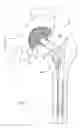
FIG. 1 is a schematic side view showing a prosthetic total hip joint positioned within a patient's body;
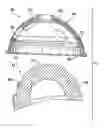
FIG. 2 is an exploded schematic side view showing the prosthetic acetabular component of the prosthetic total hip joint shown in FIG. 1; and
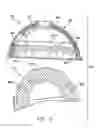
FIG. 3 is a schematic side view of the prosthetic acetabular component of the prosthetic total hip joint shown in FIG. 1.
DETAILED DESCRIPTION OF THE PREFERRED EMBODIMENTSLooking first at FIG. 1, there is shown a prosthetic total hip joint 5 which generally comprises a prosthetic acetabular component 10 seated in a recess contained in a prepared hip 15, and a prosthetic femoral stem component 20 which is secured to the top end of a resected femur 25.
Prosthetic acetabular component 10 is shown in greater detail in FIGS. 2 and 3. Prosthetic acetabular component 10 generally comprises a metal base construct 30 and a polyethylene bearing construct 35.
More particularly, metal seat base construct 30 comprises a metal seat 40 with a rail 60 defining a groove 65 therein.
Polyethylene liner construct 35 comprises a domed top surface 75 having an annular flange 85. Flange 85 is sized to snap fit in the groove 65 of metal base construct 30, whereby polyethylene bearing construct 35 may be secured to metal base construct 30.
In use, the socket of the acetabulum of hip 15 is removed, metal base construct 30 is secured to hip 15 via screws 55 and press fit with the acetabulum. Then polyethylene liner construct 35 is seated into metal base construct 30 until polyethylene bearing construct 35 engages the metal seat 40.
In accordance with the present invention, metal base construct 30 is formed with a bimetal construction. More particularly, the metal base construct 30 is composed of two different metals, a first metal 87 which engages hip 15 and a second metal 90 which engages polyethylene liner construct 35. Each of these metals is selected so that its characteristics are well suited to its particular function. More particularly, first metal 87 (i.e., the one that engages hip 15) is selected so as to provide a superior bone-engaging face, while second metal 90 (i.e., the one that engages polyethylene liner construct 35) is selected so as to provide a superior polyethylene-engaging face. By combining the different material characteristics of two different metals in base metal construct 10, it is possible to simultaneously form a superior bone-engaging face and a superior polyethylene-engaging face. Among other things, by selecting two appropriate metals for the metal base construct, superior bone ingrowth can be achieved while still avoiding the aforementioned problems with “backside wear”.
For instance, a base metal construct 10 may be formed whose bone-engaging surfaces are formed from titanium and whose polyethylene-engaging surfaces are formed from CoCrMo. This construction places a good bone ingrowth metal against the bone and a good polyethylene-engaging metal against the polyethylene, whereby to provide a significantly superior prosthetic acetabular component 10.
It is also possible to use other metals that are suitable in both strength, biocompatibility, and joinability to make the bimetal tibial component construct.
By way of example but not limitation, first metal 87 may comprise titanium, titanium alloys, tantalum, tantalum alloys or other metals and/or metal alloys consistent with the present invention. Among other things, first metal 87 is preferably a material which is highly biocompatible and which exhibits good bone ingrowth properties.
By way of further example but not limitation, second metal 90 may comprise CoCrMo, cobalt based alloys, stainless steels, zirconium based alloys or other metals and/or metal alloys consistent with the present invention. Among other things, second metal 90 is preferably a material which has relatively high hardness and which is scratch resistant. For the purposes of the present invention, the term bimetal may be defined as a composite of two metals, where each of the metals has a different primary constituent. The bimetal construct can be formed from two different commercially pure metals, from two alloys of different base metals, or a combination thereof.
The bimetal construct can be fabricated using a variety of techniques. In one preferred form of the invention, the bimetal construct is fabricated using the method disclosed in pending U.S. patent application Ser. No. 09/079,502, which patent application is hereby incorporated herein by reference. Alternatively, the bimetal construct can be fabricated by other techniques such as plasma spray, diffusion bonding, sintering, or metallurgical methods, e.g., such as a method of the sort disclosed in U.S. Pat. No. 5,323,954 (Shetty).
Claims
1. A prosthetic acetabular component for a prosthetic total hip joint, said component comprising two constructs, one being a metal base construct that engages the bone and the other being a polyethylene bearing construct that attaches to the metal base construct and articulates with a prosthetic femoral stem component on the opposing side of the joint, where said metal base construct is composed of two different metals, a first metal which engages the bone surface and a second metal which engages the polyethylene bearing construct, with the first metal being selected so as to provide a superior bone-engaging face, and the second metal being selected so as to provide a superior polyethylene-engaging face.
2. A prosthetic acetabular component according to claim 1 wherein said first metal comprises titanium.
3. A prosthetic acetabular component according to claim 1 wherein said first metal comprises a titanium alloy.
4. A prosthetic acetabular component according to claim 1 wherein said first metal comprises tantalum.
5. A prosthetic acetabular component according to claim 1 wherein said first metal comprises a tantalum alloy.
6. A prosthetic acetabular component according to claim 1 wherein said first metal comprises a material which is highly biocompatible and which exhibits good bone ingrowth properties.
7. A prosthetic acetabular component according to claim 1 wherein said second metal comprises CoCrMo.
8. A prosthetic acetabular component according to claim 1 wherein said second metal comprises a cobalt based alloy.
9. A prosthetic acetabular component according to claim 1 wherein said second metal comprises a stainless steel.
10. A prosthetic acetabular component according to claim 1 wherein said second metal comprises a zirconium based alloy.
11. A prosthetic acetabular component according to claim 1 wherein said second metal comprises a material which has relatively high hardness and which is scratch resistant.
Images & Drawings included:

Sources:
- United States Patent and Trademark Office - verify current appl. status at the USPTO↗
Similar patent applications:
Recent applications in this class:
- » 20250288422 2025-09-18
INTERBODY SPACER FOR SPINAL FUSION - » 20250186211 2025-06-12
Methods for Carbonate Surface Coating and Related Bone Void Filler Compositions - » 20240350271 2024-10-24
METHODS OF DESIGNING HIGH X-RAY LUCENCY LATTICE STRUCTURES - » 20240041605 2024-02-08
ORTHOPEDIC IMPLANT WITH POROUS STRUCTURE HAVING VARYING COEFFICIENT OF FRICTION WITH BONE - » 20230414368 2023-12-28
OSTEOINDUCTIVE IMPLANTS AND RELATED MANUFACTURING METHODS - » 20230346562 2023-11-02
Surface modified unit cell lattice structures for optimized secure freeform fabrication - » 20230346561 2023-11-02
THREE-DIMENSIONAL POROUS STRUCTURES FOR BONE INGROWTH AND METHODS FOR PRODUCING - » 20230301788 2023-09-28
TITANIUM IMPLANT SURFACES FREE FROM ALPHA CASE AND WITH ENHANCED OSTEOINDUCTION - » 20230248526 2023-08-10
Interbody spacer for spinal fusion - » 20230248525 2023-08-10
ZONAL TRABECULA FEMORAL CONDYLAR COMPONENT CONTAINING ZIRCONIUM-NIOBIUM ALLOY ON OXIDATION LAYER AND PREPARATION METHOD THEREOF