Virtual input using a pen
US20050103536A1
2005-05-19
10/496,682
2002-11-04
Abstract:
The invention relates to a method for inputting information using a pen on a surface (SO). According to said method, the displacement path of a pen (ST) is represented in graphic form on a transparent display or a transparent microdisplay (MD), whereby means allowing the pen (ST) and the graphics on the display (MD) to be locally coupled are provided.
Assignee:
- Siemens Aktiengesellschaft 1,616 🇩🇪 Muenchen, Germany
Interested in similar patents?
Get notified when new applications in this technology area are published.
Classification:
G06F3/011 » CPC main
Input arrangements for transferring data to be processed into a form capable of being handled by the computer; Output arrangements for transferring data from processing unit to output unit, e.g. interface arrangements; Input arrangements or combined input and output arrangements for interaction between user and computer Arrangements for interaction with the human body, e.g. for user immersion in virtual reality
G06F3/04883 » CPC further
Input arrangements for transferring data to be processed into a form capable of being handled by the computer; Output arrangements for transferring data from processing unit to output unit, e.g. interface arrangements; Input arrangements or combined input and output arrangements for interaction between user and computer; Interaction techniques based on graphical user interfaces [GUI] using specific features provided by the input device, e.g. functions controlled by the rotation of a mouse with dual sensing arrangements, or of the nature of the input device, e.g. tap gestures based on pressure sensed by a digitiser using a touch-screen or digitiser, e.g. input of commands through traced gestures for inputting data by handwriting, e.g. gesture or text
Description
The invention relates to a method for inputting information using a pen on a surface. According to said method, the displacement path of the pen is represented in graphic form on a display.
In miniaturized data terminals, in spite of small, inconspicuous and lightweight devices, there is a requirement for a large graphics screen. Furthermore, the user wishes to be able to input data in as natural a manner as possible. Future data terminals might therefore be equipped with a transparent microdisplay in which graphic information is projected via the natural environment. Such microdisplays are provided, for example, by “The MicroDisplay Corporation”. Inputting graphics using a pen is difficult on such a projected screen.
Technologies for inputting information using a pen on any surface are known, according to which, on the one hand, active pens with built-in displacement detection (cf. for example, www.anoto.com or www.com.n.com) are used, or according to which, on the other hand, by means of direction-finding technologies (cf. for example, www.virtual-ink.com), position recognition of a passive pen takes place relative to a data entry terminal. In these active as well as passive pens, data is transferred, for example, to a notebook, on which the displacement path is represented in graphic form, for example, by a line.
The object of the invention is to indicate a method for inputting information using a pen, in particular for a transparent microdisplay which enables natural handling for the user.
This object is achieved according to the invention by the features indicated in the claim.
An advantage of the method according to the invention is that other people cannot observe or hear inputting.
In the following the invention is described on the basis of an exemplary embodiment shown in the drawing.
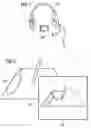
FIG. 1 shows the use of a microdisplay in connection with a headset, and
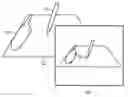
FIG. 2 the method according to the invention for inputting information using a pen.
The method according to the invention for inputting information using a pen permits the evaluated movement or displacement path of the pen to be represented in such a way on a transparent microdisplay that the visual impression arises that the pen is actually writing. In actual fact the pen moves on the respective support or surface without leaving a trace there. The displacement path so to speak is represented by a so-called “virtual ink” which flows from the tip of the pen as in the case of a real ballpoint pen.
In FIG. 1 a microdisplay MD is represented which, for example, is attached to a headset HS. If the microdisplay MD is embodied as a transparent microdisplay, then the user of the headset HS sees the diagram projected or represented on the microdisplay MD via the real background in front of him. For example, the user sees a text inserted on the display MD projected over the natural background.
In FIG. 2 a writing surface SO is represented on which there is a pen tracer STV which records the displacement of a pen ST. The writing surface SO forms the acquisition area so to speak on which the displacement path of the pen ST can be evaluated.
In the method according to the invention, means are provided allowing the pen ST and the graphics created by it to be locally coupled in the transparent microdisplay MD.
On the transparent display or transparent microdisplay MD, the graphics input using the pen ST is represented. Care should be taken here that the graphics appear as a projection on the microdisplay MD, while these graphics are not discernible on the real writing surface SO. Only the user or the observer who sees the whole scenario, in other words, projection image on the microdisplay MD and the real pen ST, sees so to speak a writing pen which leaves a virtual trail of ink behind it.
The object of the invention is to make the detected displacement of the pen visible on the microdisplay MD in such a way that the virtual impression arises that the pen is writing, although it is moving on the support without leaving a trace.
To achieve the object of the invention, the microdisplay MD coupled to the eye in its displacement is calibrated by means of the user, for example, touching one or more visible points on the display MD. This touching naturally occurs with the pen ST on the writing surface SO, in other words on the projection of the points on the writing surface SO. Compensation of the head displacement has the effect then of making the virtual writing or also line drawing remain at the same place on the writing surface SO for the user, who sees the writing surface SO via the microdisplay MD, while he is able to continue writing or drawing, and the virtual ink flows on from the tip of the pen ST.
In the display MD the user sees a combination of the real pen and the virtual ink which are locally coupled. Hereby the impression arises of a writing pen ST.
An external observer can only follow the movement of the pen, but would not see either the emerging graphics or writing, or a drawing that arises.
Claims
1. Method for inputting information using a pen on a surface (SO),
whereby the displacement path of a pen (ST) is represented in graphic form on a transparent display or transparent microdisplay (MD), and
whereby means are provided allowing the pen (ST) and the graphics on the display (MD) to be locally coupled.
Images & Drawings included:
Sources:
- United States Patent and Trademark Office - verify current appl. status at the USPTO↗
Recent applications in this class:
- » 20250172993 2025-05-29
Display Method, Apparatus, and Mobile Carrier - » 20250172992 2025-05-29
VISUAL TRACKING OF PERIPHERAL DEVICES - » 20250172991 2025-05-29
INFORMATION PROCESSING APPARATUS, INFORMATION PROCESSING METHOD, AND PROGRAM - » 20250165059 2025-05-22
METHODS AND SYSTEMS FOR ASSOCIATING INPUT SCHEMES WITH PHYSICAL WORLD OBJECTS - » 20250165058 2025-05-22
MULTIPARTY OBJECT RECOGNITION - » 20250165057 2025-05-22
Methods and Apparatuses for Providing Procedure Guidance - » 20250155968 2025-05-15
TRACKING AND DRIFT CORRECTION - » 20250155967 2025-05-15
INFORMATION PROCESSING METHOD, INFORMATION PROCESSING DEVICE, AND NON-TRANSITORY COMPUTER READABLE RECORDING MEDIUM - » 20250155966 2025-05-15
IMMERSIVE IMAGE EXPERIENCING DEVICE WITH TOUCH STIMULATION PROVIDING FUNCTION - » 20250155965 2025-05-15
SYSTEM AND METHOD FOR PROVIDING VIRTUAL REALITY SERVICE
Recent applications for this Assignee:
- » 20240329014 2024-10-03
Gas analyzer with improved architecture for operation in potentially hazardous environments - » 20230189450 2023-06-15
TOLERANCE COMPENSATION ELEMENT FOR CIRCUIT CONFIGURATIONS - » 20230096258 2023-03-30
Power load data prediction method and device, and storage medium - » 20220365520 2022-11-17
GEOMETRIC MODEL-BASED EVALUATION METHOD, SYSTEM, AND APPARATUS FOR KPI IN PRODUCTION PROCEDURE - » 20220337046 2022-10-20
Circuit breaker device, circuit breaker system and method - » 20220291259 2022-09-15
Low-voltage power switch and arc fault detection unit - » 20220283990 2022-09-08
Method for configuring priority level, cloud platform, system, computing device, and medium - » 20220283787 2022-09-08
SYSTEM AND METHOD SUPPORTING GRAPHICAL PROGRAMMING BASED ON NEURON BLOCKS, AND STORAGE MEDIUM - » 20220269240 2022-08-25
SMART PROGRAMMING METHOD FOR INTEGRATED CNC-ROBOT - » 20220263732 2022-08-18
Field data transmission method, device and system, and computer-readable medium