Goods tracking system and method
US20050139663A1
2005-06-30
11/007,659
2004-12-08
✅ Patent granted
US 7,267,270 B2
2007-09-11
-
-
Daniel Stcyr | Edwyn Labaze
2024-12-08
Abstract:
A goods tracking method and system for tracking goods loaded on or in a carrier is disclosed. The carrier and/or goods have an RFID tag. A data writing device and a data reading device are used. The writing device is arranged to obtain information on the goods and write corresponding data to the carrier's or goods' RFID tag. The reading device is arranged to read data from the RFID tag of the carrier and/or goods being submitted for fulfilment of an order and to determine acceptance of the goods on or in the carrier in dependence on the data meeting requirements of the order.
Assignee:
- Intellident Limited 1 🇬🇧 Stockport, United Kingdom
Interested in similar patents?
Get notified when new applications in this technology area are published.
Classification:
G06Q20/203 » CPC main
Payment architectures, schemes or protocols; Payment architectures; Point-of-sale [POS] network systems Inventory monitoring
G06Q10/08 » CPC further
Administration; Management Logistics, e.g. warehousing, loading, distribution or shipping; Inventory or stock management, e.g. order filling, procurement or balancing against orders
G06Q10/0833 » CPC further
Administration; Management; Logistics, e.g. warehousing, loading, distribution or shipping; Inventory or stock management, e.g. order filling, procurement or balancing against orders; Shipping Tracking
G06Q20/208 » CPC further
Payment architectures, schemes or protocols; Payment architectures; Point-of-sale [POS] network systems Input by product or record sensing, e.g. weighing or scanner processing
G07G1/009 » CPC further
Cash registers; Checkout procedures with a code reader for reading of an identifying code of the article to be registered, e.g. barcode reader or radio-frequency identity [RFID] reader the reader being an RFID reader
G07B15/02 IPC
Arrangements or apparatus for collecting fares, tolls or entrance fees at one or more control points taking into account a variable factor such as distance or time, e.g. for passenger transport, parking systems or car rental systems
Description
Under 35 U.S.C. § 119(a), this application claims the benefit of British Application No. 0328429.6, filed Dec. 8, 2003, which is hereby incorporated by reference in its entirety.
FIELD AND BACKGROUND OF THE INVENTIONThe present invention relates to a system and method for tracking goods.
Many suppliers providing goods to retailers, particularly perishable pre-prepared or raw foodstuffs, have moved from providing loaded pallets to using dollys. A dolly is typically a wheeled platform onto which layers of Tray/Case/Outers containing the goods can be placed. In this manner, the Dolly/Pallet can be wheeled directly out into the retailer's store and the goods unloaded onto shelves.
Currently goods/products are stored in containers such as Tray/Case/Outers. The products and containers have bar codes: the product bar code normally contains only the product ID, while the container contains Product UPC/EPC/SKU, Supplier Code and Display Until Date.
One particular issue with any supplier-retailer chain is tracking orders and ensuring that the correct goods are delivered to the correct destination (destination being a consolidation point, distribution depot or retail store). Particularly now that regulations and consumers require fresh produce, it is particularly important that the product is delivered well within its sell-by date & with the correct sell by date displayed. Furthermore, many retailers now have agreements with suppliers that the supplier labels and prices goods at source. If incorrectly labelled or priced goods are received, retailers often reject the goods and charge the supplier.
SUMMARY OF THE INVENTIONAccording to an aspect of the present invention, there is provided a goods tracking system for tracking goods loaded on or in a carrier, the carrier and/or goods having an RFID tag, the system comprising a data writing device and a data reading device, the writing device being arranged to obtain information on the goods and write corresponding data to the carrier's or goods' RFID tag and the reading device being arranged to read data from the RFID tag of the carrier and/or goods being submitted for fulfilment of an order and to determine acceptance of the goods on or in the carrier in dependence on the data meeting requirements of the order.
Preferably, the system maintains and is used to control all despatches using RFID technology. By control of dispatches using an embodiments of the present invention, despatch/shipping errors should be reduced or removed. Embodiments of the present invention may be implemented to control a whole supply chain to improve despatch at suppliers and receipt at destination to deliver.
The present invention is particularly applicable to systems using RFID reading/writing equipment, but could equally be transferable into the Barcode arena of Data Capture applications. In a preferred embodiment, half multiscanner or mobile multiscanner devices are used. Although RFID technologies are preferred, other writeable or rewriteable memory devices could also be used. In addition, although a mix of barcodes and RFID tags are discussed, systems using purely RFID tags or purely barcodes or other mixes could also be contemplated.
BRIEF DESCRIPTION OF DRAWINGSExamples of the present invention will now be described in detail with reference to the accompanying drawings, in which:
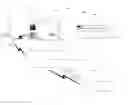
FIG. 1 is a schematic diagram of a system according to an embodiment of the present invention;
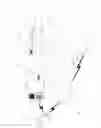
FIG. 2 is a schematic diagram illustrating aspects of a reading device for use in an embodiment according to the present invention; and,
FIG. 3 is a schematic diagram illustrating aspects of a reading device for use in an embodiment according to the present invention.
DETAILED DESCRIPTION OF THE PREFERRED EMBODIMENTThe system 10 includes a writing device 20 and a reading device 30. Preferably the reading and writing devices are multiscanners. Although only one reading and one writing device is illustrated, multiple reading & writing devices may be utilised either separately or in a networked/connected manner to allow multiple simultaneous writing & despatching against shared orders for multiple destinations.
Goods are loaded onto a Tray/Case/Outer 40 that are then stacked onto a Dolly/Pallet 50 having an RFID tag or similar rewritable memory device 51. Each goods item 45 has a product description/pricing barcode 46 and optionally a life date (display until date) on its packaging. Each tray 40 includes a barcode or RFID tag 41 describing the goods in the tray.
When the completed Dolly/Pallet stack is presented to the writing device 20, the user is prompted via a screen 21 to scan the barcode on the packaging of the goods in the tray using a scanner 22 and enter the date life, as printed on the package via a touch-screen interface 23. Once this is complete, the operative is asked to scan the tray end label/tag to ensure that the product & label match.
The writing device 20 is arranged to check that the product barcode matches the tray end barcode and displays an error message if this is not so. Additional checks are preferably made to ensure that the product is being dispatched has the correct Display Until Date by use of the Current Date and Lifespan (from a product database 60).
The writing device 20 preferably includes a networked computer system 25 that cross checks the Product Code (as defined by a standard such as UPC/EPC/SKU) from the barcode of each goods item with the product database 60 to ensure the product is correctly labelled.
In a preferred embodiment, the networked computer system also checks the price of the goods on the package to ensure that the package contains the correct price information. This could be done by adding price information to the product database 60 linked to the UPC/EPC/SKU. In this manner, the system can verify that the price is correct prior to entering store. This avoids RTM (Return to Manufacturer) issues. RTM's are a big issue for suppliers because if the packaging is incorrect or if the product is not fit to merchandise ‘in-store’, retailers reject the product and the supplier has to pay to pick up the product, loses the load payment and receives a loss of profit charge from the retailer.
The writing device 20 then asks for the despatch date, usually today/tomorrow/or the day after to ensure the date life on the tray end label is in tolerance and to ensure that on despatch the tray is sent on the correct delivery wave.
Only once these criteria have been satisfied will the writing device 20 write the required RFID tag 51 labelling the Dolly/Pallet. The RFID tag 51 labelling the Dolly/Pallet includes the UPC/EPC/SKU of the goods, date life and series number (an Individual Supplier Code).
In this manner, the system ensures that the correct product is in the correct tray, labelled correctly and to the correct date life and advertising the right price.
At the reading device 30, tags within Dolly/Pallets are read as they are despatched. The data from the tags is recorded to prove what is being sent and to whom. The reading device 30 collects the UPC/EPC/SKU, Date Life and series number from the Tag and verifies this data against the retailer's order for that day.
FIGS. 2 and 3 are, respectively, schematic diagrams illustrating aspects of a reading device and a writing device for use in an embodiment according to the present invention.
The dispatch process is as follows:
Once goods have been picked and a Dolly/Pallet stack containing the goods is awaiting despatch, an operative moves the Dolly/Pallet to the reading device for scanning out. Before he is allowed to do this, a screen on the device will ask the operative to select the destination of the Dolly/Pallet stack. He selects the relevant destination (destination being a consolidation point, distribution depot or retail store) and in dependence on the selection, the reading device seeks a file situated on the network that holds the destination's orders for the day. This may be split into an AM or PM delivery wave, and would normally be supplied by the retailer's network. However, the data could equally be supplied by any database system as all that is required is a small file containing Destination, Date, UPC/EPC/SKU, Wave and volume figures. The reading device looks for the latest ‘timed’ file (as orders can be updated or changed by retailer during the morning) and uploads the data, if necessary according to wave AM or PM in which case the relevant files are prefixed by ‘a’ or ‘p’.
As they are scanned, the individual UPC/EPC/SKUs from the tags are then deducted from the order quantity until the order status is zero, now the order is fulfilled for this destination and this process continues until every destination is complete. In this manner, the system ensures the correct volume of goods being delivered to the correct destination, even if the order has been updated.
The operative can then selects the wave (AM/PM) to ensure that the date is correct and the reading device reads the data off the tag and uploads the new volume figures. This ensures the tolerance date life is appropriate and the goods are despatched on right day, so Sunday's delivery is sent PM Saturday and not AM Friday for example.
Once an order for a destination is complete, the reading device provides the despatch office 70 with a copy of the vehicle manifest 75 and delivery note 76 ready for the driver. Preferably, the data is provided via email or some other electronic alert or report. The data is in a form that can be produced as a paper document to satisfy legacy systems and authorities should it be needed. This expedites despatch as the gatehouse receives the manifest of the vehicle to prepare the destination of the delivery before the lorry even leaves the site. This provides a rapid information flow as there is a reduced paper trail. It also provides a failsafe mechanism to ensure orders are 100% complete; the supplier now cannot deliver a short or an over order to a destination.
Reporting facilities are available on screen for pickers to track their progress. For example, after a break they can go to the reading device and call up orders remaining to complete. This removes human error, such as poor concentration and distractions, and means picking sheets, which are manually completed and usually out of date, are not needed.
In a preferred embodiment, the RFID tag of a Dolly/Pallet also includes data on a trail to the destination and the date at which the Dolly/Pallet went into further destinations.
The system preferably provides a supervisor mode to allow redistribution of stock. For example, one supplier may have made too few products to fulfil an order. In this case it is preferable to redistribute goods with the appropriate UPC/EPC/SKU across the destinations giving them all a slight shortage instead of one destination having a substantial short. Using the supervisor mode, a multiscanner device can instruct the network to redistribute the stock and the pick quantity is reduced across the destination network.
It is also possible using supervisor mode to add an additional product that is not contained in the order. For example, a supplier may have to redistribute stock for the reasons above. In this situation, the retailer may call the supplier and ask if they can supply the shortfall. Since the order does not appear on the multiscanner device, an ‘add local’ option can be invoked at the destination which enables the supplier to deliver UPC/EPC/SKU's outside of the destinations requested order.
All of a day's transactions are recorded on a local or centrally served database for reporting purposes. This data can be used to ensure that if their ever is a discrepancy on delivery volume against an order the supplier can quickly call up that day's delivery and provide definitive proof that an order was fulfilled or not, as the case my be. This removes the time consuming searching through historical paperwork to address an inconsistency.
| Area | Reason | Benefit |
| Writing Multiscanner device |
| Checking “Display | Ensures that the pack | Avoids fines for |
| until” date on pack | has the correct printed | incorrect product |
| dispatch date | ||
| Comparison of | Ensures that the product | Avoids fines for |
| product label and | is in the correct tray | incorrect product |
| tray end barcode | ||
| Checking dispatch | Ensures that the product | Avoids fines for |
| day against “display | has the correct dispatch | incorrect product display |
| until” date on the | day | until date |
| label and the | ||
| date life | ||
| Checking the | Ensures the correct | Avoids unaccounted for |
| number of tags in a | number of Tray/Case/ | stock |
| stack against the | Outers are passed into | |
| number entered on | cold store/Storage | |
| screen | ||
| Communication | Gets product names | Allows the system to |
| with product | and shelf life's | check dispatch date and |
| database | display name of product |
| Reading Multiscanner device |
| Checking tray count | Checking for good RFID | Avoids bad tags on |
| tags and that the correct | dispatched stock and | |
| number of Tray/Case/ | ensures the system has | |
| Outers is entered into | the correct quantity of | |
| the system | dispatched stock | |
| Repeat Tray/Case/ | Checks that Tray/Case/ | Prevents the same Tray/ |
| Outers checking | Outers can only be | Case/Outers from |
| processed once during | being processed a | |
| each 24 hour period | number of times and | |
| therefore avoids fines | ||
| for incorrect quantity of | ||
| product | ||
| Destination and | Allows the refining of | Avoids fines for |
| wave selection | products into the correct | incorrect quantity of |
| number for individual | product | |
| destinations | ||
| On screen report | Displays details of | Allows packers select |
| outstanding products | the outstanding product | |
| after each tray has been | ||
| accepted | ||
| Addition of | Allows local entry of | Allows the system to |
| local product | products with UPC/ | operate off line and |
| EPC/SKU code and | process products that | |
| name | are not yet in the | |
| database/order system | ||
| etc | ||
| Network Link | Get order information | Allows the system to |
| and updates to orders | process the correct | |
| number of Tray/Case/ | ||
| Outers for a particular | ||
| destination | ||
| Destination | Allows all products for a | Allows an order to be |
| Complete | particular destination to | dispatched immediately |
| be marked as complete | ||
| Destination | Displays the outstanding | Shows what will happen |
| Complete | products and quantities | to stock levels if this |
| outstanding | that will be marked as | action continues |
| orders report | complete | |
| Redistribute | Allows movement of | Allows orders to be |
| products between | completed for given | |
| destinations as priorities | destination from already | |
| dictate | packed stock. | |
| Checking of | Any destination | Avoids fines for |
| Database/Order | transaction needs to | incorrect product |
| system for updates | have the latest product | |
| quantities | ||
In a preferred embodiment, the management functionality of the system can be enhanced to display the status of an order before asking for confirmation of and enacting the request.
This allows an order to be shipped even if incomplete. This is accomplished by selecting a Destination, Wave and Date. In this manner, the status displayed will be either
-
- Complete
- Incomplete, and the outstanding quantities required
Example of Incomplete Destination
| Product | ||||
| Description | Picked | Order | Variance | |
| Granny Smith | 1 | 60 | 59 | |
To avoid the same tags being used to “complete” different, or even the same order more than once, each tag identifier is saved to a database. If a tag is presented to the reading device more than once within a day then an error message will be displayed. Obviously the time period can be lengthened or shortened as is needed when configuring the system.
Where a product does not match the tray end barcode and the dispatch date does not match the tray end barcode dispatch date, an error message indicating both failures are displayed.
Where products are removed from an order, the quantity is not reduced in the next order file, even though the actual product line is missing. Since an update to the database is made from this file and no new quantity exists for the product, the quantity is set to zero.
In a preferred embodiment, the system is arranged to check that a product being dispatched is not only the product that matches the tray end label but is also the product with the correct date. Since the date in not encoded on the product bar code, a dialog is presented with the numbers 1 to 31. The operative can then enter a number from the dialog that represents the product display date.
This is used to check that the entered numbers matches the day number of the Display Until Date from the label. If this check fails the process will be halted and an error message displayed.
In a preferred embodiment, the process performed at the writing device is as follows: (this assumes the preferred case in which all products on a Dolly/Pallet are the same)
- Wheel up a Dolly/Pallet containing Tray/Case/Outers to the multiscanner device
- Display shows ‘Scan Product’
- Scan Product Barcode. ProductBarcode.
- Display shows ‘Enter Dispatch Day’ and a entry box with date number entry appears.
- The user selects a number
- Screen shows ‘Scan Tray end Label’
- Scan the Tray end label TrayEndLabelBarcode
- Tray End Label Barcode separated into ProductUPC/EPC/SKU, SupplierCode and DisplayDate
- Check that the entered Display Day matches the display day from the entered tray end label, Display the error message Incorrect Date on product” if this check fails.
- Ensure that ProductBarcode=UPC/EPC/SKU else display ‘Incorrect Tray End Label’
- Link to product Database. Get product names and LifeSpan.
- Show a new screen with Product Description and request Outload Day
- User Selects Outload Day from touch screen. Days will be listed as ‘TODAY’ followed by each day in turn.
- Ensure CurrentDate+ElapsedDays (CurrentDay, OutLoad Day)+LifeSpan=Display Until Date
- Enter tray Count and select between single or double Dolly/Pallet
- Check the correct number of Tray/Case Outers are on the Dolly/Pallet Program RFID Tags
For a double Dolly/Pallet, the system is arranged to display a prompt to position reverse of the Dolly/Pallet, and then proceeds substantially as above.
In another embodiment, the process performed at the writing device is as follows: (this assumes the preferred case in which all products on a Dolly/Pallet are the same)
- Wheel up a Dolly/Pallet containing Tray/Case/Outers to the multiscanner device
- Change display screen To Show ‘Scan Product’
- Scan Product Barcode. ProductBarcode.
- Change display screen to show ‘Scan Tray end Label’
- Scan the Tray end label TrayEndLabelBarcode
- Tray End Label Barcode separated into ProductUPC/EPC/SKU, SupplierCode and DisplayDate
- Ensure that ProductBarcode=UPC/EPC/SKU else display ‘Incorrect Tray End Label’
- Link to Database. Get product names and LifeSpan.
- Show a new screen with Product Description and request Outload Day
- User Selects Outload Day from touch screen. Days will be listed as ‘TODAY’ followed by each day in turn.
- Ensure CurrentDate+ElapsedDays(CurrentDay, OutLoad Day)+LifeSpan=Display Until Date
- Enter tray Count and select between single or double Dolly/Pallet
- Check the correct number of Tray/Case/Outers are on the Dolly/Pallet Program Tags
- For double Dolly/Pallet, display ‘Position reverse of Dolly/Pallet’, enter number of Tray/Case/Outers and program
At the reading device, dollies can have a mix of products. In a preferred embodiment, the process performed at the reading device is as follows:
- Check database for the latest order details.
- Select destination button and select from the list on screen.
- Select Either
- Supervisor Menu accessible via a 3 digit pin code providing
- Add functionality to add products that are not in database
- Redistribute functionality, which would read product into a different destination. Select FROM destination, Select number of Tray/Case/Outers, Select TO destination. Select ‘Confirm’
- Destination Complete (meaning the order has been manually completed)
- Or proceed as normal (step ‘d’)
- Scan the Dolly/Pallet and look up the product names from the order database data, The link being in the UPC/EPC/SKU code
- Display the current screen until the correct number of Tray/Case/Outers is detected and then display the totals screen
- Display the contents of the Dolly/Pallet (Product, Picked, Order, ‘On This Dolly/Pallet’) of Tray/Case/Outers
- Excess Tray/Case/Outers would be flagged, “Remove Excess Tray of <Description> re-scan” as well as ‘Product <Description> order already complete. Please “remove tray(s) and scan again”
- User selects “Confirmed” button and data is entered into the system.
- Display now shows outstanding quantity of products on order for the selected destination or
- When no further items are required the system should flash “destination order complete”
- An email containing details of the report will be dispatched for all orders completed
Order Database
Files from Order Database Preferably have the Format:
Filename:- YYMMDD|Wave|Version.csv
Where:
- YYMMDD|Wave|Version.csv
- YYMMDD represents the date
- Wave is either AM or PM
- Version is an updated version number from 0 to 9 with 0 being the first version of the order
- Example 030521A0.csv, being an AM order for 21/05/03 version 1
Contents: - OrderNumber, Branch, UPC/EPC/SKU, ProductName, Quantity
Example - 1234, BAR, 12345678, ISRAELI APRICOTS 10×6 MS, 3 repeated for each destination.
Reports
Various reports can be generated via a screen at the reading device. In addition, reports may be emailed at the point orders are complete. Reports may have a format:
Destination #0637 Date: 23/4/2003 Wave: One
| Product | ||||
| Description | Picked | Order | Variance | |
| Granny Smith | 1 | 60 | 59 | |
| Golden del | 3 | 60 | 57 | |
Destination #0637 Date: 23/4/2003 Wave: One
| Product | ||||
| Description | Picked | Order | Variance | |
| Granny Smith | 1 | 60 | 59 | |
| Golden del | 3 | 60 | 57 | |
Preferably, the reports have an HTML format, viewable in a Web browser such a Microsoft Internet Explorer (RTM).
Another report format available shows the status of orders following the selection of the following:
- Destination
- Date
- Wave
Example
Destination #0637 Date: 23/4/2003 Wave: One
| Product | ||||
| Description | To be picked | Order | Variance | |
| Granny Smith | 1 | 60 | ||
| Golden del | 0 | 60 | ||
Claims
1. A goods tracking system for tracking goods loaded on or in a carrier, the carrier and/or goods having an RFID tag, the system comprising a data writing device and a data reading device, the writing device being arranged to obtain information on the goods and write corresponding data to the carrier's or goods' RFID tag and the reading device being arranged to read data from the RFID tag of the carrier and/or goods being submitted for fulfilment of an order and to determine acceptance of the goods on or in the carrier in dependence on the data meeting requirements of the order.
2. A system according to claim 1, wherein the data writing device includes a barcode scanner, the data writing device being arranged to obtain information on the goods in dependence on a goods' barcode.
3. A system according to claim 2, wherein the data writing device is arranged to access a database to obtain data in dependence on the goods' barcode.
4. A system according to claim 1, wherein the writing device is arranged to obtain data on the life of the goods and to reject goods having a life expiring before a predetermined point in time.
5. A system according to claim 1, further comprising an order database, wherein the reading device is arranged to access the order database to determine acceptance of the goods submitted for a respective order.
6. A system according to claim 5, wherein upon acceptance of goods, the reading device is arranged to update the order database to decrement the respective goods required to fulfil the order.
7. A system according to claim 6, wherein upon acceptance of goods, the reading device is arranged to record data on tags associated with the goods, the system being to cross reference data recorded on accepted tags to prevent repeated presentation of the goods to fulfil the same or another order.
8. A system according to claim 1, wherein data is written to tags during fulfilment of an order to create an audit trail for tracking said goods and said order.
9. A system according to claim 1, wherein upon fulfilment of an order, the system being arranged to transmit data on the order to one or more destinations to facilitate despatch.
10. A system according to claim 9, wherein the data transmitted includes one or more of a delivery note, a goods manifest and a despatch notice.
11. A goods tracking system for tracking goods loaded on or in a carrier, the carrier and/or goods having an RFID tag, the system comprising a data writing device and a data reading device;
the writing device including a barcode scanner and being arranged to obtain information on the goods from a database in dependence on a goods' barcode and write corresponding data to the carrier's or goods' RFID tag;
the reading device being arranged to read data from the RFID tag of the carrier and/or goods being submitted for fulfilment of an order and to determine acceptance of the goods on or in the carrier in dependence on the data meeting requirements of the order as defined in an order database, wherein upon acceptance of goods, the reading device is arranged to update the order database to decrement the respective goods required to fulfil the order and to record data on tags associated with the goods, the system being to cross reference data recorded on accepted tags to prevent repeated presentation of the goods to fulfil the same or another order.
12. A method for tracking goods loaded on or in a carrier comprising:
including an RFID tag on the carrier and/or goods;
obtaining information on the goods and writing corresponding data to the carrier's or goods' RFID tag;
reading data from the RFID tag of the carrier and/or goods being submitted for fulfilment of an order; and,
determining acceptance of the goods on or in the carrier in dependence on the data meeting requirements of the order.
13. A method according to claim 12, wherein the step of obtaining information includes the step of reading a goods' barcode and obtaining information on the goods in dependence on a goods' barcode.
14. A method according to claim 13, further comprising accessing a database to obtain data in dependence on the goods' barcode.
15. A method according to claim 12, wherein the step of obtaining information includes the step of obtaining data on the life of the goods and to reject goods having a life expiring before a predetermined point in time.
16. A method according to claim 12, wherein the step of determining acceptance of goods further comprises accessing an order database to determine acceptance of the goods submitted for a respective order.
17. A method according to claim 16, wherein upon acceptance of goods, the method further comprising updating the order database to decrement the respective goods required to fulfil the order.
18. A method according to claim 17, wherein upon acceptance of goods, the method further comprising recording data on tags associated with the goods, the step of determining acceptance of goods further comprising cross referencing data recorded on accepted tags to prevent repeated presentation of the goods to fulfil the same or another order.
19. A method according to claim 12, further comprising writing data to goods' tags during fulfilment of an order to create an audit trail for tracking said goods and said order.
20. A method according to claim 12, further comprising, upon fulfilment of an order, transmitting data on the order to one or more destinations to facilitate despatch.
Images & Drawings included:


Sources:
- United States Patent and Trademark Office - verify current appl. status at the USPTO↗
Similar patent applications:
- » 20120089409
APPARATUS, METHOD, AND SYSTEM TO TRACK GOODS AND SERVICES - » 20050289019
Method and system for tracking goods - » 20140095187
Method and system for tracking goods - » 20190122173
Systems and methods for tracking goods carriers - » 20070055584
Systems and methods for tracking goods - » 20090070238
DATABASE SYSTEM AND METHOD FOR TRACKING GOODS - » 20090070273
DATABASE SYSTEM AND METHOD FOR TRACKING GOODS - » 20190102732
Bi-modal communication system for secure goods tracking and methods of using the same - » 20220138677
SYSTEM AND A METHOD FOR TRACKING GOODS OF A VALUE CHAIN ORIGINATING FROM A LOCATION - » 20150379216
Method for tracking sanitary materials and goods with RFID identification system; containment area and/or structure actuating said method
Recent applications in this class:
- » 20250265564 2025-08-21
METHOD OF OPERATING AN AUTOMATED TRANSACTION MACHINE FOR ENHANCED SECURITY - » 20250238777 2025-07-24
ANTICIPATORY AND REMOTE-CONTROLLED MEDIA MANAGEMENT - » 20250190965 2025-06-12
System and method for determining product theft information using magnetic sensors - » 20250182081 2025-06-05
System and method for determining product theft information using magnetic sensors - » 20250139601 2025-05-01
TRANSACTION SYSTEM, TRANSACTION APPARATUS, AND TRANSACTION METHOD - » 20250117765 2025-04-10
AUTOMATIC ITEM IDENTIFICATION DURING ASSISTED CHECKOUT - » 20240412186 2024-12-12
DISPLAY DEVICE FOR DISPLAYING A PRICE AND/OR PRODUCT INFORMATION - » 20240338668 2024-10-10
SYSTEM, METHOD AND DEVICE FOR PROCESSING A TRANSACTION - » 20240311788 2024-09-19
Self-Service Kiosk Inventory Control - » 20240281786 2024-08-22
System and method for determining product theft information using magnetic sensors