Light emitting diode
US20050139852A1
2005-06-30
11/020,764
2004-12-23
✅ Patent granted
US 7,342,260 B2
2008-03-11
-
-
Minhloan Tran | Benjamin Tzu-Hung Liu
2025-08-19
Abstract:
A light emitting diode. The light emitting diode comprises a lead frame and an LED chip therein. Packaging material in the lead frame is covers the LED chip. A plurality of ZnX quantum dots dispersed in the packaging material, wherein X is S, Se, Te or a combination thereof. A plurality of organic molecules covers each ZnX quantum dot.
Inventors:
- Hsueh-Shih CHEN 28 🇹🇼 Hsinchu, Taiwan
- Chien-Ming CHEN 9 🇹🇼 Yangmei Township, Taiwan
- Hsueh-Shih Chen 29 🇹🇼 Hsinchu City, Taiwan
- Gwo-Yang Chang 6 🇹🇼 Jiali Township, Taiwan
- Jun-Ren Lo 1 🇹🇼 Hsinchu, Taiwan
- Shyh-Yang Lee 2 🇹🇼 Hsinchu, Taiwan
- Chien-Ming Chen 6 🇹🇼 Yangmei Township, Taoyuan County, Taiwan
- Gwo-Yang Chang 5 🇹🇼 Jiali Township, Tainan County, Taiwan
Assignee:
- INDUSTRIAL TECHNOLOGY RESEARCH INSTITUTE 7,890 🇹🇼 HSINCHU, Taiwan
Interested in similar patents?
Get notified when new applications in this technology area are published.
Classification:
H01L33/502 » CPC main
Semiconductor devices with at least one potential-jump barrier or surface barrier specially adapted for light emission; Processes or apparatus specially adapted for the manufacture or treatment thereof or of parts thereof; Details thereof characterised by the semiconductor body packages; Wavelength conversion elements characterised by the materials, e.g. binder Wavelength conversion materials
B82Y10/00 » CPC further
Nanotechnology for information processing, storage or transmission, e.g. quantum computing or single electron logic
Y10S428/917 » CPC further
Stock material or miscellaneous articles Electroluminescent
H01L29/22 IPC
Semiconductor devices adapted for rectifying, amplifying, oscillating or switching, or capacitors or resistors with at least one potential-jump barrier or surface barrier, e.g. PN junction depletion layer or carrier concentration layer; Details of semiconductor bodies or of electrodes thereof; Multistep manufacturing processes therefor; Semiconductor bodies ; Multistep manufacturing processes therefor characterised by the materials of which they are formed including, apart from doping materials or other impurities, only AB compounds
Description
BACKGROUNDThe invention relates to a light emitting diode (LED), and more particularly to a ZnX LED, where X is S, Se, Te or a combination thereof.
Light emitting diodes are used as display and lighting devices. Working principles comprise voltage applied to a diode to drive electron and hole combinations, releasing light from the diode. Luminescence characteristics, such as color and intensity, are based on energy gap and quantum efficiency of the luminescent materials.
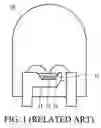
A popular LED structure is shown in FIG. 1, in which LED 10 comprises a lead frame 11, a GaN LED chip 12 therein, and a packaging material 13 covering GaN LED chip 12. A plurality of YAG phosphors 14 are dispersed in packaging material 13. YAG phosphors 14 are synthesized at high temperature (>1000° C.), creating large particles.
YAG phosphors 14 also present poor dispersion due to incompatebility with packaging material 13, negatively affecting luminescent uniformity.
It is desirable to resolve these and other problems and obtain higher luminescent efficiency for the LED.
SUMMARYAccordingly, embodiments of the invention provide a light emitting diode.
The light emitting diode comprises a lead frame and a LED chip therein. Packaging material in the lead frame covers the LED chip. A plurality of ZnX quantum dots is dispersed in the packaging material, wherein X is S, Se, Te or a combination thereof. A plurality of organic molecules covers each ZnX quantum dot.
DESCRIPTION OF THE DRAWINGSThe invention can be more fully understood by reading the subsequent detailed description and examples with references made to the accompanying drawings, wherein:
FIG. 1 is a cross-section of a conventional LED structure;
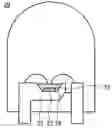
FIG. 2 is a cross-section of a LED structure of the embodiments;
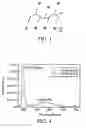
FIG. 3 is a schematic illustrating interaction between the phosphors and the coating materials of the embodiments;
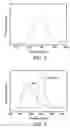
FIG. 4 is a ZnSe LED PL spectrum of example 1;
FIG. 5 is a ZnS LED PL spectrum of example 2;
FIG. 6 is a ZnTe LED PL spectrum of example 3; and
FIG. 7 is a ZnSe:I LED PL spectrum of example 4.
FIG. 8 is a ZnS LED and ZnS:Mn LED PL spectrum of example 5.
DETAILED DESCRIPTIONThe light emitting device structure of the embodiments is shown in FIG. 2. Light emitting device 20 comprises a lead frame 21, a LED chip 22 in lead frame 21, and packaging material 23 in lead frame 21 and covering LED chip 22. Packaging material 23 may be resin or epoxy. A plurality of ZnX quantum dots 24 is dispersed in packaging material 23, where X is S, Se, Te or a combination thereof. ZnX quantum dot 24 is smaller than 20 nm. Furthermore, ZnX quantum dots 24 may be doped by dopants, such as transition elements, halogens or a combination thereof. A plurality of organic molecules 25 covers the each ZnX quantum dot 24 to form a core/shell structure, as shown in FIG. 3. Organic molecules 25 comprise aliphatic compounds or phospholipids. Organic molecules 25 interact with packaging material 23, to improve ZnX quantum dot 24 dispersion, even to nano-scale dispersion. In other words, ZnX quantum dots 24 dispersed in the packaging material 23 form a plurality of clusters wiht each cluster is smaller than 100 nm.
EXAMPLE 1—ZnSe LED0.3158 g Se powder was put in a vacuum environment to remove moisture, and inert gas was injected from oxidation. 5 ml tri-octylphosphine (TOP) was added and treated ultrasonically for 30 mins to obtain a colorless TOPSe complex solution.
0.324 g ZnO was put in a three-necked bottle and heated to 120° C. in inert gas to remove moisture. After cooling to room temperature, 1.4693 g tri-octylphosphine oxide (TOPO) and 2 g stearic acid (SA) were added and heated to 150° C. for 20 mins to obtain a transparent solution.
The ZnO solution was heated to 300° C., and the TOPSe solution was added to form ZnSe quantum dots covering the stearic acid (SA) molecules.
The 10 wt. % and 20 wt. % ZnSe quantum dots were mixed with epoxy to form two mixtures. The two mixtures were coated onto two GaN LED chips respectively to form two ZnSe LEDs.
FIG. 4 is a PL spectrum of the ZnSe LEDs. The luminescent intensity of the 10 wt. % ZnSe quantum dots LED is higher than the 20 wt. % ZnSe quantum dots LED.
The CIE chromaticity coordinates are (0.3840872, 0.3831313) and (0.3824845, 0.4137564) respectively, with the two LEDs shown both white LEDs.
EXAMPLE 2—ZnS LED0.0321 g S powder was put in a vacuum environment to remove moisture, and inert gas was injected from oxidation. 1 ml tri-octylphosphine (TOP) was added and treated ultrasonically for 30 mins to obtain colorless TOPS complex solution.
0.081 g ZnO was put in a three-necked bottle and heated to 120° C. in inert gas to remove moisture. After cooling to room temperature, 0.7422 g tri-octylphosphine oxide (TOPO) and 11.4 g stearic acid (SA) were added and heated to 150° C. for 20 mins to obtain a transparent solution.
The ZnO solution was heated to 300° C., and the TOPS solution was added to form ZnS quantum dots covering the stearic acid (SA) molecules.
The ZnS quantum dots were mixed with epoxy to form a mixture. The mixture was coated onto a GaN LED chip to form a ZnS LED.
FIG. 5 is a PL spectrum of the ZnS LED.
EXAMPLE 3—ZnTe LED1.276 gTe powder was put in a vacuum environment to remove moisture, and inert gas was injected from oxidation. 15 ml tri-octylphosphine (TOP) was added and the solution was treated ultrasonically for 30 mins to obtain a green TOPTe complex solution.
1.215 g ZnO was put in a three-necked bottle and heated to 120° C. in inert gas to remove moisture. After cooling to room temperature, 23.199 g tri-octylphosphine oxide (TOPO) and 1.0016 g stearic acid (SA) were added and heated to 150° C. for 20 mins to obtain a transparent solution.
The ZnO solution was heated to 300° C., and the TOPTe solution was added to form ZnTe quantum dots covering the lauric acid (LA) molecules.
The ZnTe quantum dots were mixed. with epoxy to form a mixture. The mixture was coated onto a GaN LED chip to form a ZnTe LED.
FIG. 6 is a PL spectrum of the ZnTe LED.
EXAMPLE 4—ZnSe:I LEDThe TOPSe complexes solution was prepared according to example 1.
ZnO was put in a three-necked bottle and heated to 120° C. in inert gas to remove moisture. After cooling to room temperature, hexadecylamine (HDA) and stearic acid (SA) were added and heated to 150° C. for 20 mins to obtain a transparent solution.
I2 was added tri-octylphosphine (TOP) to obtain a I2/TOP solution.
The ZnO solution was heated to 300 ° C. for 10 min, the TOPSe complex solution and 0.5 ml I2/TOP solution were add at 260° C. for 20 min then cooled to room temperature to form ZnSe:I quantum dots covering the lauric acid (LA) molecules.
The ZnSe:I quantum dots were mixed with epoxy to form a mixture. The mixture was coated onto a GaN LED chip to form a ZnSe:I LED.
FIG. 7 is a PL spectrum of the ZnSe:I LED.
EXAMPLE 5—ZnSe:Mn LEDThe ZnSe:Mn LED was prepared as in examples 2 and 4, except for substitution of Mn(NO3)2. for I2.
FIG. 8 is a PL spectrum of the ZnS:Mn LED and ZnS LED.
The ZnX LED comprises the following features:
-
- 1. ZnX quantum dots improve the luminescent efficiency of the LED due to the quantum confinement effect of the quantum dots.
- 2. Luminescent characteristics are controlled by the energy gap of the quantum dot. One of the factors for controlling the energy gap is particle size. Therefore, various color LEDs can be obtained using different size quantum dots.
- 3. Conventional LED luminescent materials often have poor dispersion, causing non-uniform luminescence. In the present invention, each ZnX quantum dot is covered by organic molecules, and the organic molecules interact with the packaging materials to promote ZnX quantum dot dispersion, even to nano-scale dispersion.
- 4. The organic materials that cover the ZnX quantum dots preserve of the ZnX quantum dots. Thus, the ZnX quantum dots are more stable in LED.
Claims
1. A light emitting diode, comprising:
a lead frame;
an LED chip in the lead frame;
packaging material in the lead frame covering the LED chip;
a plurality of ZnX quantum dots dispersed in the packaging material, wherein X is S, Se, Te or a combination thereof; and
a plurality of organic molecules covering each ZnX quantum dot.
2. The light emitting diode as claimed in claim 1, wherein the packaging material comprises resin or epoxy.
3. The light emitting diode as claimed in claim 1, wherein the ZnX quantum dot is smaller than 20 nm.
4. The light emitting diode as claimed in claim 1, wherein the ZnX quantum dots are further doped with a dopant.
5. The light emitting diode as claimed in claim 4, wherein the dopant comprises transition elements, halogens or a combination thereof.
6. The light emitting diode as claimed in claim 1, wherein the organic molecules comprise aliphatic compounds or phospholipids.
7. The light emitting diode as claimed in claim 1, wherein the ZnX quantum dots dispersed in the packaging material form a plurality of clusters, each cluster smaller than 100 nm.
8. A white light emitting diode, comprising:
a lead frame;
an LED chip in the lead frame;
packaging material in the lead frame covering the LED chip;
a plurality of ZnX quantum dots dispersed in the packaging material, wherein X is S, Se, Te or a combination thereof; and
a plurality of organic molecules covering each ZnX quantum dot.
9. The light emitting diode as claimed in claim 8, wherein the packaging material comprises resin or epoxy.
10. The light emitting diode as claimed in claim 8, wherein the ZnX quantum dot is smaller than 20 nm.
11. The light emitting diode as claimed in claim 8, wherein the ZnX quantum dots are further doped with a dopant.
12. The light emitting diode as claimed in claim 11, wherein the dopant comprises transition elements, halogens or a combination thereof.
13. The light emitting diode as claimed in claim 8, wherein the organic molecules comprise aliphatic compounds or phospholipids.
14. The light emitting diode as claimed in claim 8, wherein the ZnX quantum dots dispersed in the packaging material form a plurality of clusters, each cluster smaller than 100 nm.
15. The light emitting diode as claimed in claim 8, wherein the LED chip comprises GaN, ZnSe or SiC.
Images & Drawings included:


Sources:
- United States Patent and Trademark Office - verify current appl. status at the USPTO↗
Similar patent applications:
- » 20080210957
Light emitting diode, method for manufacturing light emitting diode, integrated light emitting diode, method for manufacturing integrated light emitting diode, light emitting diode backlight, light emitting diode illumination device, light emitting diode display, electronic apparatus, electronic device, and method for manufacturing electronic device - » 20060278886
Light emitting diode, method of manufacturing light emitting diode, light emitting diode backlight, light emitting diode illuminating device, light emitting diode display, and electronic apparatus - » 20100308349
LIGHT-EMITTING DIODE, METHOD FOR MAKING LIGHT-EMITTING DIODE, INTEGRATED LIGHT-EMITTING DIODE AND METHOD FOR MAKING INTEGRATED LIGHT-EMITTING DIODE, METHOD FOR GROWING A NITRIDE-BASED III-V GROUP COMPOUND SEMICONDUCTOR, LIGHT SOURCE CELL UNIT, LIGHT-EMITTING DIODE BACKLIGHT, AND LIGHT-EMITTING DIODE DISPLAY AND ELECTRONIC DEVICE - » 20080121903
METHOD FOR MANUFACTURING LIGHT-EMITTING DIODE, LIGHT-EMITTING DIODE, LIGHTSOURCE CELL UNIT, LIGHT-EMITTING DIODE BACKLIGHT, LIGHT-EMITTING DIODE ILLUMINATING DEVICE, LIGHT-EMITTING DIODE DISPLAY, AND ELECTRONIC APPARATUS - » 20190035979
Light emitting diode, method for manufacturing light emitting diode, light emitting diode display device, and method for manufacturing light emitting diode display device - » 20060258027
Light-emitting diode, method for making light-emitting diode, integrated light-emitting diode and method for making integrated light-emitting diode, method for growing a nitride-based III-V group compound semiconductor, light source cell unit, light-emitting diode - » 20070246730
Light emitting diode and light emitting diode device including the light emitting diode element and method for manufacturing the light emitting diode - » 20070241361
Light emitting diode and light emitting diode device including the light emitting diode element and method for manufacturing the light emitting diode - » 20200100334
Light emitting diode module, light emitting diode driver, and light emitting diode lighting apparatus - » 20160099385
Method for manufacturing vertical type light emitting diode, vertical type light emitting diode, method for manufacturing ultraviolet ray light emitting diode, and ultraviolet ray light emitting diode
Recent applications in this class:
- » 20250072174 2025-02-27
LIGHT EMITTING SUBSTRATE, DISPLAY APPARATUS, SPLICING SCREEEN DISPLAY APPARATUS, AND METHOD OF OPERATING DISPLAY APPARATUS - » 20250063864 2025-02-20
LED LIGHT SOURCE FOR MEDICAL OPTICAL COHERENCE TOMOGRAPHY WITH HIGH AXIAL RESOLUTION - » 20250063863 2025-02-20
LIGHT-CONVERSION MODULE, METHOD FOR MANUFACTURING THE SAME, AND DISPLAY - » 20250063862 2025-02-20
LIGHT-EMITTING DEVICE AND DISPLAY APPARATUS - » 20250056934 2025-02-13
Method for manufacturing a colour conversion optoelectronic device, including a step of optically forming surface potential patterns in an electret layer - » 20250048801 2025-02-06
DISPLAY DEVICE AND METHOD OF MANUFACTURING THE SAME - » 20250040314 2025-01-30
Light-Emitting Device and Manufacturing Method Thereof, Taillight and Vehicle - » 20250031494 2025-01-23
MANUFACTURING METHOD OF MICRO LIGHT-EMITTING DIODE DISPLAY DEVICE - » 20250031493 2025-01-23
OPTICAL PART, LIGHT-EMITTING DEVICE WITH QUANTUM DOTS, AND MANUFACTURING METHOD THEREOF - » 20250022989 2025-01-16
DISPLAY PANEL AND METHOD FOR MANUFACTURING THE SAME
Recent applications for this Assignee:
- » 20250289330 2025-09-18
MOBILE VEHICLE CHARGING PROTECTION DEVICE FOR ELECTRICAL SAFETY IN LIVESTOCK HOUSES - » 20250287224 2025-09-11
COMMUNICATION DEVICE AND COMMUNICATION METHOD - » 20250286593 2025-09-11
COMMUNICATION DEVICE AND METHOD OF BEAM MANAGEMENT - » 20250284336 2025-09-11
SYSTEM AND METHOD FOR ADJUSTING IMAGE BASED ON PHYSIOLOGICAL INFORMATION AND POSTURE - » 20250281908 2025-09-11
ELECTROCATALYST COMPOSITION AND PREPARATION METHOD THEREOF - » 20250273403 2025-08-28
CAPACITOR AND ELECTRONIC DEVICE - » 20250271759 2025-08-28
POLYMER, POSITIVE PHOTORESIST COMPOSITION, AND METHOD FOR FORMING PATTERNED PHOTORESIST LAYER - » 20250265803 2025-08-21
MULTI-SENSOR COORDINATION METHOD, PROCESSING DEVICE, AND INFORMATION DISPLAY SYSTEM - » 20250263659 2025-08-21
METHOD AND KIT FOR PREPARING AN IMMUNE CELL DIFFERENTIATED FROM A STEM CELL - » 20250252547 2025-08-07
CORROSION POSITIONING SYSTEM, CORROSION INSPECTION VEHICLE AND CORROSION POSITIONING METHOD USING THE SAME