Conductive layers and fabrication methods thereof
US20050142839A1
2005-06-30
11/002,509
2004-12-02
✅ Patent granted
US 7,135,394 B2
2006-11-14
-
-
Phuc T. Dang
2025-03-24
Abstract:
Methods for forming conductive layers. A layer of metal composite is applied on a substrate, comprising a plurality of metal flakes, a plurality of nanometer metal spheres, and a plurality of mixed metal precursors. The plurality of mixed metal precursors comprises a mixture of inorganic salts and organic acidic salts. The layer of metal composite is cured to induce an exothermic reaction, thereby forming a conductive layer on the substrate at a relatively low temperature (<200° C.)
Inventors:
- Hong-Ching Lin 20 🇹🇼 Kaohsiung City, Taiwan
- Shao-Ju SHIH 5 🇹🇼 TAIPEI CITY, Taiwan
- Ying-Chang Houng 1 🇹🇼 Guansi Township, Taiwan
- Chi-Jen Shih 1 🇹🇼 Fongshah City, Taiwan
- Ying-Chang Houng 1 🇹🇼 Guansi Township, Hsinchu County, Taiwan
- Hong-Ching Lin 13 🇹🇼 Kaohsiung, Taiwan
- Chi-Jen Shih 1 🇹🇼 Fongshan, Taiwan
- Shao-Ju Shih 2 🇹🇼 Taipei, Taiwan
Assignee:
- INDUSTRIAL TECHNOLOGY RESEARCH INSTITUTE 7,890 🇹🇼 HSINCHU, Taiwan
Interested in similar patents?
Get notified when new applications in this technology area are published.
Classification:
H01L21/44 IPC
Processes or apparatus adapted for the manufacture or treatment of semiconductor or solid state devices or of parts thereof; Manufacture or treatment of semiconductor devices or of parts thereof the devices having at least one potential-jump barrier or surface barrier, e.g. PN junction, depletion layer or carrier concentration layer the devices having semiconductor bodies not provided for in groups, , , and with or without impurities, e.g. doping materials Manufacture of electrodes on semiconductor bodies using processes or apparatus not provided for in groups -
C23C18/06 » CPC main
Chemical coating by decomposition of either liquid compounds or solutions of the coating forming compounds, without leaving reaction products of surface material in the coating; Contact plating by thermal decomposition Coating on selected surface areas, e.g. using masks
C23C18/08 » CPC further
Chemical coating by decomposition of either liquid compounds or solutions of the coating forming compounds, without leaving reaction products of surface material in the coating; Contact plating by thermal decomposition characterised by the deposition of metallic material
H05K1/097 » CPC further
Printed circuits; Details; Use of materials for the conductive, e.g. metallic pattern; Dispersed materials, e.g. conductive pastes or inks Inks comprising nanoparticles and specially adapted for being sintered at low temperature
H05K1/097 » CPC further
Printed circuits; Details; Use of materials for the conductive, e.g. metallic pattern; Dispersed materials, e.g. conductive pastes or inks Inks comprising nanoparticles and specially adapted for being sintered at low temperature
H05K3/105 » CPC further
Apparatus or processes for manufacturing printed circuits in which conductive material is applied to the insulating support in such a manner as to form the desired conductive pattern by conversion of non-conductive material on or in the support into conductive material, e.g. by using an energy beam
H05K3/105 » CPC further
Apparatus or processes for manufacturing printed circuits in which conductive material is applied to the insulating support in such a manner as to form the desired conductive pattern by conversion of non-conductive material on or in the support into conductive material, e.g. by using an energy beam
Y10T428/256 » CPC further
Stock material or miscellaneous articles; Web or sheet containing structurally defined element or component and including a second component containing structurally defined particles Heavy metal or aluminum or compound thereof
Description
BACKGROUNDThe invention relates to conductive layers and fabrication methods thereof and, more particularly, to methods for fabricating high conductive layers at a relatively low curing temperature.
Typically, the thermal resist temperature or operative temperature for fabricating a conductive layer on substrates of conventional electronic products is less than 350° C. for polyimide substrates, 290° C. for printed circuit boards (PCBs), and lower than 200° C. for other plastic substrates. The curing temperature of conductive pastes for conventional low temperature products are constrained to the thermal resist temperature or operative temperature of the substrates. The resistivity of the conductive layer such as silver on the substrate is 10-50 times that of pure silver, resulting in more power consumption, signal loss, and reduction of transmission distance during signal transmission.
U.S. Pat. No. 6,036,889 (Kydd et. al.), the entirety of which is hereby incorporated by reference, discloses a method of fabricating a metal layer. A conductive paste comprising organic acidic salt and metal flakes is formed on a substrate. The organic acidic salts such as silver 2-ethylhexanoate (C8H15O2Ag) are decomposed at 250-350° C. to create interlinks between the metal flakes, thereby improving conductivity of the metal layer. Moreover, U.S. Pat. No. 6,036,889 (Kydd et. al.), the entirety of which is hereby incorporated by reference, further discloses a method of fabricating a metal layer. Organic acidic salts such as silver 2-ethylhexanoate(C8H15O2Ag) are decomposed at 250-350° C. to create interlinks between nanometer colloidal metal flakes, thereby improving conductivity of the metal layer.
The decomposition temperature of conventional organic acidic salts, however, is still relatively high, and cannot be held under 200° C. for use in fabrication of conductive layers on plastic substrates.
SUMMARYConductive layers and fabrication methods thereof employing relatively low curing temperature are provided. An exemplary embodiment of a conductive layer comprises metal flakes and nanometric metal spheres forming densified compact structure. The conductive layer further comprises inorganic salts and organic acidic salts. Decomposition of the inorganic salts can be exothermic at low temperature to induce another high exothermic reaction of the organic acidic salts, thereby forming continuous conductive layer skeletal network structure, at a temperature of less than 200° C. The resistivity of the conductive layer can achieve less than 7 μΩ cm.
Some embodiments of the invention provide a method for forming a conductive layer on a substrate comprising applying a layer of metal composite on the substrate. The metal composite comprises a plurality of metal flakes, a plurality of nanometer metal spheres, and a plurality of mixed metal precursors. The layer of metal composite is cured to induce an exothermic reaction, thereby forming a conductive layer on the substrate at a relatively low temperature.
An exemplary embodiment of a conductive layer structure comprises a main layer formed on a substrate. The main layer comprises a mixture of a plurality of different aspect ratios of metal flakes and a plurality of different diameters of metal spheres. A continuous network skeleton is interposed within the main layer. The continuous network skeleton comprises a plurality of inorganic salts and a plurality of metal precursors.
DESCRIPTION OF THE DRAWINGSConductive layers and fabrication methods thereof will be better understood reference to the descriptions to be read in conjunction with the accompanying drawings, in which:
FIG. 1 is a schematic cross-section of an embodiment of a conductive layer on a substrate; and
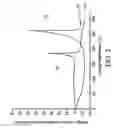
FIG. 2 is graph illustrating curves of curing temperature dependent of energy release of exothermic reaction.
DETAILED DESCRIPTIONAs the metal paste becomes thinner and thinner, the continuity of the metal powders must be good enough to ensure lower conductivity of the metal layer. Since the sintering temperature of the metal paste layer, such as silver, is higher than 450° C., low temperature sintered metal layer cannot reach high densification whiling maintaining high conductivity.
Referring to FIG. 1, a layer of metal paste 15 is provided on a substrate 10. The metal paste layer 15 comprises a main layer comprising a mixture of a plurality of different aspect ratios of metal flakes 12 such as in a range of approximately larger than 1 and less than 20 and a plurality of different diameters of metal spheres 14. A continuous network skeleton is interposed within the main layer. The network skeleton matrix comprises a plurality of inorganic salts and a plurality of metal precursors 16.
The plurality of metal precursors 16 comprises a mixture of organic acidic salts, such as silver 2-ethylhexanoate (C8H51O2Ag) and inorganic salts. The ratio of the mixture is shown in Table 1. The materials of the metal flakes 12 are selected from the group consisting of Cu, Pt, Ni, Ag, and Au. The ratio of the metal flakes in the mixture is in a range of 60-80%. The ratio of the metal spheres relative to the metal flakes is in a range of approximately 30-60%.
| TABLE 1 | |||||
| Ag2C2O4/ C8H15O2Ag metal precursor/ silver flake | 5% | 15% | 35% | 45% | |
| conductivity of mixture of 20% C8H15O2Ag (μΩcm) | |||||
| conductivity of mixture of 30% C8H15O2Ag (μΩcm) | 11.2 | 18.6 | 15.8 | ||
| conductivity of mixture of 40% C8H15O2Ag (μΩcm) | 16.9 | 24.2 | 21.3 | ||
| curing temperature 15 sec (° C.) | 250 | 190 | 190 | 190 | 190 |
The preferable ratios of the mixture are shown in the gray area of the Table 1. When a mixture of 20% C8H15O2Ag and the ratios of Ag2C2O4/C8H15O2Ag are in a range of 5% to 35% at 190° C. 15 sec, the conductivity of the metal layer has relatively low resistivity.
An embodiment of a method for forming a conductive layer on a substrate at relative low temperature is provided. A layer of metal paste is applied on the substrate. The metal paste comprises a plurality of metal flakes, a plurality of nanometer metal spheres, and a plurality of mixed metal precursors. The layer of metal composite is cured to induce an exothermic reaction, thereby forming a conductive layer on the substrate at a relatively low temperature. The inorganic salt comprises a silver oxalate (Ag2C2O4) . The organic acidic salt comprises a silver 2-ethylhexanoate (C8H15O2Ag).
FIG. 2 is graph illustrating curves of curing temperature dependent on the energy release of an exothermic reaction. In FIG. 2, curve 24 exerts exothermic effect 20 at 180° C., compared with conventional method curve 26 at 250° C. The reaction equations are:
Ag2C2O4→2Ag+2CO2+ΔH1 Eq. 1
AgC8H15O2+(43/4)O2+ΔH2→Ag+8CO2+(15/2)H2O Eq. 2
In Eq. 1, Ag2C2O4 is reduced into silver and CO2, releasing heat ΔH1. In Eq. 2, C8H15O2Ag absorbs heat ΔH1 released from Eq. 1 and is reduced into silver, CO2, and H2O at a temperature less than 200° C. The overall reaction is an exothermic reaction.
The decomposition temperature of the mixture of metal precursors is reduced from 250° C. to 180° C. by adding Ag2C2O4 into C8H15O2Ag. The heat released from reduction of Ag2C2O4 can trigger decomposition of C8H15O2Ag at a temperature less than 200° C., thereby forming continuous silver layer with resistivity less than 7 μΩ cm.
Conductive layers and fabrication methods thereof provide the following potential advantages. First, by mixing a plurality of different sizes of metal particles with a plurality of different sizes of metal flakes, the continuity of pure metal in the main layer can be improved. Second, using the mixture of the metal precursors, such as silver oxalate and long chain metal carboxyl compounds, can reduce decomposition at a temperature less than 200° C. Nanometric silver can be potentially reduced from the metal precursors, comprising excellent wieldability at relatively low temperature resulting in increasing the effective conductive traces of pure metal and the conductivity of metal film.
While the invention has been described by way of example and in terms of preferred embodiment, it is to be understood that the inventions is not limited to the disclosed embodiments. To the contrary, it is intended to cover various modifications and similar arrangements (as would be apparent to those skilled in the art). Thus, the scope of the appended claims should be accorded the broadest interpretations so as to encompass all such modifications and similar arrangements.
Claims
1. A method for forming a conductive layer on a substrate, comprising:
applying a layer of a metal composite on the substrate;
the metal composite comprising a plurality of metal flakes, a plurality of nanometric metal spheres, and a plurality of mixed metal precursors;
curing the layer of metal composite to induce an exothermic reaction, thereby forming a conductive layer on the substrate at a relatively low temperature.
2. The method as claimed in claim 1, wherein the plurality of mixed metal precursors comprises a mixture of inorganic salts and organic acidic salts.
3. The method as claimed in claim 2, wherein the inorganic salt comprises a silver oxalate (Ag2C2O4)
4. The method as claimed in claim 2, wherein the organic acid salt comprises a silver 2-ethylhexanoate (C8H15O2Ag)
5. The method as claimed in claim 1, wherein the curing temperature is approximately less than 200° C.
6. A patterned conductive layer on a substrate, comprising:
a substrate;
a patterned metal layer formed on the substrate, wherein the metal layer is made by the method as claimed in claim 1.
7. A conductive structure, comprising:
a substrate;
a main layer formed on the substrate, comprising a mixture of a plurality of different aspect ratios of metal flakes and a plurality of different diameters of metal spheres; and
a continuous network skeleton interposed within the main layer, the network skeleton comprising a plurality of inorganic salts and a plurality of metal precursors.
8. The conductive layer structure as claimed in claim 7, wherein the aspect ratios are in a range of approximately larger than 1 and less than 20.
9. The conductive layer structure as claimed in claim 7, wherein the ratio of the metal flakes in the mixture is in a range of 60-80%.
10. The conductive layer structure as claimed in claim 7, wherein the diameters of the metal spheres are less than approximately 0.2 μm.
11. The conductive layer structure as claimed in claim 7, wherein the ratio of the metal spheres relatively to the metal flakes is in range of approximately 30-60%.
12. The conductive layer structure as claimed in claim 7, wherein the materials of the metal flakes are selected from the group consisting of Cu, Pt, Ni, Ag, and Au.
13. The conductive layer structure as claimed in claim 7, wherein the plurality of metal precursors comprise a mixture of metal precursors.
14. The conductive layer structure as claimed in claim 13, wherein the decomposition temperature of the metal precursors is in a range of approximately 150-300° C.
15. The conductive layer structure as claimed in claim 13, wherein ratio of the mixture of the metal precursors comprising:
3-35 wt % of inorganic metal salt relatively to long chain metal carboxyl groups, having decomposition temperature less than 200° C.;
20-50 wt % of long chain metal carboxyl groups relatively to metal flakes, having decomposition temperature in a range of approximately 200-300° C.
16. The method as claimed in claim 15, wherein the inorganic metal salt comprises a silver oxalate (Ag2C2O4).
17. The method as claimed in claim 15, wherein the long chain metal carboxyl groups comprise a silver 2-ethylhexanoate (C8H15O2Ag).
Images & Drawings included:





Sources:
- United States Patent and Trademark Office - verify current appl. status at the USPTO↗
Similar patent applications:
- » 10330298
Organic electroluminescent device including transparent conductive layer and fabricating method thereof - » 20050275340
Organic electroluminescent device including transparent conductive layer and fabricating method thereof - » 20060147650
Electroluminescence display device comprising a drain electrode being directly contacted with the upper surface of the first transparent conductive layer and the side surface of the second conductive layer and fabricating methods thereof - » 20070054112
Conductive layers and fabrication methods thereof - » 20080223724
Apparatuses for electrochemical deposition, conductive layer, and fabrication methods thereof - » 20090057655
Organic thin film transistor comprising gate electrode of nanocrystalline conductive carbon layer, fabrication method thereof, and organic semiconductor device comprising the same - » 20170344161
Touch display panel comprising a transparent conducting film layer, method for fabrication thereof and touch display device - » 20220302414
Display substrate with inorganic protective layer between conducting layer and insulating layer and fabrication method thereof, and display device - » 20100033903
Electrode for supercapacitor having manganese oxide-conductive metal oxide composite layer, fabrication method thereof, and supercapacitor comprising same - » 20170115759
Touch panel having two transparent conductive layers with different thicknesses and fabrication method thereof
Recent applications in this class:
- » 20240026544 2024-01-25
FORMING NANOWIRES - » 20230340672 2023-10-26
DEVICE COMPRISING NANOWIRES - » 20220259741 2022-08-18
COMPOSITION, METHOD OF PRODUCING SUBSTRATE, AND POLYMER - » 20220243337 2022-08-04
Substrate processing apparatus, method for processing substrate, and method for manufacturing semiconductor device - » 20200216962 2020-07-09
METHOD OF FORMING A COATING - » 20190161864 2019-05-30
METHOD OF FORMING A COATING - » 20120276303 2012-11-01
Manufacturing method of and manufacturing apparatus for metal oxide film - » 20110184139 2011-07-28
Metal compositions and methods of making same - » 20110171528 2011-07-14
Solid state electrolytes having high lithium ion conduction - » 20110171398 2011-07-14
Apparatus and method for depositing alkali metals
Recent applications for this Assignee:
- » 20250289330 2025-09-18
MOBILE VEHICLE CHARGING PROTECTION DEVICE FOR ELECTRICAL SAFETY IN LIVESTOCK HOUSES - » 20250287224 2025-09-11
COMMUNICATION DEVICE AND COMMUNICATION METHOD - » 20250286593 2025-09-11
COMMUNICATION DEVICE AND METHOD OF BEAM MANAGEMENT - » 20250284336 2025-09-11
SYSTEM AND METHOD FOR ADJUSTING IMAGE BASED ON PHYSIOLOGICAL INFORMATION AND POSTURE - » 20250281908 2025-09-11
ELECTROCATALYST COMPOSITION AND PREPARATION METHOD THEREOF - » 20250273403 2025-08-28
CAPACITOR AND ELECTRONIC DEVICE - » 20250271759 2025-08-28
POLYMER, POSITIVE PHOTORESIST COMPOSITION, AND METHOD FOR FORMING PATTERNED PHOTORESIST LAYER - » 20250265803 2025-08-21
MULTI-SENSOR COORDINATION METHOD, PROCESSING DEVICE, AND INFORMATION DISPLAY SYSTEM - » 20250263659 2025-08-21
METHOD AND KIT FOR PREPARING AN IMMUNE CELL DIFFERENTIATED FROM A STEM CELL - » 20250252547 2025-08-07
CORROSION POSITIONING SYSTEM, CORROSION INSPECTION VEHICLE AND CORROSION POSITIONING METHOD USING THE SAME