Floor sweeper
US20050155169A1
2005-07-21
10/758,312
2004-01-15
Abstract:
A floor sweeper includes a body, an electric motor mounted within the body, a main brush mounted to the body and extending transversely thereof and driven by the electric motor to rotate. The floor sweeper also includes an auxiliary brush mounted to the body and driven to rotate about a vertical axis independently of the electric motor and main brush.
Interested in similar patents?
Get notified when new applications in this technology area are published.
Classification:
A47L9/0411 » CPC main
Details or accessories of suction cleaners, e.g. mechanical means for controlling the suction or for effecting pulsating action; Storing devices specially adapted to suction cleaners or parts thereof; Carrying-vehicles specially adapted for suction cleaners; Nozzles with driven brushes or agitators; Driving means for the brushes or agitators driven by electric motor
A47L9/0422 » CPC further
Details or accessories of suction cleaners, e.g. mechanical means for controlling the suction or for effecting pulsating action; Storing devices specially adapted to suction cleaners or parts thereof; Carrying-vehicles specially adapted for suction cleaners; Nozzles with driven brushes or agitators; Driving means for the brushes or agitators driven by the rotation of the supporting wheels on which the nozzle travels over the floor
A47L9/0444 » CPC further
Details or accessories of suction cleaners, e.g. mechanical means for controlling the suction or for effecting pulsating action; Storing devices specially adapted to suction cleaners or parts thereof; Carrying-vehicles specially adapted for suction cleaners; Nozzles with driven brushes or agitators; Gearing or transmission means therefor for conveying motion by endless flexible members, e.g. belts
A47L9/0488 » CPC further
Details or accessories of suction cleaners, e.g. mechanical means for controlling the suction or for effecting pulsating action; Storing devices specially adapted to suction cleaners or parts thereof; Carrying-vehicles specially adapted for suction cleaners; Nozzles with driven brushes or agitators; Dust-loosening tools, e.g. agitators, brushes Combinations or arrangements of several tools, e.g. edge cleaning tools
A47L11/32 » CPC further
Machines for cleaning floors, carpets, furniture, walls, or wall coverings Carpet-sweepers
A47L11/4038 » CPC further
Machines for cleaning floors, carpets, furniture, walls, or wall coverings; Parts or details of machines not groups - , , e.g. handles, arrangements of switches, skirts, buffers, levers; Parts or details of the surface treating tools Disk shaped surface treating tools
A47L11/4041 » CPC further
Machines for cleaning floors, carpets, furniture, walls, or wall coverings; Parts or details of machines not groups - , , e.g. handles, arrangements of switches, skirts, buffers, levers; Parts or details of the surface treating tools Roll shaped surface treating tools
A47L11/4069 » CPC further
Machines for cleaning floors, carpets, furniture, walls, or wall coverings; Parts or details of machines not groups - , , e.g. handles, arrangements of switches, skirts, buffers, levers; Driving means; Transmission means therefor Driving or transmission means for the cleaning tools
A47L11/4072 » CPC further
Machines for cleaning floors, carpets, furniture, walls, or wall coverings; Parts or details of machines not groups - , , e.g. handles, arrangements of switches, skirts, buffers, levers Arrangement of castors or wheels
Description
The present invention relates to floor sweepers. More particularly, although not exclusively, the invention relates to a motorised floor sweeper having auxiliary brushes that can clean up to an edge such as a skirting board for example.
Electric floor sweepers having motor-driven brushes are known. These comprise a transverse horizontal main brush including an array of radiating bristles—the brush being driven to rotate by an electric motor ouch that the tips of the bristles contact the floor surface and sweep dust and debris therefrom into a receiving bin within the sweeper body. Such floor sweepers having auxiliary brushes that rotate about a substantially vertical axis are also known. Such auxiliary brushes flank the transverse horizontal brush and are driven by a take-off mechanism therefrom. The ancillary brushes have bristles that project transversely of the sweeper body such that their tips extend to the edge of a room such an at a skirting board. Rotation of the main brush results in rotation of the auxiliary brushes. A problem associated with such devices is that the auxiliary bristles rob power from the main brush. Should the auxiliary brushes become jammed, the main brush will also jam.
OBJECTS OF THE INVENTIONIt is an object of the present invention to overcome or substantially ameliorate the above disadvantages and/or more generally to provide an improved floor sweeper having auxiliary brushes driven independently of a main sweeping brush.
DISCLOSURE OF THE INVENTIONThere is disclosed herein a floor sweeper comprising:
-
- a body,
- a main brush mounted to the body and extending transversely thereof and driven to rotate,
- an auxiliary brush mounted to the body and driven to rotate about a substantially vertical axis independently of the main brush.
Preferably, the floor suite for further comprises an electric motor mounted within the body and driving the main brush.
Preferably, the floor sweeper further comprises a drive pulley attached to an output shaft of the electric motor, a driven pulley upon the main brush, and a drive belt extending about the drive pulley and driven pulley.
Preferably, the floor sweeper further comprises surface-engaging wheels attached to the body and wherein the auxiliary brush is driven to rotate by one of the surface-engaging wheels.
Preferably the floor sweeper further comprises another auxiliary brush—the main brush being flanked by the auxiliary brushes and wherein said another auxiliary brush is driven to rotate by another of said surface-engaging wheels.
Preferably, the floor sweeper further comprises a wheel pulley attached to each surface-engaging wheel and an auxiliary pulley attached to each auxiliary brush and a drive belt extending between each respective wheel pulley and auxiliary pulley.
BRIEF DESCRIPTION OF THE DRAWINGSA preferred form of the present invention will now be described by way of example with reference to the accompanying drawings, wherein:
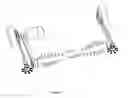
FIG. 1 in a schematic prospective illustration of, key parts of an electric floor sweeper,
FIG. 2 is a schematic cross-sectional plan view of a floor sweeper body encasing the key parts of FIG. 1, and
FIG. 3 is a schematic parts-exploded prospective illustration of the key parts of the floor sweeper an depicted in FIG. 1
DESCRIPTION OF THE PREFERRED EMBODIMENTIn the accompanying drawings there is depicted schematically a floor sweeper body 10 typically fabricated from moulded plastics material. Mounted within the body 10 is an electric motor 11 that would typically received power from one or more rechargeable batteries housed within the body 10. The electric motor 11 drives a main brush 12 having bristles 13 extending radially therefrom. Do this end, the motor and 11 has a drive pulley 13 about which a bill to 14 extends. The belt 14 passes about a driven pulley 15 at one end of the main brush 12. Upon activation of the electric motor 11, the belt 14 causes main brush 12 to rotate about a horizontal axis such that the chips of the bristles for 10 contact a floor surface to thereby sweep debris into a dustbin 20 within the body 10.
The floor sweeper comprises a pair of auxiliary brushes 17 flanking the main brush 12. Biggs Hillary brushes 17 rotated about a substantially vertical axis and each comprise an auxiliary pulley 18.
There is a pair of floor-engaging wheels 16 mounted to the body 10 and these each have attached thereto a main wheel pulley 21 about which they belted 19 extends. Each belt 19 extends about a respective one of the auxiliary pulleys 18. As a result, motion of the body turned over a floor surface results in rotation of the ancillary brushes 17 in order to sweep dust and debris from a floor region immediately adjacent to a skirting board for example into the path of the main brush 12 that would in turn sweep that dust and debris into the dustbin 20.
It should be appreciated that modifications and alterations obvious to those skills in the art are not to be considered as beyond the scope of the present invention. For example, the auxiliary brushes 17 might be driven by an independent motor or motors. Furthermore, the main brush 12 might not be driven to rotate by an electric motor. Instead, it might be driven to rotate by a floor-engaging wheel.
The floor sweeper can be used to clean a floor surface and should one of the auxiliary brushes become jammed in use, this will not result in jamming of the main brush 12.
Claims
1. A floor sweeper comprising:
a body,
a main brush mounted to the body and extending transversely thereof and driven to rotate,
an auxiliary brush mounted to the body and driven to rotate about a substantially vertical axis independently of the main brush.
2. The floor sweeper of claim 1 further comprising an electric motor mounted within the body and driving the main brush.
3. The floor sweeper of claim 2 further comprising a drive pulley attached to add an output shaft of the electric motor, a driven pulley upon the main brush and a drive belt extending about the drive pulley and driven pulley.
4. The floor sweeper of claim 1 further comprising surface-engaging wheels attached to the body and wherein the auxiliary brush is driven to rotate by one of the surface-engaging wheels.
5. The floor sweeper of claim 4 further comprising another auxiliary brush—the main brush being flanked by the auxiliary brushes and wherein said another auxiliary brush is driven to rotate by another of said surface-engaging wheels.
6. The floor sweeper of claim 4 further comprising a wheel pulley attached to each surface-engaging wheel and an auxiliary pulley attached to each auxiliary brush and a drive belt extending between each respective wheel pulley and auxiliary pulley.
Images & Drawings included:



Sources:
- United States Patent and Trademark Office - verify current appl. status at the USPTO↗
Similar patent applications:
- » 20220007905
ELECTRIC FLOOR SWEEPER - » 20050011028
Motorised floor sweeper - » 20050066467
Manually-powered floor sweeper with vacuum port - » 20050155175
Cleaning device such as carpet cleaner, floorwasher, floor sweeper, polishing machine and the like with two motors - » 20050268410
Floor sweeper - » 20070107149
Gaskets for floor sweeper - » 20090077761
Floor sweeper with cloth cleaning pad - » 20110138570
FLOOR SWEEPER - » 20200237175
Floor sweeper - » 20050005377
Floor sweeper
Recent applications in this class:
- » 20250098915 2025-03-27
NOZZLE FOR CLEANER - » 20250072679 2025-03-06
Suction Head Provided With A Brush Motor Cooling Circuit - » 20250040771 2025-02-06
SURFACE CLEANING APPARATUS HAVING A BRUSH MOTOR INTERNAL OF A ROTATING BRUSH AND BRUSH MOTOR FOR DRIVING A ROTATABLE BRUSHING MEMBER - » 20240415348 2024-12-19
SWAPPABLE BRUSHROLL OR CASSETTE FOR VACUUM CLEANER - » 20240298853 2024-09-12
MOTORIZED SUCTION HEAD - » 20240237862 2024-07-18
FLOOR BRUSH ASSEMBLY FOR VACUUM CLEANER AND VACUUM CLEANER - » 20240180376 2024-06-06
Nozzle for cleaner - » 20230309767 2023-10-05
Surface cleaning apparatus having a brush motor internal of a rotating brush and brush motor for driving a rotatable brushing member - » 20230292967 2023-09-21
VACUUM CLEANER - » 20230240490 2023-08-03
CLEANING TOOL AND CLEANING DEVICE