Method of emptying a container, and use of the method
US20050155558A1
2005-07-21
10/520,509
2003-07-08
✅ Patent granted
US 7,363,877 B2
2008-04-29
WO; PCT/DK03/00478; 20030708
WO; WO2004/007323; 20040122
Yvonne R. Abbott
2023-12-26
Abstract:
A method of emptying a large container of e.g. 12000 litres for the storage of fish, such as shellfish, e.g. shrimps, said container being emptied through a pipe in the container, air being supplied simultaneously with the emptying. The air is expediently supplied through/near the bottom of the container via holes which are provided in a pattern, or via a pipe distribution system which is lowered into the container. By supplying the air to the container during emptying it is ensured that the pipe, through which the fish are discharged from the container, does not clog, and that the contents are discharged as a uniformly distributed mass.
Assignee:
- KM Fish Machinery 1 🇩🇰 Dybvad, Denmark
Interested in similar patents?
Get notified when new applications in this technology area are published.
Classification:
B65G53/30 » CPC main
Conveying materials in bulk through troughs, pipes or tubes by floating the materials or by flow of gas, liquid or foam Conveying materials in bulk through pipes or tubes by liquid pressure
A01K61/59 » CPC further
Culture of aquatic animals of shellfish of crustaceans, e.g. lobsters or shrimps
A01K63/00 » CPC further
Receptacles for live fish, e.g. aquaria ; Terraria
A01K63/02 » CPC further
Receptacles for live fish, e.g. aquaria ; Terraria Receptacles specially adapted for transporting live fish
Y02A40/81 » CPC further
Adaptation technologies in agriculture, forestry, livestock or agroalimentary production in fisheries management Aquaculture, e.g. of fish
A01K61/00 IPC
Pisciculture; Aquaria; Terraria
A01K61/00 IPC
Culture of aquatic animals
Description
The invention relates to a method of emptying a container for the storage of fish, such shellfish, said fish being stored in the container together with water, said emptying taking place through a pipe provided in the bottom of the container, a medium being supplied into the container during emptying.
Containers of this type, which may be made of plastics, are used for the ripening of e.g. shrimps. Typically, they have a size of 660 or 1000 litres and are emptied after completed ripening simply by tilting them.
For operational reasons, it is desirable to be able to ripe shrimps in larger containers, e.g. containers having a capacity of 12000 litres. However, containers of this size are not easy to handle in connection with empting where the container is to be tilted. It would therefore be an advantage if the container could be emptied through a pipe provided in the container. However, it has been found that, with so large containers for the storage, of shrimps in water, emptying through the pipe will rapidly result in clogging, as the liquid will leave the container faster than the shrimps.
A container of the type defined in the introductory portion of claim 1 is known from DD Patent Specification No. 61451. In this method, a mixture of fish and water is pumped from a pipe located at the bottom of the container vertically upwards to a conveyor belt above the container, where water is conveyed back to the container, while the fish are transported further on.
Accordingly, it is an object of the invention to provide a method of emptying the initially mentioned large containers, which requires fewer installations, while maintaining a minimal risk of clogging.
The object of the invention is achieved by a method of the type stated in the introductory portion of claim 1, which is characterized in that the medium is constituted by air, which is supplied through holes provided near the bottom of the container.
Hereby, emptying takes place through the pipe as a very homogeneous uniform mass without the pipe becoming clogged.
As mentioned, the invention also relates to use of the method. This use is defined in claim 3.
The invention will now be explained more fully with reference to the drawing, in which
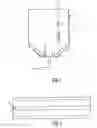
FIG. 1 shows the container according to the invention seen from the side in cross-section, while
FIG. 2 shows the right-hand side of the container bottom seen from below relative to FIG. 1.
In FIG. 1, a container according to the invention is generally designated 1. As will be seen, the shown container has a vertical side wall 5 and a bottom 4 which are connected with each other by an inclined wall. A pipe is connected at the bottom 4, said pipe being intended for discharging e.g. shrimps admixed with ice/water.
With a view to avoid clogging of the container, the bottom and optionally the inclined walls are formed with holes through which a medium, such as air may be conveyed, indicated e.g. by the reference numeral 8.
As will be seen in FIG. 2, the holes are here formed in a pattern which consists of two rows of holes 3, 7. These holes may be surrounded by a wall (not shown), thereby creating a cavity through which a pipe stub may be connected for the admission of a medium, such as water or air under pressure.
Alternatively, a pipe distribution system (not shown) may be lowered into the container for the supply of water or air under pressure, which may e.g. be an advantage if existing containers are to be upgraded.
In addition, FIG. 1 shows a pipe or hose 6 which is located at the bottom 4 and is intended to empty the container. Alternatively, the pipe or the hose may be disposed inside the container, as shown by the reference numeral 2.
When the contents of the container are to be emptied, water or air is optionally supplied via the hole-shaped pattern. It is ensured hereby that the pipe 2 of the container does not clog when its contents are discharged from the pipe 2 in the direction of the arrow 9.
The rate of this discharge may generally be increased if suction is applied to the pipe 2.
The container may be made of plastics or metal and have a size of e.g. 12000 litres.
Claims
1. A method of emptying a container (1) for the storage of fish, such as shellfish, said fish being stored in a container together with water, said emptying taking place through a pipe (5) provided in the bottom (4) of the container, a medium being supplied into the container during emptying, characterized in that the medium is constituted by air (8), which is supplied through holes (3, 7) provided near the bottom of the container.
2. A method to claim 1, characterized in that the holes (3,7) are provided in a pattern.
3. Use of the method according to claim 1 for emptying a container of e.g. 12000 litres which contains a mixture of shrimps, ice and water.
Images & Drawings included:
Sources:
- United States Patent and Trademark Office - verify current appl. status at the USPTO↗
Similar patent applications:
Recent applications in this class:
- » 20250153957 2025-05-15
FLUID-FLOATED CONVEYING DEVICE - » 20240367923 2024-11-07
A PUMPING SYSTEM AND METHOD - » 20230118741 2023-04-20
Transfer mechanism for use with a food processing system - » 20220267104 2022-08-25
Methods and Systems to Control Percent Solids in Conveyance Pipe - » 20210371216 2021-12-02
Transport and hoisting of slurry - » 20200299073 2020-09-24
Transfer mechanism for use with a food processing system - » 20190062076 2019-02-28
Transfer mechanism for use with a food processing system - » 20180057282 2018-03-01
Pipeline transportation method of coal - » 20180022556 2018-01-25
Systems and methods for providing feed material to a pressurized system - » 20170210573 2017-07-27
Hydraulic hoisting system and method