Lenses
US20050168686A1
2005-08-04
11/050,331
2005-02-02
✅ Patent granted
US 7,445,334 B2
2008-11-04
-
-
Scott J Sugarman
2025-03-28
Abstract:
A method of sealing lenses includes the steps of grinding the edges of at least two lenses, cleansing the lenses, positioning the lenses next to one another, applying an adhesive to the ground edges of the lenses and placing the lenses in an oven to cure the adhesive to produce a laminated, hermetically-sealed, lens.
Inventors:
- David Tak Fung Chow 1 🇭🇰 Kowloon Bay, Hong Kong
- Ngai Shing Chan 1 🇭🇰 Kowloon Bay, Hong Kong
Assignee:
- Easy Power Limited 1 🇭🇰 Kowloon Bay, Hong Kong
Interested in similar patents?
Get notified when new applications in this technology area are published.
Classification:
B32B7/12 » CPC main
Layered products characterised by the relation between layers; Layered products characterised by the relative orientation of features between layers, or by the relative values of a measurable parameter between layers, i.e. products comprising layers having different physical, chemical or physicochemical properties; Layered products characterised by the interconnection of layers; Interconnection of layers using interposed adhesives or interposed materials with bonding properties
B29C65/483 » CPC further
Joining of preformed parts ; Apparatus therefor using adhesives, i.e. using supplementary joining material; solvent bonding characterised by the type of adhesives Reactive adhesives, e.g. chemically curing adhesives
B29C65/524 » CPC further
Joining of preformed parts ; Apparatus therefor using adhesives, i.e. using supplementary joining material; solvent bonding applying the adhesive by applying the adhesive from an outlet device in contact with, or almost in contact with, the surface of the part to be joined
B29C66/0222 » CPC further
General aspects of processes or apparatus for joining preformed parts; General aspects dealing with the joint area or with the area to be joined; Preparation of the material, in the area to be joined, prior to joining or welding; Mechanical pre-treatments, e.g. reshaping without removal of material, e.g. cleaning by air blowing or using brushes
B29C66/02245 » CPC further
General aspects of processes or apparatus for joining preformed parts; General aspects dealing with the joint area or with the area to be joined; Preparation of the material, in the area to be joined, prior to joining or welding; Mechanical pre-treatments, e.g. reshaping with removal of material Abrading, e.g. grinding, sanding, sandblasting or scraping
B29C66/545 » CPC further
General aspects of processes or apparatus for joining preformed parts; General aspects of joining tubular articles; General aspects of joining long products, i.e. bars or profiled elements; General aspects of joining single elements to tubular articles, hollow articles or bars; General aspects of joining several hollow-preforms to form hollow or tubular articles; Joining tubular articles, profiled elements or bars; Joining single elements to tubular articles, hollow articles or bars; Joining several hollow-preforms to form hollow or tubular articles; Joining several hollow-preforms, e.g. half-shells, to form hollow articles, e.g. for making balls, containers; Joining several hollow-preforms, e.g. half-cylinders, to form tubular articles one hollow-preform being placed inside the other
B29D11/00932 » CPC further
Producing optical elements, e.g. lenses or prisms Combined cutting and grinding thereof
C03C19/00 » CPC further
Surface treatment of glass, not in the form of fibres or filaments, by mechanical means
C03C27/10 » CPC further
Joining pieces of glass to pieces of other inorganic material; Joining glass to glass other than by fusing; Joining glass to glass by processes other than fusing with the aid of adhesive specially adapted for that purpose
C09J5/06 » CPC further
Adhesive processes in general; Adhesive processes not provided for elsewhere, e.g. relating to primers involving heating of the applied adhesive
B29C66/452 » CPC further
General aspects of processes or apparatus for joining preformed parts; General aspects of joining substantially flat articles, e.g. plates, sheets or web-like materials; Making flat seams in tubular or hollow articles; Joining single elements to substantially flat surfaces; Joining substantially flat articles ; Making flat seams in tubular or hollow articles; Joining of substantially the whole surface of the articles the article having a disc form, e.g. making CDs or DVDs
B29C66/91431 » CPC further
General aspects of processes or apparatus for joining preformed parts; Measuring or controlling the joining process by measuring or controlling the temperature, the heat or the thermal flux by controlling or regulating the temperature, the heat or the thermal flux by controlling or regulating the temperature the temperature being kept constant over time
B29C66/919 » CPC further
General aspects of processes or apparatus for joining preformed parts; Measuring or controlling the joining process by measuring or controlling the temperature, the heat or the thermal flux characterised by specific temperature, heat or thermal flux values or ranges
B29C66/9534 » CPC further
General aspects of processes or apparatus for joining preformed parts; Measuring or controlling the joining process by measuring or controlling specific variables not covered by groups - by measuring or controlling the humidity of the atmosphere, i.e. taking the ambient humidity into account
B29L2009/00 » CPC further
Layered products
B29L2011/0016 » CPC further
Optical elements, e.g. lenses, prisms Lenses
B32B2551/00 » CPC further
Optical elements
C09J2400/143 » CPC further
Presence of inorganic and organic materials; Presence of inorganic materials; Glass in the substrate
C09J2400/146 » CPC further
Presence of inorganic and organic materials; Presence of inorganic materials; Glass in the pretreated surface to be joined
C09J2400/226 » CPC further
Presence of inorganic and organic materials; Presence of organic materials; Presence of unspecified polymer in the substrate
C09J2400/228 » CPC further
Presence of inorganic and organic materials; Presence of organic materials; Presence of unspecified polymer in the pretreated surface to be joined
C09J2461/00 » CPC further
Presence of condensation polymers of aldehydes or ketones
C09J2463/00 » CPC further
Presence of epoxy resin
G02C7/02 IPC
Optical parts Lenses; Lens systems ; Methods of designing lenses
G02C7/10 IPC
Optical parts Filters, e.g. for facilitating adaptation of the eyes to the dark; Sunglasses
Description
This invention relates to improvements in lenses and is particularly concerned with improved techniques for sealing lenses.
It has previously been proposed to apply silicon into frame grooves to function as a cushion to the lens edge to prevent delamination. This did not prove to be satisfactory. The application of thin adhesive tape at the lens edge also failed to achieve good results. Various other methods have been tried including the application of silicon, paint and nickel but all have failed to prevent de-lamination of lenses.
The present invention seeks to provide a reliable method of sealing lenses which ensures that de-lamination does not take place.
According to the invention, there is provided a method of sealing lenses which includes the steps of grinding the edges of at least two lenses, cleansing the lenses, positioning the lenses next to one another, applying an adhesive to the ground edges of the lenses and placing the lenses in an oven to cure the adhesive to produce a laminated, hermetically-sealed, lens.
A polarizing film may be applied between the lenses.
The lenses are preferably ground to have beveled edges.
Further, the lenses are preferably cleansed by being placed in a basket and then subjected to ultra-sonic cleansing.
The adhesive is desirably cured in an oven between 40° C. and 50° C. for about 4 hours.
Preferably, the adhesive comprises a principal ingredient including at least one of bisphenol A, epoxy resin and butyl ether; a first solidifier including at least one of polyoxy propylene diamine and triethanolamine and a second solidifier including at least one of dithylamine and propylamine.
The invention will now be described in detail, by way of example, with reference to the drawings, in which:
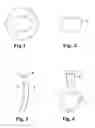
FIG. 1 shows an uncut lens;
FIG. 2 shows a lens after the edge has been cut and ground;
FIG. 3 is a side view of parts of a pair of lenses which have been fitted together;
FIG. 4 shows the application of an adhesive to the fitted lenses;
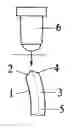
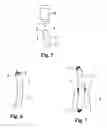
FIG. 5 is a side view of parts of the lenses shown in FIG. 4 showing the application of the adhesive;
FIG. 6 is a side view, corresponding to FIG. 5, showing the adhesive applied to the edge of the lenses;
FIG. 7 shows the lenses., to which the adhesive has been applied, mounted in a mount for curing; and
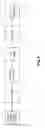
FIG. 8 shows a work process flow chart.
In the drawings, like parts are denoted by like reference numerals.
Referring to the drawings, as shown in FIG. 1, a lens 1 is cut from a sheet of glass or CR39 laminated polarising material. The edge of the lens is then subjected to grinding to form a bevelled edge 2 as shown in FIG. 2. After cleansing, the lens is then fitted to a similar lens 3 having a beveled edge 4 the sized of the lenses 1 and being such that their bevelled edges 2 and 4 are substantially coterminous. As shown in FIG. 3, the bevelled edges 2 and 4 slope away from each other so that they meet at a point. A polarising film 5 may be applied between the lenses 1 and 3, again as shown in FIG 3.
The lenses 1 and 3 are then brought to an applicator 6 containing an adhesive of a suitable formulation and the lenses are rotated so that the adhesive is applied evenly to the ground edges 2 and 4 of the lenses. FIGS. 4 and 5 show the application of the adhesive to the edges of the lenses and FIG. 6 shows a bead 7 of adhesive applied to the said edges.
The lenses are then placed in a mount 8, as shown in FIG. 7, and put in an oven to cure the adhesive. Once the adhesive has cured, the lenses are subjected to a final inspection. FIG. 8 is a flow chart showing the various stages of production of a laminated lens according to the invention.
Sealing of the lenses should be carried out in a dust-free clean room of cleaning level 10,000 or above with the temperature controlled to be between 20° C. and 25° C. and the humidity controlled to within 35 to 55%.
The polarising lens to be sealed must be 100% visually checked to standard to ensure compliance with quality requirements. Lenses which pass this test are put into a cleansing basket for ultra-sonic cleansing.
The formulation of the adhesive used is as follows:
| Principal Ingredient | Solidifier 1 | Solidifier 2 |
| 60 | 15 | 1 |
The principal ingredient consists of bisphenol A, epoxy resin, butyl ether
Solidifier 1 consists of polyoxy propylene diamine, triethanolamine
Solidifier 2 consists of dithylamine, propylamine
During the course of development, the following formulations were tried, the proportions being given by weight:
| Glue formula: | 10:3.3:0.4 | low adhesion |
| 5:1.5:0.2 | low adhesion | |
| 5:0.5:0.1 | glue too sticky, cannot be cleaned easily | |
| 5:0.5:0.2 | glue too sticky, cannot be cleaned easily | |
| 5:0.8:0.2 | glue 45° C. not level after solidification | |
| 5:1:0.2 | glue 45° C. not level after solidification | |
| 5:1.5:0.6 | poor adhesion | |
| 5:2.5:0.1 | better adhesion, not ideal | |
| 6:1:0.2 | glue cannot be cleaned easily | |
| 6:0.5:0.1 | glue too sticky, cannot be cleaned easily | |
| 6:1.0:0.1 | glue too sticky, cannot be cleaned easily | |
| 6:1.5:0.1 | in depth good adhesiveness set as stand- | |
| ard | ||
Polarised lenses produced according to the invention were subjected to humidifier tests at a temperature range of between 58.4° C. and 60° C. and at a humidity range of 21.6˜22.7% and 99.8˜100.1%, switched every two hours, and yielded the following test results:
| Time | |||||
| Area Apart | |||||
| Reference | 12 hours | 24 hours | 48 hours | Glue Scale | Remarks |
| N 1 | 30 mm2 | 40 mm2 | 40 mm2 | ||
| N2 | 40 mm2 | 45 mm2 | 50 mm2 | 12:3.0:0.2 | New |
| formula | |||||
| N3 | 24 mm2 | 40 mm2 | 50 mm2 | ||
| K1 | 260 mm2 | 280 mm2 | 280 mm2 | ||
| K2 | 220 mm2 | 240 mm2 | 240 mm2 | 10:3.3:0.4 | KY lens |
| M1 | ✓ | 8 mm2 | 8 mm2 | ||
| M2 | 150 mm2 | 155 mm2 | 160 mm2 | — | Japanese |
| products | |||||
| M3 | 100 mm2 | 120 mm2 | 120 mm2 | ||
| P1 | 240 mm2 | 240 mm2 | 240 mm2 | ||
| P2 | 240 mm2 | 245 mm2 | 245 mm2 | 10:3.3:0.4 | POLL |
| Lenses. | |||||
| KS 1 | ✓ | ✓ | ✓ | → | KY |
| 12:3.0:0.2 | Lenses | ||||
| KS2 | ✓ | ✓ | ✓ | 12:3.0:0.2 | KY |
| Lenses | |||||
| KS 3 | ✓ | ✓ | ✓ | 12:3.0:0.2 | |
It has thus been found that laminated lenses produced according to the invention are moisture proof and thus do not suffer from de-lamination. They also exhibit enhanced impact resistance. The present invention is applicable to lenses made of glass, resin or other plastics materials.
Claims
1. A method of sealing lenses which includes the steps of grinding the edges of at least two lenses, cleansing the lenses, positioning the lenses next to one another, applying an adhesive to the ground edges of the lenses and placing the lenses in an oven to cure the adhesive to produce a laminated, hermetically-sealed, lens.
2. The method according to claim 1, wherein a polarising film is applied between the lenses.
3. The method according to claim 1, wherein the lenses are ground to have bevelled edges.
4. The method according to claim 1, wherein the lenses are cleansed by being placed in a basket and then subjected to ultra-sonic cleansing.
5. The method according to claim 1, wherein the adhesive is cured in an oven between 40° C. and 50° C. for about 4 hours.
6. The method according to claim 1, wherein the adhesive comprises a principal ingredient including at least one of bisphenol A, epoxy, resin and butyl ether; a first solidifier including at least one of polyoxy propylene diamine and triethanolamine and a second solidifier including at least one of diethylamine and propylamine.
7. (cancelled)
8. A lens produced by the method claimed in claim 1.
9. (cancelled)
10. The method according to claim 2, wherein the lenses are ground to have bevelled edges.
11. The method according to claim 2, wherein the adhesive is cured in an oven between 40° C. and 50° C. for about 4 hours.
12. The method according to claim 3, wherein the adhesive is cured in an oven between 40° C. and 50° C. for about 4 hours.
13. The method according to claim 4, wherein the adhesive is cured in an oven between 40° C. and 50° C. for about 4 hours.
14. The method according to claim 2, wherein the adhesive comprises a principal ingredient including at least one of bisphenol A, epoxy, resin and butyl ether; a first solidifier including at least one of polyoxy propylene diamine and triethanolamine and a second solidifier including at least one of diethylamine and propylamine.
15. The method according to claim 3, wherein the adhesive comprises a principal ingredient including at least one of bisphenol A, epoxy, resin and butyl ether; a first solidifier including at least one of polyoxy propylene diamine and triethanolamine and a second solidifier including at least one of diethylamine and propylamine.
16. The method according to claim 5, wherein the adhesive comprises a principal ingredient including at least one of bisphenol A, epoxy, resin and butyl ether; a first solidifier including at least one of polyoxy propylene diamine and triethanolamine and a second solidifier including at least one of diethylamine and propylamine.
17. A lens produced by the method claimed in claim 2.
18. A lens produced by the method claimed in claim 3.
19. A lens produced by the method claimed in claim 4.
20. A lens produced by the method claimed in claim 5.
21. A lens produced by the method claimed in claim 6.
22. A lens produced by the method claimed in claim 10.
Images & Drawings included:

Sources:
- United States Patent and Trademark Office - verify current appl. status at the USPTO↗
Similar patent applications:
- » 20190187414
Camera lens assembly comprising four lenses of +-+-, five lenses of +-+-, six lenses of +-+-+-, or seven lenses of +-++++-, refractive powers - » 20050041134
Transparent member in a solid-state image pick-up apparatus supported through use of micro-lenses larger in size than pixel micro-lenses and a method for producing the micro-lenses and transparent member - » 20140371410
Fluoro-containing ether monomer for fabricating contact lenses, contact lenses materials and contact lenses obtained therefrom - » 20150175733
Fluoro-containing ether monomer for fabricating contact lenses, contact lenses materials and contact lenses obtained therefrom - » 20150177418
Fluoro-containing ether monomer for fabricating contact lenses, contact lenses materials and contact lenses obtained therefrom - » 20160370504
Material for contact lenses, method for manufacturing contact lenses and contact lenses obtained thereby - » 20050079798
Unit for the form machining of the edges of spectacle lenses and method of manipulating blank lenses and finished lenses in such a unit - » 20140221523
Material for contact lenses, method for manufacturing contact lenses and contact lenses obtained thereby - » 20150111983
Material for contact lenses, method for manufacturing contact lenses and contact lenses obtained thereby - » 20210364751
Camera module with telephoto imaging including three lenses of +-+, four lenses of +--+, or five lenses of +-+-+ or +--+- refractive powers
Recent applications in this class:
- » 20250282121 2025-09-11
FLEXIBLE PLASTIC REVERSE-PRINTED PACKAGING COMPOSED OF POLYETHYLENE WITH HAZY POLYMER LAYER - » 20250242570 2025-07-31
Hybrid Polymer Adhesive and Laminate Using the Adhesive - » 20250236091 2025-07-24
Panel, in Particular a Floor, Ceiling, or Wall Panel; A Covering Constructed by a Multitude of Such Panels; And a Method for the Recycling of Such a Panel - » 20250229506 2025-07-17
REFORMABLE EPOXY RESIN FOR COMPOSITES AND METHODS THEREOF - » 20250222677 2025-07-10
MULTILAYER FILM FOR APPLYING LABELS ON ITEMS OF CLOTHING - » 20250222676 2025-07-10
PROTECTIVE FILM-EQUIPPED WRITING-PERFORMANCE ENHANCEMENT FILM - » 20250196486 2025-06-19
HEAT DISSIPATION SHEET AND METHOD OF MANUFACTURING HEAT DISSIPATION SHEET - » 20250196470 2025-06-19
LAYER COMPOSITE AND METHOD FOR THE PRODUCTION THEREOF - » 20250187304 2025-06-12
ASSEMBLY AND METHOD FOR MANUFACTURING SAME - » 20250187303 2025-06-12
BONDED ARTICLE