Hydrophobic coating composition
US20050282953A1
2005-12-22
11/149,886
2005-06-10
Abstract:
The present invention provides a durable and weatherable hydrophobic coating composition. The hydrophobic coating comprises a glassy matrix formed by crosslinking a silicone or a silane and siloxane, and a fluorinated compound. In one embodiment, the coating composition comprises a glassy matrix and a fluorinated compound, wherein the glassy matrix is formed by crosslinking a mixture of a glycidyl silane modified polyamide, an organic-modified silicone and a C4 to C20 triethoxysilane. In another embodiment, the glassy matrix is formed by crosslinking a silicone and a C4 to C20 silane.
Inventors:
- William H. Simendinger 3 🇺🇸 Raleigh, NC, United States
- David William Garrett 2 🇺🇸 Raleigh, NC, United States
Interested in similar patents?
Get notified when new applications in this technology area are published.
Classification:
C09D183/04 » CPC main
Coating compositions based on macromolecular compounds obtained by reactions forming in the main chain of the macromolecule a linkage containing silicon, with or without sulfur, nitrogen, oxygen, or carbon only; Coating compositions based on derivatives of such polymers Polysiloxanes
Description
RELATED APPLICATIONSThis application claims priority to U.S. Provisional Application No. 60/580,554; filed on Jun. 17, 2004, the disclosure of which is incorporated herein by reference in its entirety.
FIELD AND BACKGROUND OF THE INVENTIONThe present invention relates to a hydrophobic coating composition suitable for use on a variety of substrates and surfaces. Of particular interest is the use of the composition as a coating for surfaces exposed to the weather and which are susceptible to water film formation.
For example, there is a need for hydrophobic coating compositions for articles that are exposed to weather-related water and moisture such as satellite dishes, radar dishes, radomes, other signal receivers and transmitters, windshields and rainshields. Such coating compositions must be durable but also should not adversely affect or interfere with signal transmission or reception.
SUMMARY OF THE INVENTIONThe present invention provides a durable and weatherable hydrophobic coating composition. The hydrophobic coating comprises a glassy matrix formed by crosslinking a siloxane and a silane, and a fluorinated compound. In one embodiment, the coating composition comprises a glassy matrix and a fluorinated compound, wherein the glassy matrix is formed by crosslinking a mixture of a glycidyl silane modified polyamide, an organic-modified silicone and a C4 to C20 triethoxysilane. The composition, once crosslinked, is an organically modified ethoxy/silane crosslinked composition. In another embodiment, a glassy matrix is formed by crosslinking a methyl hydrosilicone and a C4 to C20 silane.
DETAILED DESCRIPTION OF THE INVENTIONAs discussed above, the hydrophobic coating comprises a glassy matrix and a fluorinated compound. In one embodiment, the glassy matrix is formed by crosslinking a glycidyl silane modified polyamide, an organic-modified silicone and a C4 to C20 triethoxysilane. A preferred C4-C20 triethoxysilane is N-octyl triethoxysilane. The glycidyl silane modified polyamide is formed by reacting a glycidyl silane and a polyamide such as ancamide 220, a polyamide curing agent available from Air Products, Allentown, Pa. Suitable glycidyl silanes include 3-(glycidoxypropyl)trimethoxysilane, 3-(glycidoxypropyl)dimethylethoxysilane 3-(glycidoxypropyl)triethoxysilane and 3-(glycidoxypropyl)methyldimethoxysilane.
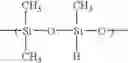
Suitable organic-modified silicones are prepared by reacting a silicone, e.g.,
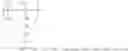
with a C4-C20 alkene such a hexadecene in the presence of a catalyst to form the organic-modified silicone, e.g.,
In another embodiment, the glassy matrix is formed by crosslinking a silicone and a C4 to C20 silane. Suitable silicones include methyl hydrosilicone or dimethyl hydromethylsilicone copolymers. Suitable C4 to C20 silanes include octylsilane, octadecyl silane, hexadecyl silane, and decyl silane. It is recognized that the term “octyl” silane or “hexadecyl” silane relates to a variety of silanes having octyl, hexadecyl, etc. . . . functionality. Thus, for example, octylsilane can include n-octyl triethoxysialane and octyl trichlorosilane.
Suitable fluorinated compounds include both perfluorinated and non-perfluorinated monomers and/or polymers. A preferred fluorinated compound is polytetrafluoroethylene (PTFE) Teflon® powder.
The glassy matrix is crosslinked using a titanium or tin catalyst. Suitable catalysts include, without limitation, titanium alkoxides such as titanium methoxide, titanium ethoxide, titanium isopropoxide, titanium propoxide, titanium butoxide, titanium diisopropoxide (bis 2,4-pentanedionate), titanium diisopropoxide bis(ethylacetoacetateo) titanium ethylhexoxide, and organic tin compounds such as dibutyl tin diacetate, dibutyltin dilaurate, dimethyl tin dineodecanoate, dioctyl dilauryl tin, and dibutyl butoxy chlorotin, as well as mixtures thereof.
The matrix formulation may also include additives such as fillers (e.g., fumed silica, mica, kaolin, bentonite, talc), zinc oxides, zinc phosphates, iron oxides, cellulose, pigments, corrosion inhibitors, UV light stabilizers, thixotropic agents, epoxy modifiers, UV indicators, ultra high molecular weight polyethylene powder, high, medium and low molecular weight polyethylene powder, or other additives, as will be readily apparent to those skilled in the art. Additionally, the pH can be balanced such as by adding acetic acid.
The cured hydrophobic coating composition comprises about 10 to 30 percent by weight of the glassy matrix and about 70 to 90 percent by weight of the fluorinated compound. In one embodiment, the glassy matrix comprises 1 to 10 percent total weight of the coating composition of glycidyl silane modified polyamide, 0.5 to 5 percent by total weight of the coating composition organic modified silicone and 5 to 20 percent by total weight of the coating compositions C4-C20 triethoxysilane. In another embodiment, the glassy matrix is 60 to 90 percent by total weight of the coating silicone and 1 to 40 percent by total weight of the coating C4-C20 silane.
In operation, the hydrophobic composition of the present invention can be applied by roll-coating, brush, spray coating, dipping and the like. It is preferred that the user mix the catalyst with the other components right before or substantially contemporaneously with application. The composition is preferably applied at a thickness of about 10 to 500 microns.
The hydrophobic coating composition can be applied on signal receivers including, but not limited to, antennas, radar dishes, satellite dishes and radomes. Microwave signals are significantly attenuated by atmospheric precipitation and by films on the surface of a receiver or transmitter. As bandwidths expand, commercial and private use of microwave links, e.g., hotels offering wireless Internet connections, the problem of signal attenuation caused by atmospheric precipitation has increased. Thus another aspect of the invention is a signal receiver or transmitter surface coated with the hydrophobic composition of the invention.
The present invention can also be used on laboratory vessels, vehicular surfaces, signal reflectors, architectural surfaces, outdoor furniture, household goods, kitchen articles, kitchen surfaces, bathroom articles, bathroom surfaces, signs, visual signaling devices, scanner windows, lenses, liquid crystal displays, windshields, rainshields and video displays.
The coating compositions preferably has an interfacial contact angle of >150°, often >160°, and preferably >170°. The surface energy is preferably less than 20 dynes/cm and more preferably less than 20 dynes/cm.
EXAMPLESThe following examples are provided to afford a better understanding of the present invention to those skilled in the art. It is to be understood that the examples are intended to be illustrative only and is not intended to limit the invention in any way.
Example 1Part A
| Component | Grams | Weight (%) | |
| Water | 2630 | 65.76 | |
| UV Tracer | 1.60 | 0.040 | |
| Acetic Acid | 55 | 1.37 | |
| Acetone | 501 | 12.53 | |
| PTFE powder | 812 | 20.30 | |
Mixing
Add water and UV tracer. Stir.
Slowly add acetic acid with stirring
Slowly add PTFE dispersion with mild stirring.
Pour mix into Waring blender, add PTFE powder, and blend at low speed until powder is wet-out.
Part B
| Component | Grams | Weight (%) | |
| 3-(Glycidoxypropyltrimethoxy)silane | 100.83 | 33.61 | |
| n-Octyl triethoxysilane | 38.37 | 12.79 | |
| Isopropyl Alcohol | 114.84 | 38.28 | |
| Tin Diacetate | 22.98 | 7.66 | |
| Silicone-hexadecene | 22.98 | 7.66 | |
Mixing
Add the first three ingredients and stir.
Add tin diacetate and stir.
Add silane-hexadecene product and stir for 1 minute to insure homogeneity.
Part C
| Component | Grams | Weight (%) | |
| 60% PTFE dispersion | 126.66 | 100 | |
| in H2O | |||
Hexadecene/Silane Copolymer Formulation
| Component | Grams | Weight (%) | |
| Methyl hydrosilicone | 37.87 | 37.87 | |
| Hexadecene | 47.46 | 47.46 | |
| Vinyl triethoxysilane | 13.41 | 13.41 | |
| 5% PT catalyst | 1.26 | 1.26 | |
Mixing
Prepare in clean glassware. The catalyst can be poisoned by metals and impurities.
Add the first three ingredients and stir.
Add the catalyst, stir and cap container.
Heat container in oven for 4 hours at 140° C.
Remove from oven and allow to cool. Run FTIR spectrum and measure viscosity at 25° C.
3-(Glycidoxypropyltrimethoxysilane Formulation
| Component | Grams | Weight (%) | |
| Ancamide 220 | 50 | 41.67 | |
| 3-(Glycidoxypropltrimethoxy)silane | 70 | 58.33 | |
Mixing
Weigh the two ingredients into a plastic beaker and stir with a stirring stick.
Heat material for 90 minutes at 90° C. Stir every 15-20 minutes.
Cool. Run FTIR spectrum and measure viscosity at 25° C.
Use immediately.
The ratio of Part A/Part B/Part C is 91.54/5.40/3.06.
The coating passes 2000 inches of rain (60 inches/hour for 34 hours), is resistant to ethanol, MEK, acetone and acid rain, is UV-resistant and resists high humidity. The definition of resistance is that a drop of water will roll off the surface at 2° incline after exposure. Example 2
Part A
| Component | Grams | Weight (%) | |
| Water | 132.00 | 49.78 | |
| UV Indicator | 0.11 | 0.04 | |
| Isopropyl | 48.60 | 18.33 | |
| Alcohol | |||
| Acetic Acid | 4.00 | 1.51 | |
| PTFE powder | 56.00 | 20.06 | |
| 60% PTFE | 27.81 | 10.46 | |
| dispersion in H2 | |||
Part B
| Component | Grams | Weight (%) | |
| Methyl hydrosilicone | 20.00 | 60.75 | |
| n-Octyl triethoxysilane | 10.00 | 30.37 | |
| Tin Diacetate | 2.92 | 8.86 | |
The ratio of Part A/Part B is 11.1/1.0.
In the specification and examples, there have been disclosed typical preferred embodiments of the invention and, although specific terms are employed, they are used in a generic and descriptive sense only and not for purposes of limitation of the scope of the invention set forth in the following claims.
Claims
1. A hydrophobic coating composition comprising:
(a) a glassy matrix formed by crosslinking a mixture of a glycidyl silane modified polyamide, an organic modified silicone and a C4 to C20 triethoxysilane, and
(b) a fluorinated compound.
2. The hydrophobic coating according to claim 1, wherein the glycidyl silane portion of the glycidyl silane modified polyamide is 3-(glycidoxypropyl)triethoxysilane.
3. The hydrophobic coating according to claim 1, wherein the composition further comprises an additive.
4. The hydrophobic coating according to claim 3, wherein the additive is selected from the group consisting of fumed silica, mica, kaolin, bentonite, talc, zinc oxides, zinc phosphates, iron oxides, cellulose, pigments, ultra high molecular weight polyethylene powder, high, medium and low molecular weight polyethylene powder.
5. The hydrophobic coating according to claim 1, wherein the glassy matrix is crosslinked using an organotitanate or tin catalyst.
6. The hydrophobic coating according to claim 1 wherein the fluorinated compound is polytetrafluoroethylene.
7. A signal receiver or transmitter coated with the hydrophobic coating composition of claim 1.
8. A hydrophobic coating composition comprising:
(a) a glassy matrix formed by crosslinking a silicone and a C4 to C20 silane; and
(b) a fluorinated compound.
9. The hydrophobic coating composition according to claim 8, wherein the silicone is methylhydrosilicone and the C4 to C20 silane is octyl silane.
10. The hydrophobic coating according to claim 8, wherein the composition further comprises an additive.
11. The hydrophobic coating according to claim 10, wherein the additive is selected from the group consisting of fumed silica, mica, kaolin, bentonite, talc, zinc oxides, zinc phosphates, iron oxides, cellulose, pigments, ultra high molecular weight polyethylene powder, high, medium and low molecular weight polyethylene powder.
12. The hydrophobic coating according to claim 8, wherein the glassy matrix is crosslinked using an organotitanate or tin catalyst.
13. The hydrophobic coating according to claim 8 wherein the fluorinated compound is polytetrafluoroethylene.
14. A signal receiver or transmitter coated with the hydrophobic coating composition of claim 8.
Images & Drawings included:
Sources:
- United States Patent and Trademark Office - verify current appl. status at the USPTO↗
Similar patent applications:
- » 20150140222
Hydrophobic coating composition and method of imparting hydrophobicity onto a surface - » 20080090010
Hydrophobic Coating Composition - » 20120142814
Hydrophobic coating compositions for drag reduction - » 20100256291
Hydrophobic coating compositions and articles coated with said compositions - » 20120214893
Hydrophobic coating compositions and articles coated with said compositions - » 20120067908
Hydrophobic coating compositions and articles coated with said compositions - » 20070281110
Hydrophobic coating compositions, articles coated with said compositions, and processes for manufacturing same - » 20100316810
Hydrophobic coating compositions, articles coated with said compositions, and processes for manufacturing same - » 20050003203
Hydrophobic coating compositions and articles coated with said compositions - » 20160046824
Hydrophobic coating compositions for forming toner receptive coatings
Recent applications in this class:
- » 20250154375 2025-05-15
FILM, LIQUID COMPOSITION, OPTICAL ELEMENT, AND IMAGING APPARATUS - » 20250122406 2025-04-17
COMPOSITION - » 20250122405 2025-04-17
WATER-ROBUSTNESS OF INKJET PRINTS USING PAPER PRECOAT AND METHODS THEREOF - » 20250109316 2025-04-03
Two-Component Silicone-Based Coating Composition, Coating Method Using the Same and Article Thereof - » 20250084278 2025-03-13
TEMPERATURE RESISTANT SOL-GEL - » 20250066639 2025-02-27
A SUPERHYDROPHOBIC COATING METHOD - » 20250051610 2025-02-13
Coating method of long-chain entangled PDMS gel with sustainable self-replenishment of lubricating layer - » 20240376344 2024-11-14
OXIDE COATINGS WITH ADJUSTABLE ION-PERMEATION AS OPTICAL AND PROTECTIVE COATINGS AND METHODS OF MAKING THE SAME - » 20240368426 2024-11-07
RELEASE COATING COMPOSITION - » 20240352277 2024-10-24
COATING PROCESS AND METHOD FOR PRODUCING ELECTRONIC COMPONENT