Process for the preparation of alkylene glycols
US20060069293A1
2006-03-30
10/955,796
2004-09-30
✅ Patent granted
US 7,161,046 B2
2007-01-09
-
-
Samuel Barts | Kellette Gale
2024-09-30
Abstract:
Disclosed is a process for the preparation of alkylene glycols from the corresponding alkylene oxide, such as ethylene glycol from ethylene oxide, in the presence of water, a catalyst and, optionally, carbon dioxide. The catalyst is a SALEN-type compound which contains an amino group and an oxy or hydroxy group connected by a hydrocarbon, such as an alkyl or an alkylaryl. The SALEN-type compounds may be Schiff bases, i.e., a condensate product of a primary amine with an aldehyde, ketone or an alcohol. The SALEN-type compound may be a mono or bis compound and may be complexed with a Group 4-14 metal, such as aluminum, tin, vanadium, chromium, manganese, iron, cobalt or platinum.
Inventors:
- Xiankuan Zhang 24 🇺🇸 Houston, TX, United States
- Jaap W. van Hal 8 🇺🇸 Fresno, TX, United States
- John S. Ledford 5 🇺🇸 Richmond, TX, United States
Assignee:
- SAUDI BASIC INDUSTRIES CORPORATION 420 🇸🇦 Riyadh, Saudi Arabia
Interested in similar patents?
Get notified when new applications in this technology area are published.
Classification:
C07C29/00 IPC
Preparation of compounds having hydroxy or O-metal groups bound to a carbon atom not belonging to a six-membered aromatic ring
C07C31/02 IPC
Saturated compounds having hydroxy or O-metal groups bound to acyclic carbon atoms Monohydroxylic acyclic alcohols
C07C33/00 IPC
Unsaturated compounds having hydroxy or O-metal groups bound to acyclic carbon atoms
C07C29/106 » CPC main
Preparation of compounds having hydroxy or O-metal groups bound to a carbon atom not belonging to a six-membered aromatic ring by hydrolysis of ethers, including cyclic ethers, e.g. oxiranes of cyclic ethers of oxiranes
C07C31/202 » CPC further
Saturated compounds having hydroxy or O-metal groups bound to acyclic carbon atoms; Polyhydroxylic acyclic alcohols; Dihydroxylic alcohols Ethylene glycol
C07C29/10 IPC
Preparation of compounds having hydroxy or O-metal groups bound to a carbon atom not belonging to a six-membered aromatic ring by hydrolysis of ethers, including cyclic ethers, e.g. oxiranes
Description
BACKGROUND OF THE INVENTION1. Field of the Invention
This invention relates to a process for the preparation of alkylene glycols from the corresponding alkylene oxide in the presence of water and a SALEN-type catalyst. A specific example of the process is in the preparation of ethylene glycol from ethylene oxide.
2. Description of the Prior Art
The production of alkylene glycols from alkylene oxides is known and is practiced commercially. Of particular interest is the production of ethylene glycol from ethylene oxide. The thermal hydration of ethylene oxide in water produces monoethylene glycol (MEG), a major active component in antifreeze. MEG can also be used as a base material in the production of polyester fibers, resins, films and bottles.
Hydration of ethylene oxide can be through catalytic and non-catalytic means. Non-catalytic hydration of ethylene oxide to MEG requires a large excess of water to inhibit the formation of diethylene glycol (DEG) and other higher glycols. Even with a large excess of water the molar selectivity to MEG is only about 90%. In addition, the water must be distilled from the glycol to obtain a high purity product.
Catalytic hydration of ethylene oxide may use smaller amounts of water and is carried out at lower temperatures. There are numerous examples of catalysts for hydration of an alkylene oxide to alkylene glycol.
N,N′-bis(salicylidene)ethylenediamino(SALEN)-type compounds are known. A metal may be associated with the SALEN-type compound to form a metallosalenate.
U.S. Pat. No. 5,665,890 discloses a process for producing a stereoselectively or regioselectively enriched product by reacting a nucleophile and a chiral or prochiral cyclic substrate in the presence of a non-racemic chiral catalyst. Examples of nucleophiles are amines, mercaptans and alcohols. Epoxides, aziridines, episulfides and certain other cyclic compounds are examples of the substrate. The catalyst may be a metallosalenate catalyst. One reaction disclosed is the asymmetric ring-opening of symmetrical epoxides to resolve a racemic mixture. Hydrolytic kinetic resolution of racemic mixtures having terminal epoxide groups is disclosed in U.S. Pat. No. 6,448,414.
U.S. Pat. No. 5,902,835 discloses a method of preparing polyurethane foam by reacting an organic polyisocyanate with a polyol in the presence of water and a combination of a gelling catalyst and a blowing catalyst. The blowing catalyst may be titanium isopropoxy-SALEN.
U.S. Pat. No. 6,440,745 discloses a method for the combinatorial synthesis, screening and characterization of supported and unsupported organometallic compounds as catalysts, additives and therapeutic agents. SALEN compounds were included as a base scaffold to prepare ligand libraries.
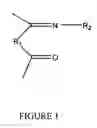
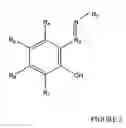
SUMMARY OF THE INVENTIONThis invention is a process for the preparation of alkylene glycols from an alkylene oxide and water in the presence of a SALEN-type compounds of general formulae R1—NR2O or R3-7Ar—NR2OH where R1 is an alkyl of 1 to 6 carbon atoms, R2 is hydrogen or an alkyl, aryl, cycloalkyl, alkylamino group of two to six carbon atoms, halogens, an alkenyl of two to six carbon atoms, hydroxyl, nitro, thiol, amines, amino, imines, amide, phosphoryls, phosphonates, phosphines, carbonyls, R3-7 are substituents on aromatic ring Ar and are hydrogen, an alkyl or cycloalkyl group and may be the same or different (see FIGS. 1 and 2). These SALEN compounds may be mono or bis compounds or may be complexed with a Group 4-14 metal, such as aluminum, tin, vanadium, chromium, manganese, iron, cobalt or platinum.
BRIEF DESCRIPTION OF THE DRAWINGSA more complete appreciation of the invention and many of the attendant advantages thereof will be readily understood by reference to the following detailed description when considered in connection with the accompanying drawings:
FIG. 1 is a structural representation of alkyl SALEN-type compounds.
FIG. 2 is a structural representation of alkylaryl SALEN-type compounds.
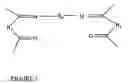
FIG. 3 is a structural representation of N,N′-bisacetylacetone-alkylene diamino SALEN-type compounds.
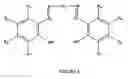
FIG. 4 is a structural representation of N,N′-bis(salicylidene)alkylenediamino SALEN-type compounds.
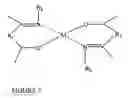
FIG. 5 is a structural representation of bis[acetylacetonatealkylamino]SALEN-type metallosalenate compounds.
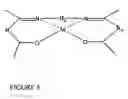
FIG. 6 is a structural representation of N,N′-bis(acetylacetone-alkylene diamino) SALEN-type metallosalenate compounds.
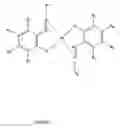
FIG. 7 is a structural representation of bis[salicylidenealkylamino]SALEN-type metallosalenate
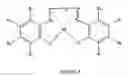
FIG. 8 is a structural representation of N,N′-bis(salicylidene)alkylenediamino SALEN-type metallosalenate compounds.
DETAILED DESCRIPTION OF THE INVENTIONAlkylene glycols can be obtained by reacting the corresponding alkylene oxide with water. A catalyst may be added to improve activity of the reaction and the selectivity to the glycol.
Alkylene oxides are generally of the formula R1R2(COC)R3R4, where each R1, R2, R3 and R4 is independently hydrogen, an alkyl of from 1 to 4 carbon atoms or an aryl of from 6 to 10 carbon atoms. Examples of alkylene oxides are ethylene oxide, propylene oxide and butylene oxide. The corresponding alkylene glycol is generally of the formula R1R2(COHCOH)R3R4, where R1, R2, R3 and R4 are as defined above, and may be obtained by hydration of the alkylene oxide, i.e., reacting it with water to introduce a hydroxyl group and hydrogenate the oxygen. A mixture of glycols is formed (monoalkylene glycol, dialkylene glycol and higher alkylene glycols).
Though the reaction of alkylene oxide and water to alkylene glycol proceeds non-catalytically, improvements in reaction rate, selectivity and reduced water can be realized by the use of catalysts. The catalysts used in the present invention are SALEN-type or metallosalenate compounds.
As noted above, SALEN-type and metallosalenate compounds have been used to kinetically resolve chiral epoxides by selectively hydrating one enantiomer over another with a chiral, nonracemic catalyst, such as salenates and metallosalenates (U.S. Pat. No. 6,448,414, Example 18 in which racemic mixtures of compounds having a terminal epoxide are contacted with SALEN-Co(III)benzoate to produce enantioenriched (unreacted) epoxides and (reaction product) diols.
The present invention is not concerned with reacting a racemic mixture of epoxides for kinetic resolution to a particular isomer by converting the other isomers to diols. In the present invention, conversion of all epoxides, such as ethylene oxide, to diols, such as ethylene glycols, is preferable and the selective conversion to a particular diol, such as monoethylene glycol, is more preferable.
The term “racemic” means a mixture of dextrorotatory and levorotatory isomers which is not optically active. The term “chiral” describes a molecule which is not capable of being superimposed on its mirror image. One example of chirality is a carbon atom which is bonded to four different elements or radicals. The term “enantiomer” means a chiral isomer, i.e., a non-racemic molecule which is not capable of being superimposed on its mirror image.
SALEN-type compounds or metallosalenate compounds of the present invention may be chiral but it is not necessary or desirable that they are non-racemic. SALEN-type compounds of the present invention contain an amino group and an oxy or hydroxy group which are connected by a hydrocarbon, such as an alkyl or an alkylaryl, may be mono or bis compounds and may be ligands coordinated with a metal. The SALEN-type compounds of the present invention may be Schiff bases, i.e., a condensate product of a primary amine with an aldehyde, ketone or an alcohol.
One class of SALEN-type compounds of the present invention is of the general formula R1—NR2O where R1 is an alkyl of 1 to 6 carbon atoms and R2 is hydrogen or an alkyl, aryl, cycloalkyl, alkylamino group of two to six carbon atoms, halogens, an alkenyl of two to six carbon atoms, hydroxyl, nitro, thiol, amines, amino, imines, amide, phosphoryls, phosphonates, phosphines or carbonyls. This type of SALEN compound may be mono of the general formula R1—NR2O where R1 and R2 are as described above (FIG. 1), bis of the general formula (R1—NO)2R2 where R1 and R2 are as described above (FIG. 3) or a metal complex of the general formula M(R1—NO2R2)2 (FIG. 5) or of the general formula M(R1—NO2)2R2 (FIG. 6) where R1 and R2 are as described above and M is a metal of Group 4-14, such as aluminum, tin, vanadium, chromium, manganese, iron, cobalt or platinum, preferably cobalt, more preferably cobalt (III). The metals may have an oxidation state of (II) or (III). If the metal has an oxidation state of (III), the metallosalenate exists as a (+1) cation with a (−1) anion, such as acetate (CH3COO), boron tetrafluoride (BF4), boron tetra pentafluorophenyl (B(C6F5)4), or triflate (CF3SO3)
Another class of SALEN-type compounds of the present invention is of the general formula R3-7Ar—NR2OH where R3-7 is hydrogen, an alkyl or cycloalkyl group and Ar is an aromatic ring. This type of SALEN compound may be mono of the general formula R3-7Ar—NR2OH where R3-7 and Ar are as described above (FIG. 2), bis of the general formula (R3-7Ar—NOH)R2 where R2, R3-7 and Ar are as described above (FIG. 4) or a metal complex of the general formula M(R3-7Ar—NR2OH)2 (FIG. 7) or of the general formula M(R3-7Ar—NOH)R2 (FIG. 8) where R2, R3-7, Ar and M are as described above.
Methods of making SALEN-type and metallosalenate compounds are known in art. Examples of preparation of such compounds are disclosed in U.S. Pat. No. 6,448,414, hereby incorporated by reference.
The catalysts used in the present invention may be heterogenized using procedures known in the art, examples found at J. Am. Chem. Soc., 1999, vol. 121, p. 4147-4154; Inorg. Chem, 2004, vol. 43, p. 2967-2974; J. Catal., 2004, vol. 225, p. 398-407; J. Mol. Catal. A., 2004, vol. 218, p. 141-146 and PCT WO 03059512. The catalysts may be supported on resins, zeolite, clay, alumina, silica or carbon.
In a process for preparing an alkylene glycol by reacting alkylene oxide with water in the presence of a catalyst of the present invention, a mixture of alkylene oxide and water in the liquid state is contacted with a SALEN-type catalyst. The process is carried out at a temperature from about 20° C. to 250° C., preferably 50° C. to 200° C. and a pressure greater than atmospheric, preferably 25 psig to 1000 psig with the temperature and pressure selected to maintain liquid phase conditions. The molar ratio of water to alkylene oxide is in the range from about 5 to 25.
The invention having been generally described, the following examples are given as particular embodiments of the invention and to demonstrate the practice and advantages thereof. It is understood that the examples are given by way of illustration and are not intended to limit the specification or the claims to follow in any manner.
The following compounds were purchased from commercially available sources (Aldrich):
- N,N′-bis(salicylidene)ethylenediamine
- N,N′-bis(salicylidene)-1,3-propanediamine
- N,N′-bis(salicylidene)-1,4-butanediamine
- N,N′-bis(salicylidene)-1,6-propanediamine
- N,N′-bis(salicylidene)-1,2-phenylenediamine
- (R,R)-(−)—N,N′-bis(3,5-di-tert-butylsalicylidene)-1,2-cyclohexanediamine or (S,S)-(+)—N,N′-bis(3,5-di-tert-butylsalicylidene)-1,2-cyclohexanediamine
The following compounds were prepared similar to the literature method described for N,N′-bis(salicylidene)ethylenediamine in “Synthetic Methods of Organometallic and Inorganic Chemistry”, Vol 1, p. 81, Ed by W. A. Herrmann, by Herrmann and Zybill, or J. Am. Chem. Soc., 1955, 77, 5820 from the aldehyde or ketone and amine: bisacetylacetone-ethylenediamine N-salicylidene-aniline
These compounds were evaluated as catalysts for the catalytic hydration of ethylene oxide to ethylene glycol. All experiments were performed in a batch mode in a Multiclave™. EO and water mixture was dosed into the individual tubes of the Multiclave™ at reaction temperature using a stream selector valve, a pump and a timer. Products were analyzed by GC using a FID detector. Selectivities to MEG, DEG and TEG are calculated using the number of moles of EO used to form the glycols. Reactions were run for 10 hours at 100° C. or for 72 hours at room temperature. Listed below are the results of the experiments. Selectivities were compared to a control experiment using a tube filled with the same volume but with no catalyst present (Comparative Example).
EXAMPLE 1 N,N′-bis(salicylidene)ethylenediamineApproximately 0.6 g of SALEN ligand dissolved in 1 ml water was loaded into each reactor tube of the Multiclave™, and 5 ml of 4:1 (weight ratio) water/EO was added at 100° C. The reactor was blanketed with 250 psig of N2. The experiment with the same SALEN ligand dissolved in 5 ml of water and treated with carbon dioxide over the weekend at room temperature was repeated but with 250 psig of CO2 as blanket gas.
The results are listed in Table 1.
EXAMPLE 2 N,N′-bis(salicylidene)-1,3-propanediamineThe procedure for Example 1 was repeated. The results are listed in Table 1.
EXAMPLE 3 N,N′-bis(salicylidene)-1,4-butanediamineThe procedure for Example 1 was repeated. The results are listed in Table 1.
EXAMPLE 4 N,N′-bis(salicylidene)-1,6-propanediamineThe procedure for Example 1 was repeated. The results are listed in Table 1.
EXAMPLE 5 N,N′-bis(salicylidene)-1,2-phenylenediamineThe procedure for Example 1 was repeated. The results are listed in Table 1.
EXAMPLE 6 bisacetylacetone-ethylenediamineThe procedure for Example 1 was repeated. The results are listed in Table 1.
EXAMPLE 7 N-salicylidene-anilineThe procedure for Example 1 was repeated. The results are listed in Table 1.
| TABLE 1 |
| Selectivity to MEG on SALEN ligands in the absence or |
| presence of CO2 |
| EXAMPLE | MEG selectivity with N2 | MEG selectivity with CO2 |
| Comparative | 83% | 88% |
| 1 | 52% | 93% |
| 2 | 62% | 93% |
| 3 | 48% | 92% |
| 4 | 66% | 91% |
| 5 | 82% | 89% |
| 6 | 79% | 91% |
| 7 | 79% | 90% |
The following compound was purchased from commercially available sources (Aldrich):
- Cobalt-N,N′-bis(salicylidene)-1,6-propanediamine
The following compounds were prepared from Co(II) acetate and a stoichiometric amount of SALEN ligand in boiling methanol: - Cobalt(II)-N,N′-bis(salicylidene)ethylenediamino
- Cobalt (II)-bis (N-salicylidene-aniline)
- Cobalt(II)-N,N′-bis(salicylidene)-1,6-propanediamine
Approximately 0.3 g of Co(II) SALEN compound dissolved in 5 ml water was loaded into each reactor tube of the Multiclave™, and 5 ml of 4:1 (weight ratio) water/EO was added at 100° C. The reactor was blanketed with 250 psig of either N2 or CO2. The results are listed in Table 2.
EXAMPLE 9 Cobalt(II)-N-salicylidene-anilineThe procedure for Example 1 was repeated. The results are listed in Table 2.
EXAMPLE 10 Cobalt(II)-N,N′-bis(salicylidene)-1,3-propanediamineThe procedure for Example 1 was repeated. The results are listed in Table 2.
EXAMPLE 11 Cobalt(II)-N,N′-bis(salicylidene)-1,6-propanediamineThe procedure for Example 1 was repeated. The results are listed in Table 2.
| TABLE 2 |
| Selectivity to MEG using Cobalt(II)SALEN in the presence |
| of N2 or CO2 |
| MEG selectivity | MEG selectivity | |
| EXAMPLE | with N2 | with CO2 |
| Comparative | 87% | 89% |
| 8 | 82% | 86% |
| 9 | 86% | 88% |
| 10 | 73% | 91% |
| 11 | 87% | 88% |
Approximately 1 mmol of SALEN ligand dissolved in acetic acid solution was loaded into each reactor tube of the Multiclave™, and 5 ml of 4:1 (weight ratio) water/EO was added at 100° C. The results are shown in Table 3.
EXAMPLE 13 N,N′-bis(salicylidene)-1,3-propanediamineThe procedure for Example 1 was repeated. The results are listed in Table 3.
| TABLE 3 |
| Selectivity to MEG using SALEN ligands in the presence |
| of Acetic Acid. |
| EXAMPLE | Acetic acid added | MEG selectivity |
| Comparative 1 | None | 88% |
| Comparative 2 | 0.05M to 1 M | 89% |
| 12 | None | 66% |
| 12 | 1 mmol | 74% |
| 12 | 2 mmol | 93% |
| 12 | 3 mmol | 94% |
| 12 | 4 mmol | 95% |
| 12 | 5 mmol | 95% |
| 13 | 2 mmol | 90% |
| 13 | 4 mmol | 93% |
Cobalt (III)— (R,R)-(−)—N,N′-bis (3,5-di-tert-butylsalicylidene)-1,2-cyclohexanediamine acetate or Cobalt(III)—(S,S)-(+)—N,N′-bis(3,5-di-tert-butylsalicylidene)-1,2-cyclohexanediamine acetate was prepared from the commercially available cobalt (II) compounds (Aldrich) in toluene in the presence of acetic acid and air as described in J. Am. Chem. Soc., 2002, 124, 1307 (Jacobsen and co-workers). EXAMPLE 14 Cobalt(III)—(R,R)-(−)—N,N′-bis(3,5-di-tert-butylsalicylidene)-1,2-cyclohexanediamine acetate or Cobalt-(S,S)-(+)—N,N′-bis(3,5-di-tert-butylsalicylidene)-1,2-cyclohexanediamine acetate
The solid was dissolved in 5 mL of di-glyme. The reactor was blanketed with N2 and 5 mL of 4:1 EO/water was dosed in each tube. The reaction was run for 72 hours at room temperature. The EO conversion was close to complete at the end of the run. The results are shown in Table 4.
| TABLE 4 |
| Selectivity to MEG using R and S compounds at room |
| temperature |
| Metal Compound | Amount | MEG selectivity |
| 14-R | 0.07 g. | 97% |
| 14-R | 0.13 g. | 98% |
| 14-R | 0.21 g. | 98% |
| 14-S | 0.08 g. | 97% |
| 14-S | 0.15 g. | 98% |
| 14-S | 0.20 g. | 98% |
The above data demonstrates that SALEN-type compounds containing —NR1OH or —NR2O where R1 is an alkyl of 2 to 6 carbon atoms and R2 is an alkylaryl of 7 to 10 carbons atoms are effective for the catalytic hydration of ethylene oxide to ethylene glycol (Table 1). The presence of carbon dioxide improves the selectivity to monoethylene glycol when compared to thermal hydration (Tables 1 and 2). The addition of acetic acid also improves the selectivity to monoethylene glycol when compared to thermal hydration (Table 3). Other acids which should have the same effect are any acid that forms a weakly coordinating counterion, such as benzoic acid, triflic acid and sulphonic acid. Cobalt (II) metallosalenate compounds are effective for the catalytic hydration of ethylene oxide to ethylene glycol (Table 2). Cobalt (III) metallosalenate compounds show improved selectivity to monoethylene glycol when compared to thermal hydration (Table 4).
Obviously, numerous modifications and variations of the present invention are possible in light of the above teachings. It is therefore to be understood that within the scope of the appended claims, the invention may be practiced otherwise than as specifically described herein.
Claims
What is claimed as new and desired to be secured by Letter of Patent of the United States of America is:1. A process for the preparation of alkylene glycols comprising reacting an alkylene oxide with water in the presence of a SALEN-type compounds containing R1—NR20 or R3-7Ar—NR2OH where R1 is an alkyl of 1 to 6 carbon atoms, R2 is hydrogen or an alkyl, aryl, cycloalkyl, alkylamino group of two to six carbon atoms, halogens, an alkenyl of two to six carbon atoms, hydroxyl, nitro, thiol, amines, amino, imines, amide, phosphoryls, phosphonates, phosphines, carbonyls, R3-7 is hydrogen, an alkyl or cycloalkyl group and may be same or different and Ar is an aromatic ring.
2. The process as in claim 1 wherein the SALEN-type compound is of the formula R1—NR2O.
3. The process as in claim 1 wherein the SALEN-type compound is of the general formula (R1—NO)2R2.
4. The process as in claim 1 wherein the SALEN-type compound is of the general formula M(R1—NO2R2)2 wherein M is a metal of Group 4-14.
5. The process as in claim 4 wherein M is aluminum, tin, vanadium, chromium, manganese, iron, cobalt or platinum
6. The process as in claim 1 wherein the SALEN-type compound is of the general formula M(R1—NO2)2R2 wherein M is a metal of Group 4-14.
7. The process as in claim 6 wherein M is aluminum, tin, vanadium, chromium, manganese, iron, cobalt or platinum.
8. The process as in claim 1 wherein the SALEN-type compound is of the formula R3-7Ar—NR2OH wherein where R1 is an alkyl of 1 to 6 carbon atoms, R2 is hydrogen or an alkyl, aryl, cycloalkyl, alkylamino group of two to six carbon atoms, halogens, an alkenyl of two to six carbon atoms, hydroxyl, nitro, thiol, amines, amino, imines, amide, phosphoryls, phosphonates, phosphines, carbonyls, R3-7 is hydrogen, an alkyl or cycloalkyl group and may be same or different and Ar is an aromatic ring.
9. The process as in claim 1 wherein the SALEN-type compound is of the general formula (R3-7Ar—NOH)2R2.
10. The process as in claim 1 wherein the SALEN-type compound is of the general formula M(R3-7Ar—NR2OH)R2.
11. The process as in claim 10 wherein M is aluminum, tin, vanadium, chromium, manganese, iron, cobalt or platinum
12. The process as in claim 1 wherein the SALEN-type compound is of the general formula M(R3-7Ar—NOHR2)2.
13. The process as in claim 11 wherein M is cobalt.
14. The process as in claim 13 wherein the metal is in a valence state of 2.
15. The process as in claim 1 wherein R1 is phenyl, propyl, ethyl, n-hexyl, 1,2-cyclohexane, or CH3N[(CH2)3]2.
16. The process as in claim 1 wherein R2 and R5 are hydrogen or t-butyl.
17. The process as in claim 1 wherein the SALEN-type compound is N,N′-bis(salicylidene)ethylenediamine, N,N′-bis(salicylidene)-1,3-propanediamine, N,N′-bis(salicylidene)-1,4-butanediamine, N,N′-bis(salicylidene)-1,6-propanediamine, N,N′-bis(salicylidene)-1,2-phenylenediamine, (R,R)-(−)—N,N′-bis(3,5-di-tert-butylsalicylidene)-1,2-cyclohexanediamine or (S,S)-(+)—N,N′-bis(3,5-di-tert-butylsalicylidene)-1,2-cyclohexanediamine bisacetylacetone-ethylenediamine, N-salicylidene-aniline.
18. The process as in claim 1 wherein the metallosalenate-type compound is Cobalt(III)-N,N′-bis(salicylidene)-1,6-propanediamine, Cobalt(III)-N,N′-bis(salicylidene)ethylenediamino, Cobalt-N-salicylidene-aniline, Cobalt(III)-N,N′-bis(salicylidene)-1,3-propanediamine, Cobalt(III)—(R,R)-(−)—N,N′-bis(3,5-di-tert-butylsalicylidene)-1,2-cyclohexanediamine or Cobalt(III)—(S,S)-(+)—N,N′-bis(3,5-di-tert-butylsalicylidene)-1,2-cyclohexanediamine.
19. The process as in claim 1 wherein the process is carried out at a temperature from about 20° C. to 250° C.
20. The process as in claim 19 wherein the temperature is 50° C. to 200° C.
21. The process as in claim 1 wherein the process is carried out at a pressure greater than atmospheric.
22. The process as in claim 21 wherein the pressure is 25 psig to 1000 psig.
23. The process as in claim 1 wherein the process is carried out at a molar ratio of water to alkylene oxide in the range from about 5 to 25.
24. The process as in claim 1 wherein the alkylene oxide is reacted with water in the presence of carbon dioxide or nitrogen.
25. The process as in claim 1 wherein the alkylene oxide is reacted with water in the presence of any acid that forms a weakly coordinating counterion
26. The process as in claim 25 wherein the acid is acetic acid, benzoic acid, triflic acid or sulphonic acid.
Images & Drawings included:
Sources:
- United States Patent and Trademark Office - verify current appl. status at the USPTO↗
Similar patent applications:
- » 20230038706
PROCESS FOR PREPARING ALKYLENE GLYCOL MIXTURE FROM A CARBOHYDRATE SOURCE WITH INCREASED SELECTIVITY FOR GLYCEROL - » 20060199980
Process for preparing alkylene glycols - » 20220356134
PROCESS FOR PREPARING ALKYLENE GLYCOL FROM A CARBOHYDRATE SOURCE COMPRISING HEMICELLULOSE, CELLULOSE AND LIGNIN - » 20230042854
PROCESS FOR PREPARING ALKYLENE GLYCOL MIXTURE FROM A CARBOHYDRATE SOURCE WITH DECREASED SELECTIVITY FOR POLYOL SIDE PRODUCTS - » 20060089515
Process for continuously preparing alkylene glycol diethers - » 20080300431
Process for preparing an alkylene glycol - » 20050119510
Process of preparing an alkylene glycol - » 20070066856
Process for the preparation of alkylene glycols - » 20080064881
Process for the preparation of alkylene glycol - » 20060161026
Process for the preparation of alkylene glycols
Recent applications in this class:
- » 20240400480 2024-12-05
Process and apparatus for the preparation of alkylene glycol - » 20220009862 2022-01-13
Process and apparatus for the preparation of alkylene glycol - » 20150251979 2015-09-10
Process for the production of ethylene oxide - » 20120232313 2012-09-13
Method of making alcohols - » 20120226078 2012-09-06
Method of making alkylene glycols - » 20110251441 2011-10-13
Method of making alcohols - » 20110201850 2011-08-18
Method of making alkylene glycols - » 20110054224 2011-03-03
Process for the preparation of alkylene glycol - » 20100261627 2010-10-14
Diester-based lubricants and methods of making same - » 20100121113 2010-05-13
Process for producing low color glycols
Recent applications for this Assignee:
- » 20200207678 2020-07-02
FERTILIZER CAPSULE COMPRISING ONE OR MORE CORES AND METHOD OF MAKING SAME - » 20200017779 2020-01-16
Method for cracking a hydrocarbon feedstock in a steam cracker unit - » 20190351395 2019-11-21
Catalyst with improved activity/selectivity for light naphtha aromatization - » 20190225562 2019-07-25
Process and installation for the conversion of crude oil to petrochemicals having an improved propylene yield - » 20190070594 2019-03-07
Catalyst with improved activity/selectivity for light naphtha aromatization - » 20190062655 2019-02-28
Process for upgrading refinery heavy residues to petrochemicals - » 20190039970 2019-02-07
Process and installation for the conversion of crude oil to petrochemicals having an improved propylene yield - » 20190039969 2019-02-07
Process and installation for the conversion of crude oil to petrochemicals having an improved propylene yield - » 20190023640 2019-01-24
Production of products from natural resources - » 20180371338 2018-12-27
Process for producing BTX from a mixed hydrocarbon source using pyrolysis