Air-permeable composite fabric
US20060205306A1
2006-09-14
11/434,017
2006-05-15
✅ Patent granted
US 7,488,696 B2
2009-02-10
-
-
Arti Singh
2026-12-18
Abstract:
An air-permeable composite fabric is provided. The composite fabric has an inner fabric layer, an outer fabric layer, and an intermediate vapor barrier. The vapor barrier is selected from adhesive material and an adhesive/membrane combination designed so the composite fabric has a level of air permeability to allow air flow between the first fabric layer and the second fabric layer and a variable level of water vapor diffusion resistance that decreases as air speed impinging on the composite fabric increases.
Inventors:
- Moshe Rock 76 🇺🇸 Brookline, MA, United States
- Thomas C. Colasanto 7 🇺🇸 Tolland, CT, United States
- Vikram Sharma 14 🇺🇸 Stoneham, MA, United States
- Kimberly Shanley 4 🇺🇸 Plymouth, MA, United States
- Mark Shanley 1 🇺🇸 , United States
Assignee:
- MMI-IPCO, LLC 36 🇺🇸 Lawrence, MA, United States
Interested in similar patents?
Get notified when new applications in this technology area are published.
Classification:
B32B27/12 » CPC main
Layered products comprising synthetic resin next to a fibrous or filamentary layer
A41D13/002 » CPC further
Professional, industrial or sporting protective garments, e.g. surgeons' gowns or garments protecting against blows or punches with controlled internal environment
A41D31/065 » CPC further
Materials specially adapted for outerwear characterised by special function or use; Thermally protective, e.g. insulating using layered materials
A41D31/085 » CPC further
Materials specially adapted for outerwear characterised by special function or use; Heat resistant; Fire retardant using layered materials
B32B5/22 » CPC further
Layered products characterised by the non- homogeneity or physical structure, i.e. comprising a fibrous, filamentary, particulate or foam layer; Layered products characterised by having a layer differing constitutionally or physically in different parts characterised by the presence of two or more layers which are next to each other and are fibrous, filamentary, formed of particles or foamed
B32B5/245 » CPC further
Layered products characterised by the non- homogeneity or physical structure, i.e. comprising a fibrous, filamentary, particulate or foam layer; Layered products characterised by having a layer differing constitutionally or physically in different parts characterised by the presence of two or more layers which are next to each other and are fibrous, filamentary, formed of particles or foamed one layer being a fibrous or filamentary layer another layer next to it being a foam layer
B32B5/26 » CPC further
Layered products characterised by the non- homogeneity or physical structure, i.e. comprising a fibrous, filamentary, particulate or foam layer; Layered products characterised by having a layer differing constitutionally or physically in different parts characterised by the presence of two or more layers which are next to each other and are fibrous, filamentary, formed of particles or foamed one layer being a fibrous or filamentary layer another layer also being fibrous or filamentary
B32B7/06 » CPC further
Layered products characterised by the relation between layers; Layered products characterised by the relative orientation of features between layers, or by the relative values of a measurable parameter between layers, i.e. products comprising layers having different physical, chemical or physicochemical properties; Layered products characterised by the interconnection of layers; Interconnection of layers permitting easy separation
B32B7/12 » CPC further
Layered products characterised by the relation between layers; Layered products characterised by the relative orientation of features between layers, or by the relative values of a measurable parameter between layers, i.e. products comprising layers having different physical, chemical or physicochemical properties; Layered products characterised by the interconnection of layers; Interconnection of layers using interposed adhesives or interposed materials with bonding properties
B32B27/322 » CPC further
Layered products comprising synthetic resin comprising polyolefins comprising halogenated polyolefins, e.g. PTFE
B32B27/34 » CPC further
Layered products comprising synthetic resin comprising polyamides
B32B27/36 » CPC further
Layered products comprising synthetic resin comprising polyesters
B32B27/40 » CPC further
Layered products comprising synthetic resin comprising polyurethanes
B32B33/00 » CPC further
Layered products characterised by particular properties or particular surface features, e.g. particular surface coatings; Layered products designed for particular purposes not covered by another single class
B32B37/10 » CPC further
Methods or apparatus for laminating, e.g. by curing or by ultrasonic bonding characterised by the pressing technique, e.g. using action of vacuum or fluid pressure
B32B37/1284 » CPC further
Methods or apparatus for laminating, e.g. by curing or by ultrasonic bonding characterised by using adhesives Application of adhesive
B32B38/0012 » CPC further
Ancillary operations in connection with laminating processes Mechanical treatment, e.g. roughening, deforming, stretching
B32B38/004 » CPC further
Ancillary operations in connection with laminating processes; Heat treatment by physically contacting the layers, e.g. by the use of heated platens or rollers
D06N7/00 » CPC further
Flexible sheet materials not otherwise provided for, e.g. textile threads, filaments, yarns or tow, glued on macromolecular material
A41D31/102 » CPC further
Materials specially adapted for outerwear characterised by special function or use; Impermeable to liquids, e.g. waterproof; Liquid-repellent Waterproof and breathable
A41D31/125 » CPC further
Materials specially adapted for outerwear characterised by special function or use; Hygroscopic; Water retaining Moisture handling or wicking function through layered materials
B32B2038/0028 » CPC further
Ancillary operations in connection with laminating processes; Mechanical treatment, e.g. roughening, deforming, stretching Stretching, elongating
B32B2250/03 » CPC further
Layers arrangement 3 layers
B32B2250/40 » CPC further
Layers arrangement Symmetrical or sandwich layers, e.g. ABA, ABCBA, ABCCBA
B32B2266/0242 » CPC further
Composition of foam; Organic; Materials belonging to Acrylic resin
B32B2266/0257 » CPC further
Composition of foam; Organic; Materials belonging to Polyamide
B32B2266/0264 » CPC further
Composition of foam; Organic; Materials belonging to Polyester
B32B2266/0278 » CPC further
Composition of foam; Organic; Materials belonging to Polyurethane
B32B2305/18 » CPC further
Condition, form or state of the layers or laminate; Fibres of continuous length Fabrics, textiles
B32B2307/712 » CPC further
Properties of the layers or laminate; Other properties Weather resistant
B32B2307/724 » CPC further
Properties of the layers or laminate; Other properties Permeability to gases, adsorption
B32B2307/728 » CPC further
Properties of the layers or laminate; Other properties Hydrophilic
B32B2327/18 » CPC further
Polyvinylhalogenides containing fluorine PTFE, i.e. polytetrafluoroethylene
B32B2367/00 » CPC further
Polyesters, e.g. PET, i.e. polyethylene terephthalate
B32B2375/00 » CPC further
Polyureas; Polyurethanes
B32B2377/00 » CPC further
Polyamides
B32B2437/00 » CPC further
Clothing
B32B2459/00 » CPC further
Nets, e.g. camouflage nets
D10B2331/021 » CPC further
Fibres made from polymers obtained otherwise than by reactions only involving carbon-to-carbon unsaturated bonds, e.g. polycondensation products polyamides aromatic polyamides, e.g. aramides
Y10T156/10 » CPC further
Adhesive bonding and miscellaneous chemical manufacture Methods of surface bonding and/or assembly therefor
Y10T428/1476 » CPC further
Stock material or miscellaneous articles; Layer or component removable to expose adhesive Release layer
Y10T428/23943 » CPC further
Stock material or miscellaneous articles; Pile or nap type surface or component Flock surface
Y10T428/24496 » CPC further
Stock material or miscellaneous articles; Structurally defined web or sheet [e.g., overall dimension, etc.] including variation in thickness Foamed or cellular component
Y10T428/24802 » CPC further
Stock material or miscellaneous articles; Structurally defined web or sheet [e.g., overall dimension, etc.] Discontinuous or differential coating, impregnation or bond [e.g., artwork, printing, retouched photograph, etc.]
Y10T428/2481 » CPC further
Stock material or miscellaneous articles; Structurally defined web or sheet [e.g., overall dimension, etc.]; Discontinuous or differential coating, impregnation or bond [e.g., artwork, printing, retouched photograph, etc.] including layer of mechanically interengaged strands, strand-portions or strand-like strips
Y10T428/249982 » CPC further
Stock material or miscellaneous articles; Web or sheet containing structurally defined element or component; Composite having voids in a component [e.g., porous, cellular, etc.] With component specified as adhesive or bonding agent
Y10T428/249999 » CPC further
Stock material or miscellaneous articles; Web or sheet containing structurally defined element or component; Composite having a component wherein a constituent is liquid or is contained within preformed walls [e.g., impregnant-filled, previously void containing component, etc.] Differentially filled foam, filled plural layers, or filled layer with coat of filling material
Y10T428/2896 » CPC further
Stock material or miscellaneous articles; Web or sheet containing structurally defined element or component and having an adhesive outermost layer; Adhesive compositions including nitrogen containing condensation polymer [e.g., polyurethane, polyisocyanate, etc.]
Y10T442/20 » CPC further
Fabric [woven, knitted, or nonwoven textile or cloth, etc.] Coated or impregnated woven, knit, or nonwoven fabric which is not [a] associated with another preformed layer or fiber layer or, [b] with respect to woven and knit, characterized, respectively, by a particular or differential weave or knit, wherein the coating or impregnation is neither a foamed material nor a free metal or alloy layer
Y10T442/2139 » CPC further
Fabric [woven, knitted, or nonwoven textile or cloth, etc.]; Coated or impregnated woven, knit, or nonwoven fabric which is not [a] associated with another preformed layer or fiber layer or, [b] with respect to woven and knit, characterized, respectively, by a particular or differential weave or knit, wherein the coating or impregnation is neither a foamed material nor a free metal or alloy layer Coating or impregnation specified as porous or permeable to a specific substance [e.g., water vapor, air, etc.]
Y10T442/2213 » CPC further
Fabric [woven, knitted, or nonwoven textile or cloth, etc.]; Coated or impregnated woven, knit, or nonwoven fabric which is not [a] associated with another preformed layer or fiber layer or, [b] with respect to woven and knit, characterized, respectively, by a particular or differential weave or knit, wherein the coating or impregnation is neither a foamed material nor a free metal or alloy layer Coating or impregnation is specified as weather proof, water vapor resistant, or moisture resistant
Y10T442/2484 » CPC further
Fabric [woven, knitted, or nonwoven textile or cloth, etc.]; Coated or impregnated woven, knit, or nonwoven fabric which is not [a] associated with another preformed layer or fiber layer or, [b] with respect to woven and knit, characterized, respectively, by a particular or differential weave or knit, wherein the coating or impregnation is neither a foamed material nor a free metal or alloy layer Coating or impregnation is water absorbency-increasing or hydrophilicity-increasing or hydrophilicity-imparting
Y10T442/2738 » CPC further
Fabric [woven, knitted, or nonwoven textile or cloth, etc.]; Coated or impregnated woven, knit, or nonwoven fabric which is not [a] associated with another preformed layer or fiber layer or, [b] with respect to woven and knit, characterized, respectively, by a particular or differential weave or knit, wherein the coating or impregnation is neither a foamed material nor a free metal or alloy layer Coating or impregnation intended to function as an adhesive to solid surfaces subsequently associated therewith
Y10T442/3325 » CPC further
Fabric [woven, knitted, or nonwoven textile or cloth, etc.]; Woven fabric [i.e., woven strand or strip material] Including a foamed layer or component
Y10T442/335 » CPC further
Fabric [woven, knitted, or nonwoven textile or cloth, etc.]; Woven fabric [i.e., woven strand or strip material]; Including a foamed layer or component Plural fabric layers
Y10T442/3472 » CPC further
Fabric [woven, knitted, or nonwoven textile or cloth, etc.]; Woven fabric [i.e., woven strand or strip material] Woven fabric including an additional woven fabric layer
Y10T442/3854 » CPC further
Fabric [woven, knitted, or nonwoven textile or cloth, etc.]; Woven fabric [i.e., woven strand or strip material] Woven fabric with a preformed polymeric film or sheet
Y10T442/647 » CPC further
Fabric [woven, knitted, or nonwoven textile or cloth, etc.]; Nonwoven fabric [i.e., nonwoven strand or fiber material] Including a foamed layer or component
B32B27/04 IPC
Layered products comprising synthetic resin as impregnant, bonding, or embedding substance
B32B5/18 IPC
Layered products characterised by the non- homogeneity or physical structure, i.e. comprising a fibrous, filamentary, particulate or foam layer; Layered products characterised by having a layer differing constitutionally or physically in different parts characterised by features of a layer of foamed material
Description
This application is a continuation of and claims the benefit of U.S. application Ser. No. 10/650,098, filed Aug. 25, 2003, now pending, which is a continuation of U.S. application Ser. No. 09/378,344, filed Aug. 20, 1999, now abandoned, which claims the benefit of U.S. Provisional application Ser. No. 60/098,254, filed Aug. 28, 1998, now expired. U.S. application Ser. No. 10/650,098, filed Aug. 25, 2003, now pending, is also a continuation of U.S. Ser. No. 10/341,309, filed Jan. 13, 2003, now abandoned, which is a continuation of U.S. application Ser. No. 09/863,852, filed May 23, 2001, now abandoned, which is a divisional of U.S. application Ser. No. 09/378,344, filed Aug. 20, 1999, now abandoned. The contents of the prior applications are considered part of (and are incorporated by reference in) the disclosure of this application.
BACKGROUNDThis invention relates to a fabric material, and more particularly, to a composite fabric having controlled wind permeability.
Conventional composite fabrics are designed to be fully wind resistant. By way of example, reference is made to U.S. Pat. Nos. 5,204,156; 5,268,212; and 5,364,678, all entitled “Windproof and Water Resistant Composite Fabric With Barrier Layer,” and which describe a drapable, stretchable, windproof, water resistant and water vapor-permeable composite fabric. This composite fabric includes an inner fabric layer 13A, an outer fabric layer 13B, and a barrier or membrane layer 17A (see FIG. 1). The barrier or membrane layer is constructed to prevent air and water from passing through the fabric layers. Testing has shown that the amount of air flowing through such a composite fabric is on the order or no more than 1 ft. 3/ft. 2/min.
The membrane or barrier of this type of prior art fabric composite is typically adhered or bonded to the fabric layers with the aid of an adhesive 18. The adhesive can be made from a polyurethane, polyester, acrylic or polyamide. Reference is made to FIG. 1, which illustrates the composite fabric of the prior art.
The above-described fabric composite is nonetheless less than desirable. Because such a composite fabric allows only minimal air flow therethrough, the wearer of the fabric may not be comfortable. When a person wearing a garment constructed with the composite fabric of the prior art performs some type of physical activity, heat is almost always generated, even if the outside air is cold. In order to adjust for this heat generation, the two fabric layers may be selected to have low insulative properties. However, this is disadvantageous, since using such a fabric composite will cause the wearer to feel cold when no activity is being performed.
Another disadvantage with prior art composite fabrics is the level of moisture vapor transmission. For example, a membrane made of polytetrafluroethylene, while having a higher moisture vapor transmission performance than a polyurethane membrane, is still not desirable, since it cannot handle a situation where high levels of moisture vapor or sweat are generated. As a result, wearer discomfort is often prevalent, due to this limitation on moisture transport. Specifically, excess moisture which could not be transported out from the fabric condenses next to the skin-side surface, producing a cold feeling on the skin of the person wearing a garment made from this type of prior art composite fabric.
Accordingly, it is desirable to provide an improved windproof, water vapor permeable fabric which eliminates the problems associated with prior art fabrics.
SUMMARYGenerally speaking, in accordance with the invention, a wind resistant and water vapor permeable composite fabric is provided. The composite fabric includes an inner fabric layer, an outer fabric layer, and an intermediate vapor barrier. The vapor barrier is selected from adhesive material and an adhesive/membrane combination designed so the composite fabric has a level of air permeability to allow air flow between the first fabric layer and the second fabric layer and a variable level of water vapor diffusion resistance that decreases as air speed impinging on the composite fabric increases.
The adhesive may be a continuous film which is mechanically altered by means of crushing, stretching and the like to enhance air permeability or a discontinuous film which inherently enhances air permeability. The adhesive and/or the membrane may be applied directly to a fabric surface of one or both of the fabric layers or may be applied by means of transfer coating from release paper.
In one example, the adhesive functions as a vapor barrier and is disposed between the two fabric layers. The adhesive may be in the form of a foam. One or more rollers may be used to apply pressure to the fabric in order to selectively adjust the air permeability characteristics thereof.
In a second embodiment, the vapor barrier comprises a membrane made from polyurethane, polyamide, polytetrafluroethylene or polyester, or a combination thereof, which is applied between the two fabric layers 15 and adhered thereto with an adhesive. The fabric composite undergoes mechanical processing, such as controlled stretching, in order to achieve a desired level of air permeability.
According to one aspect of the invention, an air-permeable composite fabric comprises a first fabric layer, a second fabric layer, and an intermediate, air-permeable vapor barrier disposed between and bonded to the first and second fabric layers. The intermediate, air-permeable barrier layer is selected from the group consisting of: a foamed adhesive in the form of a discontinuous film, an adhesive in the form of a continuous film mechanically altered by one of crushing and stretching, and a membrane disposed between and adhered to the first fabric layer and the second fabric layer with an adhesive and mechanically altered by stretching. The intermediate, air-permeable vapor barrier layer has a level of air permeability to allow air flow between the first and second fabric layers, and the intermediate, air-permeable vapor barrier layer has a variable level of water vapor diffusion resistance that substantially decreases as air speed of moving air impinging on the fabric increases.
Preferred embodiments of this aspect of the invention may include one or more of the following additional features. The adhesive is selected from the group consisting of polyurethane, acrylics, polyamides, polyesters and combinations thereof. At least one of the first and second fabric layers is rendered hydrophilic. At least one of the first and second fabric layers has a raised surface. The intermediate, air-permeable vapor barrier comprises an adhesive selected from the group consisting of: an adhesive in the form of a mechanically altered continuous film and a foamed adhesive in the form of a discontinuous film. The vapor barrier is exclusively foamed adhesive in the form of a discontinuous film. The intermediate, air-permeable vapor barrier comprises the membrane disposed between the first and second fabric layers and adhered thereto with an adhesive and mechanically altered by stretching, the composite fabric having undergone mechanical processing. The membrane is made from a material selected from the group consisting of polyurethane, polyamide, polytetrafluoroethylene, polyester and combinations thereof. The mechanical processing comprises controlled stretching. The adhesive is selected from the group consisting of polyurethane, acrylics, polyamides, polyesters and combinations thereof.
According to another aspect of the invention, a method of forming an air-permeable composite fabric comprising the steps of: selecting a vapor barrier from the group consisting of a membrane and an adhesive, disposing the vapor barrier between a first fabric layer and a second fabric layer in order to produce the composite fabric, and mechanically processing the composite fabric of such that the intermediate, air-permeable vapor barrier layer has a level of air permeability to allow air flow between the first fabric layer and the second fabric layer and the intermediate, air-permeable vapor barrier layer has a variable level of water vapor diffusion resistance that decreases as air speed impinging on the composite fabric increases.
Preferred embodiments of this aspect of the invention may include one or more of the following additional features. The vapor barrier is a membrane, and the step of mechanical processing comprises controlled stretching of the composite fabric. The vapor barrier is an adhesive, and the step of mechanical processing comprises applying pressure to the composite fabric. The method comprises passing the composite fabric through a plurality of rollers while applying pressure. The method comprises passing the composite fabric through a plurality of heated rollers while applying pressure. The method comprises passing the composite fabric through the rollers at variable controlled speeds. Preferably, the adhesive is foamed. The method comprises disposing the adhesive between the first fabric layer and the second fabric layer by transfer coating using release paper. The method comprises disposing the vapor barrier between the first fabric layer and the second fabric layer as a continuous film of adhesive. The method comprises disposing the vapor barrier between the first fabric layer and the second fabric layer as a discontinuous film of adhesive. The method comprises disposing the vapor barrier between the first fabric layer and the second fabric layer as a film of adhesive using release paper. The method comprises disposing the vapor barrier between the first fabric layer and the second fabric layer by applying the adhesive directly to at least one of the first fabric layer and the second fabric layer.
Accordingly, it is an object of the invention to provide an improved windproof composite fabric, whose wind resistance may be varied.
Still another object of the invention is to provide a composite fabric which is water resistant.
A further object of the invention is to provide an air-permeable composite fabric.
Yet another object of the invention is to provide a composite fabric having a moisture vapor transmission rate which substantially increases as air speed impinging on the fabric increases.
Still other objects and advantages of the invention will in part be obvious and will in part be apparent from the following description.
The invention accordingly comprises the several steps and the relation of one or more steps with respect to each of the others, and the fabric possessing the features, properties and construction of elements which are exemplified in the following detailed disclosure, and the scope of the invention is indicated in the claims.
DESCRIPTION OF DRAWINGSFor a fuller understanding of the invention, reference is made to the following description, taken in connection with the accompanying drawings, in which:
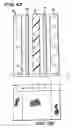
FIG. 1 is a front view in cross-section illustrating a composite fabric of the prior art;
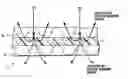
FIG. 2 is a front view in cross-section illustrating a composite fabric made in accordance with the invention;
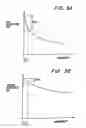
FIG. 3A is a graph which shows the change in moisture vapor transmission as a function of air permeability in the inventive composite fabric;
FIG. 3B is a graph showing the change in air permeability as a function of thermal resistance in the inventive composite fabric;
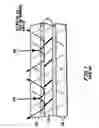
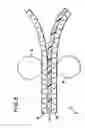
FIG. 4A is a front view in cross-section showing formation of a second embodiment of the composite fabric of the invention;
FIG. 4B shows the effects of controlled stretching on the composite fabric depicted in FIG. 4A;
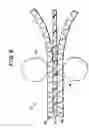
FIG. 5 is a front view in cross-section showing the formation of a third embodiment of the inventive composite fabric;
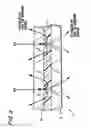
FIG. 6 is a front elevational view in cross-section showing the formation of a fourth embodiment of the inventive composite fabric; and
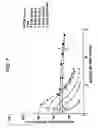
FIG. 7 is a graph showing the relationship of water vapor resistance as a function of wind speed impinging on the inventive fabric as compared to prior art fabrics..
Like reference symbols in the various drawings indicate like elements.
DETAILED DESCRIPTIONReferring first to FIG. 2, a first embodiment of the inventive composite fabric, generally indicated at 11, is shown. Fabric 11 comprises first and second fabric layers 13 and 15, and a barrier 17 disposed therebetween. Fabric 11 has variable water vapor permeability, as discussed below. In this embodiment, the barrier 17 consists of an adhesive material. Adhesive 17 may, in one form, be applied by means of transfer coating from release paper at between 0.25 oz/yd2 and 2.5 oz/yd2. Each of layers 13 and 15 may be treated or modified, as described in U.S. Pat. Nos. 5,204,156; 5,268,212; and 5,364,678, including rendering the layers hydrophilic, providing the layers with a raised surface, treating the layers to be water repellant, etc.
Fabric 11 is formed to any specific controlled wind resistant performance level, as discussed below. As shown, air which impinges upon fabric 11 is partially deflected away from the barrier 17 and partially penetrates as well through the barrier 17.
In the absence of moving air, water vapor/moisture from the skin can only transfer through the fabric by means of an absorption/adsorption phenomenon leading to excess heat buildup and moisture. When fabric allows some air to pass through the barrier, it helps in transferring high moisture levels and thus make the wearer more comfortable.
Importantly, as wind speed increases, more air flows through the barrier, allowing more vapor to be dissipated. Thus, the composite fabric of the invention has a relatively high water vapor permeability in moving air, and has substantially reduced resistance to vapor permeability with an increase in air flow. The reduction in wind resistance or increase in air permeability will not cause any significant loss of the thermal insulative properties, as shown in the graphs of FIG. 3A and 3B now discussed, because the actual amount of air penetrating the barrier is minimal.
The graph of FIG. 3A illustrates that for any increase in air permeability of the inventive fabric, there is a corresponding decrease in evaporation pressure resistance. The graph of FIG. 3B shows that for any increase in air permeability of the inventive fabric, there will be a corresponding decrease in thermal resistance of the composite fabric. As can be appreciated from reviewing the graphs, there is a substantial difference between the magnitude of change in evaporation pressure resistance and thermal resistance. Evaporation pressure resistance drops far more rapidly than thermal resistance for the same amount of change in air permeability of the composite fabric. Thus, when there is a small increase in air permeability of the composite fabric, the evaporative pressure resistance reduces significantly. As evaporation pressure resistance decreases, more moisture can be transported across the composite fabric, and thus, the loss in thermal resistance which defines the warmth of the fabric is not affected significantly.
FIG. 4A describes a second embodiment of the inventive composite fabric, which is generally indicated at 21. Composite fabric 21 includes first and second fabric layers 23 and 25, a barrier that in this case is an intermediate membrane 27, and an adhesive 29 on both sides of membrane 27 for adhering membrane 27 to fabric layers 23 and 25. Adhesive 29 may, in one form, be applied by means of transfer coating from release paper at a thickness of between 0.25 oz/yd2 and 2.5 oz/yd2. Membrane 27 is made from polyurethane, polytetrafluroethyelene or polyester. Membrane 27 may be applied by means of transfer coating from release paper at a thickness of between 0.0001 in. and 0.010 in., or directly on the fabric surfaces at a thickness of between 0.0003 in. and 0.010 in.
As shown in FIG. 4B, composite fabric 21 having a width, W, is subjected to controlled stretching to produce a composite having a width, W′, with a desired specific level of air permeability.
Referring now to FIG. 5, a third embodiment of the inventive composite fabric is shown and generally indicated at 31. Composite fabric 31 includes fabric layers 33 and 35, and a barrier consisting of an intermediate adhesive 37. The adhesive is chosen from a polyurethane, polyester, acrylic and polyamide. Here, adhesive 37 is applied as a foam at between about 0.3 oz/yd2 and 10 oz/yd2. The foam density (mixing air with adhesive) and the amount of adhesive applied are selected depending on the desired air permeability of the composite. Composite fabric 31 is prepared by first applying foam adhesive 37 on one of the opposed surfaces of fabric layers 33 and 35. Once applied, the other fabric layer is put over the adhesive in order to produce the inventive fabric composite. Composite 31 is then mechanically processed by means of a pair of rollers 39, which apply pressure thereto in an amount between about 10 lbs./in.2 and 150 lbs/in.2 in order to produce a composite having a specific level of air permeability.
Referring now to FIG. 6, a further embodiment of the inventive composite fabric is shown. Composite fabric 41 comprises fabric layers 43 and 45 and a barrier formed of an intermediate adhesive 47. Air permeability is controlled by applying the adhesive on the fabric and then using some type of mechanical processing, such as treatment with rollers 19, in order to create the desired levels of air permeability.
Still referring to FIG. 6, adhesive 47 may, in one form, be applied by means of a release paper. The adhesive is first placed on the release paper at between about 0.25 oz./yd.2 and 2.5 oz./yd.2, after which one of the fabric layers is put on top thereof in order for bonding to occur. Then, the release paper is stripped from the fabric and the second fabric layer is applied to the other side of the adhesive. The composite then undergoes mechanical processing by rollers 49 (which may be heated to a temperature of between about 100° F. and 375° F.), which apply pressure to the composite fabric. As can be appreciated, changing any mechanical parameter (roller temperature, pressure applied, and speed of the fabric through the rollers) helps change the air permeability characteristics of the composite fabric.
Alternatively, and still referring to FIG. 6, adhesive 47 may be applied directly to one of fabric layers 43 and 45 (at 0.25 oz./yd.2 to 2.5 oz./yd.2) without the use of release paper. As before, the composite fabric will undergo mechanical processing in order to achieve a desired air permeability performance.
FIG. 7 describes the advantages of the present invention over the prior art. In this figure, lines A and B show the water vapor diffusion resistance for two prior art fabrics (GORE WINDSTOPPER® fabric using GORE-TEX® PTFE membrane from W.L. Gore & Associates, Inc. (Newark, Delaware) and ET551 laminate with PTFE from Tetratec Corporation (Feasterville, Pennsylvania)). As seen in FIG. 7, the diffusion resistance for these prior art fabrics is substantially constant. However, in the materials identified by lines C, D, E and F, corresponding respectively to various air permeability level samples (high to low), the vapor diffusion resistance decreases dramatically with increased wind speed through the fabric.
It will thus be seen that the objects set forth above, among those made apparent from the preceding description, are efficiently attained, and, since certain changes may be made in carrying out the above method and in the fabric construction set forth without departing from the spirit and scope of the invention, it is intended that all matter contained in the above description and shown in the drawings shall be interpreted as merely illustrative, and should not be considered limiting.
The following claims are intended to cover all of the generic and specific features of the invention described herein, and all statements of the scope of the invention which might be said to fall therebetween.
Claims
What is claimed is:1. An air-permeable composite fabric comprising:
a first fabric layer;
a second fabric layer; and
an intermediate, air-permeable vapor barrier disposed between and bonded to said first fabric layer and said second fabric layer;
said intermediate, air-permeable barrier layer being selected from the group consisting of: a foamed adhesive in the form of a discontinuous film, an adhesive in the form of a continuous film mechanically altered by one of crushing and stretching, and a membrane disposed between and adhered to said first fabric layer and said second fabric layer with an adhesive and mechanically altered by stretching,
said intermediate, air-permeable vapor barrier layer having a level of air permeability to allow air flow between said first fabric layer and said second fabric layer, and
said intermediate, air-permeable vapor barrier layer having a variable level of water vapor diffusion resistance that substantially decreases as air speed of moving air impinging on said composite fabric increases.
2. The air-permeable composite fabric of claim 1, wherein said adhesive is selected from the group consisting of polyurethane, acrylics, polyamides, polyesters and combinations thereof.
3. The air-permeable composite fabric of claim 1, wherein at least one of said first fabric layer and said second fabric is rendered hydrophilic.
4. The air-permeable composite fabric of claim 1, wherein at least one of said first fabric layer and said second fabric layer has a raised surface.
5. The air-permeable composite fabric of claim 1, wherein said intermediate, air-permeable vapor barrier comprises an adhesive selected from the group consisting of: an adhesive in the form of a mechanically altered continuous film and a foamed adhesive in the form of a discontinuous film.
6. The air-permeable composite fabric of claim 5, wherein said vapor barrier is exclusively foamed adhesive in the form of a discontinuous film.
7. The air-permeable composite fabric of claim 1, wherein said intermediate, air-permeable vapor barrier comprises the membrane disposed between said first fabric layer and said second fabric layer and adhered thereto with an adhesive and mechanically altered by stretching, said composite fabric having undergone mechanical processing.
8. The air-permeable composite fabric of claim 1 or claim 7, wherein said membrane is made from a material selected from the group consisting of polyurethane, polyamide, polytetrafluoroethylene, polyester and combinations thereof.
9. The air-permeable composite fabric of claim 7 wherein said mechanical processing comprises controlled stretching.
10. The air-permeable composite fabric of claim 1, claim 5 or claim 7, wherein said adhesive is selected from the group consisting of polyurethane, acrylics, polyamides, polyesters and combinations thereof.
11. A method of forming an air-permeable composite fabric comprising the steps of: selecting a vapor barrier from the group consisting of a membrane and an adhesive,
disposing the vapor barrier between a first fabric layer and a second fabric layer in order to produce the composite fabric, and
mechanically processing the composite fabric of such that the intermediate, air-permeable vapor barrier layer has a level of air permeability to allow air flow between the first fabric layer and the second fabric layer and the intermediate, air-permeable vapor barrier layer has a variable level of water vapor diffusion resistance that decreases as air speed impinging on the composite fabric increases.
12. The method of claim 11, wherein said vapor barrier is a membrane, and wherein the step of mechanical processing comprises controlled stretching of the composite fabric.
13. The method of claim 11, wherein said vapor barrier is an adhesive, and the step of mechanical processing comprises applying pressure to the composite fabric.
14. The method of claim 13, comprising passing the composite fabric through a plurality of rollers while applying pressure.
15. The method of claim 13, comprising passing the composite fabric through a plurality of heated rollers while applying pressure.
16. The method of claim 14 or claim 15, comprising passing the composite fabric through the rollers at variable controlled speeds.
17. The method of claim 13, wherein the adhesive is foamed.
18. The method of claim 13, comprising disposing the adhesive between the first fabric layer and the second fabric layer by transfer coating using release paper.
19. The method of claim 11, comprising disposing the vapor barrier between the first fabric layer and the second fabric layer as a continuous film of adhesive.
20. The method of claim 11, comprising disposing the vapor barrier between the first fabric layer and the second fabric layer as a discontinuous film of adhesive.
21. The method of claim 11, comprising disposing the vapor barrier between the first fabric layer and the second fabric layer as a film of adhesive using release paper.
22. The method of claim 11, comprising disposing the vapor barrier between the first fabric layer and the second fabric layer by applying the adhesive directly to at least one of the first fabric layer and the second fabric layer.
Images & Drawings included:
Sources:
- United States Patent and Trademark Office - verify current appl. status at the USPTO↗
Similar patent applications:
- » 20050020160
Air-permeable composite fabric - » 20080223500
Air-permeable composite fabric - » 20090197491
Air-Permeable Composite Fabric
Recent applications in this class:
- » 20250289210 2025-09-18
Hybrid-type fiber-reinforced composite material and apparatus for producing same - » 20250276508 2025-09-04
PLANK WITH ANTI-SLIP FUNCTION - » 20250249670 2025-08-07
SYNTHETIC LEATHER - » 20250222684 2025-07-10
ELASTIC COMPOSITE STRUCTURE CONTAINING A TEXTILE LAYER - » 20250187320 2025-06-12
WATERPROOF SHEET FOR FORMING A SLAB GUARD - » 20250187319 2025-06-12
METHOD FOR PRODUCING CURED POLYMERIC SKINS - » 20250187318 2025-06-12
FABRIC ALUMINUM COMPOSITE FILM STRUCTURE - » 20250170808 2025-05-29
PANELS FOR FORMWORK AND RELATED DEVICES, SYSTEMS, AND METHODS - » 20250170807 2025-05-29
Environmentally Sustainable Flooring Product Comprising Natural Fibers and Bio-Based Resins - » 20250170806 2025-05-29
LAMINATED FABRIC/FILM MATERIAL THAT IS SUBSTANTIALLY GAS AND WATER VAPOR IMPERMEABLE
Recent applications for this Assignee:
- » 20180338563 2018-11-29
Three-dimensional channeled fabric structure for garments and/or footwear - » 20140115783 2014-05-01
THERMAL BLANKETS - » 20130196109 2013-08-01
Insulated Composite Fabric - » 20130183495 2013-07-18
Antimicrobial Fabrics - » 20130183480 2013-07-18
Fabrics Containing Multi-Groove Fibers - » 20130180056 2013-07-18
BLANKET FOR HEALTH CARE USE - » 20130180027 2013-07-18
STRETCHABLE FABRICS AND PROTECTIVE GLOVES FORMED THEREOF, INCLUDING WITH TOUCH SCREEN COMPATIBILITY - » 20130115409 2013-05-09
Multi-layer flame retardant fabric - » 20130078415 2013-03-28
Temperature Responsive Smart Textile - » 20120260422 2012-10-18
THERMAL BLANKETS