Indicating storage locations within caches
US20060236074A1
2006-10-19
11/105,593
2005-04-14
Abstract:
A data processor operable to process data said data processor being operable to perform a plurality of processes or a plurality of applications on said data, said data processor comprising: a cache; a data storage unit operable to store a process or application identifier defining a process or application that is currently executing on said data processor on said data; wherein a data item storage location within said cache is indicated by an address, and said data processor further comprises: a hash value generator operable to generate a hash value from at least some of said bits of said address and at least some bits of said process or application identifier, said hash value having fewer bits than said address.
Inventors:
- Barry Duane WILLIAMSON 4 🇺🇸 Austin, TX, United States
- David James Williamson 15 🇺🇸 Austin, TX, United States
- Gerard Richard Williams 2 🇺🇸 Austin, TX, United States
Assignee:
- ARM Limited 3,187 🇬🇧 Cambridge, United Kingdom
Interested in similar patents?
Get notified when new applications in this technology area are published.
Classification:
G06F12/0864 » CPC main
Accessing, addressing or allocating within memory systems or architectures; Addressing or allocation; Relocation in hierarchically structured memory systems, e.g. virtual memory systems; Addressing of a memory level in which the access to the desired data or data block requires associative addressing means, e.g. caches using pseudo-associative means, e.g. set-associative or hashing
G06F12/1054 » CPC further
Accessing, addressing or allocating within memory systems or architectures; Addressing or allocation; Relocation in hierarchically structured memory systems, e.g. virtual memory systems; Address translation using associative or pseudo-associative address translation means, e.g. translation look-aside buffer [TLB] associated with a data cache the data cache being concurrently physically addressed
G06F12/00 IPC
Accessing, addressing or allocating within memory systems or architectures
Description
BACKGROUND OF THE INVENTION1. Field of the Invention
This invention relates to the field of data processing systems. More particularly, this invention relates to the field of accessing data within a cache.
2. Description of the Prior Art
Caches within data processors can store large amounts of data. Accessing data within caches can be quite a complicated procedure requiring addresses of a relatively large size. Manipulation of such addresses can therefore require significant amounts of power and time. Caches have been organised in a number of ways in order to reduce power and time overheads involved in accessing storage locations within the caches.
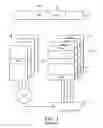
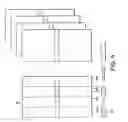
One popular way of configuring a cache is the so-called ‘set associative’ cache. A 16 Kbyte set associative cache is shown in FIG. 1. The cache shown is such a 4-way set associative cache 10 having 4 ways 11, 12, 13, 14 each containing a number of cache lines 20. A data value (in the following examples, a word) associated with a particular address 35 can be stored in a particular cache line of any of the 4 ways (i.e. each set has 4 cache lines, as illustrated generally by reference numeral 22). Each way stores 4 Kbytes (16 Kbyte cache/4 ways). If each cache line stores eight 32-bit words then there are 32 bytes/cache line (8 words×4 bytes/word) and 128 cache lines in each way ((4 Kbytes/way)/(32 bytes/cache line)). Hence, in this illustrative example, the total number of sets would be equal to 128, i.e. ‘M’ in the figure would be 127.
In order to address data stored in this sort of a cache an address 35 comprising a SET or index portion 37, which indicates which of the sets or lines the address is referring to and a TAG portion 36 indicating which of the four ways it is in is used. Such an address identifies a cache line and a cache way. The line being identified by the set and a comparison and match of TAGs stored in 4 TAG RAMs 25 with the TAGs in the corresponding set of the 4 caches 10 indicating the way. In reality more than one data word may be stored in a cache line within a cache way and thus, the address may contain further information.
When accessing data stored in a cache organised in this way, any virtual address produced by a programming model will need to be converted to a physical address. This can slow the procedure, as the program will produce the virtual address early, but the data cannot be accessed until it is converted to a physical address.
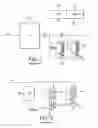
A known way of converting a virtual address to a physical address is by the use of a translation lookaside buffer or TLB. FIG. 2 shows a known way of accessing data during which a virtual address is converted to a physical address, the physical address then being used to access the data. In this Figure a table lookaside buffer (TLB) 30, receives a virtual address from a programmer's model and converts it to a physical address. The physical address 35 comprises a tag portion 36 and an index portion 37. The index portion is used to indicate which set within the cache ways the address refers to. Thus, a corresponding line within the plurality of cache tag directories 40 is selected using the index portion of address 35. The tag portion 36 of address 35 is then compared in comparator 60 with the four tags stored in each of the four cache tag directories that correspond to the four ways of the cache. When a comparison gives a match this indicates the cache way storing the data item and this data item can then be accessed from cache 50 using multiplexer 70.
This is one way in which data identified by a virtual address can be accessed. The initial step in this procedure is conversion of the virtual address to a physical address using a table lookaside buffer. This is not a fast step and thus, having this as the first step in the procedure considerably slows the critical path. An alternative to this is shown in FIG. 3. This system is referred to as a virtually indexed/physically tagged cache system. In this example the data access is performed using the virtual index to select which set (or line) the tag will be stored in. Thus, as soon as the virtual address is available this step can be performed in parallel with the conversion of the virtual address to a physical address using the TLB 30. Once the physical tag has been produced by the TLB 30 this is compared with the four tags selected from the cache tag directory by the index. When a match is found then this is used to access the data from the cache 50.
This is faster than the data access shown in FIG. 2. However, tags can be relatively long pieces of data, for example a memory system which has a 32K 4-way set-associative cache structure (consisting of 64 byte cache line size), would have tags of 19 bits (for a processor with 32-bit addresses). Thus, the comparison stage can be slow.
SUMMARY OF THE INVENTIONA first aspect of the present invention provides a data processor operable to process data said data processor being operable to perform a plurality of processes or a plurality of applications on said data, said data processor comprising: a cache, a data storage unit operable to store a process or application identifier defining a process or application that is currently executing on said data processor on said data; wherein a data item storage location within said cache is indicated by an address, and said data processor further comprises: a hash value generator operable to generate a hash value from at least some of said bits of said address and at least some bits of said process or application identifier, said hash value having fewer bits than said address.
An address, be it a virtual or a physical address, indicating a storage location of a data item within a cache can require a relatively large number of bits. This is particularly so if it is to uniquely identify a location within a cache. The present invention addresses this problem by providing a hash value generator which generates a hash value from at least some bits of the address and at least some bits of the process or application identifier and produces a hash value having fewer bits than the address. Although, all of the bits of an address may be required to uniquely identify the storage location of that data item, it may be that a good hint could be provided by far fewer bits. The location within a cache used to store data may depend quite strongly on the process or application that the data processor is performing on that data. Thus, it has been found to be particularly advantageous to use data identifying the process or application being performed in the generation of a hash value along with portions of the address itself. Such a hash value which in effect is a reduced bit address indicator provides in most cases an accurate indication of where the data item is stored allowing access to that data item. Thus a data item location can be accurately indicated in most cases using an address indicator of few bits, which therefore can be manipulated and compared in a shorter time and using less circuit area than a wider value would need. It should be noted that data item refers to data in general and should be interpreted to include instructions.
In some embodiments, said address is a virtual address.
A virtual address is used by a program to indicate the location of a data item. A virtual address used by one process may be the same as that used by another process although it may not relate to the same location. Producing a hash value indicating a storage location that takes account of both the virtual address relating to the data item and the application or process that the processor is performing, is an effective way of reducing any data conflicts that may arise from two processes using the same virtual address to indicate different storage locations.
In embodiments, said cache is divided into a plurality of cache ways, each cache way comprising a plurality of cache sets; said address comprises a tag portion and an index portion, said index portion indicating one of said plurality of cache sets comprising said data item storage location and said tag portion indicating one of said plurality of cache ways comprising said data item storage location; said at least some bits of said address used to generate said hash value comprise bits from said tag portion, said hash value having fewer bits than said tag portion.
A common form of cache is a set associative cache in which you have a plurality of cache ways each having their own individual cache sets. In such an arrangement, the index portion is used to determine which cache set is relevant and then a cache tag directory is used for comparison with the tag portion of the address to indicate the actual data location, i.e. which cache way the data item is located in. This comparison can be slow as the tag portions can have a relatively large number of bits. Thus, it would be advantageous to reduce the size of the tag portion by producing a hash value from it.
In embodiments, said hash value generator is operable to generate said hash value by performing logical operations on said at least some bits of said address and said at least some bits of said process or application identifier.
A suitable hash value generator can be produced by performing logical operations on the bits of the address and processor application identifier. It may be that not all bits of the address or all bits of the process or application identifier need to be used to provide a result that gives a reliable hint as to the data location.
In embodiments, each of said bits of said reduced bit virtual address is generated from a logical operation performed on at least one bit of said process or application identifier and at least two bits of said address.
A hash value which is likely to provide an accurate hint to where the data item is located is produced if each of the bits of the hash value are derived from a logic operation performed on at least one bit of the processor application identifier and some bits of the address.
In some embodiments, said at least two bits of said address are bits separated from each other by a number of bits equal to or approximately equal to the number of bits of said hash value.
By producing individual bits from logical operations performed on bits of the address that are remote from each other rather than on bits that are adjacent, it has been found that a hash value that has a high probability of providing an accurate indication of where a data item is located is produced.
In an embodiment of the invention said hash value generator is operable to generate at least one bit of said hash value by performing two step logical operations on said at least some bits of said address and said at least one bit of said process or application identifier.
Combining the bits of the address and the process or application identifier using logical operations is an effective way of producing the hash value. The number of logical operations performed can increase the number of bits that are used to produce the hash value and thus, possibly increase its accuracy, however it also extends the time required to create the hash values. For these reasons it has been found to be advantageous to use two step logical operations. This is a good compromise between combining several bits while not extending the length of time or circuit area required to produce these values.
In one embodiment, said hash generator is operable to generate at least one bit of said hash value by performing an additional first step comprising performing a logical operation on at least two of said process or application identifier bits.
Although it is advantageous to keep the number of steps of logical operations low it can also be advantageous to combine several bits which require more steps. As the process or application identifier are available before the address, bits of these can be combined in an additional step without impacting on the time taken to produce the hash value. Thus, in some embodiments, some bits of the hash value are produced using a logically combined value of some of the bits of the process or application identifier.
A variety of different logical operations can be used to combine the bits to produce the hash value, for example, in some embodiments said logical operations comprise exclusive OR operations.
A further aspect of the present invention provides a method of processing data comprising: storing a data item within a storage location within a cache, said storage location being indicated by an address; performing a process or an application on said data item said process or application being identified by an application identifier; generating a hash value from at least some of said bits of said address and at least some bits of said process or application identifier, said hash value having fewer bits than said address.
A still further aspect of the present invention provides a means for processing data operable to perform a plurality of processes or a plurality of applications on said data, said means for processing data comprising: a means for storing data operable to store a process or application identifier defining a process or application that is currently executing on said data processor on said data; a data storage means operable to store a data item in a storage location within said data storage means, said storage location being indicated by an address; a means for generating a hash value operable to generate a hash value from at least some of said bits of said address and at least some bits of said process or application identifier, said hash value having fewer bits than said address.
The above, and other objects, features and advantages of this invention will be apparent from the following detailed description of illustrative embodiments which is to be read in connection with the accompanying drawings.
BRIEF DESCRIPTION OF THE DRAWINGSFIG. 1 schematically illustrates a 4-way set associative cache according to the prior art;
FIG. 2 schematically illustrates data access in a physically indexed/physically tagged cache system according to the prior art;
FIG. 3 illustrates data access in a virtually indexed/physically tagged cache system according to the prior art;
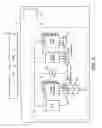
FIG. 4 illustrates data access of a 4-way set associative cache according to an embodiment;
FIG. 5 illustrates the hash value buffer shown in FIG. 4 in more detail;
FIG. 6 shows timing of a data access of a 4-way set associative cache according to an embodiment;
FIG. 7 shows a circuit for generating a hash value;
FIG. 8 shows a flow diagram illustrating the steps taken in response to a hash hit cache miss;
FIG. 9 shows a flow diagram illustrating the steps taken in response to a hash miss;
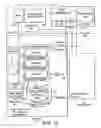
FIG. 10 shows a top level block diagram for a load store unit;
FIG. 11 shows a data cache organization according to an embodiment; and
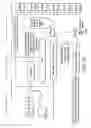
FIG. 12 shows a simple cache pipeline.
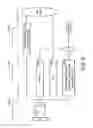
DESCRIPTION OF THE PREFERRED EMBODIMENTSFIG. 4 shows a way of accessing data in a four way set associative cache 50 within data processor 52 according to an embodiment. A virtual address 81 along with an application or process identifier (ASID/PID) 78 identifying the application or process currently being performed by the data processor is sent to the cache access circuits. The ASID/PID is accessed from a register 75 within the data processor 52 where it is stored. The tag portion of the virtual address 81 along with information from the ASID/PID is then converted to a hash value by hash generator 82. The tag portion of the virtual address in this embodiment is 19 bits wide and it is converted to a 6 bit wide hash value. This value is then compared with the four hash values stored in hash buffer 80 that are indicated as appropriate by the index portion of the virtual address. The hash values that are generated are 6 bit wide, thus this comparison is performed using six bit comparators 64. If a match occurs then this identifies one of the cache ways in cache 50 and the data item is accessed via multiplexer 70. Thus, rather than having to access four different tag cache directories and perform a 19 bit comparison, a single buffer is accessed and a six bit comparison is performed.
However, as the hash values are not necessarily unique, there is a possibility that the wrong data item has been accessed. Thus, in parallel to this data access a slower and more rigorous identification of the data item storage location is performed. In this case the virtual address 81 is fed to a TLB 30 and the virtual tag portion of the address is converted to a physical tag portion. The virtual index is input to the cache tag directories 40 and the four possible tags may be compared by comparator 60 to the physical tag. A match identifies which of the cache ways the data item is located in. A check can then be made to see if the data access performed in response to the hash value was indeed correct.
It should be noted that although in this embodiment a TLB is still consulted and the tags are compared, this access and comparison is no longer in the cache access path and as such does not slow down the procedure unless a cache miss has occurred. Thus, provided cache misses are rare the procedure is speeded up.
FIG. 5 shows the hash buffer 80 in greater detail. This hash buffer is arranged in a similar way to the arrangement of data in the cache 50. However, as the hash values are only six bits wide, separate RAMs are not required for each set of hash values corresponding to each way of the cache 50. Thus, the buffer 80 is arranged with hash values corresponding to the same cache line (or cache set) of each way being arranged in a single line. Thus, 80A refers to line 80 of cache way 0 and 80B to line 80 of cache way 1 and so on. When the hash value 83 generated from the virtual address 81 by hash value generator 82 (see FIG. 4) is compared with the hash values in the line indicated by the index portion of the address, it is found, in this case, that the hash value stored in 80C is equal to the hash value 83. This indicates that the cache way 2 of cache 50 (see FIG. 4) is where the data item is stored. By arranging the hash buffer in this way only one RAM need be accessed rather than the traditional four RAMs that need to accessed when the cache tag directories are used to provide an indication of the cache way.
In alternative embodiments (see FIG. 11), the hash values are stored in four hash buffers. The advantage of such an arrangement is that as the hash values are smaller than the traditional tag values, they can be arranged in the hash buffers such that they are easy to access. In the embodiment shown in FIG. 11 they are arranged in each of four ways in two 16×32 bit structures (each hash value being 8 bits in total consisting of 6 bits of hash vale and a secure valid bit and a non-secure valid bit). The 16 rows are indexed by 11:8 bits and bit 12 is used to select between the two 16×32 structures. Bits 7:6 are then used to select the appropriate hash which is then compared with the hash from the virtual address. Thus, although four hash buffers need to be accessed, a comparison of fewer bits is performed during the accesses thus, the four hash buffers can be accessed in less time and with lower power than the traditional cache tag directories.
In embodiments where there is a single hash buffer, the accessing of only one buffer can save power and time. Furthermore, in all embodiments the comparison of the smaller 6 bit hash values rather than the larger 19 bit tags provides both a time and power saving. However, the cache directories 40 are accessed in parallel to provide a check that the hash value provides the correct data item. Although, this does not increase the time of the cache access (unless there is a cache miss) it does mean that the potential reduction in power may not occur. However, as this cache directory access is not in the critical path it is possible to delay it by a cycle and then when the hash value 82 has produced a match with the hash buffer, the way indicated by the match can be used so that only access to the cache tag directory 40 relating to this way is made. By doing this significant power savings can be made.
The timing of the accesses is shown in FIG. 6. As can be seen from this figure, the access to the cache directory is pushed back until the access to the hash buffer (HVAB) 80 has indicated which RAM of the cache tag directory needs to be accessed. A further power saving can be produced if the information from the hash match is used to power down the sensing amplifiers of the cache data RAMs corresponding to the cache ways that the data is not to be found in. Thus only one set of sensing amplifiers need to be enabled.
The following table, table 1, compares the number of RAM accesses of the traditional access system compared to the access system of embodiments in cases where a hit and miss occur. As can be seen in the traditional method the four data RAMs of the cache 50 need to be accessed and the four tag RAMs of cache directory 40 need to be accessed in each case. In this embodiment only one of the RAMs of the cache directory needs to be accessed in the case of a cache hit and although all four of the cache data RAMs of the cache 50 are accessed initially only one bank of the sense amplifiers are enabled, the others being turned off in response to the hash value showing that they are not needed. In the case of a cache miss, such that the comparison of the physical tag with the indicated way of the cache tag directory does not give a corresponding hit, then all four of the cache tag directories need to be accessed to determine where the data item is.
| HVAB | ||||
| Implemen- | Data RAM | Tag RAM | Hit/ | |
| tation | Accesses | Accesses | Miss | Total |
| Traditional | 4 | 4 | Hit | 8 |
| Traditional | 4 | 4 | Miss | 8 |
| With hash | 4 (however | 1 | Hit | 5 (but only 2 |
| buffer | only 1 bank | banks of sense | ||
| of sense | amps) | |||
| amps) | ||||
| With hash | 4 (no sense | 4 (need to | Miss | 8 (but only |
| buffer | amps enabled) | access to | sense amps for | |
| determine | tag enabled) | |||
| hash alias | ||||
| conditions) | ||||
In summary by decoupling the TLB/Cache directory path from the data selection path cache access can be speeded up. Furthermore, removing this from the critical path also enables the cache tag directory access to be pushed out further allowing only one cache tag directory RAM to be accessed.
The use of a hash value and a hash value buffer can therefore improve data access times and reduce power consumption in cases where cache hit occurs. It should be noted that the hash value only provides a hint as to the data storage location and in the cases where a cache miss occurs the resulting process is worse than if the hash buffer was not there. It is therefore very important that the number of cache misses are kept low. The number of cache misses occurring depends on the type of logic operations that are performed and the data that is used to form the hash values. It has been found that using bits of the virtual address and bits of the process identifier or application specific identifier produces an algorithm giving an accurate hint as to the data location in most cases. FIG. 7 shows the implementation of a virtual hash algorithm according to an embodiment. The algorithm uses bits of the tag portion of the virtual address and bits of the application specific identifier or process identifier (ASID/PID). It should be noted that incorporating the ASID/PID enhances the algorithm as processes running with the same set of virtual addresses will produce distinct hash values, which should reduce the number of conflicts and subsequent evictions of data from the cache.
In the algorithm shown each hash bit is generated from virtual address bits that are separated by approximately the number of hash bits produced, in this case six. These bits are exclusive ORed together. For example hash [0] is generated from virtual address bit [13, 19, 26]. This spreads the bits of the virtual address across the bits of the hash value. The algorithm also spreads the ASID/PID bits across each hash bit. However, since the ASID/PID consists of eight bits and the hash value only consists of six bits in this example three of the ASID/PID bits are XORed together and used to generate hash [0]. It should be noted that as the ASID/PID bits are available earlier than any of the virtual address bits, the extra gates to exclusive OR all these together does not slow down the generation of hash [0] compared to the other hash bits.
It has been found in the running of several benchmarks that although the use hash values producing a subset of the tags instead of the entire tags can result in some performance degradation, in fact this has minimal impact on performance and this slight degradation is more that compensated for by the increase in frequency that is achieved by this implementation.
Although it is desirable to reduce the number of caches misses, they will sometimes occur. For example, when using virtual indexes to access caches, a problem of aliasing a virtual address to the same physical address may arise. This occurs in some caches where a virtual index does not uniquely identify all of the storage locations within that cache. In these cases, an index portion may not be sufficient to uniquely identify each of the cache lines and thus, it may be that one of two lines may be indicated by a particular index value. Data integrity is compromised if this is allowed to occur. This is a normal alias condition and is referred to hereinafter as PC/ALIAS condition and may be present in traditional cache systems where the index portion of the address does not comprise sufficient bits to uniquely identify every line within the cache.
Furthermore, in embodiments, a hash buffer has been created to provide an alternative to the cache directory when accessing cache data. The hash buffer contains reduced bit indications of address locations. As mentioned previously, comparing data within this hash buffer requires less power and less time than comparing full length addresses. However, by its very nature of being reduced bit, the hash values do not provide a unique identification of a storage location within a cache and as such further aliasing may occur. The hashes are generated in such a way as to hopefully provide a good indication of storage location within the cache, however, it is always possible that a hash hit will occur which indicates an incorrect data storage location. In order to avoid incorrect data being accessed and used, a check is made of each data access. Provided, most data accesses are correct, this check should not unduly slow down the processor. However, it is important that the check and in particular, the correction of any false cache hits is done efficiently.
With this is mind, each data access is checked using the physical address derived from the virtual address, the TLB 30 and the cache tag directories 40 (see FIG. 4).
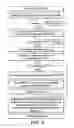
FIG. 8 shows a flow diagram illustrating the steps taken in response to a false hash hit, i.e. a hash hit, cache miss. As can be seen following a hash hit a comparison of the physical address tag and cache directory indicated by the hash hit is made. If a cache hit is found, then the hash hit was correct and the processor can continue as normal. If there is not a cache hit, i.e. the data is not in the storage location indicated by the hash buffer 80, an error has occurred, an incorrect data item has been accessed and the processor needs to correct the mistake. Thus, a “replay” signal will be sent to the Idecode unit. This will flush the pipeline and the instruction that generated the stall will be in a position to be re-issued. Prior to re-issuing the instruction some adjustments need to be made to overcome the error.
In order to do this, the rest of the physical address tags within the line of the cache directory indicated by the virtual address are checked. If a cache hit is not found, then it is concluded that the data is not present in the cache, i.e. there is a hash hit/cache miss and the data needs to be written from memory to the cache. Thus, the storage location indicated by the hash hit is invalidated, or in some cases cleaned and invalidated and then data is retrieved from the memory and written to the storage location indicated by the hash hit. By writing the data to the storage location indicated by the hash hit, a hash value generated from this virtual address in the future should give a correct indication of the storage location. The instruction that caused the replay can then be reissued.
In the case that there is a cache hit, i.e. a physical address match is found in the line of the cache directory indicated by the address, but in a different cache way to that indicated by the hash, the hash buffer itself needs to be amended to avoid having two identical hashes within the same line of the hash buffer. Thus, in such a case as this the hash value within the hash buffer corresponding to the originally indicated storage location is invalidated (and the line potentially evicted if dirty) and the generated hash value is written to the storage location corresponding to the physical address hit. Thus, the hash buffer is repaired and future data accesses to this address should not encounter a false hash hit. The instruction that caused the stall can then be reissued.
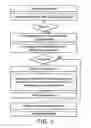
FIG. 9 shows a flow diagram illustrating the steps taken in response to a hash miss. In the case of a hash miss, a replay signal is sent to Idecode and a memory access is initiated. It is important to initiate the memory access at once as the memory access is a long process and this therefore reduces the memory access latency. The physical address tag is then compared to those stored in the cache directories corresponding to the line indicated by the index of the address and if there is no cache hit, then it was a true miss, i.e. hash miss, physical address miss and the memory should be accessed and data written to the cache. The hash buffer also needs to be updated and the generated hash value should be written to the location corresponding to the location to which the data from the memory was written. The instruction can then be reissued.
If there is a cache hit, then the hash miss was a false miss and the memory access can be cancelled. The hash buffer then needs to be updated and the generated hash value should be written to the location corresponding to the location identified by the cache directory hit. This ensures that next time that data should be accessed there will be a hash hit. The instruction can then be reissued.
A further preferred embodiment is described below:
In a traditional physically tagged way associative data cache, the tag array and data array will have to be fired in parallel with the TLB lookup. Once the TLB generates the physical address, it gets compared with the tag array physical tags which then generate the way hit signal to select the appropriate data array way. There are couple of problems with this approach.
All the data ways have to be fired in parallel which is a lot of power. A system using an embodiment of this invention, hereafter referred to as Tiger will be used in wireless systems where low power consumption (lesser than a watt) is very important. To reduce power, the data array could be fired after the tag array has been fired and tag hits have been determined, but this would make the data cache a slower implementation—longer latency. Going from 2 cycle cache access to a 3 cycle cache access would cause a 5-6% drop in performance. Also, all the way tags have to be fired in parallel.
Secondly, in the traditional implementation, in order to get a fast tag array hit, the TLB has to be made fast which implies that the adder that generates the virtual address has to be fast. Thus, there is a lot of pressure on the adder and TLB implementation.
In the HVAB (hashed virtual address buffer) approach, an array which is smaller than the tag array (in terms of number of bits to be compared) called the HVAB array is looked up first and a hashed virtual address (in Tiger's case 6 bits) is used to compare against this array. Not only is the field to be compared smaller, it also uses virtual address bits rather than physical address bits as is normally used in a traditional design. If there is a hit, only the hitting tag and data way are fired. The physical tag from the tag array is then compared with the TLB's PA to make sure that the hash hit is correct. While the tag validation is going on, the data array that was fired in parallel with the tag array way completes and the data is ready for alignment and forwarding to the various functional units.
The advantages of the HVAB scheme are:
-
- Only one tag way and data way are fired which translates to power savings.
- The data way access is independent of the tag array access—tag and data array accesses are de-coupled while retaining the advantage of a fast high performance implementation—as the data array is not waiting for the tag hit to determine which data way has to be fired and it is low power as only one way is fired as opposed to all the 4 ways being fired as in a traditional cache design.
- The pressure on TLB and adder is greatly alleviated as now, the TLB doesn't have to provide the physical address (PA) quickly to determine tag array hit and data way access. Instead the PA is just needed for hash validation. To make the TLB access fast in a traditional design, the TLB would have to be fired early which would require the adder to be extremely fast—most probably a dynamic adder and dynamic TLB—which translates to design risk.
If the Hash lookup misses, then all 4 ways of tag are fired (please note that due to virtual aliasing problems—8 ways have to be compared in the tag array—4 ways belonging to VA[12]=1 and 4 ways belonging to VA[12]=0 where VA is virtual address—this is described in more detail in later sections) and compared with the TLB PA just as in a traditional design—however, the cache doesn't signal a hit even if the PA matches—a case of hash alias—the instruction is replayed (pipes flushed to Idecode stage D2) while the hash is updated. The instruction when re-executed will get a hash and PA hit. If the PA also misses, then it is a cache miss and access will be sent to L2. If the hash hits and PA misses, then again instruction is replayed, miss resolved and instruction re-executed. However, in this case, the same way as the hash hit way is replaced as otherwise, the hash array will have multiple ways with the same hash. When the hash hits and PA misses, all the 4 ways of the tag array have to be looked up to see if the line is in another way as the hash hit could have been a false hash hit-alias. Thus the hash hit way will have to be flushed out of cache in addition to updating the hash for the tag way hit—otherwise, you will have two different hashes in two ways pointing to same PA.
Another advantage of HVAB is, way hit information is known early and can be used to determine Store Buffer forwarding for loads/stores and store merging which is another traditional speed path in a cache design where PA is used. This is explained in detail in later.
However, HVAB scheme does suffer from the problem of aliasing due to usage of virtual addresses.
Cache Organisation—HVAB array
Since the Data cache is 32K and 4 way set associative, each way represents 8K which is 2n where n=13 or Virtual Address (VA) 12:0. Since the cache line is 64 bytes or 512 bits, the HVAB array index will be 12:6 or 128 rows×8 bits (6 hash bits+1 Non-Secure Valid bit+1 Secure Valid bit). The 128×8 can be broken down physically to be a 64×16 or 32×32 bits (4 hashes are represented in one row)—32×32 represents one way—there are 4 such arrays for the 4 ways. Each way is then broken down further into a 16×32 structure. Thus there are 8 16×32 structures—2 for each way. The 16 rows are indexed by 11:8, bit 12 is used to select between the two 16×32 structures for a way and then bits 7:6 are used to select the appropriate hash before being compared with the incoming VA Hash. Both the Secure and Non-Secure valid bits cannot be set at the same time—only one bit can be set at a time and they are a copy of the NS bit from TLB. If MMU is disabled, then these bits are set using the processor Secure state bit.
The HVAB array is actually built as a register file and has two ports—one read and one write port. The D bits which were originally in the HVAB array have been moved to the data array—so, any reference to D bits in HVAB array should be ignored.
The contents of HVAB Array are: - Secure Valid bit
- Non-Secure Valid bit
- 6 bit Hash
- (total of 8 bits per entry)
In order to resolve virtual aliasing conditions, 4 ways form VA[12]=0 and 4 ways from VA[12]=1 are read out each cycle—the hash compare always takes place for the VA[12] bit that was produced by the adder. So, the 4 bit hash hit signal that is produced always corresponds to the VA[12] bit out of the adder. The valid bits from the opposite VA[12] bit is required in order to validate the 8 tag compares on a hash miss. We wouldn't have needed to do this had there been a 2:1 mux on the HVAB read port—but, since this will be a speed path, 4 extra valid bits need to be read out in case there is a hash miss.
Data cache organisation is shown in FIG. 11.
Valid Bits and Reset of Valid Bits in HVAB Array
There are two bits in the HVAB array to indicate validity of the line—Non-Secure Valid bit and the Secure Valid bit. When Tiger is in Secure mode, Secure valid bit is set to 1 for cache allocations. When Tiger is in Non-Secure mode, Non-Secure Valid bit is set to 1. When we are in Non-Secure mode, the Non-Secure valid bit will be selected and used to validate the hash compare. When we are in Secure mode, the OR of the Secure and Non-Secure valid bits will be used to validate the hash compare—else we will have the same cache line in two different places differing only by Secure/Non-Secure valid bit. Secure mode process can access both Secure and Non-Secure lines.
Resetting of Valid bits for the entire data cache is done out of reset through state machine cycling of all indices or through CP15 cache maintenance operations that can invalidate a single entry.
Replacement Policies on a Cache Miss
A 4 bit random replacement counter is used when all ways are valid. The random replacement counter shifts left by one bit every clock cycle and is sampled on a miss.
Virtual Hash
The virtual hash is formed from VA (31:13) and Process ID (PID)/Address Space ID (ASID). This is formed by a two level XOR. The reason the PID/ASID are being used is to have a good representation of the various processes in the virtual hash. Various hash schemes were studied—5 bit, 6 bits and 7 bits with various levels of XORs. A 6 bit hash has been chosen that gives almost the same hit rate as using the entire physical tag—there was a 1% degradation in hit rate due to aliasing. There can be aliases due to the following reasons:
-
- virtual hash missing, but PA matching due to not using all the virtual bits in the hash function or different virtual addresses mapping to same PA
- different PID/ASID and different virtual address XOR's producing the same virtual hash.
If timing doesn't work out with two level XOR, then a one level XOR will be used—at present, the hash generation path meets timing. But, during implementation, if this becomes a speed path, then this will be changed to one level XOR hash algorithm.
Page Coloring Problem
As mentioned earlier, the VA(12) and PA(12) cannot be guaranteed to be the same when multiple virtual addresses map to the same physical address—that VA(12)=0 and 1 can map to same PA(12)=0 (or 1). What this means is when VA(12)=0 is used to index into hash and tag arrays and a miss detected, the miss is not a indication of a true miss as the line can be in VA(12)=1 as VA(12)=1 could have brought the line in. Thus we have to look at 8 different places—4 ways at VA(12)=0 and 4 ways at VA(12)=1. Once it is detected to be in VA(12)=1 (or vice versa), the line at VA(12)=1 will be evicted to L2 and brought into VA(12)=0. Of course, we may have to evict a line at VA(12)=0 to make a place for the line being brought into VA(12)=0 from VA(12)=1. This could involve two evictions.
More importantly, a hash miss requires us to look at 8 different places. Now for integer loads, any case other than hash hit, PA hit, replay will be enabled. While we are waiting for L2 data to come back, the 8 ways of the tag array can be looked up to see if the line is present in any of the 8 places. If there is a tag hit, then L2 request is cancelled and the double eviction described above will be take place. If there is no hit, then L2 request is allowed to proceed.
HVAB Array Organization to Solve Virtual Aliasing Conditions
The hash array is already broken down into smaller arrays that can selected by VA(12) bit. However, 8 way compares do not need to be implemented for the following reason. The appropriate VA(12) 4 way hash hit is needed, as only the appropriate way of the 4 ways of the data array corresponding to VA(12) generated by the AGU is accessed rather than accessing 8 ways as is done in tag array. If it is found in the other VA(12), then the line is pushed out to L2. However, since the valid bits are in the Hash array, the valid bits corresponding to the 8 ways are read out for every access—the hash array is actually broken down into smaller sub-arrays of 8 entries—so, twice the number of entries are accessed with respect to organization not supporting hardware Page Coloring. The valid bits are required to validate the 8 way tag compare. The valid bits will be sent to the tag array on a lookup. On a replay, the valid bits will be saved and used to validate the 8 way tag compares—while for a Neon (SIMD processing) Store access, the valid bits will be read out on E2 and used in E3 (see FIG. 12).
Virtual Aliasing Solutions Explored
Following were the various page coloring solutions that were explored: - Straight forward method of accessing 8 different places—which is the preferred solution as it is simple—though at the expense of more power.
- Wait for the TLB to translate VA(12) and then use it to index tag array—this would have pushed the tag hit/miss determination and replay generation later in E4. Additionally, there was the possibility of holes in the data array—the impact of which cannot be determined very easily.
- 8 way set associative cache—same as straight forward method, but higher power as two data sub-arrays need to get fired.
- Separate duplicate tag array that gets accessed using PA(12) somewhere between L1 and L2 and if there is a hit, replay would be initiated. More area, power and complexity.
- Using L2's Exclusive and Inclusive property—high complexity
- Keeping the cache size 16K or locking 16K out when OS that doesn't support s/w page coloring is used
Power Improvement for Straight Forward Solution
If the L1 cache hit rate is high, then only when we miss and replay for integer loads, do we have to access all the 8 ways.
However since we have to stream Neon and No-Write-Allocate stores, all the 8 ways of the tag array get accessed for every Neon access and integer store access.
The integer store problem can be solved if stores are made write-allocate—however, there is a performance loss when this is done at L1 as it displaces useful information and stores have to be exposed to replay penalty. Since the percentage of stores that miss L1 are probably small, this is probably OK with respect to power.
Neon is the bigger problem as every Neon memory access has to fire up all the 8 tags. One solution being explored is to assume that Neon accesses will be marked Inner Non-Cacheable in TLB and replay if it is marked Cacheable. During the replay, the cache will be inspected to see if the line is resident in L1—if not, the access will be sent to L2. If the line is found to be in L1, then evict the line out to L2. If the OS cannot get the setting of the TLB right, then performance for Neon accesses will be poor.
Also, there can be a mode bit which indicates that an OS supports Software Page Coloring and thus not all the 8 ways needs to be fired—only 4—further reduction in power.
Alias Types
Following are the various kinds of aliases possible: - Two different virtual addresses mapping to same hash, different physical addresses—hash hit, PA miss—Hash Hit Alias—HH Alias.
- Two virtual address mapping to same physical address—hash miss, PA hit. Replay and update hash—Hash Miss Alias—HM Alias
- Page coloring alias—hash miss, PA hit in one of the 4 ways corresponding to ˜VA[12]—hash miss, Alias—PC (Page Coloring) Alias
Summary of Hash Array/Tag Array Way Accesses for Various Operations
The data array is always looked up using the 4 bit Hash Way hit/miss signal from HVAB array corresponding to the VA[12] bit that was generated by the AGU adder.
Integer Loads
| TABLE 2 |
| Hash, Tag array accesses for Integer loads |
| Tag | |||
| Hash | Tag | Compare | |
| Compare | Compare | Result | Integer Load |
| Hash Hit | One Way | PA Hit | Cache Hit |
| (HH) | Sensed | ||
| Hash Hit | One Way | PA Miss | Replay, Lookup all 8 ways to |
| Sensed | detect HH alias and PC alias | ||
| or True miss | |||
| HH Alias: Evict HH Way, update | |||
| hash in one of the other 3 ways | |||
| PC Alias: Evict1 ˜VA[12], Evict2 | |||
| HH Way, allocate into HH way | |||
| True Miss: Replace HH Way | |||
| Hash Miss | 8 Ways | PA Miss | Replay. True miss. |
| (HM) | sensed | ||
| Hash Miss | 8 Ways | Alias | Replay. Alias can be HM or |
| sensed | PC alias. | ||
| HM Alias: Update hash | |||
| PC Alias: Evict1 ˜VA[12], Evict2 | |||
| VA[12] possible. | |||
Integer Stores and Neon Accesses
| TABLE 3 |
| Hash, Tag Array Accesses for Integer Stores and Neon Accesses |
| Tag | |||
| Hash | Tag | Compare | |
| Compare | Compare | Result | Integer Stores/Neon Accesses |
| Hash Hit | One Way | PA Hit | Cache Hit |
| (HH) | Sensed | ||
| Hash Hit | One Way | PA Miss | Replay, Lookup all 8 ways to |
| Sensed | detect HH alias and PC alias | ||
| or True miss | |||
| HH Alias: Evict HH Way, update | |||
| hash in one of the other 3 ways | |||
| PC Alias: Evict1 ˜VA[12], | |||
| Evict2 HH Way allocate into | |||
| HH way | |||
| True Miss: Don't allocate! | |||
| Make Integer Store NWA (no | |||
| write allocate) and Neon L1 | |||
| non-cacheable (NC). Flush HH | |||
| way so that future accesses | |||
| can become HM, PA Miss | |||
| Hash Miss | 8 Ways | PA Miss | Do Not Replay. Make Integer |
| (HM) | sensed | Store NWA and Neon L1 NC | |
| Hash Miss | 8 Ways | Alias | Replay. Alias can be HM or |
| sensed | PC alias. | ||
| HM Alias: Update hash | |||
| PC Alias: Evict1 ˜VA[12] | |||
Instruction Accesses
Instruction accesses need not worry about PC Alias. The line can co-exist in two different indices—but care has to be taken to invalidate both locations when invalidate operations are performed.
| TABLE 4 |
| Instruction Accesses |
| Tag | |||
| Hash | Tag | Compare | |
| Compare | Compare | Result | Integer Load |
| Hash Hit | One Way | PA Hit | Cache Hit |
| (HH) | Sensed | ||
| Hash Hit | One Way | PA Miss | Replay, Lookup all 8 ways to |
| Sensed | detect HH alias and PC alias | ||
| or True miss | |||
| HH Alias: Invalidate HH Way, | |||
| update hash in one of the | |||
| other 3 ways | |||
| IF doesn't need to do this: | |||
| PC Alias: Evict1 ˜VA[12], | |||
| Evict2 HH Way, allocate into | |||
| HH way | |||
| True Miss: Replace HH Way | |||
| Hash Miss | 8 Ways | PA Miss | Replay. True miss. |
| (HM) | sensed | ||
| Hash Miss | 8 Ways | Alias | Replay. Alias can be HM or |
| sensed | PC alias. | ||
| HM Alias: Update hash | |||
| IF doesn't need to do this: | |||
| PC Alias: Evict1 ˜VA[12], | |||
| Evict2 VA[12] possible | |||
Cache Pipelines
A simplified pipeline is shown in FIG. 12.
The memory pipeline is comprised of three stages:
-
- Address Generation Cycle (E1)—two way add/subtract with optimization for shift by 0 or 2. Shifts greater than 2 will take two operations—one exclusively for shifting and one for address generation. Address decoding for HVAB and Data array takes place.
- Data Cache Cycle 1 (E2)—the HVAB arrays are accessed, HVAB hit signals then start the data array access, TLB is accessed, ISB and NSB are compared for matches as is the Fill Buffer (FB). Tag array addresses are decoded.
- Data Cache Cycle 2 (E3)—Data from data array is muxed with data from FB, ISB, aligned and forwarded to various functional units. The tag array is accessed and physical tag from tag array is compared with TLB PA to validate hash hit from HVAB arrays. Cache miss indication comes very late in E3.
Although illustrative embodiments of the invention have been described in detail herein with reference to the accompanying drawings, it is to be understood that the invention is not limited to those precise embodiments, and that various changes and modifications can be effected therein by one skilled in the art without departing from the scope and spirit of the invention as defined by the appended claims.
Claims
We claim:1. A data processor operable to process data said data processor being operable to perform a plurality of processes or a plurality of applications on said data, said data processor comprising:
a cache;
a data storage unit operable to store a process or application identifier defining a process or application that is currently executing on said data processor on said data; wherein
a data item storage location within said cache is indicated by an address, and said data processor further comprises:
a hash value generator operable to generate a hash value from at least some of said bits of said address and at least some bits of said process or application identifier, said hash value having fewer bits than said address.
2. A data processor according to claim 1, wherein said address is a virtual address.
3. A data processor according to claim 1, wherein:
said cache is divided into a plurality of cache ways, each cache way comprising a plurality of cache sets;
said address comprises a tag portion and an index portion, said index portion indicating one of said plurality of cache sets comprising said data item storage location and said tag portion indicating one of said plurality of cache ways comprising said data item storage location;
said at least some bits of said address used to generate said hash value comprise bits from said tag portion, said hash value having fewer bits than said tag portion.
4. A data processor according to claim 1, wherein:
said hash value generator is operable to generate said hash value by performing logical operations on said at least some bits of said address and said at least some bits of said process or application identifier.
5. A data processor according to claim 4, wherein:
each of said bits of said hash is generated from a logical operation performed on at least one bit of said process or application identifier and at least two bits of said address.
6. A data processor according to claim 5 wherein said at least two bits of said address are bits separated from each other by a number of bits equal to or approximately equal to the number of bits of said hash value.
7. A data processor according to claim 5, wherein said hash value generator is operable to generate at least one bit of said hash value by performing two step logical operations on said at least some bits of said address and said at least one bit of said process or application identifier.
8. A data processor according to claim 7, wherein said hash generator is operable to generate at least one bit of said hash value by performing an additional first step comprising performing a logical operation on at least two of said process or application identifier bits.
9. A data processor according to claim 7, wherein said logical operations comprise exclusive OR operations.
10. A method of processing data comprising:
storing a data item within a storage location within a cache, said storage location being indicated by an address;
performing a process or an application on said data item said process or application being identified by an application identifier;
generating a hash value from at least some of said bits of said address and at least some bits of said process or application identifier, said hash value having fewer bits than said address.
11. A means for processing data operable to perform a plurality of processes or a plurality of applications on said data, said means for processing data comprising:
a means for storing data operable to store a process or application identifier defining a process or application that is currently executing on said data processor on said data;
a data storage means operable to store a data item in a storage location within said data storage means, said storage location being indicated by an address;
a means for generating a hash value operable to generate a hash value from at least some of said bits of said address and at least some bits of said process or application identifier, said hash value having fewer bits than said address.
Images & Drawings included:


Sources:
- United States Patent and Trademark Office - verify current appl. status at the USPTO↗
Recent applications in this class:
- » 20250103504 2025-03-27
Cache Key Updating Using Group Key And Version Information - » 20250045205 2025-02-06
DISK-BASED MERGE FOR COMBINING MERGED HASH MAPS - » 20250021484 2025-01-16
STORAGE AND ACCESS OF DATA AND TAGS IN A MULTI-WAY SET ASSOCIATIVE CACHE - » 20250004946 2025-01-02
COMPACT REPRESENTATION OF TRANSITION SEQUENCES FOR SINGLE-STATE STORAGE - » 20240378154 2024-11-14
OPERATIONS IN A PROCESSOR CACHE BASED ON OCCUPANCY STATE - » 20240354254 2024-10-24
APPARATUSES AND METHODS FOR COMPUTE ENABLED CACHE - » 20240345958 2024-10-17
CACHE WITH SET ASSOCIATIVITY HAVING DATA DEFINED CACHE SETS - » 20240248848 2024-07-25
OPERATING METHOD OF SET-ASSOCIATIVE CACHE AND SYSTEM INCLUDING SET-ASSOCIATIVE CACHE - » 20240241832 2024-07-18
MULTI-MODE INDEXED CACHE IN A PROCESSOR - » 20240152462 2024-05-09
Centralized, scalable cache for containerized applications in a virtualized environment
Recent applications for this Assignee:
- » 20250173922 2025-05-29
METHOD AND SYSTEM FOR COMPRESSING DATA REPRENTATIVE OF A MAPPING FOR USE IN IMAGE PROCESSING - » 20250173829 2025-05-29
METHOD AND SYSTEM FOR PROCESSING AN IMAGE - » 20250173246 2025-05-29
TRACE GENERATION - » 20250173198 2025-05-29
DATA PROCESSING SYSTEM - » 20250173151 2025-05-29
DATA PROCESSORS - » 20250173148 2025-05-29
TECHNIQUE FOR HANDLING DATA ELEMENTS STORED IN AN ARRAY STORAGE - » 20250173146 2025-05-29
TECHNIQUE FOR HANDLING DATA ELEMENTS STORED IN AN ARRAY STORAGE - » 20250165647 2025-05-22
METHODS AND APPARATUS FOR AMBIENT COMPUTING - » 20250157145 2025-05-15
GRAPHICS PROCESSING - » 20250156184 2025-05-15
SUB-VECTOR-SUPPORTING INSTRUCTION FOR SCALABLE VECTOR INSTRUCTION SET ARCHITECTURE