Laser heater controller
US20060237436A1
2006-10-26
11/092,515
2005-03-29
Abstract:
A system and method for maintaining a set point temperature of a laser. The required operating temperature range of laser may be reduced by determining whether to increase or decrease the amount of heating to the laser. A controller compares the desired set point temperature with a measured temperature which is provided as feedback to produce an output voltage. A heater transistor is driven by the output voltage of the controller which is proportional to the amount of heat to be generated by the transistor in order to maintain the laser at the desired set point temperature.
Interested in similar patents?
Get notified when new applications in this technology area are published.
Classification:
H01S5/02453 » CPC main
Semiconductor lasers; Structural details or components not essential to laser action; Arrangements for thermal management Heating, e.g. the laser is heated for stabilisation against temperature fluctuations of the environment
G02B6/4201 » CPC further
Light guides; Coupling light guides; Coupling light guides with opto-electronic elements Packages, e.g. shape, construction, internal or external details
G02B6/4261 » CPC further
Light guides; Coupling light guides; Coupling light guides with opto-electronic elements; Packages, e.g. shape, construction, internal or external details; Details of housings mounting, engaging or coupling of the package to a board, a frame or a panel Packages with mounting structures to be pluggable or detachable, e.g. having latches or rails
G02B6/4269 » CPC further
Light guides; Coupling light guides; Coupling light guides with opto-electronic elements; Packages, e.g. shape, construction, internal or external details; Thermal aspects, temperature control or temperature monitoring; Cooling with heat sinks or radiation fins
G02B6/4271 » CPC further
Light guides; Coupling light guides; Coupling light guides with opto-electronic elements; Packages, e.g. shape, construction, internal or external details; Thermal aspects, temperature control or temperature monitoring; Cooling with thermo electric cooling
G02B6/428 » CPC further
Light guides; Coupling light guides; Coupling light guides with opto-electronic elements; Packages, e.g. shape, construction, internal or external details; Electrical aspects containing printed circuit boards [PCB]
H01S5/06804 » CPC further
Semiconductor lasers; Arrangements for controlling the laser output parameters, e.g. by operating on the active medium; Stabilisation of laser output parameters by monitoring an external parameter, e.g. temperature
H01S5/06825 » CPC further
Semiconductor lasers; Arrangements for controlling the laser output parameters, e.g. by operating on the active medium; Stabilisation of laser output parameters Protecting the laser, e.g. during switch-on/off, detection of malfunctioning or degradation
H01S5/0683 » CPC further
Semiconductor lasers; Arrangements for controlling the laser output parameters, e.g. by operating on the active medium; Stabilisation of laser output parameters by monitoring the optical output parameters
H05B1/02 IPC
Details of electric heating devices Automatic switching arrangements specially adapted to apparatus ; Control of heating devices
Description
RELATED APPLICATIONThe present U.S. application is related to U.S. application entitled “LASER HEATER ASSEMBLY”, (Attorney Docket No. 10227), which is incorporated herein by reference, and having been filed concurrently with the present application.
TECHNICAL FIELDThe present invention relates to lasers and, more particularly, relates to controlling the temperature of a laser exposed to an ambient environment by determining when to heat the laser.
BACKGROUND OF THE INVENTIONDue to cost, many lasers do not have built-in heaters or coolers. Unless an internal thermoelectric heater/cooler is included, the case temperature of an operating laser is substantially equivalent to ambient temperature. In some cases, for example outdoor HFC applications such as CATV nodes, the case temperature can be quite extreme. Outside temperatures may reach as cold as −40 degrees Celsius.
Moreover, laser performance characteristics are very dependent upon operating case temperature. Not only do parameters such as slope efficiency and output power vary with operating temperature, but output wavelength varies as well. This can cause issues if the laser output wavelength drifts outside of the bandwidth of the combining and splitting optical passives in the network. Therefore, it is desirable to maintain the laser at as constant a temperature as possible or at least within a range that the device is designed to operate within. What is needed is an economical means to minimize performance degradation due to cold temperatures and to extend the lowest temperature a laser can operate at.
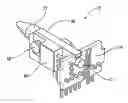
BRIEF DISCRIPTION OF THE DRAWINGSFIG. 1 illustrates a perspective view of one embodiment of a thermostatically controlled heater assembly of the present invention.
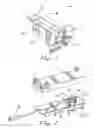
FIG. 2 illustrates a perspective view of the heater assembly of FIG. 1 utilized in an optical transmitter of a CATV node.
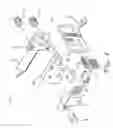
FIG. 3 illustrates an exploded view of the heater assembly of FIG. 1.
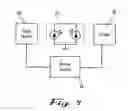
FIG. 4 illustrates a generalized block diagram of one embodiment of the present invention.
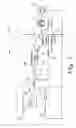
FIG. 5 illustrates one embodiment of a controller circuit for controlling the temperature of a laser according to the present invention.
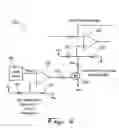
FIG. 6 illustrates one embodiment of a temperature dependent laser enable circuit according to the present invention.
DETAILED DESCRIPTIONThe present invention will be described more fully hereinafter with reference to the accompanying drawings in which like numerals represent like elements throughout the several figures, and in which an exemplary embodiment of the invention is shown. This invention may, however, be embodied in many different forms and should not be construed as being limited to the embodiments set forth herein; rather, the embodiments are provided so that this disclosure will be thorough and complete, and will fully convey the scope of the invention to those skilled in the art. The present invention is described more fully hereinbelow.
FIG. 1 illustrates one embodiment of a thermoelectric heater assembly 10 of the present invention. The heater assembly 10 of FIG. 1 is utilized, for example, in a CATV node as a coarse wave division multiplexing (CWDM) reverse transmitter 12 as shown in FIG. 2. The transmitter 12 includes a top cover 14 and a bottom cover 16 for housing a transmitter printed circuit board 18 with fiber optic cable having a fiber connector 20. However, the heater assembly 10 may be implemented as part of other laser designs where it is desirable to reduce the overall temperature range that a laser must efficiently operate at and where an economical solution is desired.
FIG. 3 illustrates an exploded view of the heater assembly 10 of FIG. 1. One embodiment of the present invention allows the heater assembly 10 to be a plug-in type modular assembly which can be used with many different frequency lasers for different applications. The heater assembly 10 includes a laser 22 adapted to be electrically and mechanically coupled to a laser printed circuit board 24 as shown in FIG. 1. The heater assembly 10 also includes a heating element or heater such as heater transistor 30 which is also electrically and mechanically coupled to the circuit board 24. A thermal transfer member or heat sink, such as a metal plate or block 40, is positioned in between the mounted laser 22 and heater transistor 30 as best shown in FIG. 1. Preferably, the heater transistor 30 and the laser 22 directly abut opposite sides of the block 40 for the best thermal connection. Heat generated from the transistor 30 is directly absorbed by the block 40 and then transferred to the laser 22. Therefore, the laser 22 is indirectly heated by the transistor 30 external to the laser 22.
The block 40 is preferably thin aluminum to facilitate transferring heat from the heater transistor 30 to the laser 22 through low thermal impedance and to minimize heating delay through thermal mass. The block 40 may be mechanically coupled to the circuit board 24 with a fastener such as screw 42 which is received in opening 44 defined between protruding portion 46 and protruding portion 48 of the block 40. However, other means for mechanically securing the block 40 to the circuit board 24 exist depending on the type and configuration of the thermal transfer plate or heat sink used. The block 40 may also be mechanically secured to a printed circuit board 18 of the transmitter 12. The circuit board 24 and the block 40 are preferably mounted in substantially a vertical manner on the circuit board 18 of the transmitter 12 in order to lift the laser 22 and the transistor 30 away from the circuit board 18 to economize the space on the circuit board 18.
Preferably, the laser 22 is directly mounted to the block 40 with mechanical fasteners such as screws 52 through laser flange members 54 as best shown in FIG. 3. Also, the heater transistor 30 is directly mounted to the block 40 with a mechanical fastener such as a screw 58. However, other means of securing the laser 22 and the heater transistor 30 to the block 40 may be used.
As best shown in FIG. 3, the laser assembly 10 may include a right angle header 62 to electrically couple the circuit board 24 to the circuit board 18 of the transmitter 12. The laser assembly may also include a temperature sensor 66 positioned underneath the block 40 and electrically coupled to the circuit board 18. The temperature sensor 66 measures the temperature of the block 40, and thus the temperature of the laser 22, and feeds this information to the heater controller describer below. Preferably, a thermally conductive material such as grease or a thermal pad 70 is used between the block 40 and the sensor 66 to improve thermal conductivity as well as absorb any dimensional tolerances between the block 40 and the temperature sensor 66.
FIG. 4 illustrates in a generalized manner the laser 22 with thermal connections to the heater transistor 30 and the temperature sensor 66. The temperature sensor measures the temperature of the laser 22 and feeds this information as an input to a heater control circuit 76. The heater control circuit 76 determines whether to increase or decrease the amount of heating. The output of the heater control circuit 76 is fed to the heater transistor 30 which produces heat in proportion to the control signal from the heater control circuit 76.
FIG. 5 illustrates one embodiment of the heater control circuit 76 having controller circuitry 78 and voltage to current converter circuitry 80. The controller circuitry 78 of the heater control circuit 76 includes a controller 82. The controller 82 compares the temperature measured by the temperature sensor 66 to a desired set point temperature and produces an output voltage that produces more or less heat in an effort to make the temperature of the block 40 equal to the set point temperature. When ambient temperatures rise above the set point temperature, the heater transistor 30 will turn off and becomes passive until the ambient temperature drops back below the set point temperature.
Depending on the requirements of the circuit, the controller 82 may be an integrating or proportional controller, or both. If an integrating controller is selected, the time constant of the integrator must be set long enough to compensate for thermal lag due to heating the block 40 and the laser 22. Proportional controllers have the advantage of less settling time, but may have a static error between laser temperature and set point temperature the magnitude of which is dependent on loop gain.
Still referring to FIG. 5, the controller 82 has two inputs, a reference voltage (REF) produced by a resistive divider on the positive input, and the output of the temperature sensor 66 on the negative input. The temperature sensor 66 is input to the controller 82 through an input resistor 68 with feedback provided from the output to the negative input through impedance 84. The output voltage of the controller 82 is used to drive the heater transistor 30 and is proportional to the amount of heat generated in the heater transistor 30. As shown in FIG. 5, the controller 82 output voltage is scaled through a simple voltage divider to ground provided by resistors 86 and 88. The output of the voltage divider is connected to the noninverting input of op amp 90. The output of op amp 90 is connected to the base of transistor 92 through resistor 94.
However, transistor 92 is not required but can be used if needed to drive the heater transistor 30. If the heater transistor 30 is a BJT transistor and if either op amp 90 has a low drive current or the gain, β, of the heater transistor 30 is low, transistor 92 may be used for additional current gain. This is accomplished by connecting transistor 92 and transistor 30 in the Darlington configuration in which the emitter of transistter 92 connects to the base of the heater transistor 30 and the collectors of both transistors 30, 92 are connected to the voltage supply Vcc. Current passing through heater transistor 30 produces the desired heat and is measured by the voltage created by passing the current of the heater transistor 30 through a current sampling resister 96. Negative feedback from resistor 98 is provided to op amp 90 through resistor 98. Heat produced by the heater transistor 30 is conducted to the laser 22 through the thermal connection provided by the block 30 which conducts heat to the temperature sensor 66 that feeds a signal back to the controller 82 as described above.
In cases where the laser 22 should not be allowed to operate below a certain temperature, a temperature based enable circuit should be employed. FIG. 6 illustrates one embodiment of a temperature based enable circuit 110, commonly referred to as a comparator circuit, for use with the laser assembly 10 and the control circuit 76. The circuit 110 precludes the laser 22 from turning on until the temperature of the laser 22 is above the set point temperature. A simple comparator circuit can be used to pull the laser power control loop reference to a voltage which will force laser output power to zero.
Still referring to FIG. 6, the temperature based enable circuit 110 includes a comparator 120 which monitors and compares input voltages from a reference trip point and the output of the temperature sensor 66. The reference trip point voltage is set by the resistive divider of resistor 122 and resistor 124. The output of comparator 120 is indicative of whether the temperature of laser 22 is above or below the reference trip point. The gate of a transistor 130 is driven by the output of comparator 120 through resistor 132 allowing transistor 130 to function as a switch. The switch function of transistor 130 acts upon the laser power control loop reference, Vref, of the integrator circuit 140. When the transistor 130 is “ON”, or saturated, the laser power control loop reference voltage, Vref, is brought to zero volts or slightly negative which forces the laser power to zero. The Vref voltage when transistor 130 is “ON” is shifted by the value of Vee and the resistor 134. The Vref voltage when the transistor 130 is “OFF” is set by the voltage divider of resistors 136 and 138 from Vcc. Turning transistor 130 on and off effectively changes the reference voltage of the circuit that controls laser output power.
The foregoing has broadly outlined some of the more pertinent aspects and features of the present invention. These should be construed to be merely illustrative of some of the more prominent features and applications of the invention. Other beneficial results can be obtained by applying the disclosed information in a different manner or by modifying the disclosed embodiments. Accordingly, other aspects and a more comprehensive understanding of the invention may be obtained by referring to the detailed description of the exemplary embodiments taken in conjunction with the accompanying drawings, in addition to the scope of the invention defined by the claims.
Claims
What is claimed is:1. A heater control loop for determining whether to increase or decrease the amount of heating, said heater control loop comprising:
a controller for comparing a desired set point temperature with a measured temperature provided as feedback to produce an output voltage; and
a heater transistor driven by said output voltage of said controller wherein said output voltage is proportional to the amount of heat to be generated by said transistor.
2. The heater control loop of claim 1 further comprising an op amp to linearize said output voltage to said heat transistor.
3. The heater control loop of claim 1 further comprising a second transistor for additional current gain, said heater transistor and said second transistor connected in a Darlington configuration.
4. The heater control loop of claim 1 further comprising a current sampling resistor wherein negative feedback is provide from said current sampling resistor to an op amp.
5. The heater control loop of claim 1 further comprising a temperature based enable circuit for precluding said laser from operating below said set point temperature.
6. The heater control loop of claim 5 wherein said temperature based enable circuit comprises a comparator having an output voltage indicating whether ambient temperature is above or below said set point temperature.
7. The heater control loop of claim 1 thermally coupled to a laser and a temperature sensor.
8. A method for reducing the operating temperature range of a laser with a desired set point temperature, said method comprising the following steps:
measuring a temperature of said laser;
providing said temperature of said laser as feedback to a controller;
generating an output voltage from said controller;
driving a transistor external to said laser with said output voltage from said controller wherein said output voltage is proportional to the amount of heat needed to be generated from said transistor; and
maintaining said laser at said set point temperature with said output voltage of said controller when ambient temperature is below said set point temperature.
9. The method of claim 8 further comprising the step of said transistor becoming passive when said ambient temperature is above said set point temperature.
10. The method of claim 8 wherein said maintaining step comprises said transistor heating a thermal transfer member positioned in thermal contact between said laser and said transistor.
11. The method of claim 8 further comprising the step of linearizing said output voltage to said heat transistor with an op amp.
12. The method of claim 8 wherein said maintaining step comprises said transistor directly heating a thermal transfer member and said thermal transfer member transferring heat to said laser.
13. The method of claim 8 further comprising the step of providing additional current gain by providing a second transistor coupled to said heater transistor in a Darlington configuration.
14. The method of claim 8 further comprising the step of providing negative feedback from a current sampling resistor.
15. The method of claim 8 further comprising the step of precluding said laser from operating below said set point temperature with a temperature based enable circuit.
16. The method of claim 15 wherein said precluding step comprises a comparator indicating whether ambient temperature is above or below said set point temperature.
17. The method of claim 8 further comprising the step of thermally coupling said laser and a temperature sensor to said transistor.
Images & Drawings included:
Sources:
- United States Patent and Trademark Office - verify current appl. status at the USPTO↗
Similar patent applications:
Recent applications in this class:
- » 20240297479 2024-09-05
OPTICAL SEMICONDUCTOR DEVICE - » 20230327396 2023-10-12
LIGHT SOURCE DEVICE AND METHOD OF MANUFACTURING SAME - » 20230163561 2023-05-25
Package self-heating using multi-channel laser - » 20230121954 2023-04-20
OPTOELECTRONIC PACKAGE STRUCTURE AND METHOD FOR MANUFACTURING THE SAME - » 20230073927 2023-03-09
Thermally-controlled photonic structure - » 20220360040 2022-11-10
SEMICONDUCTOR DEVICE - » 20220158411 2022-05-19
Laser system and method for manufacturing electronic devices - » 20220052508 2022-02-17
Package self-heating using multi-channel laser - » 20210391686 2021-12-16
Control system for regulating temperature for laser diodes - » 20210376565 2021-12-02
Heater-integrated ridge type optical semiconductor optical device