Method and device for activating regeneration of a nitric oxide adsorber
US20060248882A1
2006-11-09
11/357,410
2006-02-21
✅ Patent granted
US 7,614,217 B2
2009-11-10
-
-
Binh Q Tran
2026-02-21
Abstract:
A method of activating regeneration of a nitric oxide adsorber (8) for treating exhaust gas produced by an internal combustion engine (1) of a vehicle, the method including the steps of determining the fill level (FILL) of the nitric oxide adsorber (8); monitoring the running conditions of the vehicle and/or the operating conditions of the engine (1); and activating regeneration of the nitric oxide adsorber (8) when the fill level (FILL) of the nitric oxide adsorber (8) exceeds a maximum fill level (FILLMAX), and the running conditions of the vehicle and/or the operating conditions of the engine (1) are favourable to regeneration.
Inventors:
- Marco Tonetti 12 🇮🇹 Orbassano, Italy
- Alberto Gioannini 7 🇮🇹 Orbassano, Italy
- Francesco Bechis 3 🇮🇹 Orbassano, Italy
Assignee:
- C.R.F. SOCIETA CONSORTILE PER AZIONI 207 🇮🇹 Orbassano, Italy
Interested in similar patents?
Get notified when new applications in this technology area are published.
Classification:
B01D53/9431 » CPC main
Separation of gases or vapours; Recovering vapours of volatile solvents from gases; Chemical or biological purification of waste gases, e.g. engine exhaust gases, smoke, fumes, flue gases, aerosols,; Chemical or biological purification of waste gases of engine exhaust gases by catalytic processes; Removing only nitrogen compounds; Nitrogen oxides Processes characterised by a specific device
B01D53/96 » CPC further
Separation of gases or vapours; Recovering vapours of volatile solvents from gases; Chemical or biological purification of waste gases, e.g. engine exhaust gases, smoke, fumes, flue gases, aerosols,; Chemical or biological purification of waste gases Regeneration, reactivation or recycling of reactants
F01N3/0842 » CPC further
Exhaust or silencing apparatus having means for purifying, rendering innocuous, or otherwise treating exhaust for rendering innocuous by using absorbents or adsorbents characterised by the absorbed or adsorbed substances Nitrogen oxides
F02D41/0245 » CPC further
Electrical control of supply of combustible mixture or its constituents; Circuit arrangements for generating control signals; Introducing corrections for particular conditions exterior to the engine in relation with the state of the exhaust gas treating apparatus to increase temperature of the exhaust gas treating apparatus by increasing temperature of the exhaust gas leaving the engine
F02D41/0275 » CPC further
Electrical control of supply of combustible mixture or its constituents; Circuit arrangements for generating control signals; Introducing corrections for particular conditions exterior to the engine in relation with the state of the exhaust gas treating apparatus to purge or regenerate the exhaust gas treating apparatus the exhaust gas treating apparatus being a NOx trap or adsorbent
F02B37/00 » CPC further
Engines characterised by provision of pumps driven at least for part of the time by exhaust
Y02T10/12 » CPC further
Road transport of goods or passengers; Internal combustion engine [ICE] based vehicles Improving ICE efficiencies
Y02T10/12 » CPC further
Road transport of goods or passengers; Internal combustion engine [ICE] based vehicles Improving ICE efficiencies
F01N5/04 IPC
Exhaust or silencing apparatus combined or associated with devices profiting from exhaust energy the devices using kinetic energy
F01N3/00 IPC
Exhaust or silencing apparatus having means for purifying, rendering innocuous, or otherwise treating exhaust
Description
BACKGROUND OF THE INVENTION1. Field of the Invention
The present invention relates to a method and device for activating regeneration of a nitric oxide adsorber.
2. Description of the Related Art
As is known, diesel engine emissions comprise the following compounds, some of which are harmful to health and/or the environment:
-
- carbon dioxide (CO2) and steam (H2O), both produced by complete combustion of hydrocarbons in diesel fuel;
- unburnt hydrocarbons (HC) and carbon monoxide (CO), both produced by incomplete combustion of hydrocarbons in diesel fuel;
- nitric oxides (NOX) produced by oxidation of nitrogen in the engine air intake; and
- particulate, mainly produced by incomplete combustion of the injected fuel.
Carbon monoxide and hydrocarbons are convertible to carbon dioxide and steam by the following oxidation process, which is active when the air-fuel mixture is lean, i.e. high in oxygen:
CO+HC+O2→CO2+H2O
Nitric oxides, on the other hand, are convertible to carbon dioxide, nitrogen, and steam by the following reduction process, which is effective when the air-fuel mixture is rich:
NOx+CO+HC−>N2+CO2+H2O
Otto engines can exploit the above phenomena simultaneously.
To effectively eliminate all three of the above pollutants (HC, CO, NOX), the air-fuel mixture in the combustion chamber of Otto engines equipped with a trivalent catalyst must be stoichiometric, i.e. the amount of air fed into the combustion chamber must be the exact amount required to burn the fuel in the combustion chamber.
Trivalent catalysts, however, are unsuitable for use in diesel engines, operation of which calls for an air quantity in excess of stoichiometric proportions (lean operation), thus preventing reduction of nitric oxides in normal operating conditions, for the reasons stated above.
Nitric oxides produced by diesel engines, therefore, cannot be eliminated using a trivalent catalyst, and the effectiveness of a catalyst in this type of engine is limited solely to oxidizing carbon monoxide and hydrocarbons into carbon dioxide and steam.
In diesel engines, nitric oxides may be eliminated using a so-called nitric oxide adsorber, whereby, during normal operation of the engine, nitrogen monoxide (NO) is converted to nitrogen dioxide (NO2) by an oxidizing element, e.g. platinum (Pt), is then trapped in an adsorbent compound, e.g. barium oxide (BaO), and is separated, at a specific operating stage, into nitrogen and carbon dioxide by a reducing element, e.g. rhodium (Rh). The operating stage, known as regeneration, is achieved by calibrating the diesel engine to produce a reducing environment (rich operation) in the exhaust gas for a few seconds.
During the adsorption process, the barium oxide ultimately becomes unable to store nitrogen monoxide (NO), on account of saturation of the acceptor sites; and, when the nitric oxide adsorber reaches a saturation level at which nitric oxides are no longer eliminated effectively, the acceptor sites must be “cleared” periodically by so-called regeneration, i.e. desorption and simultaneous reduction of nitric oxides.
As stated, nitric oxide adsorption and deadsorption are closely related to the composition of the air-fuel mixture during operation of the engine. That is, to adsorb nitric oxides, the air-fuel mixture must be lean (i.e. oxidizing), whereas, to desorb and reduce nitric oxides, the air-fuel mixture must be rich (i.e. reducing).
More specifically, the nitric oxide adsorption and reduction mechanism commences in lean air-fuel mixture conditions, with oxidation of nitrogen monoxide (NO) into nitrogen dioxide (NO2) by the platinum (Pt) acting as a catalyst, according to the equation:
NO+½O2−>NO2
Subsequently, the nitrogen dioxide (NO2) reacts with the adsorbent element—barium oxide (BaO) in the example shown—by which it is trapped (i.e. chemically sorbed) in the form of barium nitrate (Ba(NO3)2), according to the equation:
BaO+NO2+½O2−>Ba(NO3)2
At the regeneration stage, the air-fuel mixture is enriched for a predetermined time period to increase carbon monoxide and unburnt hydrocarbon emissions and impart reducing properties to the exhaust gas.
The reducing atmosphere produces thermodynamic instability in the barium nitrate, which thus releases nitrogen monoxide (NO) and nitrogen dioxide (NO2), according to the equations:
Ba(NO3)2−>BaO+2NO+½O2
Ba(NO3)2−>BaO+2NO2+½O2
In rich air-fuel mixture conditions, and thanks to the presence of rhodium as a catalyst, nitrogen monoxide (NO) and nitrogen dioxide (NO2) are reduced by carbon monoxide (CO), hydrogen and hydrocarbons to nitrogen (N2) and carbon dioxide (CO2).
One possible reduction path is the equation:
NO+CO−>½N2+CO2
The success of the process depends directly on the air-fuel mixture, and, to effectively eliminate nitric oxides, the air/fuel proportion must be monitored continuously.
Efficient operation of a nitric oxide adsorber therefore substantially depends on the ability of barium to trap nitrogen dioxide, which in turn depends on various factors, such as exhaust gas temperature, exhaust gas flow, and the number of acceptor sites available in the barium. In the best possible operating conditions, a nitric oxide adsorber effectively eliminates as much as 90% of the nitric oxides produced by the engine.
One of the factors responsible for the reduction in adsorption capacity of barium is the presence of sulphur in the fuel. Unfortunately, at temperatures of over 300° C., sulphur oxidizes to sulphur dioxide (SO2), which in turn may be converted by humidity in the atmosphere to sulphur trioxide (SO3); which compounds react with barium oxide in the same way as nitrogen dioxide, i.e. tend to be trapped in the barium acceptor sites in the form of barium sulphate (BaSO4), so that some of the acceptor sites are permanently occupied by barium sulphate, thus preventing entrapment of part of the nitrogen dioxide, and so impairing adsorber efficiency. In fact, unlike regeneration of acceptor sites saturated with nitrogen dioxide, which occurs between 300 and 450° C., regeneration of sulphate-saturated acceptor sites requires temperatures of around 600° C.
To prevent sulphates damaging the nitric oxide adsorber, the fuel must therefore contain no sulphur or, to limit the extent of damage, must contain at most 10 ppm.
Though slow, sulphate accumulation in the adsorber is therefore inevitable, on account of small quantities being derived anyway from the lubricating oil as well as the fuel, and must be removed periodically, every 1000-4000 km, by a specific regeneration strategy combining reducing environment conditions and temperature levels of around 600° C.
The regeneration strategy of a nitric oxide adsorber is therefore clearly one of the major problems posed by automotive use of this type of catalyst.
For this purpose, various nitric oxide adsorber regeneration strategies have been proposed, which comprise a fixed-duration (about 60-second) accumulation step, during which the air-fuel mixture is lean—in particular, assumes a value (A/F) of 20 to 55—followed by a fixed-duration (about 5-second) regeneration step, during which the air-fuel mixture is enriched—in particular, assumes a value (A/F) of 12 to 14.
Controlling nitric oxide adsorber accumulation and regeneration cycles as described above, however, is unsatisfactory in terms of consumption and pollutant emissions, by regeneration possibly being performed when not strictly necessary, or, conversely, not being performed when actually required.
It is an object of the present invention to provide a method and device for activating regeneration of a nitric oxide adsorber, designed to eliminate the drawbacks of known methods.
SUMMARY OF THE INVENTIONAccording to the present invention, there are provided a method and device for activating regeneration of a nitric oxide adsorber, as claimed in Claims 1 and 24 respectively.
A preferred, non-limiting embodiment of the present invention will be described by way of example with reference to the accompanying drawings, in which
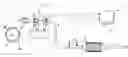
BRIEF DESCRIPTION OF THE DRAWINGSFIG. 1 shows, schematically, an internal combustion engine exhaust system equipped with a nitric oxide adsorber;
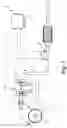
FIG. 2 shows a block diagram illustrating the principle of the method of activating regeneration of a nitric oxide adsorber according to the invention;
FIG. 3 shows a more detailed block diagram of the method according to the invention;
FIG. 4 shows an engine graph;
FIG. 5 shows a state diagram of a state machine in FIG. 3.
DETAILED DESCRIPTION OF THE PREFERRED EMBODIMENTSNumber 1 in FIG. 1 indicates schematically and as a whole an internal combustion engine of a vehicle (not shown)—in particular, a diesel engine having an exhaust system 2, of which are shown only the parts required for a clear understanding of the present invention.
FIG. 1 shows, by way of a non-limiting example, a supercharged engine 1, i.e. comprising a turbosupercharger 3 defined by a compressor 4 located along an air intake manifold 5, and by a turbine 6 connected to compressor 4 and located along an exhaust line 7 for exhausting the gas produced by the engine.
Exhaust system 2 comprises a nitric oxide (NOX) adsorber 8 located along exhaust line 7; and an electronic control system 9 designed, among other things, to control regeneration of nitric oxide adsorber 8 as described below.
More specifically, electronic control system 9 comprises an airflow meter or so-called debimeter 10 located along air intake manifold 5 to measure the air intake flow QA of the engine; a temperature sensor 11 located along exhaust line 7, at the inlet or outlet of nitric oxide adsorber 8, to measure the temperature TEXH of the exhaust gas flowing through nitric oxide adsorber 8; a measuring device 12 for measuring engine speed RPM and defined by a pulse wheel 13 fitted to the drive shaft 14 (shown schematically by the dash-and-dot line), and by an electromagnetic sensor 15 facing pulse wheel 13; a nitric oxide concentration sensor 16 located along exhaust line 7, at the inlet or outlet of nitric oxide adsorber 8, to measure the nitric oxide concentration of the exhaust gas flowing through nitric oxide adsorber 8; and an electronic central control unit 17 connected to debimeter 10, to temperature sensor 11, to measuring device 12, and to nitric oxide concentration sensor 16, and implementing, among other things, the method of activating regeneration of nitric oxide adsorber 8 according to the invention.
FIG. 2 shows a block diagram illustrating the principle of the method of activating regeneration of nitric oxide adsorber 8 implemented by electronic central control unit 17.
More specifically, as shown in FIG. 2, the regeneration activating method according to the invention substantially comprises:
-
- determining vehicle running and/or engine operating conditions favourable to regeneration of nitric oxide adsorber 8 (block 20);
- assessing the fill level of nitric oxide adsorber 8 on the basis of engine operating conditions, and the characteristics of engine 1, of nitric oxide adsorber 8, and of the fuel used (block 30); and
- controlling activation and deactivation of the engine control strategies for regenerating nitric oxide adsorber 8, depending on the presence or not of the above conditions, and on the basis of the fill level of nitric oxide adsorber 8 (block 40).
More specifically, controlling activation and deactivation of the engine control strategies comprises:
-
- generating a regeneration activation request to activate regeneration of nitric oxide adsorber 8, when given vehicle running and engine operating conditions are determined, and when the fill level of nitric oxide adsorber 8 is above a given maximum level (block 50);
- generating a regeneration deactivation request to deactivate regeneration of nitric oxide adsorber 8, when given vehicle running and engine operating conditions are determined, and when the fill level of nitric oxide adsorber 8 is below a given minimum level (block 70); and
- activating regeneration of nitric oxide adsorber 8 in the presence of an activation request or after a maximum time has elapsed without the above first vehicle running and engine operating conditions occurring; and deactivating regeneration of nitric oxide adsorber 8 in the presence of a deactivation request or after a maximum time has elapsed without the above second vehicle running and engine operating conditions occurring (block 60).
FIG. 3 shows a more detailed block diagram of the regeneration activating method according to the present invention.
More specifically, as shown in FIG. 3, electronic central control unit 17 first acquires the values of the following quantities indicating vehicle running and engine operating conditions, and on which depends the amount of nitric oxides (NOX) and sulphur dioxide (SO2) produced by combustion (block 18):
-
- vehicle speed V,
- vehicle gear G,
- injected fuel quantity QINJ,
- engine speed RPM,
- engine cooling fluid temperature TCOOL,
- exhaust gas temperature TEXH, and
- exhaust gas flow QEXH,
and determines: - engine output torque TQ as a function of engine speed RPM, and
- the presence of an injection cut-off (cut-off of fuel supply to the engine) or a transient engine operating state.
Electronic central control unit 17 also stores the following parameters of nitric oxide adsorber 8 and the fuel used (block 18):
-
- the sulphur percentage QS of the fuel, as indicated by the petrol company;
- a nitric oxide production map containing the values of the nitric oxides produced in a predetermined time interval as a function of exhaust gas flow QEXH, engine speed RPM and the quantity of fuel QINJ injected into the engine;
- a minimum speed VMIN, e.g. 50 km/h, and a maximum speed VMAX, e.g. 120 km/h, with which current vehicle speed V will be compared, as described below;
- a minimum temperature TMIN, e.g. 30° C., and a maximum temperature TMAX, e.g. 90° C., with which the engine cooling fluid temperature TCOOL will be compared, as described below;
- the engine graph divided as shown in FIG. 4, and with which the current operating point of the engine will be compared, as described below;
- engine speed RPM threshold values as a function of the engaged gear;
- an exhaust line safety temperature TSAF, e.g. 700° C., above which regeneration strategies must be deactivated immediately for safety reasons;
- a time TIME1, e.g. 10 s, and a time TIME2, e.g. 60 s, both of which can be calibrated and are used in controlling activation and deactivation of regeneration of nitric oxide adsorber 8, as described below; and
- a minimum fill level FILLMIN, e.g. 30%, and a maximum fill level FILLMAX, e.g. 80%, of nitric oxide adsorber 8.
With reference to FIG. 3, electronic central control unit 17 monitors the vehicle running and engine operating conditions, and generates an enabling signal ENBL (block 25) when conditions favourable to regeneration of nitric oxide adsorber 8 are determined.
More specifically, electronic central control unit 17:
-
- determines whether vehicle speed V lies between a stored minimum value VMIN and a stored maximum value VMAX (block 21);
- determines whether the engine operating point, defined by injected fuel quantity QINJ and engine speed RPM, lies in a given region of the engine graph, as described below with reference to FIG. 4 (block 22);
- determines whether, as a function of the engaged gear, engine speed RPM satisfies the stored operating conditions (block 23); and
- compares engine cooling fluid temperature TCOOL with the stored minimum and maximum values TMIN, TMAX (block 24) to determine correct operating conditions of the engine.
More specifically, FIG. 4 shows the so-called “engine graph”, i.e. location of the engine operating points defined by engine speed RPM and injected fuel quantity QINJ. As can be seen, the engine graph, which also shows the so-called “engine power curve”, is divided into two regions: a first, indicated “Region 1”, in which the operating conditions of the engine are favourable to regeneration of nitric oxide adsorber 8; and a second, indicated “Region 2”, in which the operating conditions of the engine are not favourable to achieving a rich air/fuel mixture, and therefore to regeneration of nitric oxide adsorber 8.
More specifically, “Region 1” substantially depends on the characteristics of the engine and on the exhaust system, and is defined in each individual case on the basis of the type of engine and the exhaust system of the vehicle. Block 22 of electronic central control unit 17 therefore determines whether the current engine operating point lies within the first or second region of the engine graph.
Once the above are determined, electronic central control unit 17 generates enabling signal ENBL (block 25) if:
-
- vehicle speed V is within the specified range;
- engine speed RPM and the engaged gear G satisfy the above conditions;
- engine cooling fluid temperature TCOOL is within the specified range; and
- the engine operating point lies in Region 1.
Electronic central control unit 17 then assesses nitric oxide and sulphur oxide adsorption in nitric oxide adsorber 8, and the relative percentage fill level FILL % (block 33), as a function of:
-
- nitric oxide flow QNOx through nitric oxide adsorber 8, which may be assessed either on the basis of the exhaust gas nitric oxide concentration supplied by nitric oxide concentration sensor 16—in particular, as a portion of total exhaust gas flow—or on the basis of the aforementioned nitric oxide production map (block 31);
- adsorption efficiency AD % of nitric oxide adsorber 8, which may be assessed as a function of exhaust gas temperature TEXH and flow QEXH (block 32) on the basis of a physical model taking into account the specific characteristics and actual operation of the nitric oxide adsorber, or on the basis of an engine test bench map; and
- sulphur percentage QS of the fuel employed.
Electronic central control unit 17 then determines whether the vehicle running and engine operating conditions and the fill level of nitric oxide adsorber 8 warrant authorization to activate regeneration of nitric oxide adsorber 8, by implementing a three-level decision-making order: request-authorization-actuation.
More specifically, electronic central control unit 17:
-
- compares the percentage fill level FILL % of nitric oxide adsorber 8 with the stored maximum fill level FILLMAX (block 51);
- monitors the occurrence of an injection cut-off or transient engine operating state (block 53), so that the driver of the vehicle does not experience a sharp change in engine operation, by also counting the time lapse since the last injection cut-off or last transient engine operating state;
- generates a regeneration request RGN_RQST if the fill level FILL of nitric oxide adsorber 8 is above the stored maximum fill level FILLMAX;
- generates a regeneration authorization RGN_AUTH in the presence of a regeneration request RGN_RQST and of enabling signal ENBL (block 52); and
- generates an activation request ACT_RQST to activate regeneration of nitric oxide adsorber 8 (block 55):
a) in the presence of a regeneration authorization RGN_AUTH or an injection cut-off or transient engine operating state (blocks 54 and 53); or
b) when a time TIME1 has elapsed without an injection cut-off or transient engine operating state occurring (block 55).
During regeneration, electronic central control unit 17 determines whether the vehicle running and engine operating conditions and the fill level of nitric oxide adsorber 8 warrant deactivating regeneration of nitric oxide adsorber 8.
More specifically, electronic central control unit 17:
-
- compares the fill level FILL of nitric oxide adsorber 8 with the stored minimum fill level FILLMIN (block 71);
- monitors the occurrence of an injection cut-off or transient engine operating state (block 72), by also counting the time lapse since the last injection cut-off or last transient engine operating state;
- generates an interrupt request INT_RQST if the fill level FILL of nitric oxide adsorber 8 is below the stored minimum fill level FILLMIN;
- generates an interrupt authorization INT_AUTH in the presence of an interrupt request INT_RQST and of an injection cut-off or transient engine operating state (block 73); and
- generates a deactivation request DEACT_RQST to deactivate regeneration of nitric oxide adsorber 8 (block 75):
a) in the presence of an interrupt authorization INT_AUTH; or
b) when a time TIME1 has elapsed without an injection cut-off or transient engine operating state occurring; or
c) if exhaust gas temperature TEXH exceeds or equals safety temperature TSAF.
Finally, electronic central control unit 17 activates and deactivates regeneration of nitric oxide adsorber 8 on the basis of activation and deactivation requests ACT_RQST and DEACT_RQST and enabling signal ENBL, using a finite-state machine, which performs the operations described below with reference to the state diagram in FIG. 5 (block 60).
As shown in FIG. 5, the finite-state machine first switches between a first start state A—in which nitric oxide adsorber 8 is accumulating, and vehicle running and engine operating conditions are favourable to regeneration of nitric oxide adsorber 8 (enabling signal ENBL present)—and a second start state B—in which nitric oxide adsorber 8 is accumulating, and vehicle running and engine operating conditions are not favourable to regeneration of nitric oxide adsorber 8 (no enabling signal ENBL). The duration of second start state B is also counted.
When the finite-state machine is in the first start state A, and an activation request ACT_RQST is generated and the total duration of second start state B is less than TIME2, the finite-state machine evolves towards a first end state C, in which standard regeneration of nitric oxide adsorber 8 is activated; whereas, when the finite-state machine is in the first start state A, and an activation request ACT_RQST is generated and the total duration of second start state B exceeds TIME2, the finite-state machine evolves towards a second end state D, in which prolonged regeneration of nitric oxide adsorber 8 is activated. Prolonged regeneration is necessary when the nitric oxides trapped in nitric oxide adsorber 8 have not been desorbed for some time, and the barium nitrates are stabilized. If the conditions necessary to switch from state B to state A never come about, regeneration is never performed.
Standard regeneration is deactivated upon generation of a deactivation request DEACT_RQST, whereas prolonged regeneration is performed for a set length of time, e.g. 20 s, regardless of the fill level.
Since the reducing conditions necessary to regenerate nitric oxide adsorber 8 cannot be created when no fuel in being injected, the finite-state machine must be able to control cut-off during regeneration. More specifically, in the event of a brief cut-off lasting a few (up to 5) seconds, regeneration of nitric oxide adsorber 8 is not interrupted; whereas, if the cut-off lasts longer, regeneration is temporarily interrupted, and is reactivated when the cut-off ceases, providing the activation conditions still apply.
The advantages of the present invention will be clear from the foregoing description. In particular, as opposed to being fixed, the duration of the accumulation stage depends on the actual degree of saturation of the nitric oxide adsorber acceptor sites, so that the adsorber is regenerated when actually saturated. As such, the regeneration frequency of nitric oxide adsorber 8 is optimized, by assessing the instantaneous fill level of nitric oxide adsorber 8 as a function of engine operating conditions.
Moreover, regeneration is optimized by only regenerating the adsorber when the operating conditions of the engine are favourable.
Moreover, the present invention provides for adapting regeneration duration as a function of the operating “history” of the vehicle during the accumulation state, and for “strict” control of regeneration strategy activation and deactivation conditions.
Clearly, changes may be made to the method as described and illustrated herein without, however, departing from the scope of the present invention, as defined in the accompanying Claims.
Claims
1) A method of activating regeneration of a nitric oxide adsorber (8) for treating exhaust gas produced by an internal combustion engine (1) of a vehicle, characterized by comprising:
determining a quantity indicating the fill level (FILL) of said nitric oxide adsorber (8);
monitoring the running conditions of the vehicle and/or the operating conditions of the engine (1); and
activating regeneration of said nitric oxide adsorber (8) as a function of the fill level (FILL) of said nitric oxide adsorber (8) and of the running conditions of the vehicle and/or the operating conditions of the engine (1).
2) A method as claimed in claim 1, wherein activating regeneration of said nitric oxide adsorber (8) comprises:
activating regeneration of said nitric oxide adsorber (8) in the presence of given running conditions of the vehicle and/or given operating conditions of the engine (1) favourable to said regeneration.
3) A method as claimed in claim 1, wherein activating regeneration of said nitric oxide adsorber (8) comprises:
generating a regeneration request (RGN_RQST) as a function of the fill level (FILL) of the nitric oxide adsorber (8);
generating a regeneration authorization (RGN_AUTH) in the presence of said regeneration request (RGN_RQST) and of said given running conditions of the vehicle and/or said given operating conditions of the engine (1); and
generating an activation request (ACT_RQST) to activate regeneration of the nitric oxide adsorber (8) in the presence of said regeneration authorization (RGN_AUTH) and of given operating conditions of the engine.
4) A method as claimed in claim 3, wherein generating a regeneration request (RGN_RQST) comprises:
comparing the fill level (FILL) of the nitric oxide adsorber (8) with a first fill level (FILLMAX); and
generating said regeneration request (RGN_RQST) when the fill level (FILL) of the nitric oxide adsorber (8) and the first fill level (FILLMAX) satisfy a first relationship.
5) A method as claimed in claim 4, wherein said first relationship is defined by the condition that the fill level (FILL) of the nitric oxide adsorber (8) exceeds the first fill level (FILLMAX).
6) A method as claimed in claim 3, wherein said activation request (ACT_RQST) is generated in the presence of said regeneration authorization (RGN_AUTH) and of an injection cut-off or a transient operating state of the engine.
7) A method as claimed in claim 3, wherein said activation request (ACT_RQST) is generated in the presence of said regeneration authorization (RGN_AUTH) and if a given time (TIME1) has elapsed without an injection cut-off or a transient operating state of the engine occurring.
8) A method as claimed in claim 1, wherein said given running conditions of the vehicle and/or said given operating conditions of the engine (1) comprise one or more of the following conditions:
vehicle speed (V) within a given range (VMIN, VMAX);
engine speed (RPM) and engaged gear (G) satisfy a second relationship;
engine cooling fluid temperature (TCOOL) within a given range (TMIN, TMAX); and
current operating point of the engine within a given region of the engine graph.
9) A method as claimed in claim 1, and also comprising:
deactivating regeneration of said nitric oxide adsorber (8) as a function of the fill level (FILL) of said nitric oxide adsorber (8).
10) A method as claimed in claim 1 further comprising:
deactivating regeneration of said nitric oxide adsorber (8) as a function of the operating conditions of the engine (1).
11) A method as claimed in claims 9, further comprising:
deactivating regeneration of said nitric oxide adsorber (8) as a function of the operating conditions of the engine (1), and wherein deactivating regeneration of said nitric oxide adsorber (8) includes:
generating an interrupt request (INT_RQST) as a function of the fill level (FILL) of the nitric oxide adsorber (8);
generating an interrupt authorization (INT_AUTH) in the presence of said interrupt request (INT_RQST) and of given operating conditions of the engine; and
generating a deactivation request (DEACT_RQST) to deactivate regeneration of the nitric oxide adsorber (8) in the presence of said interrupt authorization (INT_AUTH).
12) A method as claimed in claim 11, wherein generating an interrupt request (INT_RQST) comprises:
comparing the fill level (FILL) of the nitric oxide adsorber (8) with a second fill level (FILLMIN); and
generating said interrupt request (INT_RQST) when the fill level (FILL) of the nitric oxide adsorber (8) and the second fill level (FILLMIN) satisfy a third relationship.
13) A method as claimed in claim 12, wherein said third relationship is defined by the condition that the fill level (FILL) of the nitric oxide adsorber (8) is below the second fill level (FILLMIN).
14) A method as claimed in claim 11, wherein said interrupt authorization (INT_AUTH) is generated in the presence of said interrupt request (INT_RQST) and of an injection cut-off or a transient engine operating state.
15) A method as claimed in claim 11, wherein said interrupt authorization (INT_AUTH) is generated in the presence of said interrupt request (INT_RQST) and if a given time (TIME1) has elapsed without an injection cut-off or a transient operating state of the engine occurring.
16) A method as claimed in claim 11, wherein said deactivation request (DEACT_RQST) to deactivate regeneration of the nitric oxide adsorber (8) is generated in the presence of said interrupt authorization (INT_AUTH) or of given exhaust gas temperatures (TEXH).
17) A method as claimed in claim 3, and also comprising:
activating regeneration of said nitric oxide adsorber (8) in the presence of said activation request (ACT_RQST).
18) A method as claimed in claim 17 further comprising:
activating regeneration of said nitric oxide adsorber (8) also in the presence of said given running conditions of the vehicle and/or said given operating conditions of the engine.
19) A method as claimed in claim 1, further comprising:
performing prolonged regeneration if said given running conditions of the vehicle and/or said given operating conditions of the engine fail to occur for a time in excess of a given threshold (TIME2); and
otherwise performing a standard regeneration.
20) A method as claimed in claim 16, and also comprising:
deactivating regeneration of the nitric oxide adsorber (8) in the presence of said deactivation request (DEACT_RQST).
21) A method as claimed in claim 9, and also comprising:
deactivating regeneration of the nitric oxide adsorber (8) in the presence of a prolonged injection cut-off.
22) A method as claimed in claim 21, and also comprising:
reactivating regeneration of the nitric oxide adsorber (8) at the end of said prolonged injection cut-off, if the activation conditions still apply.
23) A method as claimed in claim 1, wherein said quantity indicating the fill level (FILL) of said nitric oxide adsorber (8) is determined as a function of:
nitric oxide flow (QNOx) through the nitric oxide adsorber (8), assessed on the basis of the nitric oxide concentration of the exhaust gas, as a portion of total exhaust gas flow, or on the basis of a memorized nitric oxide production map as a function of the operating conditions of the engine; and
adsorption efficiency (AD %) of the nitric oxide adsorber (8), assessed as a function of exhaust gas temperature (TEXH) and exhaust gas flow (QEXH).
24) A device for activating regeneration of a nitric oxide adsorber (8) for treating exhaust gas produced by an internal combustion engine (1) of a vehicle, characterized by being configured to implement the method of activating regeneration, as claimed in claim 1.
Images & Drawings included:


Sources:
- United States Patent and Trademark Office - verify current appl. status at the USPTO↗
Recent applications in this class:
- » 20250144568 2025-05-08
NOX REMOVAL DEVICE - » 20230001354 2023-01-05
Fluid injector, assembly and exhaust line comprising such an injector - » 20220176316 2022-06-09
Vapor displacement refueling including onboard internally recirculating chemical looping combustion system - » 20220097001 2022-03-31
MIXING MEMBER, EXHAUST PURIFICATION DEVICE AND VEHICLE - » 20220047990 2022-02-17
Two-stage mixer - » 20220040638 2022-02-10
Urea tank for SCR aftertreatment system, and tank cover thereof - » 20220023799 2022-01-27
MODULE FOR METERING A REDUCING AGENT, HAVING AN ELASTIC THERMAL BRIDGE - » 20210113965 2021-04-22
Thermal- and photo-assisted aftertreatment of nitrogen oxides - » 20200376432 2020-12-03
Single module integrated aftertreatment module - » 20200269189 2020-08-27
Automotive exhaust aftertreatment system having a swirl-back mixer
Recent applications for this Assignee:
- » 20230174091 2023-06-08
Motor-vehicle driving assistance in low meteorological visibility conditions, in particular with fog - » 20230161611 2023-05-25
Assistance to a driver of a mobility vehicle for learning features of the mobility vehicle - » 20220379859 2022-12-01
VEHICLE BRAKING SYSTEM - » 20220314519 2022-10-06
A METHOD FOR MEASURING THE CROSS-LINKING DEGREE OF A COMPONENT OF ELASTOMERIC MATERIAL - » 20220243621 2022-08-04
Internal combustion engine with fast combustion and method of control of such an engine - » 20220169247 2022-06-02
Motor-vehicle trajectory planning and control to cause automated motor-vehicles to perform low-speed manoeuvres in automated driving - » 20220080954 2022-03-17
Automotive electronic lateral dynamics control system for a self-driving motor vehicle - » 20210389760 2021-12-16
Exploitation of automotive automated driving systems to cause motor vehicles to perform follow-me low-speed manoeuvres controllable from the outside of the motor vehicles by user terminals - » 20210330540 2021-10-28
System for assisting an operator in a work station - » 20210323143 2021-10-21
Gripping device for handling items or components of different shape and size