Vehicle panel with reinforcement layer
US20060255626A1
2006-11-16
10/567,892
2004-08-11
✅ Patent granted
US 7,648,753 B2
2010-01-19
WO; PCT/US2004/026323; 20040811
WO; WO2005/016700; 20050224
Arti Singh-Pandey
2026-01-16
Abstract:
A vehicle panel includes a core layer and a reinforcement layer positioned on one or both sides of the core layer. The core layer is made of a material with heat absorption or insulation properties, such as polypropylene, and the like. The reinforcement layer is comprised of fiberglass strands intermingled with a polymer to form a blended composition having a linear density in a range between about 50 and 200 g/m2. The vehicle panel may also include an adhesive layer between a cover material and the reinforcement layer on one side of the core layer. The vehicle panel may also include a scrim material adjacent the reinforcement layer on the opposite side of the core layer. The reinforcement layer provides dimensional stability to the vehicle panel, while reducing the overall weight and thickness of the vehicle panel as compared to conventional vehicle panels.
Assignee:
- Intier Automotive Inc. 61 🇨🇦 Newmarket, Canada
Interested in similar patents?
Get notified when new applications in this technology area are published.
Classification:
B32B5/26 » CPC main
Layered products characterised by the non- homogeneity or physical structure, i.e. comprising a fibrous, filamentary, particulate or foam layer; Layered products characterised by having a layer differing constitutionally or physically in different parts characterised by the presence of two or more layers which are next to each other and are fibrous, filamentary, formed of particles or foamed one layer being a fibrous or filamentary layer another layer also being fibrous or filamentary
B32B5/02 » CPC further
Layered products characterised by the non- homogeneity or physical structure, i.e. comprising a fibrous, filamentary, particulate or foam layer; Layered products characterised by having a layer differing constitutionally or physically in different parts characterised by structural features of a layer
B32B5/18 » CPC further
Layered products characterised by the non- homogeneity or physical structure, i.e. comprising a fibrous, filamentary, particulate or foam layer; Layered products characterised by having a layer differing constitutionally or physically in different parts characterised by features of a layer of foamed material
B32B5/245 » CPC further
Layered products characterised by the non- homogeneity or physical structure, i.e. comprising a fibrous, filamentary, particulate or foam layer; Layered products characterised by having a layer differing constitutionally or physically in different parts characterised by the presence of two or more layers which are next to each other and are fibrous, filamentary, formed of particles or foamed one layer being a fibrous or filamentary layer another layer next to it being a foam layer
B60R13/02 » CPC further
Elements for body-finishing, identifying, or decorating; Arrangements or adaptations for advertising purposes Trim mouldings Ledges; Wall liners for passenger compartments ; Roof liners
B60R13/0225 » CPC further
Elements for body-finishing, identifying, or decorating; Arrangements or adaptations for advertising purposes; Trim mouldings Ledges; Wall liners for passenger compartments ; Roof liners; Roof or head liners self supporting head liners
B60R13/0815 » CPC further
Elements for body-finishing, identifying, or decorating; Arrangements or adaptations for advertising purposes; Insulating elements, e.g. for sound insulation Acoustic or thermal insulation of passenger compartments
B32B2260/021 » CPC further
Layered product comprising an impregnated, embedded, or bonded layer wherein the layer comprises an impregnation, embedding, or binder material; Composition of the impregnated, bonded or embedded layer Fibrous or filamentary layer
B32B2260/046 » CPC further
Layered product comprising an impregnated, embedded, or bonded layer wherein the layer comprises an impregnation, embedding, or binder material; Impregnation, embedding, or binder material Synthetic resin
B32B2262/101 » CPC further
Composition or structural features of fibres which form a fibrous or filamentary layer or are present as additives; Inorganic fibres Glass fibres
B32B2266/025 » CPC further
Composition of foam; Organic; Materials belonging to Polyolefin
B32B2266/0264 » CPC further
Composition of foam; Organic; Materials belonging to Polyester
B32B2305/022 » CPC further
Condition, form or state of the layers or laminate; Cellular or porous Foam
B32B2305/08 » CPC further
Condition, form or state of the layers or laminate Reinforcements
B32B2305/38 » CPC further
Condition, form or state of the layers or laminate Meshes, lattices or nets
B32B2307/102 » CPC further
Properties of the layers or laminate having particular acoustical properties Insulating
B32B2605/003 » CPC further
Vehicles Interior finishings
B60R13/0212 » CPC further
Elements for body-finishing, identifying, or decorating; Arrangements or adaptations for advertising purposes; Trim mouldings Ledges; Wall liners for passenger compartments ; Roof liners Roof or head liners
Y10T428/24355 » CPC further
Stock material or miscellaneous articles; Structurally defined web or sheet [e.g., overall dimension, etc.] Continuous and nonuniform or irregular surface on layer or component [e.g., roofing, etc.]
B60J7/00 IPC
Non-fixed roofs; Roofs with movable panels, e.g. rotary sunroofs
Description
BACKGROUND OF THE INVENTION1. Field of the Invention
The present invention relates in general to a vehicle panel structure, and in particular to a vehicle panel structure that includes a core layer and a reinforcement layer made of a polypropylene/fiberglass material to provide dimensional stability to the vehicle panel structure while reducing the thickness and weight of the vehicle panel structure.
2. Description of the Related Art
A vehicle panel, such as a headliner, is designed to meet or exceed requirements for dimensional stability when exposed to temperatures of 160° C. over a 24-hour time period. To achieve the requirements for dimensional stability, one or more reinforcement layers are included in the design of a conventional vehicle panel, such as a headliner. Unfortunately, one problem associated with conventional vehicle panels with one or more reinforcement layers to achieve the necessary dimensional stability requirements is that the reinforcement layers is bulky and unnecessarily increases the thickness and weight associated with the vehicle panel.
SUMMARY OF THE INVENTIONThe inventor of the present invention has recognized these and other problems associated with conventional vehicle panels, and have developed a vehicle panel comprising a core layer and a reinforcement layer comprised of intermingled strands of fiberglass material and a polymer material having a linear density in a range between about 50 and 200 g/m2.
BRIEF DESCRIPTION OF THE DRAWINGSIn the drawings:
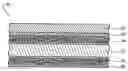
FIG. 1 shows a cross-sectional view of a vehicle panel structure including a core layer with a reinforcement layer according to an embodiment of the invention.
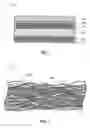
FIG. 2 shows an enlarged view of the reinforcement layer according to the invention.
DESCRIPTION OF THE PREFERRED EMBODIMENTReferring now to FIG. 1, a vehicle panel 10 is shown according to an embodiment of the invention. The vehicle panel 10 includes a core layer 12 and a reinforcement layer 14 positioned adjacent the core layer 12. Although the illustrated embodiment shows two reinforcement layers 14 positioned on opposite sides of the core layer 12, the invention can be practiced with a single reinforcement layer 14 positioned adjacent one side of the core layer 12.
The core layer 12 may be made of any desirable material. Preferably, the core layer 12 is comprised of any suitable material having insulating properties. For example, the core layer 12 may comprise a foam material, such as polypropylene or the like, and have a density and thickness that may vary depending on the design requirements. However, it will be appreciated that the core layer 12 can comprise any suitable material, such as polyethylene terepthalate (PET) or the like, depending on the design requirements.
The vehicle panel 10 may also include an adhesive layer 16, such as a 2-part adhesive film known in the art, applied between the reinforcement layer 14 and a cover material 20. The cover material 20 provides an aesthetically pleasing appearance, typically known as the “A” surface, to the vehicle panel 10. The cover material 20 may be comprised of any desirable material known in the art that provides an aesthetically pleasing appearance to the vehicle panel 10.
A scrim material 18 may be applied to the opposite side of the core layer 12 from the cover material 20. The scrim material 18 may be comprised of any desirable material known in the art. In the illustrated embodiment, the reinforcement layer 14 is disposed between the core layer 12 and the scrim material 18. However, it will be appreciated that the invention is not limited by the reinforcement layer 14 and scrim material 18, and that the invention can be practiced without the reinforcement layer 14 and scrim material 18 being applied to one side of the core layer 12. In addition, it should be noted that in the illustrated embodiment, the reinforcement layer 14 is not attached to either side of the core layer 12, and is capable of easily being separated from the core layer 12 if necessary.
One aspect of the invention is that the reinforcement layer 14 provides dimensional stability to the vehicle panel 10, while decreasing the overall weight and thickness of the vehicle panel 10, as compared to conventional vehicle panels. For example, the reinforcement layer 14 has a linear density in a range between about 50 and 200 g/m2, as compared to typical reinforcement layers that may have a linear density of at least 400 g/m2. To accomplish this aspect of the invention, the reinforcement layer 14 of the invention comprises strands of fiberglass material 22 intermingled with a polymer material 24 to form a blended composition, as shown in FIG. 2. In one embodiment of the invention, the fiberglass material 22 comprises approximately 20% to 80% by weight of the reinforcement layer 14.
Preferably, the polymer material used for the reinforcement layer 14 is compatible with the material used for the core layer 12 such that the reinforcement layer 14 can form a bond with the core layer 12. The polymer material 24 is preferably a high temperature polymer such that, upon an application of heat at a suitably low temperature, the adhesive layer 16 melts and adheres to the layers 14, 16 and 20 to each other, but not at a high enough temperature to melt the reinforcement layer 14, thereby allowing the reinforcement layer 14 to be easily separated from the core layer 12. One suitable high temperature polymer material 24 compatible with the material for the cover layer 12 is polypropylene, or the like. However, a low temperature polymer material may be included in the reinforcement layer 14 to act as a binder material to bond the reinforcement layer 14 to the core layer 12, if necessary.
One application of the vehicle panel 10 of the invention is a headliner for a vehicle. A headliner is designed to meet or exceed requirements for dimensional stability when exposed to temperatures of 160° C. over a 24-hour time period. It has been found that when the core layer 12 with reinforcement layer 14 exhibits dimensional stability when exposed to a temperature of 160° C. over a 24-hour time period, as compared to conventional headliners that are designed with a heavier, thicker reinforcement layer. Thus, the vehicle panel 10 comprising the core layer 12 with reinforcement layer 14 can provide the same or better dimensional stability as a conventional headliner, while decreasing the weight and thickness of the conventional headliner.
While the invention has been specifically described in connection with certain specific embodiments thereof, it is to be understood that this is by way of illustration and not of limitation, and the scope of the appended claims should be construed as broadly as the prior art will permit.
Claims
1. A vehicle panel, comprising:
a core layer, and
a reinforcement layer comprised of intermingled strands of fiberglass material and a polymer material,
wherein the reinforcement layer has a linear density in a range between about 50 and 200 g/m2.
2. The vehicle panel of claim 1, wherein the polymer material comprises polypropylene material.
3. The vehicle panel of claim 2, wherein the polypropylene comprises polyethylene terepthalate (PET) material.
4. The vehicle panel of claim 1, wherein said core layer is made of an insulating material.
5. The vehicle panel of claim 4, wherein said core layer comprises polypropylene material.
6. The vehicle panel of claim 1, wherein said vehicle panel comprises a headliner.
7. The vehicle panel of claim 1, wherein the reinforcement layer further comprises a binder material.
8. The vehicle panel of claim 7, wherein the binder material comprises a low temperature polymer material.
9. The vehicle panel of claim 1, wherein approximately 20% to 80% by weight of the reinforcement layer is comprised of strands of the fiberglass material.
10. The vehicle panel of claim 1, further comprising an adhesive layer adjacent the reinforcement layer.
11. The vehicle panel of claim 10, further comprising a cover material adjacent the adhesive layer.
12. The vehicle panel of claim 1, further comprising a scrim material adjacent the reinforcement layer.
Images & Drawings included:
Sources:
- United States Patent and Trademark Office - verify current appl. status at the USPTO↗
Similar patent applications:
Recent applications in this class:
- » 20250282118 2025-09-11
PROTECTIVE COMPOSITE FABRICS AND METHODS OF MANUFACTURE AND USE - » 20250269625 2025-08-28
COMPOSITE SOUND-ABSORBING MATERIAL - » 20250262840 2025-08-21
LAMINATED ADHESIVE TAPE AND COMPOSITION THEREFOR - » 20250187300 2025-06-12
AEROSPACE THERMAL ACOUSTIC FIBERGLASS INSULATION USEFUL IN SUPPORTING APPLICATIONS BACKGROUND - » 20250144911 2025-05-08
HIGH-DURABILITY DUAL COMPOSITE WATERPROOF STRUCTURE THROUGH INORGANIC ELASTIC UNDERCOAT BODY AND COMPOSITE SHEET WATERPROOF STRUCTURE WITH HEAT SHIELDING AND HEAT DISSIPATION PERFORMANCE - » 20250100247 2025-03-27
COMPOSITE LAMINATE BODY AND DISPOSABLE DIAPER - » 20250083408 2025-03-13
STRETCHY THERMAL INSULATION COMPOSITE MATERIAL - » 20250042128 2025-02-06
CELLULOSE PRECURSOR MATERIAL AND APPARATUS AND METHOD FOR FIELD CONVERSION OF THE PRECURSOR INTO CELLULOSE INSULATION - » 20250026104 2025-01-23
POROSITY GRADIENT PREFORM ARCHITECTURE FOR HIGH TEMPERATURE COMPOSITES - » 20250026103 2025-01-23
POROSITY GRADIENT PREFORM ARCHITECTURE FOR HIGH TEMPERATURE COMPOSITES
Recent applications for this Assignee:
- » 20100320352 2010-12-23
Power seat track drive assembly - » 20100230986 2010-09-16
Folding head restraint - » 20100141004 2010-06-10
Stand up seat assembly with retractable rear leg - » 20100127546 2010-05-27
Disc recliner assembly with biased synchronization - » 20100052391 2010-03-04
Fold flat seat assembly with rearward folding motion - » 20100052389 2010-03-04
Stand up and kneel seat - » 20100052388 2010-03-04
Deployable bolster for a vehicle seat - » 20100026033 2010-02-04
Fold flat seat assembly with drive link - » 20090289481 2009-11-26
Adjustable bolster assembly - » 20090230744 2009-09-17
Stand up seat