N-substituted p-menthane carboxamides
US20060276667A1
2006-12-07
11/437,294
2006-05-19
✅ Patent granted
US 7,414,152 B2
2008-08-19
-
-
Shailendra Kumar
2026-05-19
Abstract:
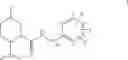
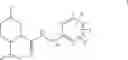
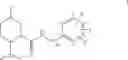
Cooling compounds are provided having the formula:
wherein, m is 0 or 1, Y and Z are selected independently from the group consisting of H, OH, C1-C4 straight or branched alkyl, and a C1-C4 straight or branched alkoxy, X is (CH2)n—R, where n is 0 or 1 and R is a group with non-bonding electrons, with the provisos that: (a) when Y and Z are H, X is not F, OH, MeO or NO2 in the 4-position and is not OH in the 2 or 6-position (b) when Y or Z is H then X, Y and Z are such that
(i) the groups in the 3- and 4-positions are not both OMe, (ii) the groups in the 4- and 5-positions are not both OMe, (iii) the groups in 3- and 5-positions are not OMe if the group in the 4-position is OH, and (iv) the groups in the 3- and 5-positions are not OH if the group in the 4-position is methyl.
Inventors:
- Jay Patrick SLACK 34 🇺🇸 Loveland, OH, United States
- Pablo Victor Krawec 11 🇺🇸 Cincinnati, OH, United States
- Christophe C. GALOPIN 14 🇺🇸 Chesterfield, VA, United States
- Lori W. TIGANI 7 🇺🇸 Salisbury, MD, United States
Assignee:
- GIVAUDAN SA 476 🇨🇭 Vernier, Switzerland
Interested in similar patents?
Get notified when new applications in this technology area are published.
Classification:
C07C255/60 » CPC main
Carboxylic acid nitriles having cyano groups bound to carbon atoms of six-membered aromatic rings of a carbon skeleton containing cyano groups and singly-bound nitrogen atoms, not being further bound to other hetero atoms, bound to the carbon skeleton at least one of the singly-bound nitrogen atoms being acylated
A61K8/42 » CPC further
Cosmetics or similar toilet preparations characterised by the composition containing organic compounds containing nitrogen Amides
A61Q19/00 » CPC further
Preparations for care of the skin
C07C233/60 » CPC further
Carboxylic acid amides having carbon atoms of carboxamide groups bound to carbon atoms of rings other than six-membered aromatic rings having the nitrogen atom of at least one of the carboxamide groups bound to a carbon atom of a hydrocarbon radical substituted by singly-bound oxygen atoms
C07C233/61 » CPC further
Carboxylic acid amides having carbon atoms of carboxamide groups bound to carbon atoms of rings other than six-membered aromatic rings having the nitrogen atom of at least one of the carboxamide groups bound to a carbon atom of a hydrocarbon radical substituted by doubly-bound oxygen atoms
C07C255/42 » CPC further
Carboxylic acid nitriles having cyano groups bound to acyclic carbon atoms having cyano groups bound to acyclic carbon atoms of a carbon skeleton containing at least one six-membered aromatic ring the carbon skeleton being further substituted by singly-bound nitrogen atoms, not being further bound to other hetero atoms
C07C255/44 » CPC further
Carboxylic acid nitriles having cyano groups bound to acyclic carbon atoms having cyano groups bound to acyclic carbon atoms of a carbon skeleton containing at least one six-membered aromatic ring the carbon skeleton being further substituted by singly-bound nitrogen atoms, not being further bound to other hetero atoms at least one of the singly-bound nitrogen atoms being acylated
C07C311/46 » CPC further
Amides of sulfonic acids, i.e. compounds having singly-bound oxygen atoms of sulfo groups replaced by nitrogen atoms, not being part of nitro or nitroso groups; Sulfonamides, the carbon skeleton of the acid part being further substituted by singly-bound nitrogen atoms, not being part of nitro or nitroso groups at least one of the singly-bound nitrogen atoms being part of any of the groups , X being a hetero atom, Y being any atom, e.g. N-acylaminosulfonamides Y being a hydrogen or a carbon atom
A61K2800/244 » CPC further
Properties of cosmetic compositions or active ingredients thereof or formulation aids used therein and process related aspects; Chemical, physico-chemical or functional or structural properties of the composition as a whole; Thermal properties Endothermic; Cooling; Cooling sensation
C07C2601/14 » CPC further
Systems containing only non-condensed rings with a six-membered ring The ring being saturated
C07C255/20 IPC
Carboxylic acid nitriles having cyano groups bound to acyclic carbon atoms containing cyano groups and carboxyl groups, other than cyano groups, bound to the same saturated acyclic carbon skeleton the carbon skeleton being further substituted by singly-bound oxygen atoms
C07C235/32 IPC
Carboxylic acid amides, the carbon skeleton of the acid part being further substituted by oxygen atoms having carbon atoms of carboxamide groups bound to acyclic carbon atoms and singly-bound oxygen atoms bound to the same carbon skeleton the carbon skeleton containing six-membered aromatic rings
C07C233/58 IPC
Carboxylic acid amides having carbon atoms of carboxamide groups bound to carbon atoms of rings other than six-membered aromatic rings having the nitrogen atoms of the carboxamide groups bound to hydrogen atoms or to carbon atoms of unsubstituted hydrocarbon radicals
A61K31/165 IPC
Medicinal preparations containing organic active ingredients; Amides, e.g. hydroxamic acids having aromatic rings, e.g. colchicine, atenolol, progabide
Description
CROSS REFERENCE TO RELATED APPLICATIONSThis application is a continuation-in-part of International Application No. PCT/CH2004/000646 filed Oct. 28, 2004, under 35 USC §120 and §365(c), which claims the benefit of the filing date of U.S. Provisional Application No. 60/523,977 filed Nov. 21, 2003.
Cooling Compounds are Presented.
Cooling compounds, that is, chemical compounds that impart a cooling sensation to the skin or the mucous membranes of the body, are well known to the art and are widely used in a variety of products such as foodstuffs, tobacco products, beverages, dentifrices, mouthwashes and toiletries.
One class of cooling compounds that have enjoyed substantial success consists of N-substituted p-menthane carboxamides. Examples of these compounds are described in, for example, British Patents GB 1,351,761-2 and U.S. Pat. No. 4,150,052.
It has now been found that a particular selection of such compounds exhibits a cooling effect that is both surprisingly strong and long-lasting. In one embodiment, the cooling compounds can be represented by formula I
in which m is 0 or 1, Y and Z are selected independently from the group consisting of H, OH, C1-C4 straight or branched alkyl, and a C1-C4 straight or branched alkoxy; X is (CH2)n—R, where n is 0 or 1 and R is a group with non-bonding electrons, with the provisos that:
- (a) when Y and Z are H, X is not F, OH, MeO or NO2 in the 4-position and is not OH in the 2 or 6-position
- (b) when Y or Z is H then X, Y and Z are such that
- (i) the groups in the 3- and 4-positions are not both OMe,
- (ii) the groups in the 4- and 5-positions are not both OMe,
- (iii) the groups in 3- and 5-positions are not OMe if the group in the 4-position is OH, and
- (iv) the groups in the 3- and 5-positions are not OH if the group in the 4-position is methyl.
An embodiment provides for compounds of formula I wherein X is in the 4-position. Additional embodiments provide for compounds of formula I wherein X is in the 4-position and Y and Z are H, OH, Me or OMe. In certain embodiments, Y and Z are selected independently.
Useful groups with non-bonding electrons are halogens, OH, OMe, NO2, CN, Ac, SO2NH2, CHO, CO2H and C1-C4 alkyl carboxylates such as CO2Et. Other C1-C4 alkyl carboxylates with non-bonding electrons may be useful.
The compounds of formula I have 3 chiral centres, giving rise to 8 stereoisomers. All possible stereoisomers are included in the scope of the compounds represented by formula I.
The cooling compounds may be prepared by reacting an arylalkylamine derivative with an appropriate acid chloride or carbonyl chloride. The carbonyl chloride can be prepared from 1-menthol ((1R,2S,5R)-2-isopropyl-5-methylcyclohexanol).
The cooling compounds are distinguished from similar compounds of the prior art by their surprisingly high cooling effect (up to 10 times higher than that of similar known compounds) and by the longevity of the cooling effect, which adds to their attractiveness in a large variety of products.
For example, a small group of panelists was asked to taste various solutions of cooling compounds and indicate which solutions had a cooling intensity similar or slightly higher than that of a solution of menthol at 2 ppm. In a second experiment, the same panel was asked to taste the solutions at the chosen concentrations and to record the cooling intensity at regular time intervals until no cooling could be sensed in the mouth. Results are shown in table 1.
| TABLE 1 |
| experiment on cooling intensity and longevity. |
| Chemical | Concentration | Longevity |
| 1-Menthol | 2.0 ppm | 35 minutes |
| N-ethyl p-menthanecarboxamide (WS-3) | 1.5 ppm | 57 minutes |
| Formula I, m = 0, Y = Z = H, | 0.5 ppm | 90 minutes |
| X = 4-CN | ||
| Formula I, m = 0, Y = Z = H, | 0.2 ppm | 93 minutes |
| X = 4-CH2CN | ||
From Table 1, it can be seen that the compounds of Formula I are up to 10 times stronger and last up to 3 times longer than menthol, the reference cooling compound. Compounds of Formula I are also much stronger and last longer than WS-3, a known cooling compound of the prior art.
The subject cooling compounds may be used in products that are applied to the mouth or the skin to give a cooling sensation. By “applying” is meant any form of bringing into contact, for example, oral ingestion or, in the case of tobacco products, inhalation. In the case of application to the skin, it may be, for example, by including the compound in a cream or salve, or in a sprayable composition. A method is directed to providing a cooling effect to the mouth or skin by applying thereto a product comprising a compound as hereinabove described.
The subject cooling compounds may be used alone or in combination with other cooling compounds known in the art, e.g., menthol, menthone, isopulegol, N-ethyl p-menthanecarboxamide (WS-3), N,2,3-trimethyl-2-isopropylbutanamide (WS-23), menthyl lactate (Frescolat™ ML), menthone glycerine acetal (Frescolat™ MGA), mono-menthyl succinate (Physcool™), mono-menthyl glutarate, O-menthyl glycerine (CoolAct™ 10), menthyl-N,N-dimethylsuccinamate or 2-sec-butylcyclohexanone (Freskomenthe™).
The subject cooling compounds and related methods are further described by the following non-limiting examples.
The starting compound p-menthane-3-carbonyl chloride as used for the preparation of the compounds in Example 1-6 was prepared from 1-menthol.
EXAMPLE 1 Preparation of N-(4-cyanomethylphenyl) p-menthanecarboxamideTo a flask, were added 6.6 g (50 mmol) of 4-aminobenzyl cyanide, 4.04 mL of pyridine and 100 mL MtBE. To this mixture, 10 g of p-menthane-3-carbon*yl chloride were added dropwise over 5 minutes. The reaction mixture was stirred for 24 h. To the reaction mixture, 50 mL of water were added. The mixture was separated. The organic layer was washed with 50 mL of water and 50 mL of brine. The organic layer was dried over MgSO4. The solvent was evaporated in vacuo to afford the crude product, which was recrystallized from hexanes to afford 10.1 g of the desired product with the following spectroscopic properties:
MS: 299 ([M+1]), 298 ([M+]), 132, 83. 1H NMR (300 MHz; CDCl3) δ: 7.58 (d, 2H), 7.49 (s, 1H), 7.27 (d, 2H), 3.73 (s, 2H), 2.2 (t, 1H), 1.96-1.57 (m, 5H), 1.48-1.21 (m, 2H), 1.172-0.99 (m, 2H), 0.94 (d, 3H), 0.93 (d, 3H), 0.85 (d, 3H). 13C NMR (75 MHz; CDCl3)δ: 174.4, 137.8, 128.3, 125.1, 120.3, 118.2, 50.5, 44.3, 39.25, 34.3, 32.1, 28.7, 23.8, 22.9, 22.1, 21.2, 16.1
EXAMPLE 2 Preparation of N-(4-sulfamoylphenyl) p-menthanecarboxamideA preparation similar to that described in example 1 gives the desired product with the following spectroscopic properties:
MS: 339([M+1]), 338([M+]), 172, 83. 1H NMR (300 MHz; DMSO) δ: 10.21 (s, 1H), 7.76 (d, 1H) 7.73 (d, 2H), 7.23 (s, 2H), 2.26-2.42 (m, 1H), 1.45-1.85 (m, 5H), 1.29-1.44 (m, 2H), 0.89 (d, 3H), 0.86 (d,3H), 0.78 (d, 3H). 13C NMR (75 MHz; DMSO) δ: 174.6, 142.3, 138.3, 126.7, 118.8, 48.9, 43.7, 34.3, 31.9, 28.6, 23.7, 22.35, 21.3,16.25
EXAMPLE 3 Preparation of N-(4-cyanophenyl) p-menthanecarboxamideA preparation similar to that described in example 1 gives the desired product with the following spectroscopic properties:
MS: 285([M+1]), 284 ([M+]), 139, 83. 1H NMR (300 MHz; CDCl3) δ: 7.69 (d, 2H), 7.6 (d,2 H), 7.5 (s, 1H), 1.85-1.97 (m, 1H), 1.69-1.84 (m, 3H), 1.55-1.69 (m, 2H), 1.21-1.47 (m, 2H), 0.979-1.16 (m, 2H), 0.95 (d, 3H), 0.93 (d,3H), 0.82 (d, 3H). 13C NMR (300 MHz; CDCl3) δ: 174.6, 133.1, 119.4, 118.7, 100.35, 50.7, 44.4, 39.25, 34.2, 32.1, 28.8, 23.7, 22.0, 21.2, 16.1, 14.0
EXAMPLE 4 Preparation of N-(4-acetylphenyl) p-menthanecarboxamideA preparation similar to that described in example 1 gives the desired product with the following spectroscopic properties:
MS: 302([M+1]), 301([M+]), 135, 83. 1H NMR (300 MHz; CDCl3) δ: 7.93 (d, 2H), 7.66 (d, 2H), 7.63 (s, 1H), 2.57 (s, 3H), 2.09-2.31 (m, 1H), 1.84-1.98 (m, 1H), 1.68-1.85 (m, 5H), 1.56-1.68 (m, 1H), 1.17-1.48 (m, 2H), ), 0.93 (d, 3H), 0.91 (d, 3H), 0.83 (d, 3H). 13C NMR (75 MHz; CDCl3) δ: 197.1, 174.9, 142.7, 129.9, 119.2, 51.2, 44.9, 39.8, 34.8, 32.6, 29.2, 26.6, 24.3, 22.4, 21.5, 16.6
EXAMPLE 5 Preparation of N-(4-hydroxymethylphenyl) p-menthanecarboxamideA preparation similar to that described in example 1 gives the desired product with the following spectroscopic properties:
MS: 290 (M+1), 289 (M+), 123, 83. 1HNMR (300 MHz, DMSO) δ: 9.9 (s, 1H), 7.54 (d, 2H), 7.21 (d, 2H), 4.2(s, 2H), 2.36-2.1 (m, 1H), 1.8-1.59 (m, 6H), 1.57-1.44 (m,1H), 1.21-0.9 (m, 4H), 0.87(dd, 3H), 0.85 (dd, 3H), 0.79 (d, 2H). 13C NMR (75 MHz; DMSO) δ: 173.7, 137.7, 137.1, 126.7, 118.9, 62.6, 48.6, 43.6, 34.2, 31.7, 28.3, 23.6, 22.2, 21.1, 16.1
EXAMPLE 6 Preparation of N-(3-hydroxy-4-methoxyphenyl) p-menthanecarboxamideA preparation similar to that described in example 1 gives the desired product with the following spectroscopic properties:
MS: 306([M+1]), 305([M+]), 139, 83. 1H NMR (300 MHz; CDCl3) δ: 7.14 (s, 1H), 7.08 (d, 1H), 6.78 (d, 1H), 5.7 (s, 1H), 3.8 (s, 3H), 2.02-2.21 (m, 2H), 1.53-1.94 (m, 5H), 1.17-1.48 (m, 2H), 0.97-1.17 (m, 2H), 0.92 (dd, 3H), 0.91(dd, 3H), 0.82 (d, 3H). 13C NMR (75 MHz; CDCl3) δ: 173.9, 145.6, 143.3, 131.7, 111.65, 110.8, 107.4, 56.1, 50.5, 44.4, 39.2, 32.15, 34.4, 28.6, 23.8, 22.1, 21.2, 16.1
EXAMPLE 7 Application in Mouthwash
| Alcohol 95% | 177 | mL | |
| Sorbitol 70% | 250 | g | |
| Compound of example 1 as | 50 | mL | |
| a 1% solution in alcohol | |||
| Peppermint oil, Terpeneless | 0.300 | g | |
| Methyl salicylate | 0.640 | g | |
| Eucalyptol | 0.922 | g | |
| Thymol | 0.639 | g | |
| Benzoic acid | 1.500 | g | |
| Pluronic ™ F127 | 5.000 | g | |
| Sodium Saccharin | 0.600 | g | |
| Sodium Citrate | 0.300 | g | |
| Citric Acid | 0.100 | g | |
| Water | q.s. 1 | liter | |
The ingredients are mixed. 30 mL of obtained solution is put in the mouth, swished around, gargled and spit out. An intense cooling is felt in every area of the mouth as well as the lips. The cooling perception lasts for several hours.
EXAMPLE 9 Application in Toothpaste
- Opaque toothgel 97.000 g
- Compound of example 2 as a 2% solution in PG 2.500 g
- Peppermint oil, Terpeneless 0.500 g
The materials are mixed in the toothgel, and a panelist's teeth are brushed using this toothgel. The mouth is rinsed with water and the water spit out. An intense cooling sensation is felt by the panelist in all areas of the mouth. The cooling perception lasts for several hours.
It will be understood that the embodiments described herein are merely exemplary, and that one skilled in the art may make variations and modifications without departing from the spirit and scope of the invention. All such variations and modifications are intended to be included within the scope of the invention as described hereinabove. Further, all embodiments disclosed are not necessarily in the alternative, as various embodiments of the invention may be combined to provide the desired result.
Claims
1. A compound comprising formula I
in which m is 0 or 1, Y and Z are selected independently from the group consisting of H, OH, C1-C4 straight or branched alkyl, and C1-C4 straight or branched alkoxy; X is (CH2)n—R, where n is 0 or 1 and R is a group with non-bonding electrons, with the provisos that:
(a) when Y and Z are H, X is not F, OH, MeO or NO2 in the 4-position and is not OH in the 2 or 6-position
(b) when Y or Z is H then X, Y and Z are such that
(i) the groups in the 3- and 4-positions are not both OMe,
(ii) the groups in the 4- and 5-positions are not both OMe,
(iii) the groups in 3- and 5-positions are not OMe if the group in the 4-position is OH, and
(iv) the groups in the 3- and 5-positions are not OH if the group in the 4-position is methyl.
2. A compound according to claim 1, in which X is in the 4-position.
3. A compound according to claim 2, in which Y and Z are selected from the group consisting of H, OH, Me and OMe.
4. A compound according to claim 1, in which R is selected from the group consisting of halogens, OH, OMe, NO2, CN, Ac, SO2NH2, CHO, CO2H and C1-C4 alkyl carboxylates.
5. A compound according to claim 1 selected from the group consisting of N-(4-cyanomethylphenyl) p-menthanecarboxamide, N-(4-sulfamoylphenyl) p-menthanecarboxamide, N-(4-cyanophenyl) p-menthanecarboxamide, N-(4-acetylphenyl) p-menthanecarboxamide, N-(4-hydroxymethylphenyl) p-menthanecarboxamide and N-(3-hydroxy-4-methoxyphenyl) p-menthanecarboxamide.
6. A method of providing a cooling effect to the mouth or skin by applying thereto a product comprising a compound according to claim 1.
7. A method according to claim 6 wherein the compound is selected from the group consisting of N-(4-cyanomethylphenyl) p-menthanecarboxamide, N-(4-sulfamoylphenyl) p-menthanecarboxamide, N-(4-cyanophenyl) p-menthanecarboxamide, N-(4-acetylphenyl) p-menthanecarboxamide, N-(4-hydroxymethylphenyl) p-menthanecarboxamide and N-(3-hydroxy-4-methoxyphenyl) p-menthanecarboxamide.
8. A product that is applied to the mouth or the skin comprising an amount of a compound according to claim 1, wherein the amount is effective to give a cooling sensation.
Images & Drawings included:
Sources:
- United States Patent and Trademark Office - verify current appl. status at the USPTO↗
Recent applications in this class:
- » 20230416193 2023-12-28
INTESTINE-SPECIFIC PARTIAL AGONISTS OF FARNESOID X RECEPTOR AND USES THEREOF - » 20230271915 2023-08-31
SYNTHETIC DERIVATIVES OF OLEOYL-LYSOPHOSPHATIDYLINOSITOL (OLEOYL-LPI) AND USES THEREOF - » 20220089525 2022-03-24
HETEROCYCLIC COMPOUND AND USE THEREOF - » 20170137374 2017-05-18
Selective androgen receptor degrader (SARD) ligands and methods of use thereof - » 20150057452 2015-02-26
SELECTIVE ANDROGEN RECEPTOR MODULATORS - » 20140350102 2014-11-27
Method of treating androgen receptor (AR)-positive breast cancers with selective androgen receptor modulator (SARMs) - » 20140271955 2014-09-18
Compounds and methods for inducing chondrogenesis - » 20140221479 2014-08-07
SARMs and method of use thereof - » 20140080905 2014-03-20
Method of treating estrogen receptor (ER)-positive breast cancers with selective androgen receptor modulator (SARMS) - » 20140051764 2014-02-20
Solid forms of selective androgen receptor modulators
Recent applications for this Assignee:
- » 20240312573 2024-09-19
Method Related to Organic Compositions - » 20240296916 2024-09-05
Method Related to Organic Compositions - » 20240141259 2024-05-02
USE OF ENZYMES FOR IMPROVING FRAGRANCE DEPOSITION - » 20240122837 2024-04-18
PROCESS - » 20240099330 2024-03-28
Encapsulation - » 20240018077 2024-01-18
METHOD OF MITIGATING CONVERSION OF VOLATILE TERPENE SPECIES - » 20240016711 2024-01-18
Perfume compositions - » 20230357809 2023-11-09
Solid form of (−)-Ambrox formed by a bioconversion of homofarnesol in the presence of a biocatalyst - » 20230322645 2023-10-12
PROCESS FOR MAKING A CONJUGATED DIENE FROM AN ALLYL ALCOHOL - » 20230286883 2023-09-14
Method of causing conversion of volatile terpene species