Increased ballistic performance of fabrics coated with polymer stripes
US20060286880A1
2006-12-21
11/157,433
2005-06-21
✅ Patent granted
US 7,622,404 B2
2009-11-24
-
-
Arti Singh-Pandey
2026-03-04
Abstract:
A fabric layer with a polymer disposed thereon in a series of curves, stripes, or combinations thereof and the polymer is substantially continuous within the series of curves, stripes, or combinations and covers no greater than 20% of the fabric layer and a process for making the layer.
Assignee:
- E.I. DU PONT DE NEMOURS AND COMPANY 2,145 🇺🇸 Wilmington, DE, United States
Interested in similar patents?
Get notified when new applications in this technology area are published.
Classification:
B32B5/26 » CPC main
Layered products characterised by the non- homogeneity or physical structure, i.e. comprising a fibrous, filamentary, particulate or foam layer; Layered products characterised by having a layer differing constitutionally or physically in different parts characterised by the presence of two or more layers which are next to each other and are fibrous, filamentary, formed of particles or foamed one layer being a fibrous or filamentary layer another layer also being fibrous or filamentary
B32B5/024 » CPC further
Layered products characterised by the non- homogeneity or physical structure, i.e. comprising a fibrous, filamentary, particulate or foam layer; Layered products characterised by having a layer differing constitutionally or physically in different parts characterised by structural features of a layer Woven fabric
F41H1/02 » CPC further
Personal protection gear Armoured or projectile- or missile-resistant garments; Composite protection fabrics
F41H5/0478 » CPC further
Armour; Armour plates; Plate construction composed of more than one layer; Layered armour containing fibre- or fabric-reinforced layers Fibre- or fabric-reinforced layers in combination with plastics layers
B32B2250/05 » CPC further
Layers arrangement 5 or more layers
B32B2250/20 » CPC further
Layers arrangement All layers being fibrous or filamentary
B32B2255/02 » CPC further
Coating on the layer surface on fibrous or filamentary layer
B32B2255/26 » CPC further
Coating on the layer surface Polymeric coating
B32B2262/0269 » CPC further
Composition or structural features of fibres which form a fibrous or filamentary layer or are present as additives; Synthetic macromolecular fibres; Polyamide fibres Aromatic polyamide fibres
B32B2307/536 » CPC further
Properties of the layers or laminate having particular mechanical properties Hardness
B32B2307/558 » CPC further
Properties of the layers or laminate having particular mechanical properties Impact strength, toughness
B32B2307/56 » CPC further
Properties of the layers or laminate having particular mechanical properties Damping, energy absorption
B32B2571/02 » CPC further
Protective equipment defensive, e.g. armour plates, anti-ballistic clothing
Y10T442/20 » CPC further
Fabric [woven, knitted, or nonwoven textile or cloth, etc.] Coated or impregnated woven, knit, or nonwoven fabric which is not [a] associated with another preformed layer or fiber layer or, [b] with respect to woven and knit, characterized, respectively, by a particular or differential weave or knit, wherein the coating or impregnation is neither a foamed material nor a free metal or alloy layer
Y10T442/2615 » CPC further
Fabric [woven, knitted, or nonwoven textile or cloth, etc.]; Coated or impregnated woven, knit, or nonwoven fabric which is not [a] associated with another preformed layer or fiber layer or, [b] with respect to woven and knit, characterized, respectively, by a particular or differential weave or knit, wherein the coating or impregnation is neither a foamed material nor a free metal or alloy layer Coating or impregnation is resistant to penetration by solid implements
Y10T442/2738 » CPC further
Fabric [woven, knitted, or nonwoven textile or cloth, etc.]; Coated or impregnated woven, knit, or nonwoven fabric which is not [a] associated with another preformed layer or fiber layer or, [b] with respect to woven and knit, characterized, respectively, by a particular or differential weave or knit, wherein the coating or impregnation is neither a foamed material nor a free metal or alloy layer Coating or impregnation intended to function as an adhesive to solid surfaces subsequently associated therewith
B32B5/02 IPC
Layered products characterised by the non- homogeneity or physical structure, i.e. comprising a fibrous, filamentary, particulate or foam layer; Layered products characterised by having a layer differing constitutionally or physically in different parts characterised by structural features of a layer
B32B27/04 IPC
Layered products comprising synthetic resin as impregnant, bonding, or embedding substance
Description
BACKGROUND OF THE INVENTION1. Field of the Invention
This invention is directed to coating fabrics with viscous polymer solutions for use in protective apparel.
2. Description of Related Art
Although many flexible body armor constructions adequately stop ballistic projectiles, blunt trauma can still cause substantial injury or death at a given basis weight of the fabric in an article, such as a protective vest. Conventionally, stiffer layers of fabric have been used near the body to reduce blunt trauma, but this is known to significantly compromise ballistic resistance to penetration. Further, because the fabrics are uniformly impregnated with the adhesive and in order to compensate for the associated increase in basis weight, the impregnated layers are typically placed near the body to reduce blunt trauma. This adds weight to the body armor that causes a reduction in comfort.
U.S. Pat. No. 5,776,839 discloses the application of dilatant dry powders, with a typical composition consisting of carbon black, fumed silica (nano-silica), and a small amount of adhesive “glue” to ballistic fibers and fabrics.
U.S. Pat. No. 5,229,199 considered rigid composites of woven aramid fabrics coated with an adhesion modifier and imbedded in a matrix resin. The reduced friction and weakened interfaces led to improved ballistic performance. If friction is too high in a fabric, or if the matrix is too stiff, ballistic resistance is severely compromised.
U.S. Pat. No. 5,061,545 relates to composite materials in which the resin acts as a binder for the fibers, which are mostly unidirectional. These fiber arrays are sandwiched between two continuous layers of resin.
US Publication 2002/0037391 A1 addresses resin application in patches for unidirectional structure for increased flexibility.
In order to significantly reduce basis weight, improvement in ballistic penetration resistance (V50) and reduction in back face deformation (BFD) are needed. The present invention provides a means to solve this problem.
BRIEF SUMMARY OF THE INVENTIONThis invention is directed to a fabric layer, comprising a coating of polymer, wherein the coating is disposed on the fabric layer in a series of curves, stripes, or combinations thereof and is substantially continuous within the series of curves, stripes, or combinations thereof and covers no greater than 20% of the fabric layer; and wherein the fabric has a pull out force of about 6.5 N/cm to 10 N/cm.
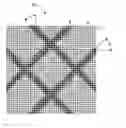
BRIEF DESCRIPTION OF THE DRAWING(S)FIG. 1 is a schematic depiction of the arrangement of stripes of polymers.
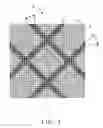
FIG. 2 is a schematic depiction of a conventional arrangement of polymers.
DETAILED DESCRIPTION OF THE INVENTIONThe current invention allows for impregnation of appropriate fabrics with very strong resins, leading to unusually high fiber friction levels with no associated loss in V50. Ballistic resistance of fiber fabrics is an extremely complex problem because of the interplay of a very large number of variables and the extremely short time (about 100 microseconds) of the event. Computer simulation has permitted insight and understanding into phenomena that were not previously understood, such as the role of fiber straining and inter-layer dynamics.
This is accomplished by the use of a broad range of liquid and solid polymer adhesives that are applied to the fabric in a series of relatively narrow stripes. The stripes can be in the form of straight lines, curves, or combinations thereof that are substantially continuous. The stripes should comprise no greater than about 20% of the fabric layer. The fabric suitably has a pull out force of about 6.5 N/cm to 10 N/cm, when formed from aramid fibers. Through computer studies, it has been determined that the poor ballistic resistance observed in some conventional fabrics used for protective apparel is due to (i) the low value of the yarn pull out force (ii) the generally uniform impregnation of strong adhesives in large amounts which leads to excessive bending stiffness and (iii) the use of hybrid systems in which very flexible fabrics layers are mixed with much stiffer impregnated fabric layers.
This has been addressed through application of the adhesive in narrow stripes and due to the reduced basis weight, the coated or impregnated fabrics can then be used throughout the multilayer system, thereby solving problem (iii) as noted above.
In this computer model, the layers of fabric were analyzed as being coated with a strong adhesive placed along narrow stripes about 10 mm apart and extending along the diagonals, with respect to the pattern of the weave, corresponding to about an 18% coverage of the entire fabric area. A representative pattern of stripes is presented in FIG. 1. The stripes can have a width representing approximately two yarn crossovers as depicted in FIG. 1, wherein yarns 2 and 2′ are substantially perpendicular as found in a warp/weft weave. As such, the width can vary depending on the tightness of the weave and the denier of the yarn making up the fabric. Preferably, the width of the stripes is about 2 mm. The stripes are arranged at angles A and A′ that are complements (that is, their sum equals 90 degrees) with respect to either axis within the plane of the fabric weave as depicted in FIG. 1. As such, one or more stripes at angle A may be substantially parallel to each other and intersect at 90 degrees with one or more stripes at angle A′ that are substantially parallel to each other. Angles A and A′ are within the range from about 30 to 60 degrees. It is more preferable that A and A′ are each about 45 degrees.
The role of the adhesive was assumed to increase (i) the yarn pullout force, Fpull and (ii) the bending modulus by a value set at Ebend=0.2.Ef.d3/12 (d=0.25 mm is the yarn diameter and Ef=140 Gpa is the tensile modulus, for aramid yarn). The pattern of stripes is shifted randomly from one layer to the next through the thickness of the pack. For testing, the packs are assumed as placed against a background having the elastic properties of clay (compressive modulus Ec=3 MPa) and tested against a spherical and non-deformable projectile having a mass of 10.2 g and a radius of 3.7 mm.
Ballistic penetration resistance was measured by solving strain wave equations across each layer as provided by Y. Termonia, Impact Resistance of Woven Fabrics. Textile Research Journal, 74, 723-729 (2004)] and breaking the yarns according to a kinetic fracture model based on Eyring's activation rate theory and Y. Termonia and P. Smith. Theoretical Study of the Ultimate Mechanical Properties of Poly(phenylene-terephthalamide) Fibers. Polymer, 27, 1845-1849 (1986)]. Actual Instron fiber pull-out tests have revealed that the high Fpull=10 N/cm value can be achieved by using an Hysol Epoxi 0151 resin with high toughness, such as EA 9313 (an aromatic amine epoxy, available from Loctite, Bay Point, Calif.) applied according to the teachings of the present invention. Other polymers suitable for coating the fabric include cyanoacrylate adhesives, urethane adhesives and aliphatic amine epoxy resins. The polymers can be homopolymers, copolymers, blends, or mixtures thereof.
Note finally that Fpull=10 N/cm corresponds, for impact at the center of a (40 cm×40 cm) layer, to a value close to the breaking strength of aramid yarn. These high values can only be achieved with very strong and stiff resins, which, in order to avoid punch-through, must be applied locally according to the teachings of the present invention.
Suitable materials for making the fabric layers include polyamide, aromatic polyamide, polyolefin, polybenzoxazole, polybenzothiazole, poly{2,6-diimidazo[4,5-b4′,5′-e]pyridinylene-1,4(2,5-dihydroxy)phenylene}, polyareneazole, polypyridazole, polypyridobisimidazole, and mixtures thereof.
The invention provides for the fabrication of ballistic garments at substantially lower basis weights with a good balance of back face deformation and V50. They also have the additional advantages of excellent drape properties, which increases the comfort.
EXAMPLES Example 1Packs of polyaramid fabric layers having a plain weave construction of 840 denier yarn (tensile modulus Ef=140 Gpa) and having a nominal face weight of 166 g/m2 (4.9 oz/sqy) were simulated using a computer. Table 1 shows the calculated dependence of critical perforation velocity V50 and back face deformation value BFD (measured at the corresponding V50) on the total number of layers and the fiber pull-out force (Fpull) within the range 6-10 N/cm. The model predictions are for V50 and BFD for layers treated with thin strips of a strong resin running along the diagonals.
| TABLE 1 | |||
| Number of Layers | Fpull, N/cm | V50, m/sec (ft/sec) | BFD, mm |
| 21 | 6 | 517 (1696) | 23 |
| 20 | 6 | 494 (1620) | 23 |
| 19 | 6 | 475 (1558) | 23 |
| 21 | 8 | 605 (1984) | 24 |
| 20 | 8 | 570 (1870) | 24 |
| 19 | 8 | 555 (1820) | 24 |
| 21 | 10 | 666 (2185) | 24 |
| 20 | 10 | 641 (2103) | 25 |
| 19 | 10 | 624 (2047) | 25 |
The results presented in Table 1 reveals a dramatic increase in V50 at high Fpull of about 8-10 N/cm.
Example 2The modeling of the fabrics was the same as for Example 1, except for wider diagonal strips (about 4 mm), which are also placed farther apart (distance about 20 mm) in order to ensure substantially the same 18% coverage of the entire fabric area.
| TABLE 2 | |||
| Number of Layers | Fpull, N/cm | V50, m/sec (ft/sec) | BFD, mm |
| 21 | 6 | 488 (1601) | 22 |
| 20 | 6 | 484 (1588) | 23 |
| 19 | 6 | 460 (1509) | 24 |
| 21 | 8 | 594 (1949) | 24 |
| 20 | 8 | 560 (1837) | 24 |
| 19 | 8 | 524 (1719) | 23 |
| 21 | 10 | 645 (2116) | 22 |
| 20 | 10 | 620 (2034) | 24 |
| 19 | 10 | 587 (1925) | 24 |
The ballistic performance is about 15-20 m/sec lower than for the thinner strips in Table 1, which is still an acceptable result.
Comparative Example AThe following example illustrates the ballistic performance predicted by the computer model for a pack of 22 layers of fabric as described in Example 1, but with no resin. The value of Fpull is typical of that measured experimentally for untreated 840 denier plain-woven aramid fabrics. As in Example 1, the BFD value has been measured at the corresponding V50.
| TABLE 3 | |||
| Number of Layers | Fpull, N/cm | V50, m/sec (ft/sec) | BFD, mm |
| 22 | 0.4 | 452 (1482) | 37 |
The ballistic performance is substantially lower than that obtained in Examples 1 and 2
Comparative Example BThis case is similar to Example 1 except that the stripes are running along the yarn directions, that is, the stripes are mutually perpendicular to each other as warp and weft yarns are.
| TABLE 4 | |||
| Number of Layers | Fpull, N/cm | V50, m/sec (ft/sec) | BFD, mm |
| 21 | 6 | 465 (1525) | 20 |
| 20 | 6 | 452 (1482) | 20 |
| 19 | 6 | 416 (1365) | 20 |
| 21 | 8 | 537 (1761) | 21 |
| 20 | 8 | 516 (1692) | 21 |
| 19 | 8 | 486 (1594) | 21 |
| 21 | 10 | 609 (1998) | 22 |
| 20 | 10 | 602 (1975) | 23 |
| 19 | 10 | 544 (1784) | 22 |
The ballistic performance is substantially lower than in Example 1 by as much as 60 m/sec.
Comparative Example CThis example is for the case of resin applied into diamond shape patches with same 18% coverage of the fabric area. The diamonds are about 12 mm wide and they are placed 33 mm apart (center to center) in a satin design as depicted in FIG. 2. The diamond-shaped patches are in a satin pattern and have a diagonal width equal to about 11 crossovers.
| TABLE 5 | |||
| Number of Layers | Fpull, N/cm | V50, m/sec (ft/sec) | BFD, mm |
| 21 | 6 | 479 (1571) | 21 |
| 20 | 6 | 449 (1473) | 21 |
| 19 | 6 | 436 (1430) | 21 |
| 21 | 8 | 560 (1837) | 22 |
| 20 | 8 | 535 (1755) | 22 |
| 19 | 8 | 517 (1696) | 22 |
| 21 | 10 | 618 (2027) | 23 |
| 20 | 10 | 608 (1994) | 24 |
| 19 | 10 | 585 (1922) | 23 |
The ballistic performance for V50 is lower than in Example 1 by as much as 45 m/sec.
Claims
What is claimed is:1. A fabric layer, wherein a polymer is disposed on the fabric layer in a series of curves, stripes, or combinations thereof and is substantially continuous within the series of curves, stripes, or combinations thereof, and covers no greater than 20% of the fabric layer; and wherein the fabric has a pull out force of about 6.5 N/cm to 10 N/cm.
2. The fabric layer of claim 1, comprising material selected from the group consisting of polyamide, aromatic polyamide, polyolefin, polybenzoxazole, polybenzothiazole, poly{2,6-diimidazo[4,5-b4′,5′-e]pyridinylene-1,4(2,5-dihydroxy)phenylene}, polyareneazole, polypyridazole, polypyridobisimidazole, and mixtures thereof.
3. The fabric of claim 1, wherein the polymer is selected from the group consisting of cyanoacrylate adhesives, urethane adhesives, aliphatic amine epoxy resins, and aromatic amine epoxy resins.
4. The fabric of claim 3, wherein the polymer is a cyanoacrylate adhesive.
5. The fabric of claim 1, wherein the polymer is a urethane adhesive
6. The fabric of claim 1, wherein the polymer is an aliphatic amine epoxy resin.
7. The fabric of claim 1, wherein the polymer is an aromatic amine epoxy resin.
8. The fabric of claim 1, wherein the fabric is woven.
9. The fabric of claim 8, wherein the polymer is of a width sufficient to substantially cover the longest diagonal cross section of a single weave crossover.
10. The fabric of claim 9, wherein the polymer is arranged in substantially parallel stripes, at complementary angles with respect to either axis within the plane and along the directions of the fabric weave.
11. The fabric of claim 10, wherein the complementary angles are in the range of 30 to 60 degrees.
12. The fabric of claim 10, wherein the complementary angles are each 45 degrees.
13. An article, comprising about 10 to 60 layers of the fabric of either of claims 1-12.
14. The article of claim 13, comprising protective apparel.
15. A process for treating a fabric layer, comprising providing a woven fabric layer, applying to the fabric layer a polymer in a series of substantially parallel stripes at complementary angles with respect to either axis within the plane and along the directions of the fabric weave.
16. The process of claim 15, wherein the complementary angles are in the range of 30 to 60 degrees.
17. The process of claim 15, wherein the complementary angles are 45°.
Images & Drawings included:

Sources:
- United States Patent and Trademark Office - verify current appl. status at the USPTO↗
Recent applications in this class:
- » 20250282118 2025-09-11
PROTECTIVE COMPOSITE FABRICS AND METHODS OF MANUFACTURE AND USE - » 20250269625 2025-08-28
COMPOSITE SOUND-ABSORBING MATERIAL - » 20250262840 2025-08-21
LAMINATED ADHESIVE TAPE AND COMPOSITION THEREFOR - » 20250187300 2025-06-12
AEROSPACE THERMAL ACOUSTIC FIBERGLASS INSULATION USEFUL IN SUPPORTING APPLICATIONS BACKGROUND - » 20250144911 2025-05-08
HIGH-DURABILITY DUAL COMPOSITE WATERPROOF STRUCTURE THROUGH INORGANIC ELASTIC UNDERCOAT BODY AND COMPOSITE SHEET WATERPROOF STRUCTURE WITH HEAT SHIELDING AND HEAT DISSIPATION PERFORMANCE - » 20250100247 2025-03-27
COMPOSITE LAMINATE BODY AND DISPOSABLE DIAPER - » 20250083408 2025-03-13
STRETCHY THERMAL INSULATION COMPOSITE MATERIAL - » 20250042128 2025-02-06
CELLULOSE PRECURSOR MATERIAL AND APPARATUS AND METHOD FOR FIELD CONVERSION OF THE PRECURSOR INTO CELLULOSE INSULATION - » 20250026104 2025-01-23
POROSITY GRADIENT PREFORM ARCHITECTURE FOR HIGH TEMPERATURE COMPOSITES - » 20250026103 2025-01-23
POROSITY GRADIENT PREFORM ARCHITECTURE FOR HIGH TEMPERATURE COMPOSITES
Recent applications for this Assignee:
- » 20240084319 2024-03-14
COMPOSITIONS AND METHODS TO CONTROL INSECT PESTS - » 20230323374 2023-10-12
PLANT GENOME MODIFICATION USING GUIDE RNA/CAS ENDONUCLEASE SYSTEMS AND METHODS OF USE - » 20220119831 2022-04-21
NOVEL PLANT TERMINATOR SEQUENCES - » 20210355687 2021-11-18
Extruded mat - » 20190211565 2019-07-11
Extruded mat - » 20190136331 2019-05-09
Maize event DP-004114-3 and methods for detection thereof - » 20190136259 2019-05-09
METHODS OF USING CYT1A MUTANTS AGAINST COLEOPTERAN PESTS - » 20190118392 2019-04-25
Systems and methods for maize embryo plating and replating - » 20190098858 2019-04-04
Methods and compositions for producing clonal, non-reduced, non-recombined gametes - » 20180222873 2018-08-09
Method for preparing 3-trifluoromethyl chalcones