Radical polymerizable macrocyclic resin compositions with low polymerization stress
US20060287459A1
2006-12-21
11/153,090
2005-06-15
Abstract:
A composition of macrocyclic oligomer with at least one polymerizable group, (meth)acrylate, for example.
Inventors:
- Paul D. Hammesfahr 29 🇺🇸 Wyoming, DE, United States
- XIAOMING JIN 46 🇺🇸 MIDDLETOWN, DE, United States
Interested in similar patents?
Get notified when new applications in this technology area are published.
Classification:
C08G64/1691 » CPC main
Macromolecular compounds obtained by reactions forming a carbonic ester link in the main chain of the macromolecule; Aliphatic-aromatic or araliphatic polycarbonates unsaturated
C08F222/1025 » CPC further
Copolymers of compounds having one or more unsaturated aliphatic radicals, each having only one carbon-to-carbon double bond, and at least one being terminated by a carboxyl radical and containing at least one other carboxyl radical in the molecule; Salts, anhydrides, esters, amides, imides, or nitriles thereof; Esters of polyhydric alcohols or polyhydric phenols of dialcohols, e.g. ethylene glycol di(meth)acrylate or 1,4-butanediol dimethacrylate of aromatic dialcohols
C08G2650/34 » CPC further
Macromolecular compounds obtained by reactions forming an ether link in the main chain of the macromolecule characterised by the polymer type Oligomeric, e.g. cyclic oligomeric
C08F118/02 IPC
Homopolymers of compounds having one or more unsaturated aliphatic radicals, each having only one carbon-to-carbon double bond, and at least one being terminated by an acyloxy radical of a saturated carboxylic acid, of carbonic acid or of a haloformic acid Esters of monocarboxylic acids
Description
FIELD OF THE INVENTIONThis invention relates to free radical polymerizable macrocyclic compounds and composition, which feature by their low shrinkage and low contraction stress upon polymerization. Such low shrinkage and low stress resin could find their wide range of applications, especially in microelectronic, special coating and restorative dentistry where the dimensional stability and contraction stress within cured materials are critical to the total performance.
BACKGROUND OF THE INVENTIONThe polymerization shrinkage of curable material is referred to the dimensional contraction during polymerization or curing, because the formation of covalent bonding during polymerization bring the molecules closer each other than that while they are free in van der Walls distance. The origin of polymerization stress, on the other hand, comes from a restrained polymerization or shrinking during curing. Therefore, it is not only related to polymerization shrinkage, but also is dependent on the polymerization kinetics.
It is well known that with increasing molecular weight, the mobility of polymeric chain would be limited, the diffusion is becoming the rate control factor. In addition, such a limited mobility in a cross-linking system appear to come earlier in comparison with linear system, which means extra reaction would lead to an increasing polymerization stress. There are different ways to control the stress generation and development:
-
- 1. Slow down the polymerization rate;
- Introducing a special rate controller like stable radicals;
- Creating different polymerization zones from which the stress developed in a polymerized zone could be transferred to its adjacent unpolymerized zone and got relief like segmental polymerization technique;
- Employing different polymerization groups;
- Using large-size macromonomer to limited its reactivity at the early stage;
- 2. Reduce the conversion;
- Pre-building a 2D or 3D structure like macrocyclics, dendrimers or hyperbranches;
- 3. Limiting the cross-link density to offer acceptable mechanical property.
- 1. Slow down the polymerization rate;
To reduce polymerization shrinkage and stress in the specific dental restorative composite, all of above approaches are taking into account. In this invention, however, the objective is to present a general method to produce a macrocyclic oligomer which would be converted into 3D network via free radical polymerization.
U.S. Pat. No. 4,644,053, disclosed a method to synthesize single macrocyclic compounds. Then various macrocyclics oligomers, including carbonates, esters, amides, ethers, imides, sulfides, et al, have been prepared. However, high temperature ring-opening reaction has to be involved to convert these macrocyclics into high molecular weight polymers.
U.S. Pat. No. 5,047,261, disclosed a composition containing a five-member carbonate cyclic group for fast copolymerization with mathacrylate.
U.S. Pat. No. 5,792,821, disclosed polymerizable cyclidextrin (CD) derivatives, in which methacrylate was attached on CD.
U.S. Pat. No. 5,962,703, disclosed functionalized bicyclic methacrylate with norboneyl or norbonadienl group.
U.S. Pat. No. 6,043,361, disclosed polymerizable cyclic allylic sufides is used for low shrinkage materials.
Approach
The macrocyclic oligomers are prepared under pseudo-high-dilution condition via a condensation between a reactive and free radical polymerizable precursor and various coupling agents to afford carbonate, ester, siloxane, phosphonate, et al linkages to result in macrocyclic oligomers. To avoid the premature polymerization of methacrylate groups, the condensation groups usually have to be activated to assure a mild reaction for cyclization with the coupling monomers.
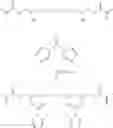
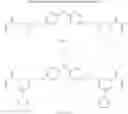
BisGMA is one of widely used dental resin and it contains two free radical polymerizable group, methacrylate and two hydroxyl groups. This turns BisGMA an ideal candidate for polymerizable macrocyclic oligomer, although the presence of BisGMA isomer would make more complicated to this approach. As shown in Scheme I, carbonyldiimidazol (CDI, 1), was used to selectively reacted with the secondary alcohol in BisGMA (2) to give an activated BisGMA, DIZ-BisGMA(3). It was isolated and the chemical structure of DIZ-BisGMA was fully characterized with FITR and NMR. Actually, according to the recent report by Davis et al of Courtlaulds, England, CDI and its intermediates could exhibit surprisingly specificity towards primary, secondary, tertiary functional groups, of the same type, during the controlled formation of various well-defined molecular sequence[1-5]. Our idea is to adopt same chemistry of CDI and to activate the two secondary hydroxyl group. Furthermore, an activated precursor, DIZ-BisGMA, was made to react with various primary diols 1,10-decanediol, under a pseudo high-dilution condition, as shown in Scheme II. Both reactants were simultaneously charged into the system in a high-dilution condition via slowly, precisely controlled addition to ensure a favorable formation of cyclic product. Since the product, C10-CYCBGM (5), is accumulated with a final concentration of 0.02M, which is much higher than the classical high dilution condition (0.001M), this procedure is, therefore, referred as pseudo-high-dilution approach. Since imidazol is produced from both precursor and cyclization steps, a continuous process was successfully developed without direct separation of DIZ-BisGMA.
- Y: Ar, cyclohexyl,
- X: O, COO,
Claims
What is claimed is:1. A composition of macrocyclic oligomer with at least one polymerizable group, (meth)acrylate, for example.
2. As claimed in 1, such a polymerizable macrocyclic oligomer was prepared at pseudo high-dilution condition, started from activated precursor.
3. As claimed in 2, such an activated precursor could be liquid and/or crystalline solid.
4. As claimed in 2, this precursor itself is polymerizable.
5. As claimed in 2, various coupling agents such as primary diols, secondary amine or diacids could be used
6. As claimed in 5, the moiety could aliphatic or aromatic or both.
7. As claimed in 2, the macrocyclic could also be prepared from an activated coupling agent with condensable, polymerizable precursor as well.
Images & Drawings included:

Sources:
- United States Patent and Trademark Office - verify current appl. status at the USPTO↗
Similar patent applications:
- » 20080182997
Radical polymerizable macrocyclic resin compositions with low polymerization stress - » 20090182109
Radical polymerizable macrocyclic resin compositions with low polymerization stress - » 20090247715
Radical polymerizable macrocyclic resin compositions with low polymerization stress - » 20100234549
Radical polymerizable macrocyclic resin compositions with low polymerization stress - » 20100240914
Radical polymerizable macrocyclic resin compositions with low polymerization stress - » 20110152569
Radical polymerizable macrocyclic resin compositions with low polymerization stress - » 20120108837
RADICAL POLYMERIZABLE MACROCYCLIC RESIN COMPOSITIONS WITH LOW POLYMERIZATION STRESS
Recent applications in this class:
- » 20250163215 2025-05-22
Resin and Method for Preparing the Same - » 20240392066 2024-11-28
Polycarbonate Resin and Preparation Method Thereof - » 20240384028 2024-11-21
Polycarbonate Resin and Preparation Method Thereof - » 20240199803 2024-06-20
Polycarbonate Resin Composition - » 20220259373 2022-08-18
Polycarbonate resin - » 20200071461 2020-03-05
AROMATIC POLYCARBONATE OLIGOMER SOLID - » 20190010280 2019-01-10
Polycarbonate resin, and production method and film thereof - » 20140128567 2014-05-08
Copolycarbonate and transparent molded article obtained therefrom - » 20120108837 2012-05-03
RADICAL POLYMERIZABLE MACROCYCLIC RESIN COMPOSITIONS WITH LOW POLYMERIZATION STRESS - » 20110152569 2011-06-23
Radical polymerizable macrocyclic resin compositions with low polymerization stress