Environmental protection material and brick made of the material
US20070131146A1
2007-06-14
11/370,484
2006-03-07
Abstract:
The present invention relates to an environmental protection material comprising 50-70% wood fiber, 45-25% curing agent and 3-10% waterproof additive. The present invention effectively reuses the wood wastes to protect the environment. A brick made of the present material is also disclosed.
Interested in similar patents?
Get notified when new applications in this technology area are published.
Classification:
Y02W30/91 » CPC further
Technologies for solid waste management; Reuse, recycling or recovery technologies Use of waste materials as fillers for mortars or concrete
Y02W30/91 » CPC further
Technologies for solid waste management; Reuse, recycling or recovery technologies Use of waste materials as fillers for mortars or concrete
C04B40/065 » CPC further
Processes, in general, for influencing or modifying the properties of mortars, concrete or artificial stone compositions, e.g. their setting or hardening ability; Inhibiting the setting, e.g. mortars of the deferred action type containing water in breakable containers ; Inhibiting the action of active ingredients; Mechanical separation of ingredients, e.g. accelerator in breakable microcapsules Two or more component mortars
C04B2103/65 » CPC further
Function or property of ingredients for mortars, concrete or artificial stone; Agents for protection against chemical, physical or biological attack Water proofers or repellants
C04B28/02 » CPC main
Compositions of mortars, concrete or artificial stone, containing inorganic binders or the reaction product of an inorganic and an organic binder, e.g. polycarboxylate cements containing hydraulic cements other than calcium sulfates
C04B18/26 » CPC further
Use of agglomerated or waste materials or refuse as fillers for mortars, concrete or artificial stone ; Treatment of agglomerated or waste materials or refuse, specially adapted to enhance their filling properties in mortars, concrete or artificial stone; Waste materials; Refuse organic; Vegetable refuse, e.g. rice husks, maize-ear refuse; Cellulosic materials, e.g. paper, cork Wood, e.g. sawdust, wood shavings
C04B24/26 » CPC further
Use of organic materials as active ingredients for mortars, concrete or artificial stone, e.g. plasticisers; Macromolecular compounds obtained by reactions only involving carbon-to-carbon unsaturated bonds
C04B24/2676 » CPC further
Use of organic materials as active ingredients for mortars, concrete or artificial stone, e.g. plasticisers; Macromolecular compounds obtained by reactions only involving carbon-to-carbon unsaturated bonds Polystyrenes
C04B40/0035 » CPC further
Processes, in general, for influencing or modifying the properties of mortars, concrete or artificial stone compositions, e.g. their setting or hardening ability; Aspects relating to the mixing step of the mortar preparation Processes characterised by the absence of a mechanical mixing step, e.g. "no-mix" processes
C04B18/18 IPC
Use of agglomerated or waste materials or refuse as fillers for mortars, concrete or artificial stone ; Treatment of agglomerated or waste materials or refuse, specially adapted to enhance their filling properties in mortars, concrete or artificial stone; Waste materials; Refuse organic
Description
TECHNICAL FIELDThe present invention relates to an environmental protection material, and in particular to an environmental protection material made of wood wastes and a brick made of the material.
BACKGROUND OF THE INVENTIONIn our daily life, a large amount of construction wastes are created, including wood, concrete, plastics and cement. It becomes a serious problem to the society to deal with such wastes. These wastes are usually dumped. As more and more people realize the importance of the environmental protection, technologies for reusing such wastes are developed. See for example Hong Kong short-term patent No. 1043490 and 1043907.
However, there is no simple and effective method to reuse various wood wastes in the prior art.
BRIEF DESCRIPTION OF THE DRAWINGSThe present invention is described with reference to the following drawing:
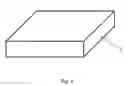
FIG. 1 shows a brick made of the environmental protection material of the present invention.
SUMMARY OF THE INVENTIONIn view of the problems existing in the prior art, the object of the present invention is to provide an environmental protection material made of waste wood with a low cost.
In order to achieve the above said object, the present invention provides an environmental material comprising 50-70% wood fiber, 25-45% curing agent and 3-10% waterproof additive by volume.
The curing agent may be two-component polymer modified cementitious screed mortar, or any commercial cement, and the waterproof additive may be any kind of waterproof additives, such as styrene butadiene copolymer or any glue.
The wood fiber used in the material may be in form of scraps or any suitable form.
The present invention also provides a brick made of the material for construction and decoration engineering.
The present invention effectively reuses the wood wastes to protect the environment.
DETAILED DESCRIPTION OF THE PREFERRED EMBODIMENTSIn order to make the material of the present invention, the first step is to crush the wood into fine scraps or powder. Then, a curing agent is added to set the scraps into a certain shape.
In order to avoid deformation caused due to a humid environment, a waterproof additive may be incorporated into the mixture of the wood fiber and the curing agent, such as styrene butadiene liquid.
The final composite material may comprise 50-70% wt of wood fiber, 25-45% curing agent and 3-10% waterproof additive.
In one preferred embodiment, the curing agent is two-component polymer modified cementitious screed mortar.
The material of the present invention has a wood-like appearance. It can be moulded to form bricks or other construction elements for construction and decoration engineering.
FIG. 1 shows a brick made of the material of the present invention. Such brick 1 may be used to build partition walls. As compared with the conventional brick, the present brick is lightweight and the partition wall built by the brick is hard enough and imposes less pressure to the foundation of the building than those convention cement or concrete walls. In addition, the surface of such wall is easier to be treated. Since its surface is smoother than the convention wall, the wall can be grouted directly without patching. The further advantage is that the wall can tightly hold the fastening elements, e.g. screws.
All kinds of wood wastes can be used to form the material of the present invention. After used, the articles or construction elements made of the material can be collected and recycled. Thus, the problems raised by the waste wood may be resolved in an effective and simple way.
While the invention has been shown and described with reference to a certain preferred embodiment thereof, it will be understood by those skilled in the art that various changes in form and details may be made therein without departing from the spirit and scope of the invention as defined by the appended claims.
Claims
What is claimed is:1. An environmental protection material, characterized in that it comprises 50-70% wood fiber, 25-45% curing agent and 3-10% waterproof additive.
2. The environmental material as claimed in claim 1, the curing agent comprises two-component polymer modified cementitious screed mortar.
3. The environmental material as claimed in claim 1, the waterproof additive comprises styrene butadine liquid.
4. The environmental material as claimed in claim 1, characterized in that the wood fiber is in form of scraps.
5. A brick made of the environmental protection material as claimed claim 1, for construction and decoration engineering.
6. A brick made of the environmental protection material as claimed claim 2, for construction and decoration engineering.
7. A brick made of the environmental protection material as claimed claim 3, for construction and decoration engineering.
Images & Drawings included:
Sources:
- United States Patent and Trademark Office - verify current appl. status at the USPTO↗
Recent applications in this class:
- » 20240228379 2024-07-11
METHOD AND SYSTEM TO PRODUCE A CONCRETE MATERIAL HAVING OPTIMIZED STRENGTH AND PARTICLE PACKING PROPERTIES - » 20230129356 2023-04-27
Enhanced pozzolan for using in extended life cements - » 20230084712 2023-03-16
PREVENTING OR REDUCING PLANT GROWTH BY BIOCEMENTATION - » 20220388906 2022-12-08
SELF-MENDING COMPOSITES INCORPORATING ENCAPSULATED MENDING AGENTS AND METHOD OF SELF-MENDING COMPOSITES - » 20220234955 2022-07-28
Preparation of Hydrous Graphene Oxide for Use as a Concrete Admixture - » 20220162123 2022-05-26
COMPOSITION FOR MANUFACTURING METHYLENE MALONATE CEMENTITIOUS HYBRID SYSTEMS, THE PREPARATION THEREOF AND USE OF THE SAME IN CONSTRUCTION - » 20220144704 2022-05-12
CONCRETE STRUCTURES FORMED USING AN ELASTIC DESIGN METHOD WITH MODULUS OF RUPTURE TESTING - » 20220024820 2022-01-27
Method of forming a cement containing insulated block, wall or other building material - » 20200392043 2020-12-17
Method for manufacturing binders hardening by hydration and carbonation - » 20200231501 2020-07-23
Surface crack filler compound