Electrical connector
US20070134964A1
2007-06-14
11/638,332
2006-12-12
✅ Patent granted
US 7,467,964 B2
2008-12-23
-
-
Jean F Duverne
2026-12-12
Abstract:
An electrical connector (1) includes a housing (10), a number of electrical contacts (20) received in the housing (10) and an actuator (30) mounted on the housing (10). In addition, the electrical connector (1) further a cover (40) disposed between the actuator (30) and the housing (10). The cover (40) is mounted above the housing (10) and the actuator (30) is pivotally disposed relative to the cover (40).
Inventors:
- Hsiu-Yuan HSU 41 🇹🇼 Tu-Cheng, Taiwan
- Tien-Chien Su 2 🇹🇼 Tu-Cheng, Taiwan
- Yi-Feng Wu 2 🇹🇼 Tu-Cheng, Taiwan
Assignee:
- Hon Hai Precision Ind. Co., Ltd. 1,929 🇹🇼 Taipei Hsien, Taiwan
Interested in similar patents?
Get notified when new applications in this technology area are published.
Classification:
H01R12/88 » CPC main
Structural associations of a plurality of mutually-insulated electrical connecting elements, specially adapted for printed circuits, e.g. printed circuit boards [PCBs], flat or ribbon cables, or like generally planar structures, e.g. terminal strips, terminal blocks; Coupling devices specially adapted for printed circuits, flat or ribbon cables, or like generally planar structures; Terminals specially adapted for contact with, or insertion into, printed circuits, flat or ribbon cables, or like generally planar structures; Coupling devices connected with low or zero insertion force contact pressure producing means, contacts activated after insertion of printed circuits or like structures acting manually by rotating or pivoting connector housing parts
H01R29/00 IPC
Coupling parts for selective co-operation with a counterpart in different ways to establish different circuits, e.g. for voltage selection, for series-parallel selection, programmable connectors
H01R13/62 IPC
Details of coupling devices of the kinds covered by groups or - Means for facilitating engagement or disengagement of coupling parts or for holding them in engagement
Description
BACKGROUND OF THE INVENTION1. Field of the Invention
The present invention relates to an electrical connector for electrically connecting a flexible printed circuit to a printed circuit board (PCB).
2. Description of Related Art
A conventional electrical connector for connecting a flexible printed circuit to a printed circuit board comprises an insulative housing, an actuator pivotably mounted on the housing, and a plurality of first contacts and a number of second received in the housing. The actuator presses the flexible printed circuit connecting the first contacts and the second contacts with the printed circuit board
Referring to the FIG. 1-3, a conventional electrical connector 1′ comprises a rectangular housing 2′, a plurality of first contacts 3′ and a plurality of second contacts 4′ receiving in the housing 2′ and an actuator 5′ mounted on the housing 2′ for pressing the flexible printed circuit connecting with the first and second contacts 3′, 4′.
The rectangular housing 2′ comprises a base 20′ and a pair of engaging portion 21′ extending from two ends of the base 20′, a plurality of passageways 200′ disposed on a front end of the housing 2′ for receiving the first contacts 3′ and the second contacts 4′. The base 21′ defines an opening 201′ for receiving the flexible printed circuit therein.
The actuator 5′ is pivotally mounted on the housing 2′ and comprises a rectangular pressing portion 50′ and a protrusion 51′ with an envelope shape extending from two ends of the pressing portion 50′. The pressing portion 50′ defines a pressing surface 501′ for pressing a flexible circuit board to the first contact 3′ and the second contact 4′. The pressing surface 501′ defines a rib 502′ and a recess 503′ separately, wherein the recess 503′ defines a projection 504′ for contacting the first contact 3′.
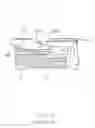
The first contact 3′ comprises an engaging portion 30′, a first securing portion 31′ and a first contacting portion 32′ extending from an end of the engaging portion 30′ and parallel to the engaging portion 30′. The first securing portion 31′ engages interferential with the housing 2′ and the first contacting portion 32′ contacts with a flexible circuit board. The engaging portion 30′ further defines a concave 300′ for receiving the projection 504′ of the actuator 5′; hence the actuator 504′ can be rotated about the first contacts 3′ from an opening position to a horizontal position. In the opening position, the actuator 5′ do not press the first contacts 3′ and the second contacts 4′, however, in the horizontal position, the actuator 5′ presses the first contacts 3′ and the second contacts 4′ tightly. The second contact 4′ is h-shaped and is inserted into the passageways 211′ of the housing 2′ from an end opposite to the opening 201′. The second contact 4′ comprises a second securing portion 40′ and a second contacting portion 41′ extending from and parallel to the second securing portion 40′. The second securing portion 40′ engages interferentially in the housing 2′ and the second contacting portion 41′ contacts the flexible circuit board. The first contacts 3′ and the second contacts 4′ are welded on a chip module by the surface material technology, which are soldered to the chip module by the two electrical connectors 1′. The two electrical connectors 1′ are connected by a flexible circuit board.
However, the electrical connector 1′ described in the above lies in following drawbacks: the actuator 5′ in the electrical connector 1′ is connected with the first contacts 3′ by recess 300′ of the engaging portion 30′ with projection 504′ of the actuator 5′. So the actuator 5′ must define a plurality of concave 503′ corresponding to the number of the first contacts 3′, which leads to a complex structure thereof. In addition, a plurality of concaves 503′ must lead to a decreasing intensity of the whole actuator 5′. For engaging with actuator 5′, each first contact 3′ must define the engaging portion 30′ thereof for engaging with actuator 5′, thereby each first contact 3′ has a different shape with each second contact 4′. Due to the difference between the first contacts 3′ and the second contacts 4′, the high frequency of the first contact and the second contact is different from each other. By the aforementioned analysis, the electrical connector 1′ has a lot of place need to be improved.
Thereby, an improved electrical connector is required to overcome the disadvantages of the prior art.
SUMMARY OF THE INVENTIONAn object of the present invention is to provide an electrical connector which has reliable structure and can perform steadily electrical connection between a flexible printed circuit and a printed circuit board (PCB).
In order to achieve above-mentioned objects, an electrical connector in accordance with a preferred embodiment of the present invention includes a housing, a number of electrical contacts received in the housing and an actuator mounted on the housing. In addition, the electrical connector further a cover disposed between the actuator and the housing. The cover is mounted above the housing and the actuator is pivotally disposed relative to the cover.
As an improvement of the invention, the electrical connector define a pair of contacts with same structure.
Relative to the conventional technology, the cover corresponding to the invention can simplify the connecting structure of the housing and the actuator, decrease the designing cost of the mold of the housing, improve the whole connecting intensity of the electrical connector, which ensure the electrical connector a stable and reliable electrical and mechanical connection. In addition, the contacts are simplified configured as same structure according to the invention, which can abbreviate the producing technology, decreasing the producing cost, improving the electrical transmission.
Other objects, advantages and novel features of the present invention will become more apparent from the following detailed description of the present embodiment when taken in conjunction with the accompanying drawings.
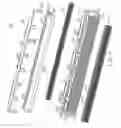
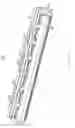
BRIEF DESCRIPTION OF THE DRAWINGSFIG. 1 is an exploded, isometric view of a conventional electrical connector;
FIG. 2 is an assembled view of the electrical connector described in FIG. 1;
FIG. 3 is a cross-sectional view of the electrical connector shown in FIG. 1 in line of the III-III;
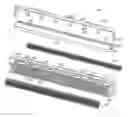
FIG. 4 is a an exploded, isometric view of an electrical connector in accordance with the preferred embodiment of the invention;
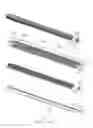
FIG. 5 is an assembled view of the electrical connector shown in FIG. 4;
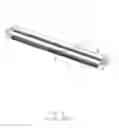
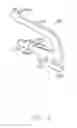
FIG. 6 is an exploded, isometric view a contact shown in FIG. 4.
DETAILED DESCRIPTION OF THE INVENTIONReference will now be made to the drawing figures to describe the present invention in detail.
Referring to FIG. 2-3, an electrical connector 1 in accordance with the preferred embodiment of the present invention comprises a housing 10, a plurality of electrical contacts 20 received in the housing 10, an actuator 30 mounted pivotally on the housing 10, and a cover 40 disposed above the housing 10.
The rectangular housing 10 comprises a first surface 101 and a second surface 102 parallel to the first surface 101, a first sidewall 103 and a second sidewall 104 perpendicular to the first surface 101. The first surface 101 defines downwardly a plurality of receiving slots 105 and a securing channel 106, which do not penetrate through the second surface 102. The housing 10 further defines a first receiving recess 107 adjacent to the first sidewall 103 in a transverse direction, a second receiving recess 108 adjacent to the second sidewall 104. The receiving slots defines a bottom surface 1055, a first inner surface 1053 and a second inner surface 1054 perpendicular to the first inner surface 1053, an anchoring projection 109 extending from the first inner surface 1053 toward the second sidewall 104, and a first engaging slot 110 and a second engaging slot 112 disposed on the second inner surface 1054 and connecting with each other. In addition, the second surface 102 defines inwardly a pair of receiving passageways 115 for receiving the contacts 20 therein.
The actuator 30 defines a rectangular base plate 301. The base plate 301 comprises the retention post 302, a securing projection 305 extending from two lengthwise ends thereof and a plurality of concaves 306 for engaging with the second hooks 405 of the cover 4.
The cover 40 comprises a rectangular base portion 401, a first engaging hook 402 and a second engaging hook 405 disposed on two transverse ends thereof. The base portion 401 defines a pair of cured solder tails 408 on the on longitudinal ends thereof for connecting to the printed circuit board, which can enhance the stability and reliability of the connection between the electrical connector 1 and the printed circuit board.
Referring to FIGS. 1 and 3, each contact 20 defines a solder portion 201, a retention portion 202 an elastic portion 205. The retention portion 202 extends a first projection 211 and a second projection 212 for decreasing the thickness of the contacts 20, which is disposed on upper and lower position of the retention portion 202 respectively. The retention portion 202 defines an engaging portion 2023 for engaging with the corresponding portion of the receiving passageway 115. When the contacts 20 are inserted into the receiving passageway 115 of the housing 10, the distances between the contacts 20 and the inner wall of the receiving passageways 115 are decreased, hence improving the stability of the pressed contacts 20. The retention portion 202 defines an anchoring portion 2023 for engaging with the receiving passageways 115. When assembled, the contacts 20 are arranged in two arrays and opposite to each other.
In assembly, the contacts 20 are inserted into the receiving passageways 115 of the housing 10 and arranged opposite to each other, wherein the elastic portion 205 partially extends out of the receiving slot 105 of the housing 10, namely a free end of the elastic portion 205 locating above the bottom surface 1055 of the receiving slot 105, and the solder portion 201 extends beyond the receiving holes in order to solder to the printed circuit board. And then the actuator 30 is inserted into the housing 10 in a direction parallel to the first surface 101 of the housing 10, in the state, the a lower surface of the anchoring projection 109 abuts against a corresponding surface of the actuator 30, the retention post 302 of the actuator 30 are engaged with receiving slot 105 of the housing 10, the securing projection 305 are received in the second engaging slot 112. At this time, the actuator 30 mounted on the housing 10 can rotate about the retention post of the actuator 30. At last, the cover 40 is mounted on the housing 10, the base portion 401 engages with the securing channel 106 of the housing 10 and the first hook 402 is inserted into the first receiving recess 107, the second hook 405 is inserted into the second receiving recess 108. Hence the cover 40 is located on the housing 10.
In conclusion, the electrical connector 1 in accordance with the invention can simplify the connecting structure of the housing 10 and the actuator 30, decrease the designing cost of the mold of the housing 10, improve the whole connecting intensity of the electrical connector 1, which ensure the electrical connector 1 a stable and reliable electrical and mechanical connection via the cover 40 disposed on the housing. In addition, the contacts 20 are simplified configured as same structure according to the invention, which can abbreviate the producing technology, decreasing the producing cost, improving the electrical transmission.
Claims
1. An electrical connector for electrically connecting a flexible printed circuit to a printed circuit board, comprising:
a housing defining a plurality of passageways therethrough and an open space in communication with the passageways;
a plurality of contacts received in the passageways and extending into the open space;
a bracket mounted on the housing adjacent to the open space;
an actuator pivotally arranged on the bracket so as to move between a first position in which the contacts are accessible, and a second position in which the open space is closed.
2. The electrical connector as described in claim 1, wherein cover defines a number of first hooks and the housing defines a number of first concaves corresponding to the first hook. When assembled, the first hooks are engaged with first concaves.
3. The electrical connector as described in claim 2, wherein cover defines a number of second hooks and the actuator defines a number of second concaves corresponding to the second hooks. When assembled, the second hooks are engaged with second concaves.
4. The electrical connector as described in claim 1, wherein the cover defines a pair of solder portions for connecting to the printed circuit board.
5. The electrical connector as described in claim 4, wherein housing defines a securing recess for receiving the cover.
6. The electrical connector as described in claim 5, wherein the contacts are arranged in two arrays and opposite to each other.
7. The electrical connector as described in claim 1, wherein the contacts have a same structure.
8. The electrical connector as described in claim 7, wherein each contact comprises a solder portion, a retention portion, an elastic portion and the retention portion defines at least a projection along a thickness direction of the contact.
9. An electrical connector for electrically connecting a flexible printed circuit to a printed circuit board, comprising:
a housing defining a plurality of passageways therethrough and an open space in communication with the passageways;
arrays of contacts received in the passageways and extending into the open space;
a cover a bracket mounted on the housing adjacent to the open space;
an actuator pivotally engaged with the open space of the housing;
wherein contacts of the different array are designed as same configurations.
10. An electrical connector for electrically connecting a flexible printed circuit to a printed circuit board, comprising:
a housing defining front and rear rows of passageways therethrough and an open space in communication with the passageways;
two rows of contacts received in the corresponding passageways and extending into the open space;
a metallic cover mounted on the housing adjacent to the open space;
an actuator pivotally mounted to the housing while engaged with the metallic cover so as to move between a first position in which the contacts are accessible, and a second position in which the open space is closed.
Images & Drawings included:
Sources:
- United States Patent and Trademark Office - verify current appl. status at the USPTO↗
Similar patent applications:
- » 20220352660
Electrical connector, electrical connector assembly, electrical connector with circuit board, and electrical connector assembly with circuit board - » 20120052753
Assembled component having electrical connector and electrical connector cap, electrical connector cap, and method of mounting electrical connector - » 11987318
Board electrical connector, and electrical connector assembly having board electrical connector and middle electrical connector - » 20110045690
Alignable electric connector, an electric connector system, and a method for connecting an alignable electric connector with a second electric connector - » 20210091499
Method for producing an electrical connector, in particular an electrical connector for a high-density header system; as well as an electrical connector, in particular an electrical connector for the motor vehicle industry; as well as high-density header system - » 20210257759
Intermediate electrical connector, electrical connector assembly, and electrical connector assembly equipped with a circuit board - » 20210296826
Electrical connector, electrical connector assembly and electrical connector module - » 20200203873
Electrical connector housing, electrical connector and electrical connector assembly - » 20220102903
Electrical connector, electrical mating connector, and electrical connector assembly - » 20220393402
First electrical connector, second electrical connector and electrical connector assembly
Recent applications in this class:
- » 20240266769 2024-08-08
HIGH-VOLTAGE ELECTRICAL ROTARY JOINT DEVICE CONFIGURED TO EQUIP AN ENERGY EXPLOITATION INSTALLATION - » 20240113459 2024-04-04
RIBBON CONDUCTOR CONNECTOR - » 20230411883 2023-12-21
FLAT CONDUCTOR ELECTRIC CONNECTOR - » 20230100491 2023-03-30
Socket actuation mechanism for package insertion and package-socket alignment - » 20220231441 2022-07-21
Connector capable of ensuring connection reliability with a circuit board - » 20220224034 2022-07-14
MIDBOARD CABLE TERMINATION ASSEMBLY - » 20220013943 2022-01-13
Electrical connector for a medical patch sensor - » 20210359449 2021-11-18
Connector, connection object and electronic device - » 20210351532 2021-11-11
Connector and electronic device - » 20210273363 2021-09-02
Electrical Connector
Recent applications for this Assignee:
- » 20110045702 2011-02-24
Electrical cable connector assembly with improved wire organizer - » 20110021088 2011-01-27
Electrical connector with improved contact footprints - » 20110021082 2011-01-27
High density backplane connector having improved terminal arrangement - » 20110008982 2011-01-13
N-in-1 card connector - » 20110005825 2011-01-13
Cable assembly with EMI protection - » 20110003508 2011-01-06
Electrical connector rotatably mounted to a portable device - » 20100330822 2010-12-30
Electrical connector having contact with upper terminal and lower terminal - » 20100317218 2010-12-16
Electrical connector assembly with latching mechanism - » 20100297861 2010-11-25
Socket connector having improved actuating mechanism for driving moving plate - » 20100291799 2010-11-18
Shielded connector with enlarged base supporting cantilevered brackets extending from the shielded connector